Multimodal Mobility: Building Better Connections for Everyday Life
11/06/2026
Efficient and sustainable transport systems play a crucial role in the quality of life of residents, the attractiveness of regions and the long-term competitiveness of local economies. While mobility challenges often become most visible during the tourist season, the need for reliable and well-connected transport solutions exists throughout the year.
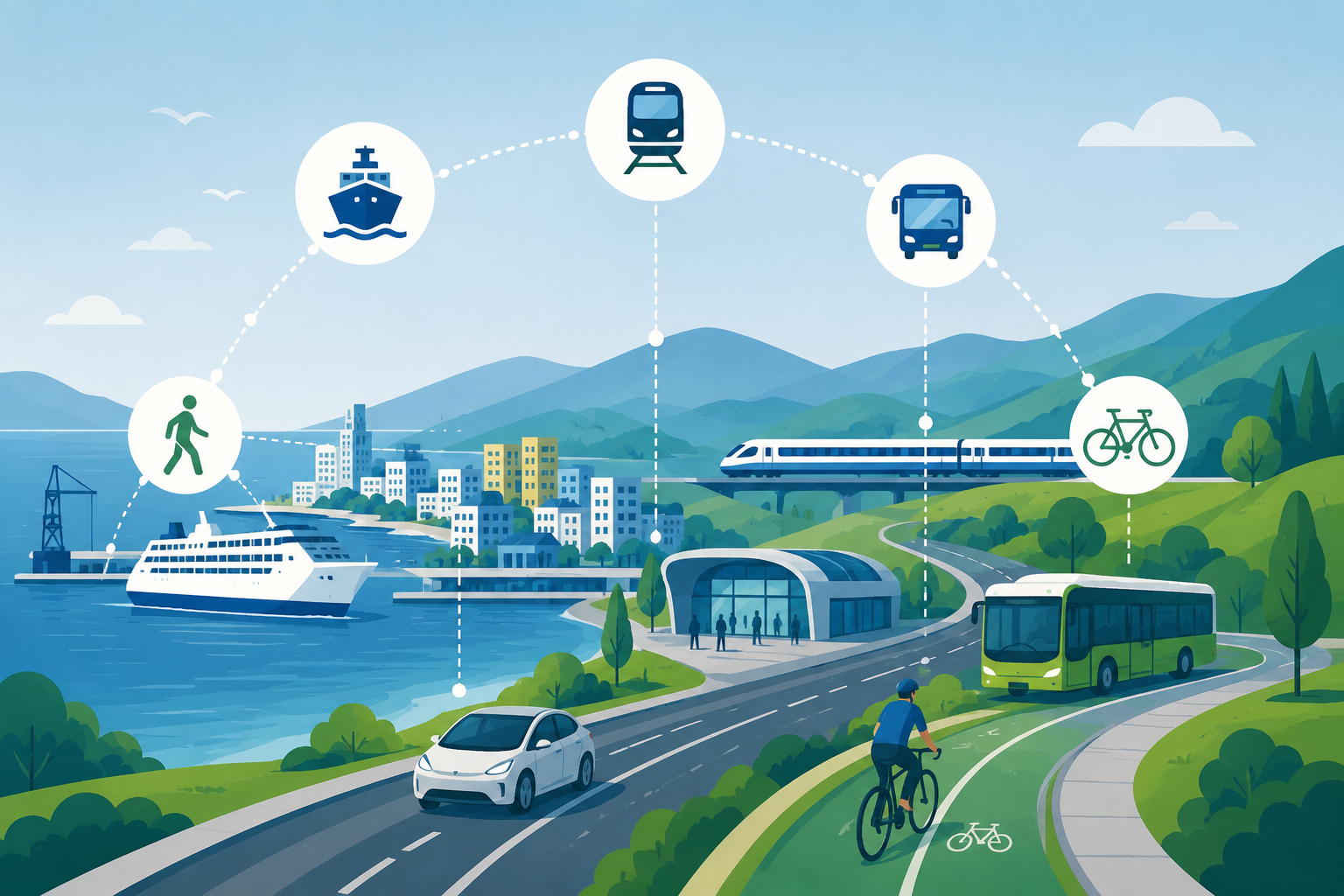
Multimodal mobility refers to the integration of different transport modes – such as walking, cycling, buses, trains, ferries and other shared mobility services – into a connected and user-friendly transport network. By making transfers between different modes easier and more efficient, multimodal solutions help people reach their destinations in a more sustainable, comfortable and flexible way.
The benefits of multimodal mobility extend far beyond transport itself. Better connectivity can improve access to education, employment, healthcare and public services, while also supporting economic development and social inclusion. At the same time, reducing dependence on private cars contributes to lower greenhouse gas emissions, improved air quality and less pressure on local infrastructure.
For coastal and hinterland areas, strong transport links are particularly important. Connecting ports, airports, railway stations and urban centres enables smoother passenger flows and helps create a more integrated and resilient transport system. Such connections are beneficial not only for visitors, but also for local communities, businesses and public authorities working to ensure balanced regional development.
Across Europe, sustainable and intelligent mobility solutions are increasingly recognised as a key element of the green transition. Digital tools, integrated transport planning and improved cooperation between transport providers can help make public and shared transport more attractive and accessible to a wider range of users.
Through the SUMMA project, partners from Italy and Croatia have been working together to promote sustainable multimodal mobility by analysing existing transport connections, exchanging knowledge and testing innovative approaches that can contribute to better connectivity across the Adriatic area. The project demonstrates how cross-border cooperation can support the development of transport systems that are more efficient, accessible and environmentally sustainable, ultimately benefiting residents, businesses and visitors alike.

