
Agriculture and Carbon Markets: GECO 2.2 presents its results in Ravenna
24/07/2026
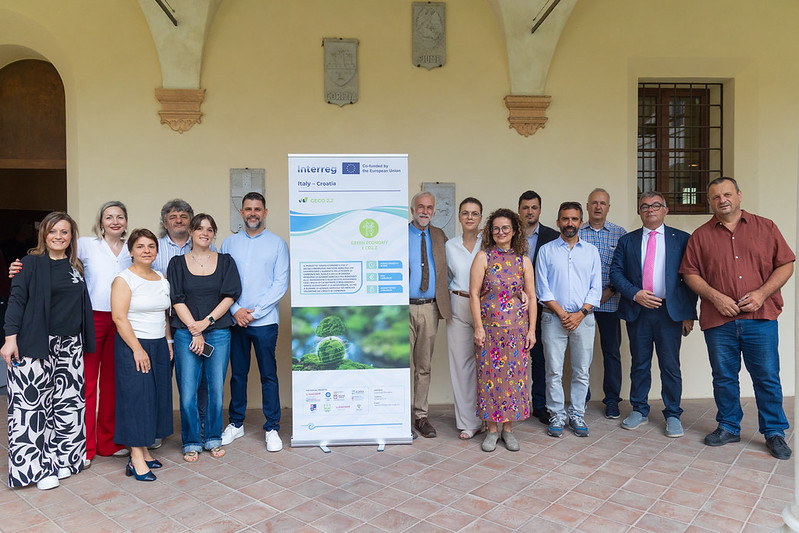
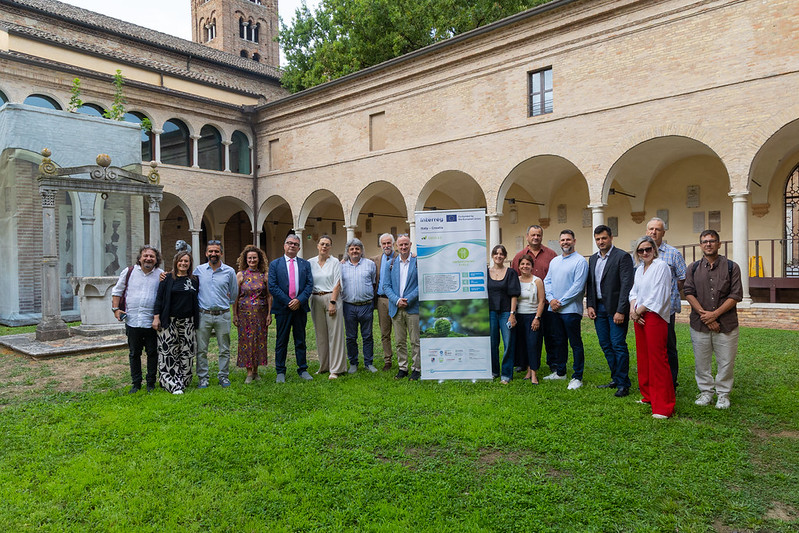
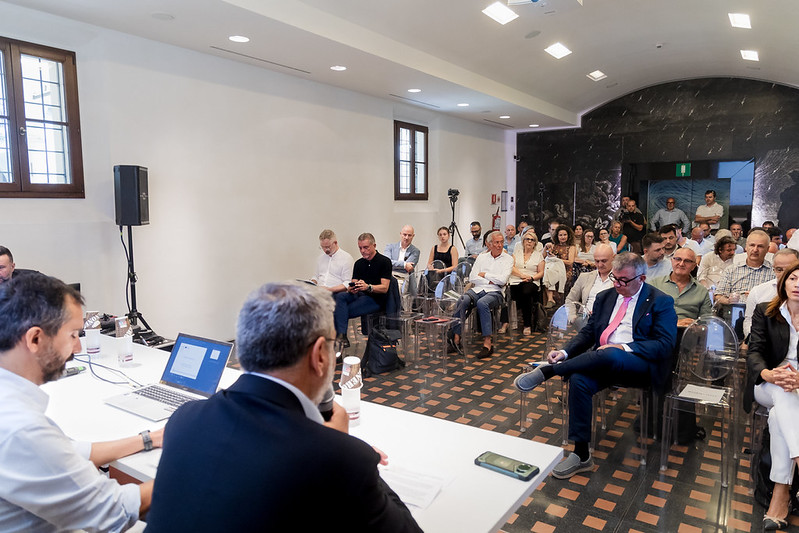
One hundred and sixty farms involved on both sides of the Adriatic, an innovative system for measuring carbon stored in soils and biomass, and a transparent model for certifying and enhancing the value of credits generated through sustainable agricultural practices. These are some of the main results achieved by GECO 2.2, the European project funded by the Interreg VI-A Italy–Croatia 2021–2027 Programme. They were presented on Tuesday, 21 July, at the Antichi Chiostri Francescani in Ravenna during the project’s final event, which brought together institutional representatives, experts, agricultural organisations, and partners from Italy and Croatia.
Among the guests were Stefano Bonaccini, Member of the European Parliament and of the Committee on Agriculture and Rural Development; Barbara Monti, Councillor for European Policies of the Municipality of Ravenna; and Simone Gamberini, President of Legacoop Nazionale.
Launched in 2024 as a continuation of the previous GECO 2 project, GECO 2.2 worked towards the creation of a regional voluntary carbon market for the agricultural sector. Its objective is to recognise and enhance the contribution of farms that, by adopting sustainable agricultural practices, increase the capacity of soils and biomass to absorb and store carbon, thereby helping to tackle climate change.
One of the project’s main achievements is the enhancement of the Carbon Calculator, an open-source digital tool that estimates the amount of carbon sequestered in farmland soils and biomass. The system calculates a carbon balance for each farmer by combining data on sequestration capacity—based on soil and climate characteristics, crops, and the sustainable practices adopted—with data on emissions generated by field operations, cover crops, crop rotations, organic fertilisation, and agricultural residue management.
The assessment begins with the establishment of a farm baseline through soil sampling and the analysis of soil organic carbon. The data are subsequently updated using the information recorded in the farm record book, making it possible to assess the effects of the practices introduced over time and quantify the carbon units generated. GECO 2.2 also developed a certification scheme aligned with the principles of Regulation (EU) 2024/3012 establishing the Carbon Removals and Carbon Farming Certification Framework.
The system sets out procedures and criteria for farm registration, independent data verification, results monitoring, and the issuance of certified units, ensuring quantification, additionality, long-term storage, transparency, and low management costs. To support the future voluntary market, a digital system for registering and tracking carbon credits was also developed, based on blockchain technology and NFT digital certificates. This allows each credit to be identified, tracked throughout its life cycle, and retired after purchase, reducing the risk of double counting and strengthening the reliability of transactions.
The model tested by GECO 2.2 connects farms capable of generating credits through the adoption of new practices with organisations and companies interested in supporting tangible, locally rooted climate action. The approach has been designed to make the carbon credit market accessible to small farms and is potentially replicable in other European regions.
Fieldwork involving 160 farms in Italy and Croatia, covering more than 2,000 hectares, made it possible to collect data, analyse existing practices, support farms in introducing new solutions, and assess the applicability of the model in different agricultural and climatic contexts. The calculated credits amounted to 4,182 tonnes of CO₂ equivalent, with an average value of 2.32 tonnes per hectare.
This figure highlights the direct link between the practices adopted through the project and increased soil organic matter. The partnership brings together Legacoop Romagna, the project’s Lead Partner; CIHEAM Bari – Mediterranean Agronomic Institute of Bari; Coldiretti Molise; Legacoop Marche; the Agency for Rural Development of Zadar County; Dubrovnik-Neretva County; and OGAM – Mastrinka Olive Growers Association. The Emilia-Romagna Region, the Puglia Region, and the Croatian Ministry of Agriculture also participate as Associated Partners.