
CAMPUS in Ferrara: Presenting the results of the Journey Towards Climate-Resilient Heritage
24/07/2026
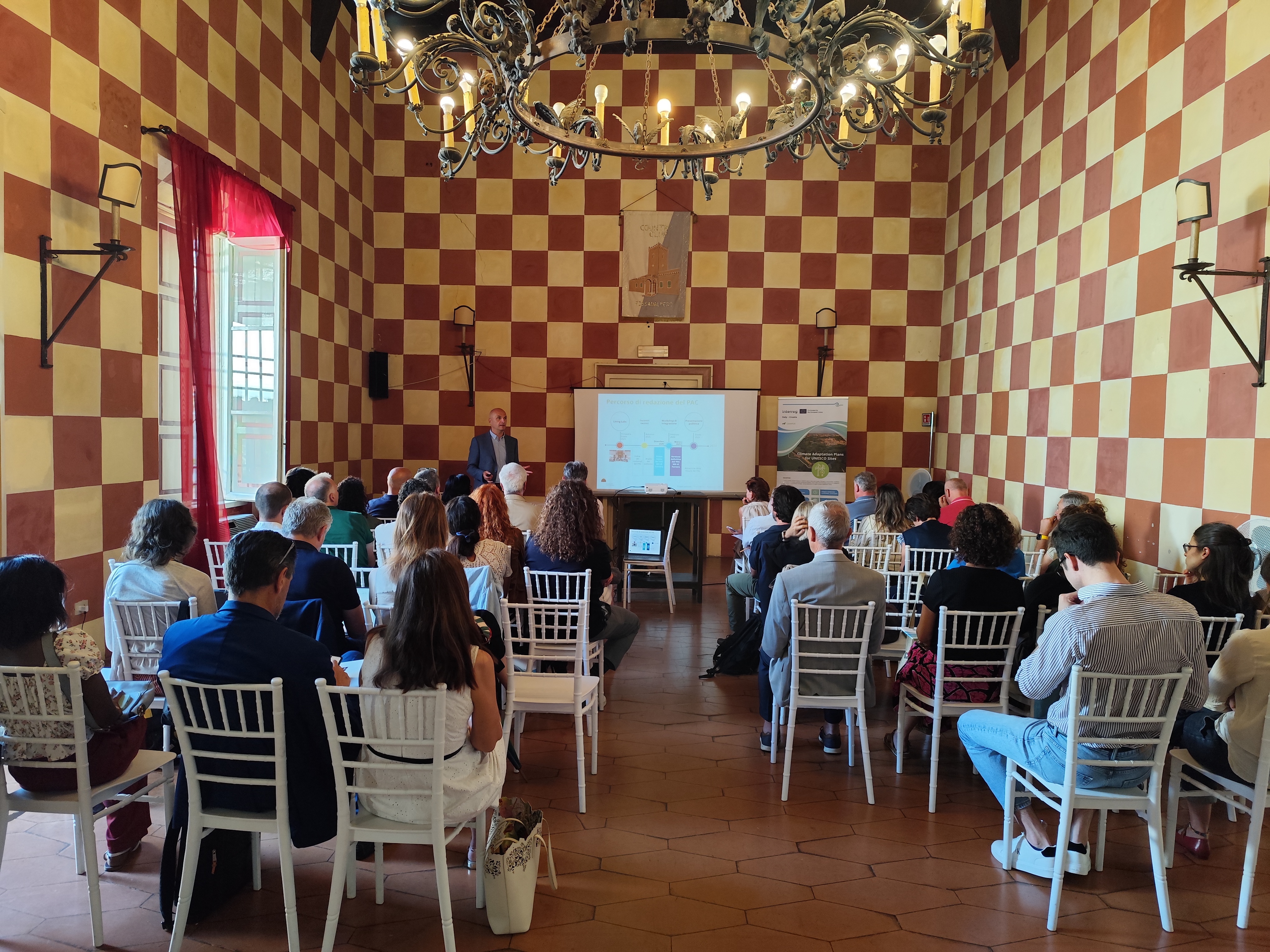
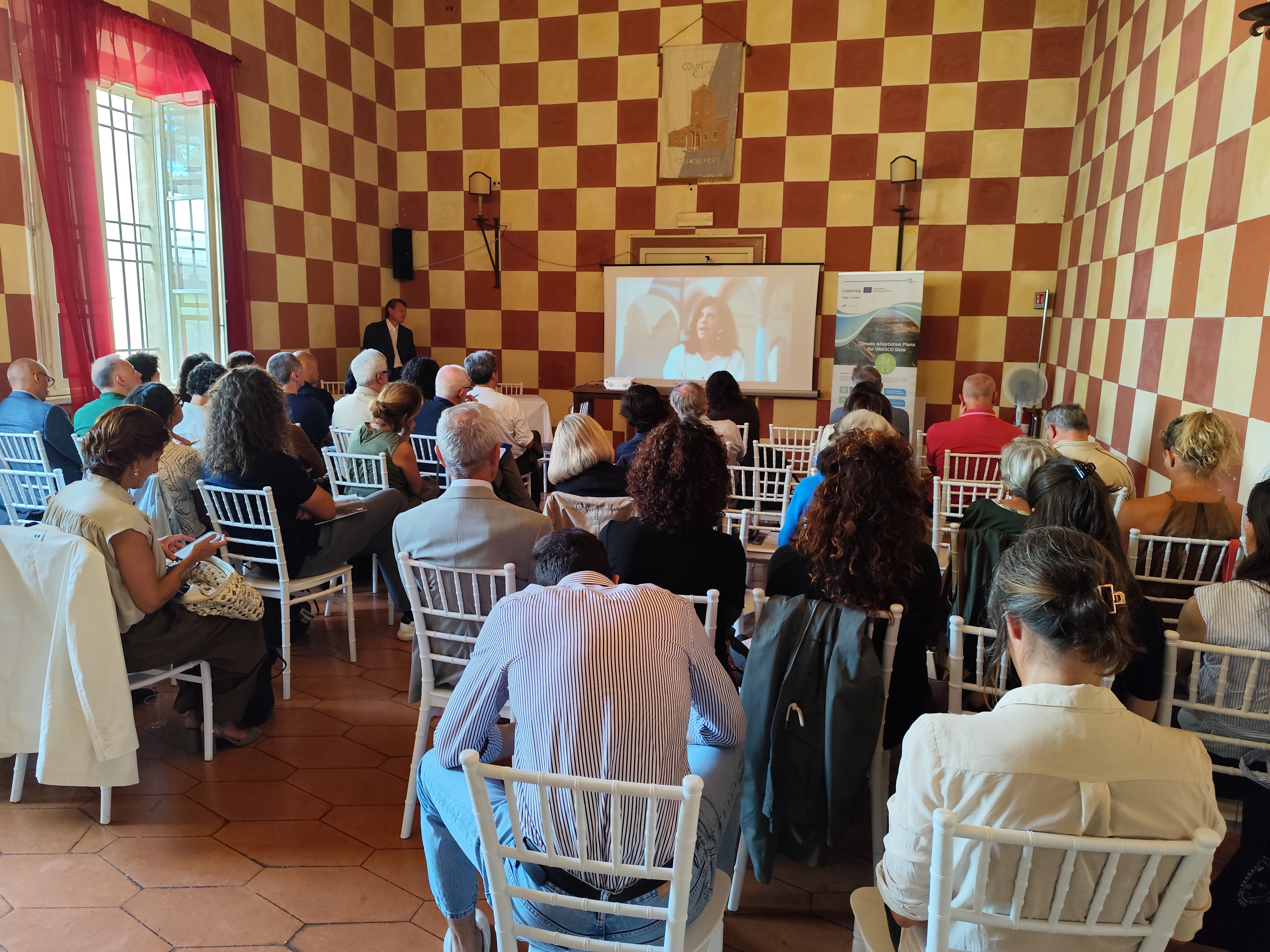
The CAMPUS project concluded its activities in Ferrara with the Final Conference held on 20 July 2026 at the Country Club Fossadalbero. The event brought together local authorities, project partners, experts, and stakeholders to present the main outcomes of the project and reflect on future strategies for strengthening the climate resilience of Ferrara's UNESCO World Heritage site. During the conference, representatives of the Municipality of Ferrara presented the Climate Adaptation Plan, developed through a collaborative process that combined technical analysis, stakeholder engagement, and community participation. The Plan identifies a set of short-, medium-, and long-term measures to protect the Outstanding Universal Value of Ferrara's historic centre while enhancing the city's capacity to respond to the impacts of climate change.
A key moment of the event was the presentation of the winning proposal of the Ideas Competition for the design of innovative climate shelters. The selected project, DOMINO, developed by a team led by architect Andrea Rinaldi, proposes a modular and sustainable solution designed to provide relief during heatwaves while creating welcoming public spaces for social interaction. Based on principles of circular economy, off-site construction, and integration with urban greenery, the concept combines environmental performance with community wellbeing.
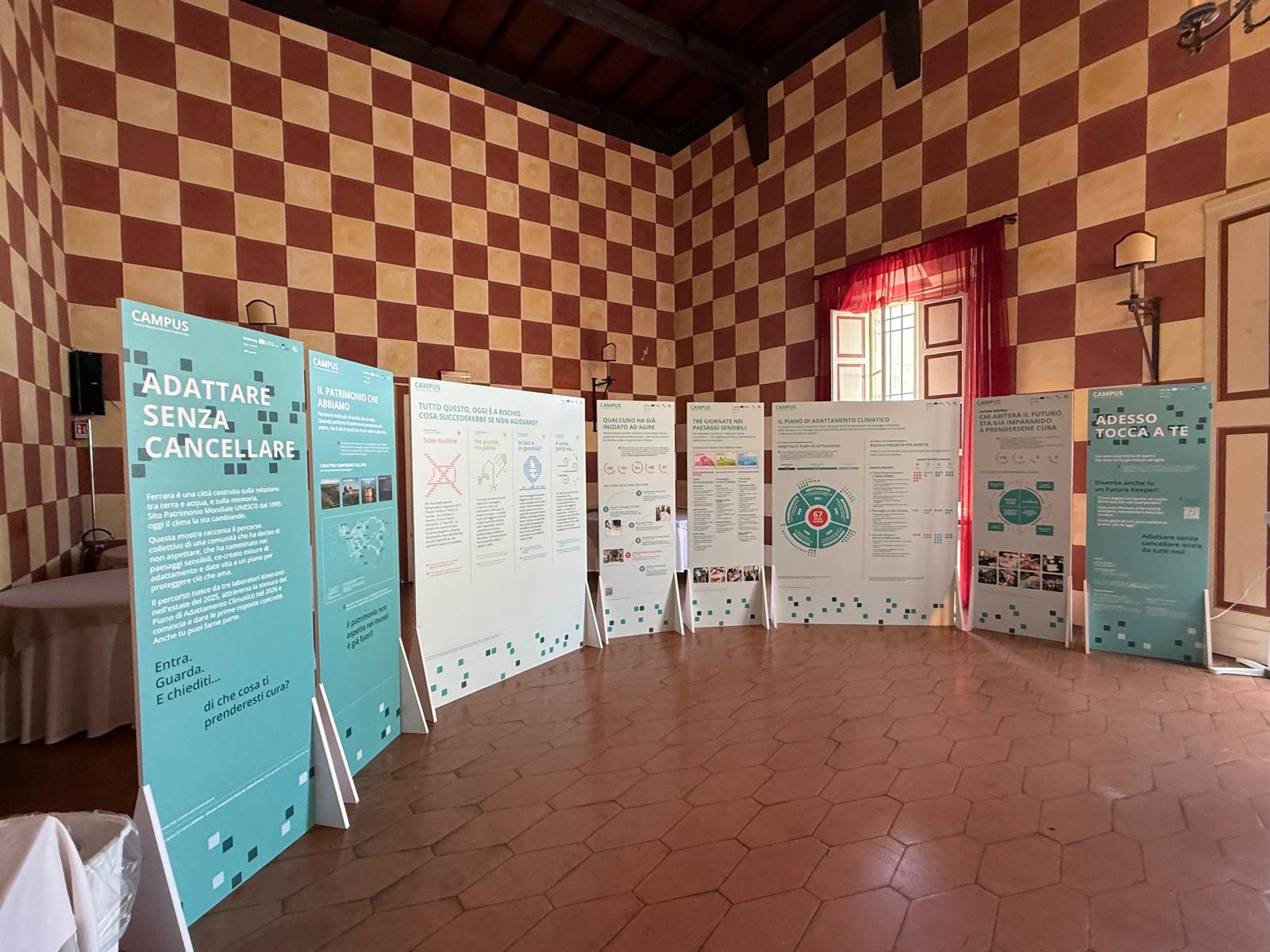
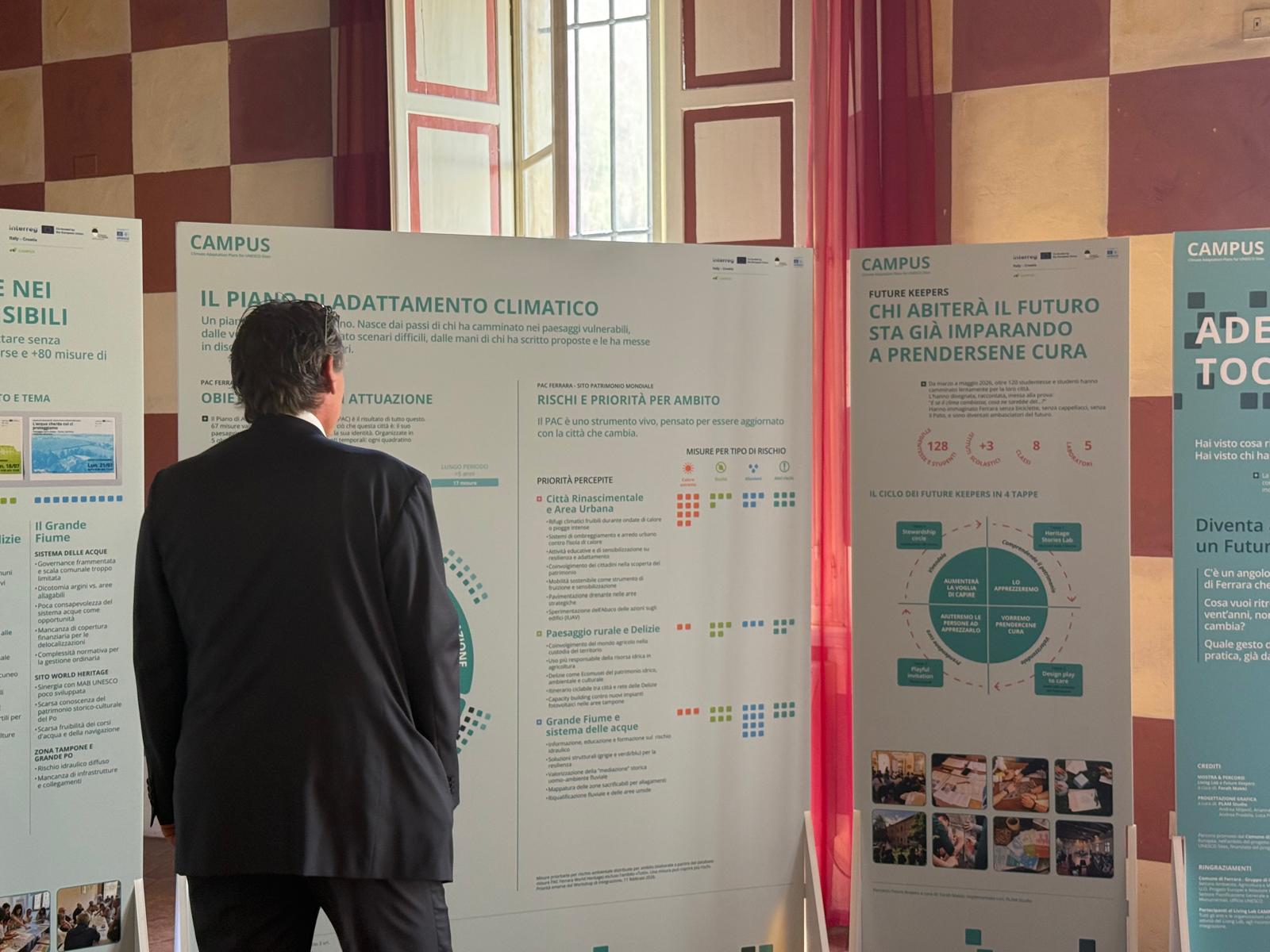
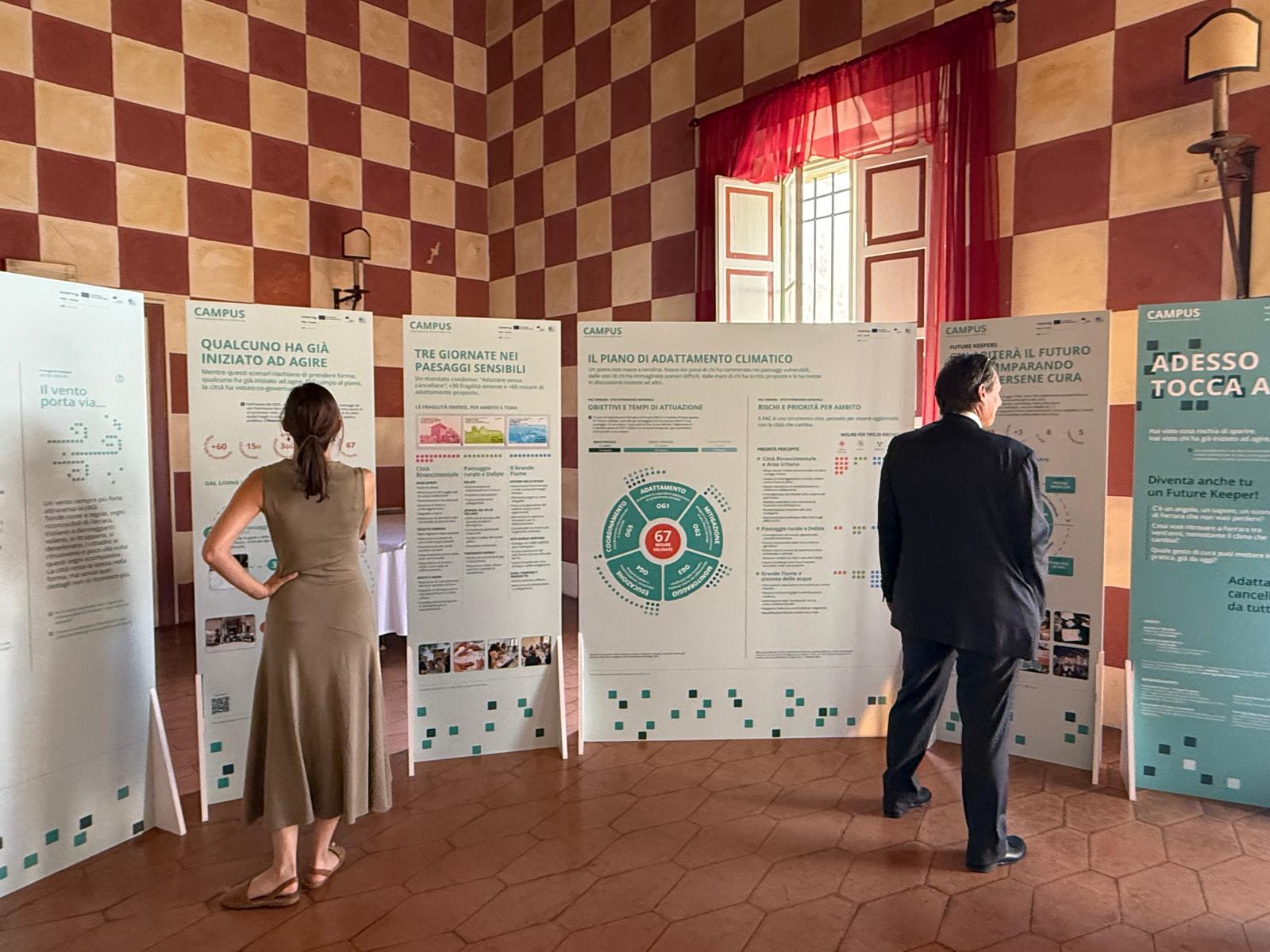
The conference also inaugurated an exhibition illustrating the CAMPUS journey in Ferrara, showcasing the methodology behind the Climate Adaptation Plan and the range of adaptation measures developed throughout the project. The exhibition, curated by Dr Farah Makki with the support of PLAM Studio, will remain on display at the Ferrara City Hall from October 2026.
The event concluded with a multidisciplinary roundtable bringing together experts and representatives from several Interreg projects to discuss shared approaches to climate adaptation, risk management, and the protection of cultural and natural heritage. The final conference marked the successful completion of the CAMPUS journey in Ferrara, demonstrating how participatory planning, cross-sector collaboration, and innovative design can contribute to safeguarding UNESCO World Heritage sites against the challenges posed by climate change.