Cross-border Radar: Introducing "The Warning buoy" Format
21/07/2026
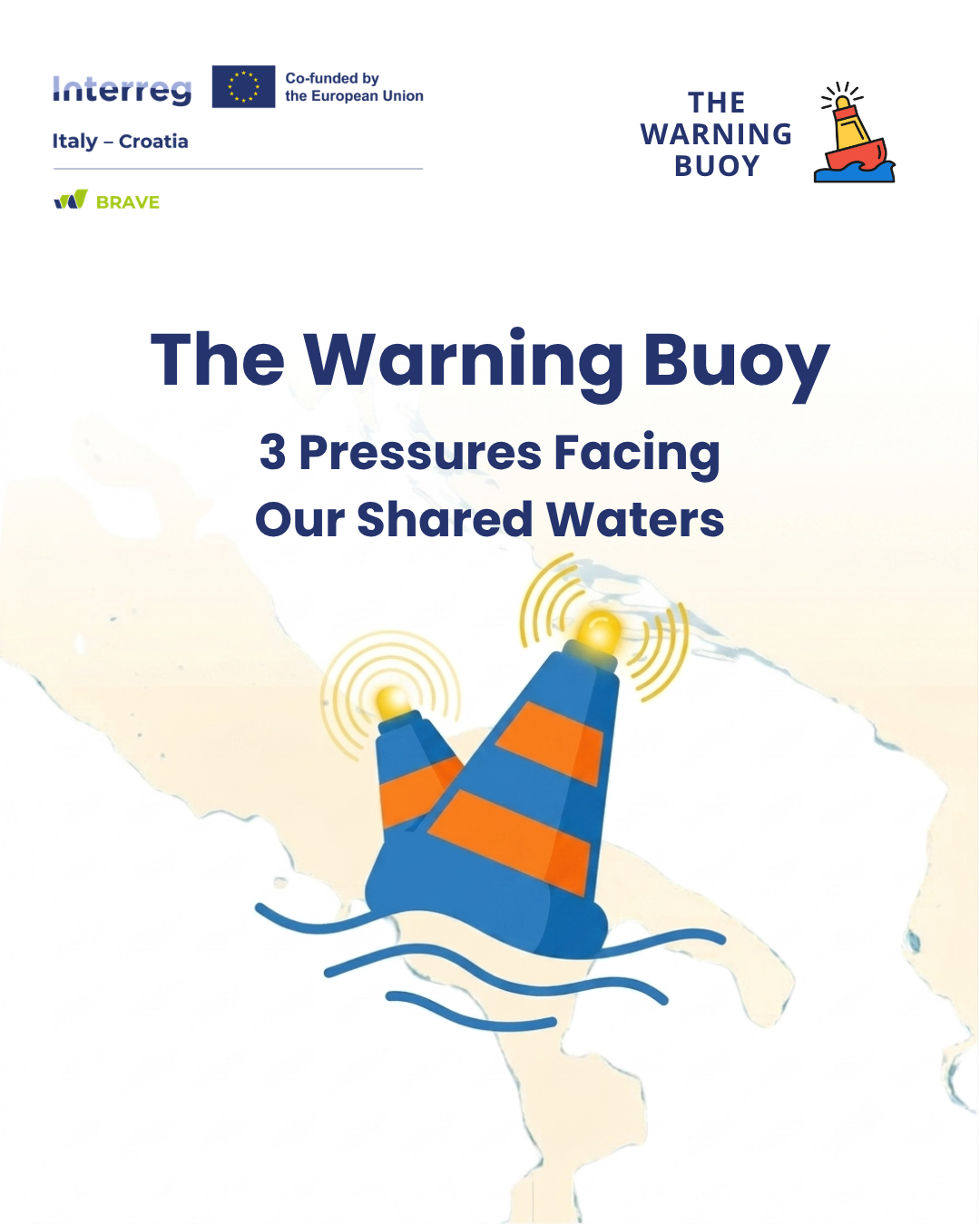
The Warning Buoy dives into the shadow side of environmental changes. By translating climate stress, habitat degradation, and ecological anomalies into clear stories, this format highlights exactly why cross-border scientific intervention and adaptive management are so vital for our future.
This Month’s Warnings: 3 Pressures Facing Our Shared Waters
Our inaugural edition flags three interconnected environmental crises from June 2026 that underscore the urgency of building long-term climate resilience:
- 📉 01 / The "Salt Wedge" Infiltration in the Po Delta
A severe early-summer heatwave caused the Po River’s freshwater flow to collapse by one third. Lacking a strong current to hold back the ocean, a massive salt wedge (cuneo salino) pushed a staggering 18 kilometers inland. While gates were sealed to save crops, the sudden influx of high-salinity water into freshwater marshes triggered immense osmotic stress, directly endangering vital coastal nurseries that local marine life relies upon.
- 🔥 02 / Wildfires Displacing Island Marine Outreach on Vis
An intense, record-breaking heat dome sparked a fierce wildfire on June 29, 2026, tearing through the protected pine forests of the Croatian island of Vis. Beyond the immediate terrestrial destruction, this emergency threatened an essential open-sea ecological stronghold used for citizen science and marine conservation, demonstrating how land-based climate disasters disrupt the networks connecting scientists to the sea.
- 🐚 03 / Hypoxic Legacy: Mass Shellfish Die-Offs on the Sea Floor
Beneath the surface, persistent extreme temperatures, historical organic pollution, and mucilage blooms have severely stratified coastal waters from Chioggia to the eastern Adriatic coast. The stagnant bottom layer has been completely stripped of oxygen, causing a catastrophic 70–80% mass die-off of critical clam and mussel populations—effectively depriving the seabed of its natural bio-filters.
The BRAVE Connection
These events vividly demonstrate how deeply interconnected our ecosystem truly is. When an inland river dries up, the sea advances; when an ecological island stronghold burns, vital coastal data loops are disrupted; and when the seafloor loses oxygen, the entire biological chain collapses.
This is precisely why the BRAVE project is building a shared digital infrastructure and harmonized data protocols across Italy and Croatia. Standardized, real-time data sharing across borders is not a bureaucratic luxury: it is an absolute ecological necessity to predict these compounding thresholds before they happen, allowing us to build an adaptive, resilient vision for the Adriatic Sea environment.
Want to stay updated on early warning signs or report environmental changes in your area?

