

CAMPUS Project: First Living Lab Round on Climate Change Related to the UNESCO Site – Plitvice Lakes Held in Gospić
26/05/2026

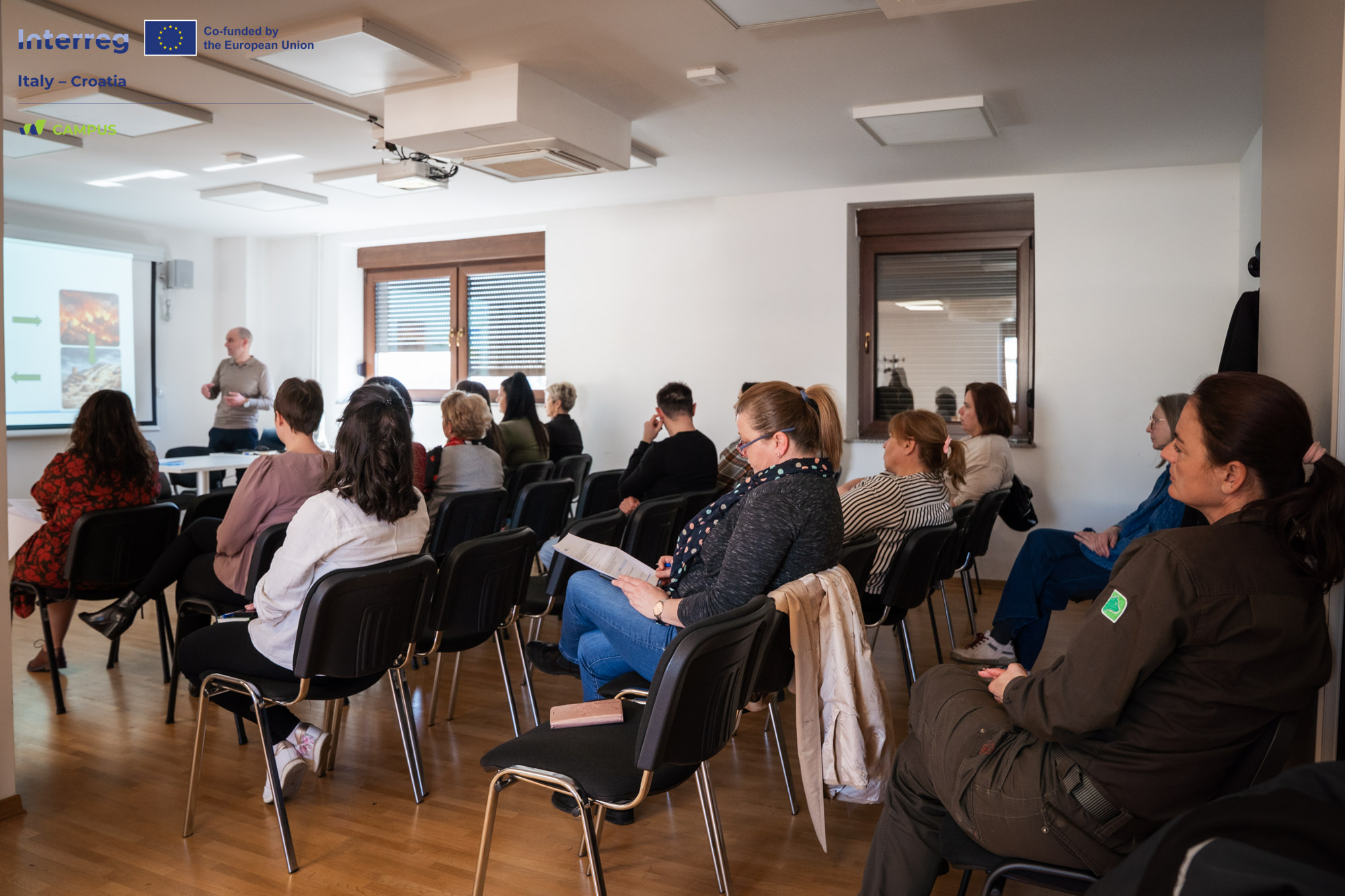
On 27 February 2026, the first round of the Living Lab was held at the Development Center of Lika-Senj County in Gospić as part of the CAMPUS – Climate Adaptation Plans for UNESCO Sites project (ID: ITHR0200358), implemented within the Interreg Italy–Croatia 2021–2027 territorial cooperation programme. The lecture was delivered by Ivan Carević on behalf of the company Geoekologija d.o.o.
The CAMPUS project is co-financed by the European Regional Development Fund and focuses on developing a cross-border framework for monitoring and adapting to climate change at UNESCO sites in Italy and Croatia. One of the project partners is the Public Institution Development Agency of Lika-Senj County – LIRA.
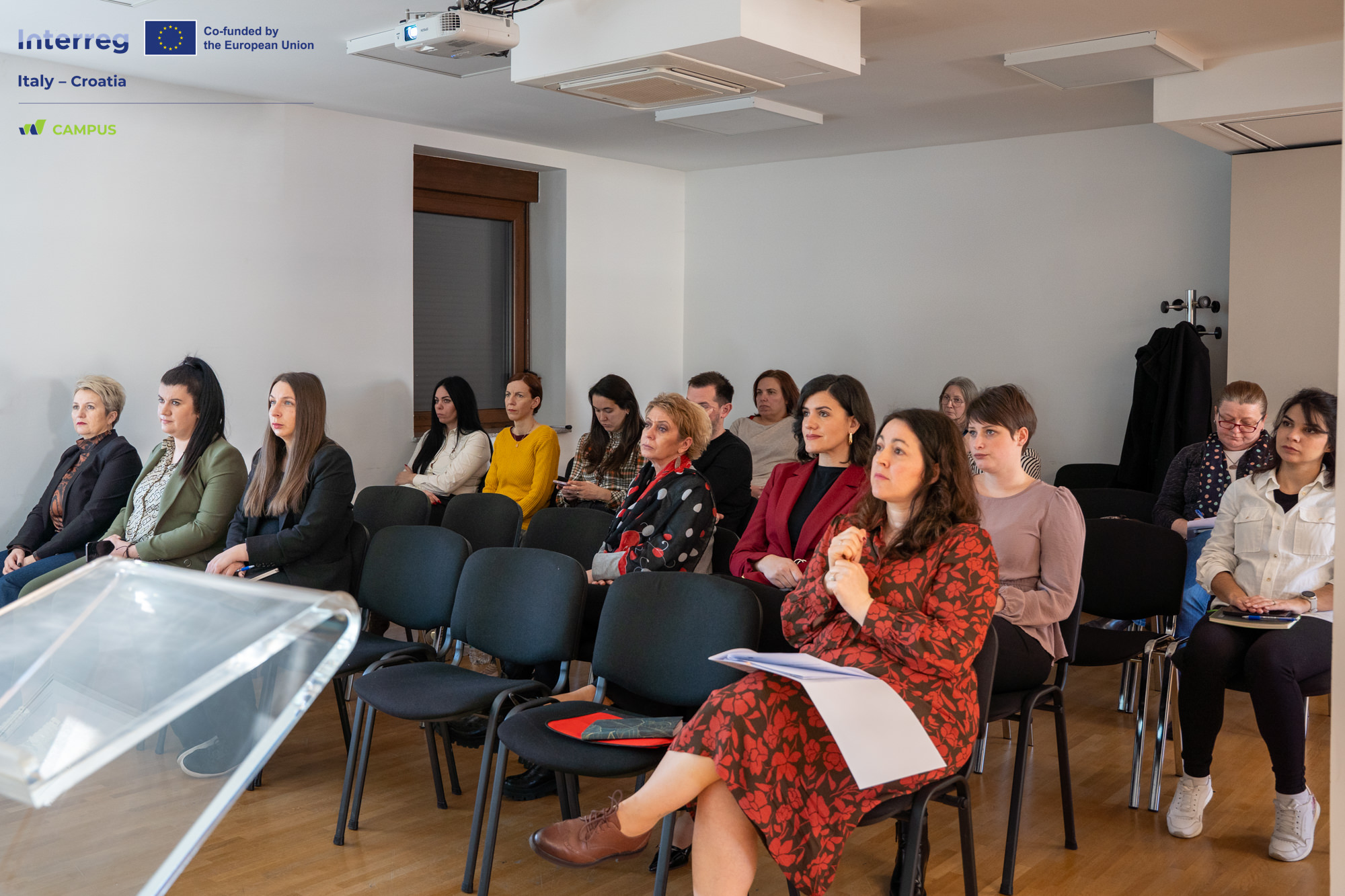
The first Living Lab round was organized for the UNESCO site Plitvice Lakes National Park and brought together local stakeholders and decision-makers from the Lika-Senj County area. The aim of the meeting was to initiate discussion on the main climate risks affecting the site, expectations regarding climate change adaptation measures, and the level of acceptability of potential trade-offs involved in implementing such measures.
The program included an introductory presentation of the workshop objectives and the Living Lab concept, a presentation of the CAMPUS project and activities related to the Plitvice Lakes, an overview of the climate context and working methodology, and a structured exchange of opinions among participants. Special emphasis was placed on identifying key climate risks, protecting the most vulnerable values of the site, and defining expectations for future adaptation measures, to which participants contributed by completing a questionnaire. The questionnaire will also be sent by email to invited participants who were unfortunately unable to attend, so that their contributions can be included. The collected information will serve as a basis for preparing the final document – the Climate Change Adaptation Plan.
During the discussion, participants highlighted the importance of timely planning and cooperation among all relevant stakeholders to ensure the long-term protection of the natural and landscape values of Plitvice Lakes National Park. They emphasized the need for a balanced approach that preserves the site’s outstanding universal value while enabling its sustainable development. It was concluded that the involvement of the local community and decision-makers is essential for developing effective and implementable climate adaptation plans.
At the end of the meeting, the main conclusions were summarized, and the next steps were announced, including the organization of the second round of the Living Lab.
Through the Living Lab methodology, the CAMPUS project encourages the active involvement of local stakeholders in the process of developing climate change adaptation plans, with the aim of ensuring the long-term protection and preservation of UNESCO sites.