

Promoting inclusiveness: training course for tourism and socio-health/social care operators in Brindisi
05/03/2026
Awareness and understanding of dementia, along with the development of practical skills in communication and managing complex situations, are increasingly recognized as concrete and essential needs for creating a more inclusive world that meets everyone’s requirements.
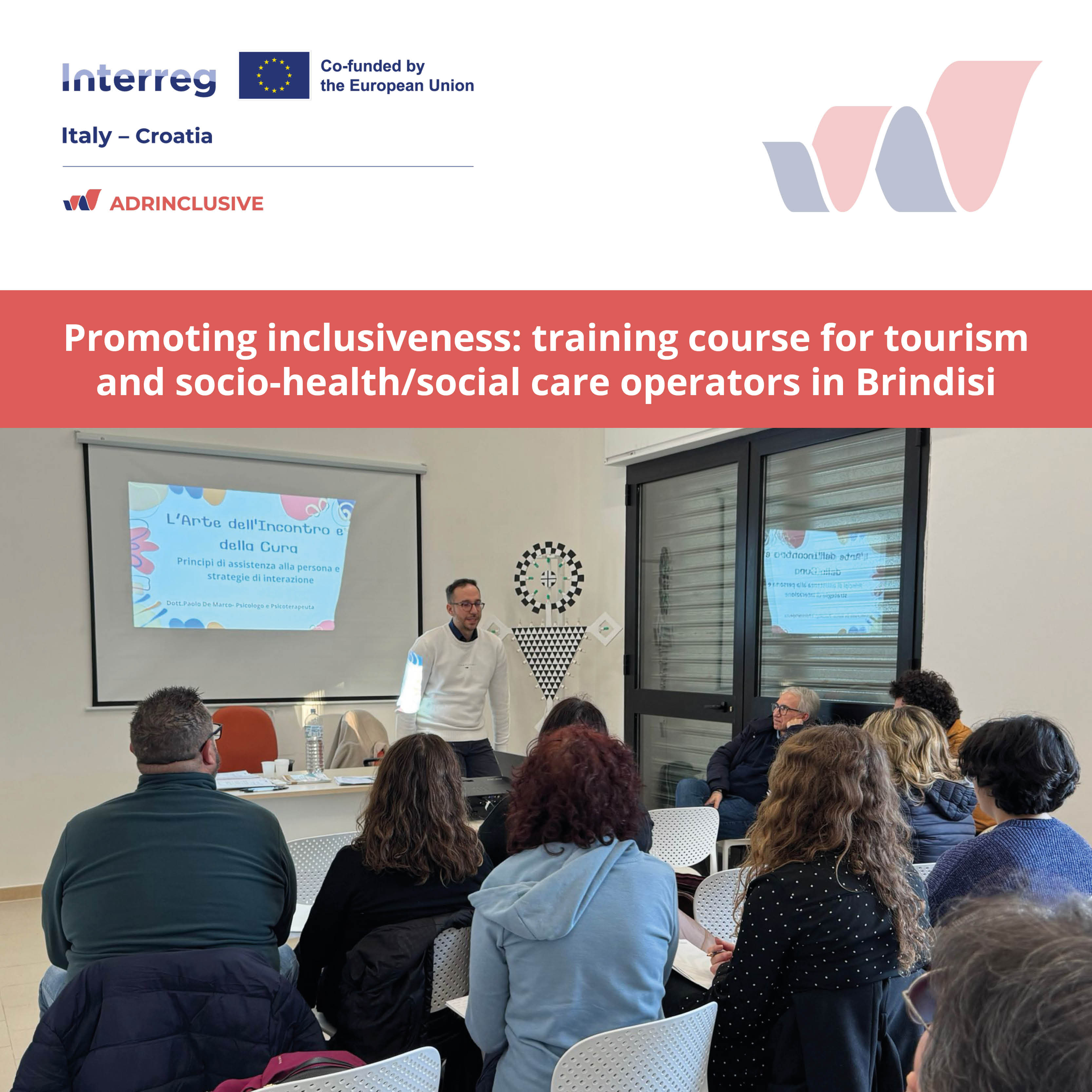
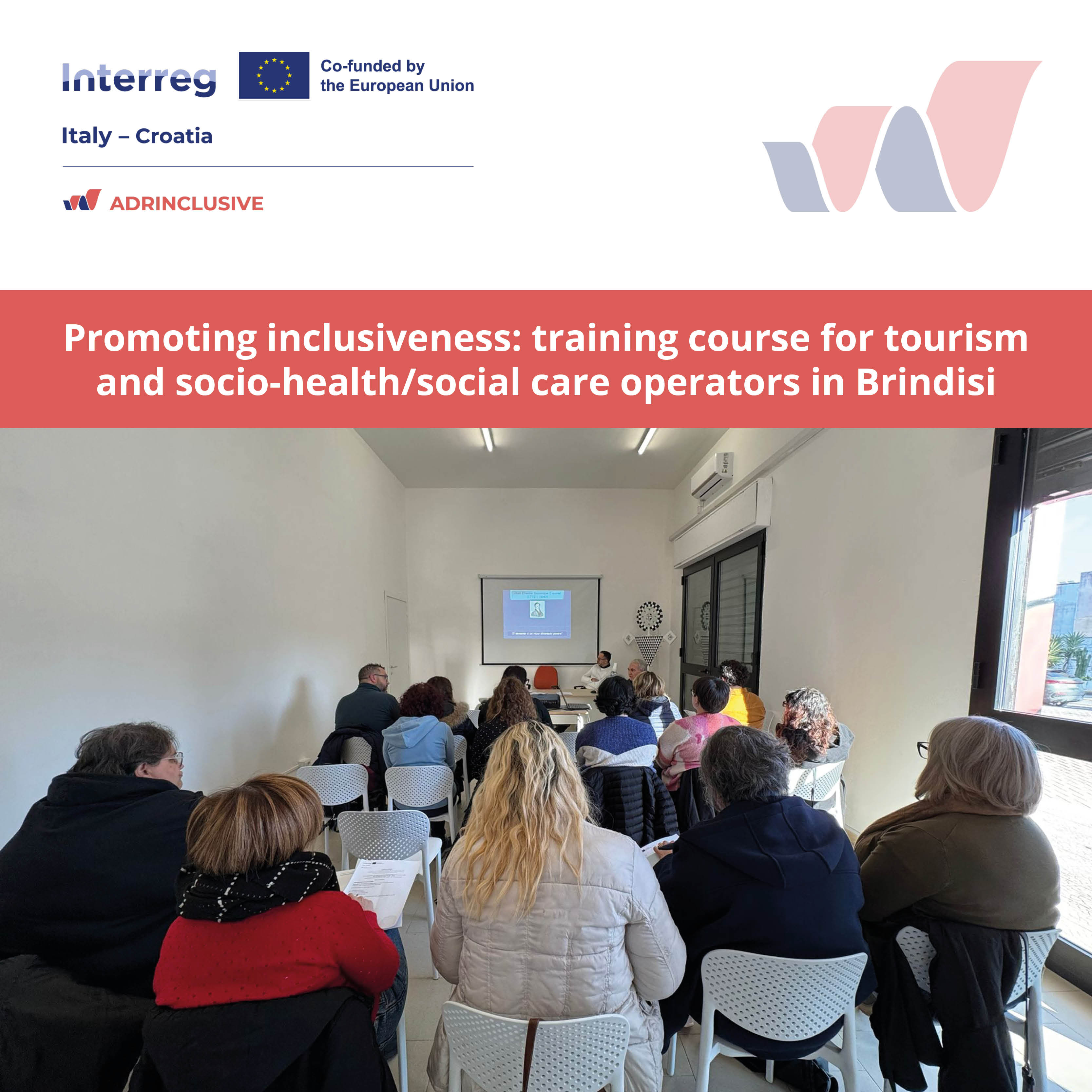
With the aim of creating more inclusive, safe, and supportive tourism environments for people living with dementia, the idea arose to develop a training course organized by the Municipality of Brindisi as part of the ADRINCLUSIVE project, targeting tourism and socio-health/social care operators. By combining theory and practice, the course successfully reinforced key knowledge about dementia, developed practical problem-solving skills related to dementia, promoted the adoption of an inclusive mindset oriented toward creating “dementia-friendly” environments, encouraged the ability to design and evaluate inclusive, safe, and meaningful holiday experiences, as well as strengthened collaboration between the tourism and welfare/health sectors.
The training was designed for a broad range of professionals working with the public and/or in care services, ensuring an integrated approach to inclusive tourism, with particular reference to the tourism and welfare sectors. The four modules of the two-day course, took place in person on February 18 and 23, 2026. Each day included two 3-hour sessions covering knowledge, skills, and attitudes/organization:
Module 1 – Raising Awareness about Dementia
Module 2 – Caring Fundamentals & Interaction Strategies
Module 3 – Becoming Ambassadors (Attitudes/Organization)
Module 4 – Cognitive Stimulation & Psychosocial Interventions
The course included Q&A sessions, role-plays and simulations, small-group case study analyses with feedback, practical exercises on psychosocial interventions, and discussions of best practices. These techniques contributed to the successful implementation of the ADRINCLUSIVE project under the Interreg Italy–Croatia Programme.
In this regard, it is important to continue working toward a future that is increasingly inclusive and responsive to the needs of people living with dementia, with the goal of creating tourism environments that are safe, supportive, and tailored to the individuals involved.