
Second Regional Conference – CAMPUS Project
05/03/2026
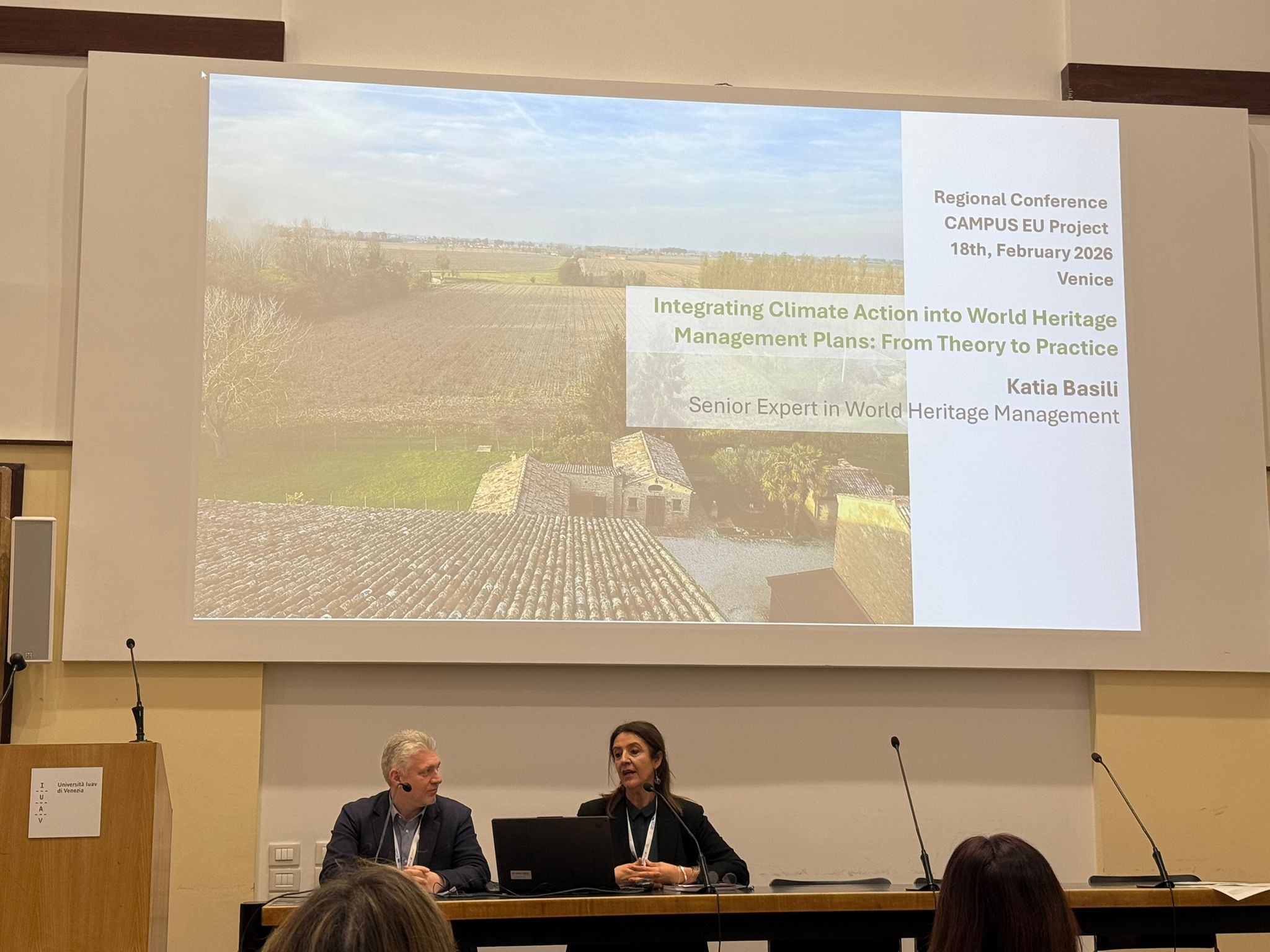
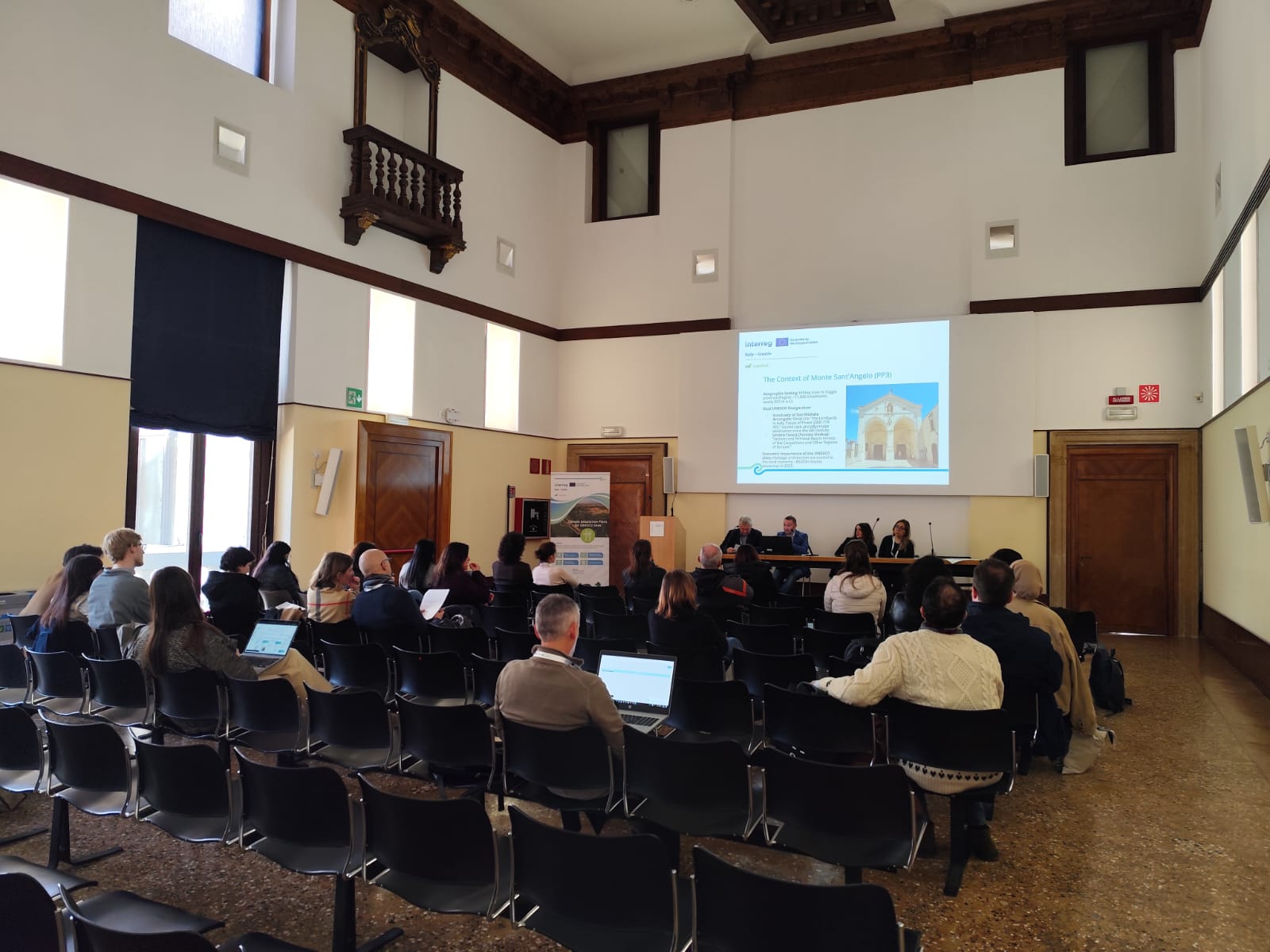
On the 18th of February 2026, the University of IUAV hosted the 2nd Regional Conference of the CAMPUS project, in Venice. The event gathered project partners, institutions and UNESCO heritage experts to present methodologies and first results on Climate Adaptation Plans (CAPs) for World Heritage Sites in the Italy–Croatia area. Opened by professor Trovò, the conference stressed that climate change must be structurally integrated into UNESCO Management Plans and multi-level governance systems, rather than addressed as a sectoral issue. CAMPUS was presented as a process linking climate risk analysis to operational planning through three main components: risk and vulnerability assessment, development of CAPs, and identification of measures and pilot actions. The keynote speech, held by Katia Basili - Senior Expert in World Heritage Protection and Management, highlighted the need to move from risk awareness to systematic implementation within management frameworks, overcoming fragmented governance and the lack of measurable climate indicators. Examples such as Ferrara and Vicenza and the Palladian Villas of the Veneto showed how climate integration can strengthen site governance. The IUAV team illustrated the multi-risk methodology developed in the framework of CAMPUS combining hazard, exposure and vulnerability analyses, applied to the sites of Ferrara and the Po Delta, Sanctuary of Monte Sant'Angelo, Trogir, Stari Grad Plain and Plitvice Lakes National Park. The approach supports priority-setting and provides a replicable framework for heritage adaptation. Living Labs were presented as key participatory tools: in Ferrara, three workshops generated around 80 adaptation measures for the draft of the CAP, while the “Future Keepers” initiative, which will be launched in March, will be engaging young people to approach the Outstanding Universal Value of the UNESCO site and learn how to contribute to its preservation. The draft CAP for Ferrara includes 61 measures and a monitoring system up to 2031, while further work in the Po Delta addresses subsidence, salinisation and coastal flooding. In Croatia, feasibility studies in Trogir and Stari Grad highlighted rising temperatures and flood risks, with around 38% of residents and 39% of heritage assets exposed. The conference reaffirmed that climate change is a structural challenge for UNESCO sites and that integrated, participatory and operational adaptation planning is essential to ensure their long-term resilience.