

Climate Adaptation Planning Advances for Ferrara UNESCO Site: Outcomes from the CAMPUS Integration Workshop
05/03/2026
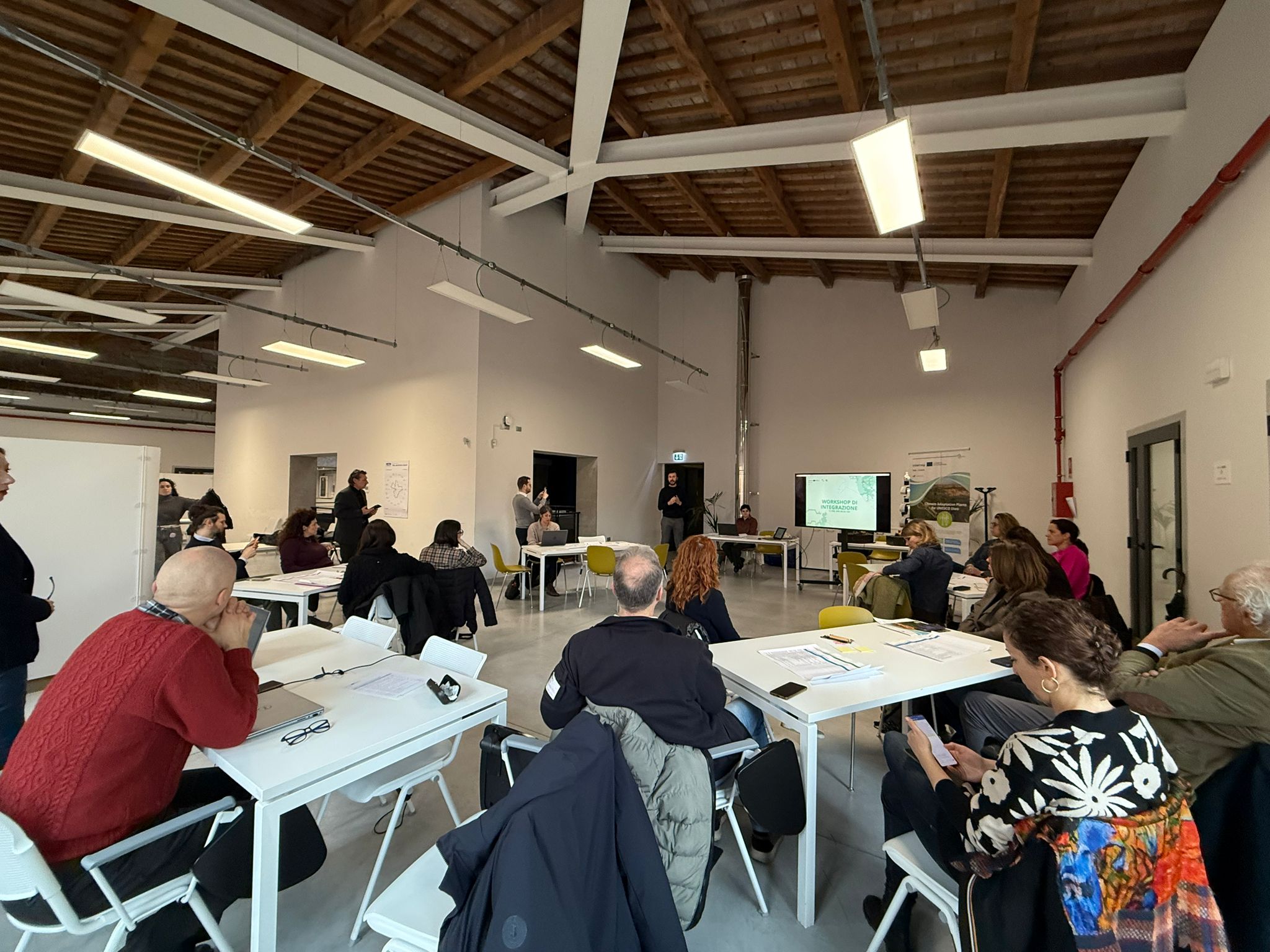
On 11 February 2026, stakeholders from across institutions and sectors gathered in Ferrara for the integration workshop which focused on the validation and refinement of the draft of the Climate Adaptation Plan (CAP) for the World Heritage site “Ferrara, City of the Renaissance and its Po Delta.”. The workshop, facilitated by consultant Farah Makki within the CAMPUS Living Lab, brought together more than fifteen representatives from local government, technical offices, cultural heritage institutions, environmental organizations, and regional stakeholders. As an introduction, consultants Chiara Ferrara and Filippo Lenzerini from Punto 3 SRL presented the logical framework and the full set of 61 adaptation measures proposed in the CAP. Participants then worked collaboratively in facilitated sessions to discuss and evaluate the measures across four thematic areas:
- Renaissance city and urban area – 20 measures
- Rural landscape and historic “Delizie” estates – 6 measures
- The Po River and water system – 9 measures
- Cross-cutting and governance measures – 26 measures
The workshop discussions highlighted a number of actions already underway in the Ferrara area, demonstrating that climate adaptation strategies are increasingly being integrated into heritage management and urban planning. Energy efficiency in historic buildings emerged as a central topic. Local institutions, including the municipal heritage office and the Order of Architects, are contributing to the gradual modernization of systems in historic and public buildings. During restoration and rehabilitation projects, high-efficiency climate control systems are being introduced, often combined with renewable energy solutions while respecting conservation requirements. Another important area concerns urban cooling and climate comfort in public spaces. Several pilot initiatives are already being implemented to mitigate urban heat, including the installation of fountains, misting systems and shaded urban furniture. Innovative permeable pavements are also being tested in strategic areas, such as sections of the city walls and pedestrian routes, helping to reduce surface temperatures and improve water management. Participants also emphasized the importance of strengthening water management strategies, particularly considering the site’s close relationship with the river and wetland environments of the Po Delta. Coordination with land reclamation authorities and environmental agencies will be essential to address flooding risks, maintain hydraulic balance, and protect both natural and cultural landscapes. A recurring theme during the workshop was the need for stronger coordination among institutions. The CAP includes several cross-cutting measures aimed at improving governance, data sharing, and long-term monitoring of climate risks affecting the heritage site. Participants highlighted the importance of integrating adaptation measures into existing planning tools, municipal policies, and regional strategies. They also stressed the value of maintaining the participatory approach used in the CAMPUS Living Lab, which allows different sectors—heritage management, urban planning, agriculture, tourism, and environmental protection—to collaborate in shaping resilient strategies. The feedback collected during the workshop will contribute to refining the draft CAP before its final adoption. The participatory process ensured that the proposed measures reflect not only technical expertise but also the practical knowledge of local actors working daily within the territory.

