
TourismA 2026 Conference: The Evolving Archaeologist and New Challenges in Heritage Management
28/02/2026
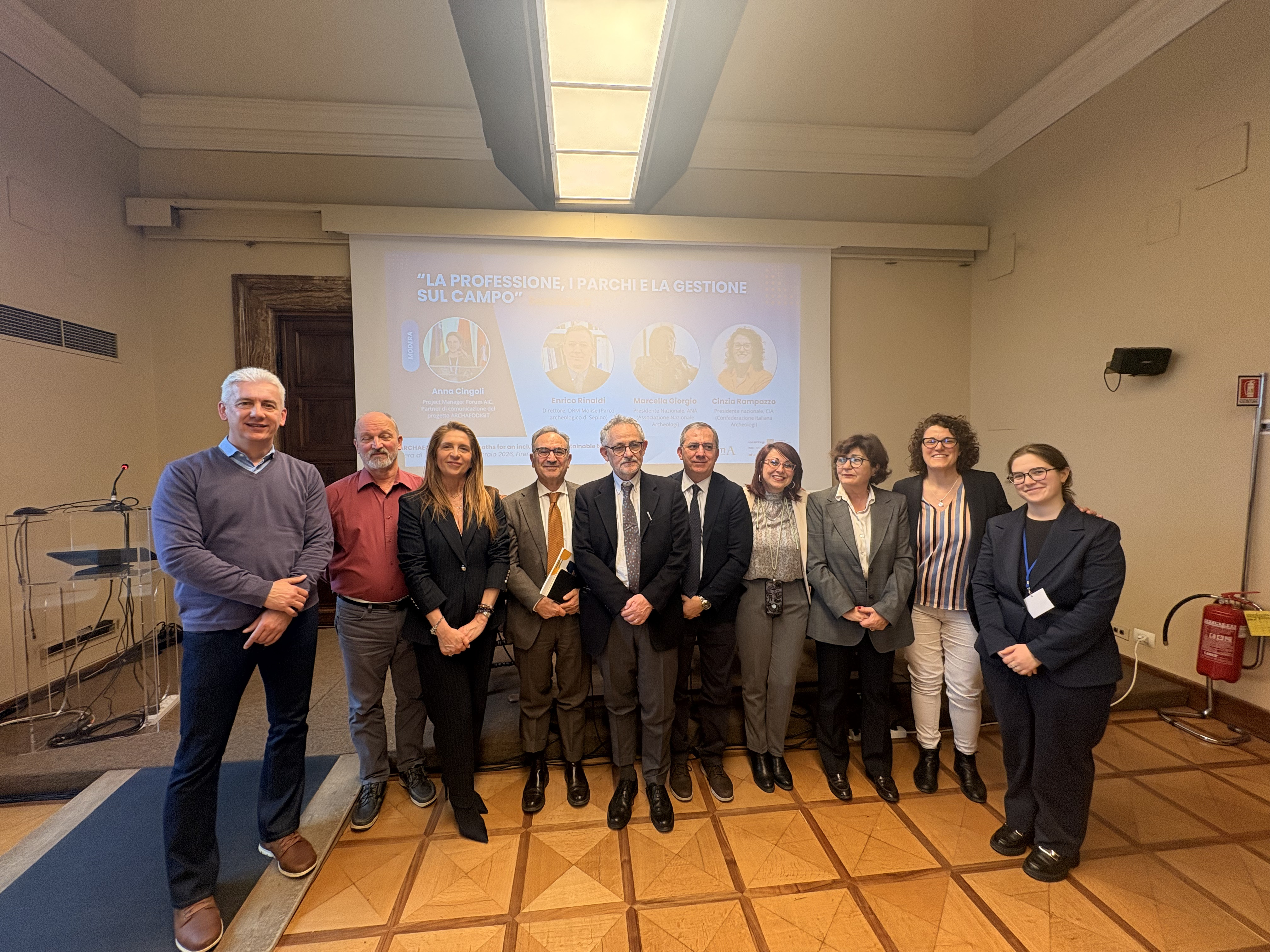
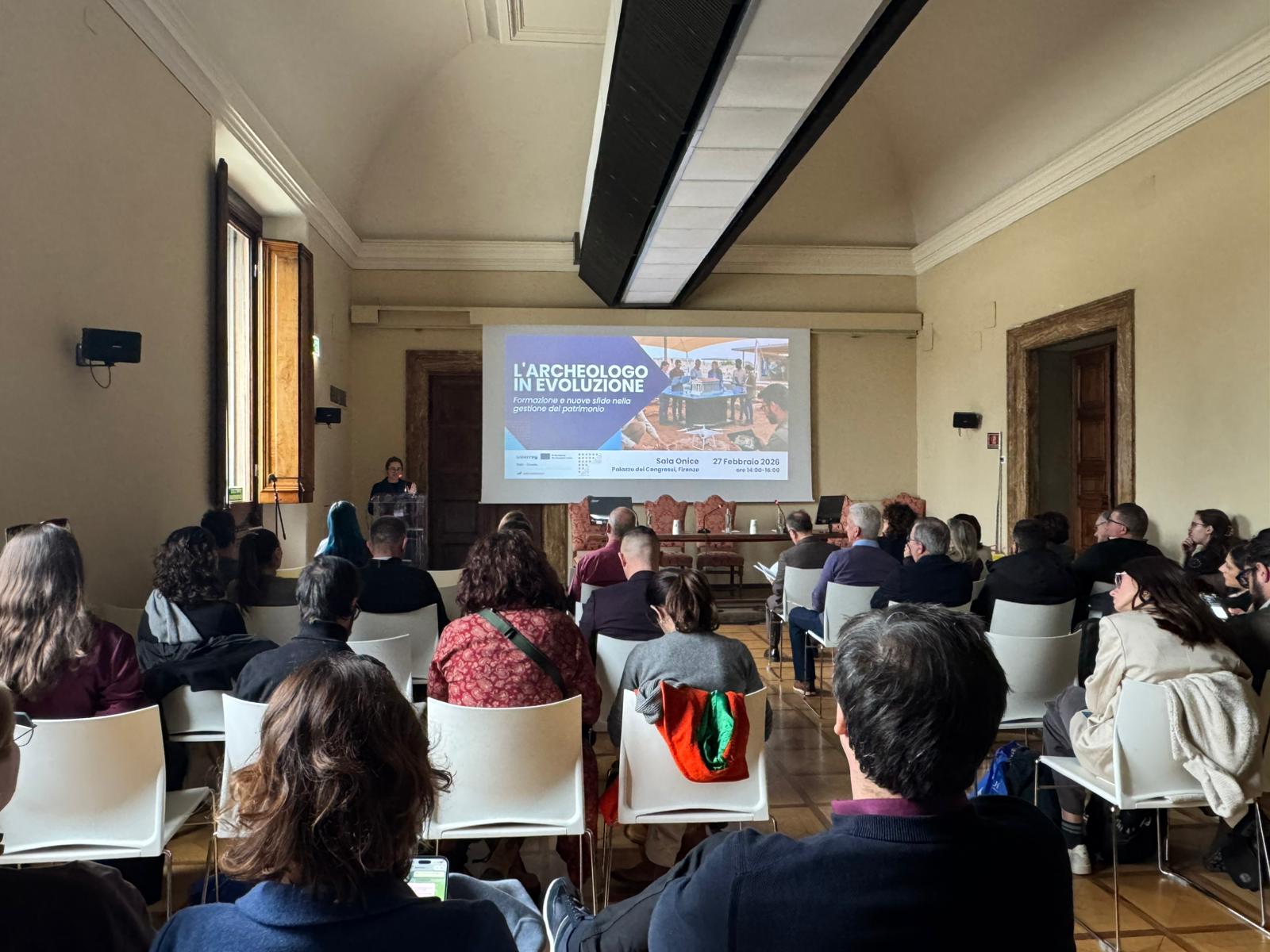
On Friday, February 27th, on the occasion of the International Fair TourismA, the prestigious Sala Onice of the Palazzo dei Congressi in Florence hosted the conference "The Evolving Archaeologist: Training and New Challenges in Heritage Management".
The event, successfully organized within the ARCHAEODIGIT project and co-funded by the European Union through the Interreg Italy - Croatia programme, represented a fundamental moment of meeting and discussion among institutions, universities, and sector professionals. The shared objective was to outline the future perspectives of public archaeology, reflecting on how innovation, cross-border cooperation, and new technologies can foster integrated territorial development and promote an increasingly inclusive and sustainable cultural tourism.
The proceedings and the fruitful debate were expertly guided by Anna Cingoli, Project Manager of Forum AIC and communication manager of the project, who acted as the moderator for the entire event.
Institutional Greetings and Introduction
Opening the day was Katuscia Cassetta, Councillor for Culture of the Municipality of Macerata (Lead Partner of the project), who immediately launched a fundamental point for the project: the need to use immersive digitalization not only as a tool to preserve, but above all to narrate our heritage.
Following the welcome remarks by Miroslav Gogala (Museum of Croatian Archaeological Monuments), who highlighted the crucial and shared challenge between Italy and Croatia: the figure of the archaeologist is evolving much more rapidly than university training paths; Roberto Perna (University of Macerata) framed the operational context, highlighting how archaeological parks live "in a territory that continues to live". Hence the need for a holistic approach in which the park opens up to the outside world, and where the archaeologist must acquire new categories of thought to dialogue effectively with professionals from other disciplines.
The Program: Two Discussion Sessions
The first session explored the evolution of training paths in Italy and Croatia:
1. Academic Training and the International Context.
- Giuliano Volpe (University of Bari) emphasized how "context and landscape are held together by people": archaeology cannot exist in an isolated bubble, but must constantly engage with a community in continuous transformation. The core of his reasoning touched on a crucial point for the future of the profession and for management policies: a heritage whose deep value the community fails to grasp is, in fact, a heritage that cannot be truly valorized. This makes public archaeology and the ability to communicate with citizens indispensable skills for new generations of archaeologists. Heritage lives within a community in transformation: if this community does not grasp its value, valorization is impossible.
- Grazia Semeraro (University of Salento) offered a lucid and critical analysis of the current national academic system. The professor highlighted an alarming critical issue: the attractiveness of archaeology degrees is progressively waning, a fact confirmed by a worrying decline in enrollments. At the root of this progressive distancing of students, Semeraro identifies one of the main problems in the "system rigidities" that characterize master's degree courses. A training model that is too rigid, if not rethought to become more flexible and dynamic, risks no longer meeting the expectations of young people and the modern needs of the working world.
- Mauro Dujmović (University of Pula) lucidly analyzed the main current training shortcomings. He highlighted, in particular, the lack of solid economic competencies and skills related to digitalization, reiterating the urgent need for future professionals to acquire more practical skills and to establish a greater dialogue with economic systems. Dujmović pointed out how, in Croatia as in many other countries, the sector of archaeological protection and that of tourism too often continue to operate on parallel tracks, struggling to integrate. The real challenge, therefore, is to overcome this division to build an innovative institutional model, in which heritage protection and tourism-territorial development are no longer seen as separate elements, but become an integral part of the same organic strategy.
The second part of the conference brought the reflection into operational reality, analyzing the multifaceted nature of the profession:
2. The Profession, Parks, and Field Management.
-
Enrico Rinaldi (DRM Molise - Sepino Archaeological Park), illustrating the MiC's perspectives for archaeological parks, highlighted the urgency of "lowering disciplinary barriers without lowering skills", cultivating real interdisciplinarity, particularly in the dialogue between architects and archaeologists. In support of this vision, he brought the virtuous example of Pompeii: here, organizing interventions in the domus with mixed teams composed of experts in archaeology, architecture, and restoration has proven to be a winning strategy. The director emphasized how, through a solid management plan, it is fundamental to bring out the true identity of places. This process is the fulcrum for intercepting coastal tourism flows and attracting visitors towards the inland, leading them to fully discover and experience archaeological parks.
-
Marcella Giorgio (ANA - National Association of Archaeologists), speaking on the needs and challenges of an increasingly multifaceted professional figure, reiterated that today the archaeologist must know how to continuously update themselves and take a proactive role in territorial planning. While on the one hand the University guarantees solid foundations in terms of research and methodology, on the other hand an alarming datum emerges: 53% of young archaeologists declare that universities do not provide the practical technological means and skills necessary to enter the job market competitively. Among these missing skills stands out the ability to manage preventive archaeology, which must be understood and applied as an integral and strategic part of the urban planning of territories in both the public and private sectors.
-
Cinzia Rampazzo (CIA - Italian Confederation of Archaeologists) concluded the analysis by declining the theme of professional archaeology between planning and valorization. In her speech, she pragmatically outlined the various gaps that still hinder entry into the sector: on an economic level, a recent graduate today perceives an income significantly below the national average, a gap that can only be overcome after about 15 years of career. Added to this is a purely training gap: fundamental technical tools such as GIS should be taught at university in order to be applied directly in the workplace, but unfortunately, today, this is often not the case. Young professionals find themselves, right from their first assignments, facing the urgent need to possess both these technical skills and essential regulatory ones, which universities struggle to transmit and which, consequently, are learned exclusively by "doing", in the field and at a more advanced stage of their career path.
Conclusion
At 16:00, the proceedings officially concluded, leaving room for great satisfaction with the richness and concreteness of the insights that emerged during the afternoon. The conference demonstrated how vital it is to maintain an open and constant dialogue between universities, institutions, management bodies, and trade associations to effectively respond to the real needs of the job market and of a society in continuous transformation.
This meeting strongly confirms the mission of the ARCHAEODIGIT project, co-funded by the European Union within the Interreg Italy - Croatia programme: to chart new paths for the evolution of the profession and to promote digital and archaeological routes capable of guaranteeing an authentically inclusive and sustainable cultural tourism. The challenge for the valorization and management of the heritage of the future is complex, but the network created today shows that the direction taken is the right one
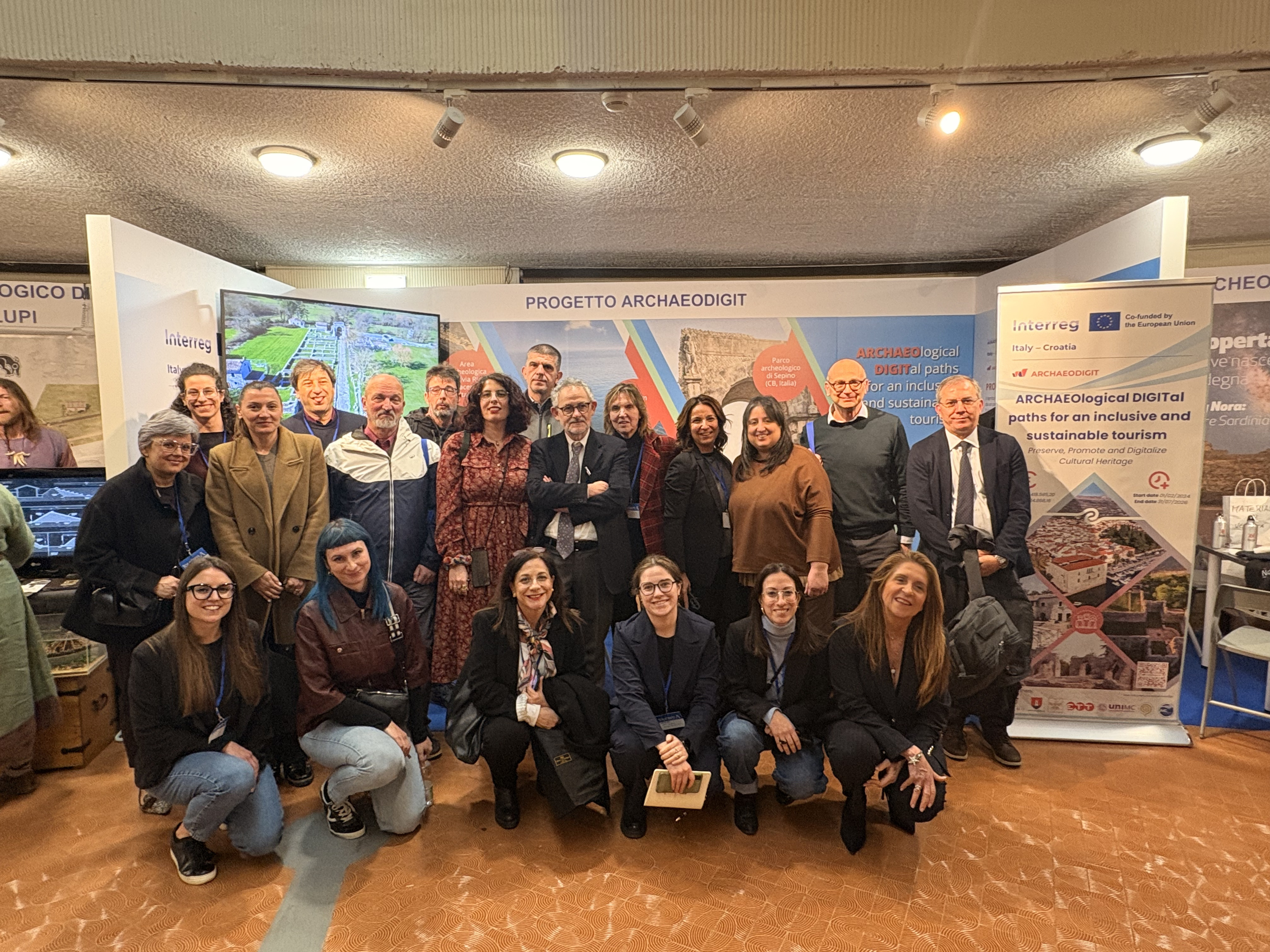
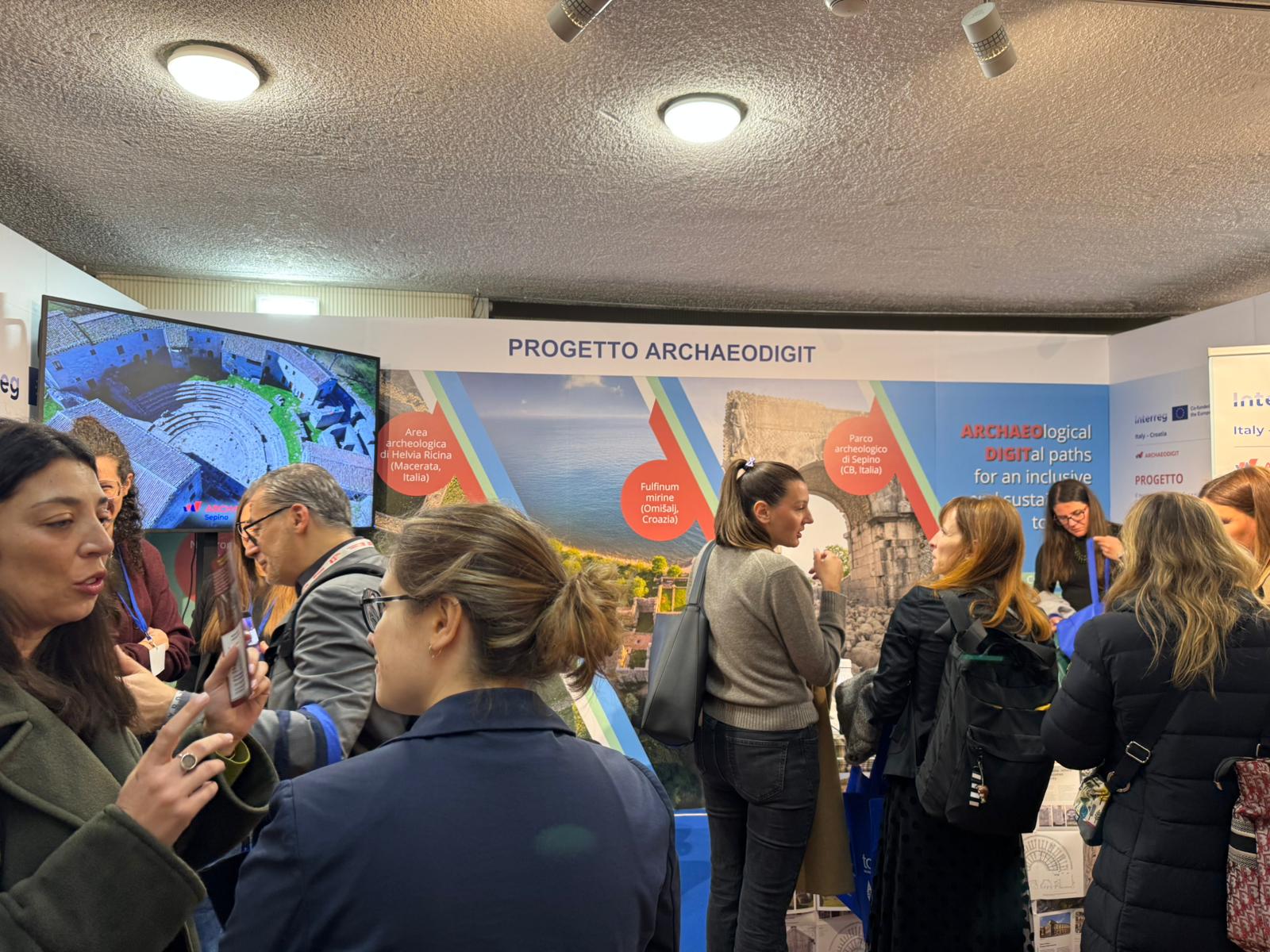
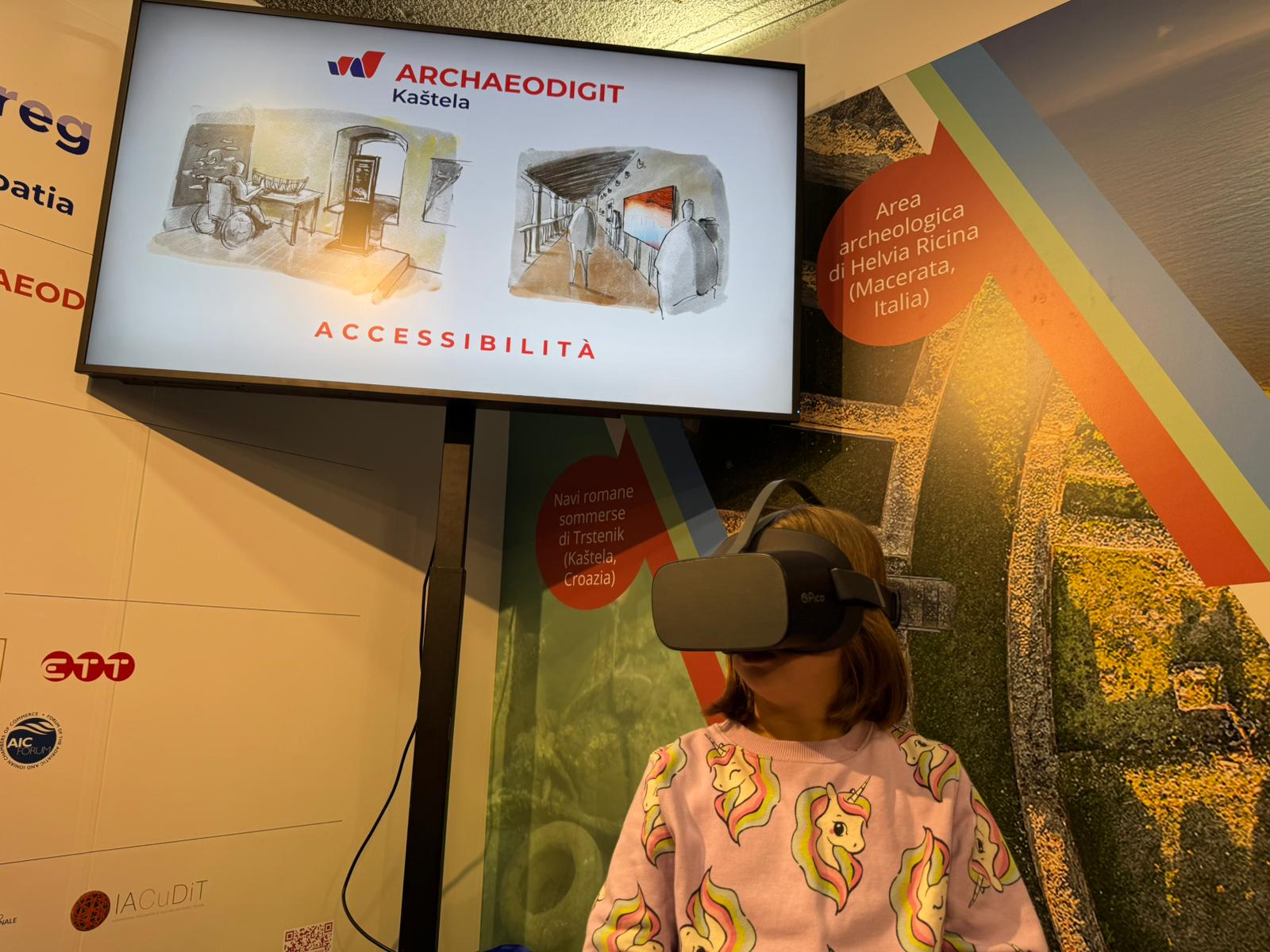
Beyond the Conference: Engaging the Public at the ARCHAEODIGIT Stand
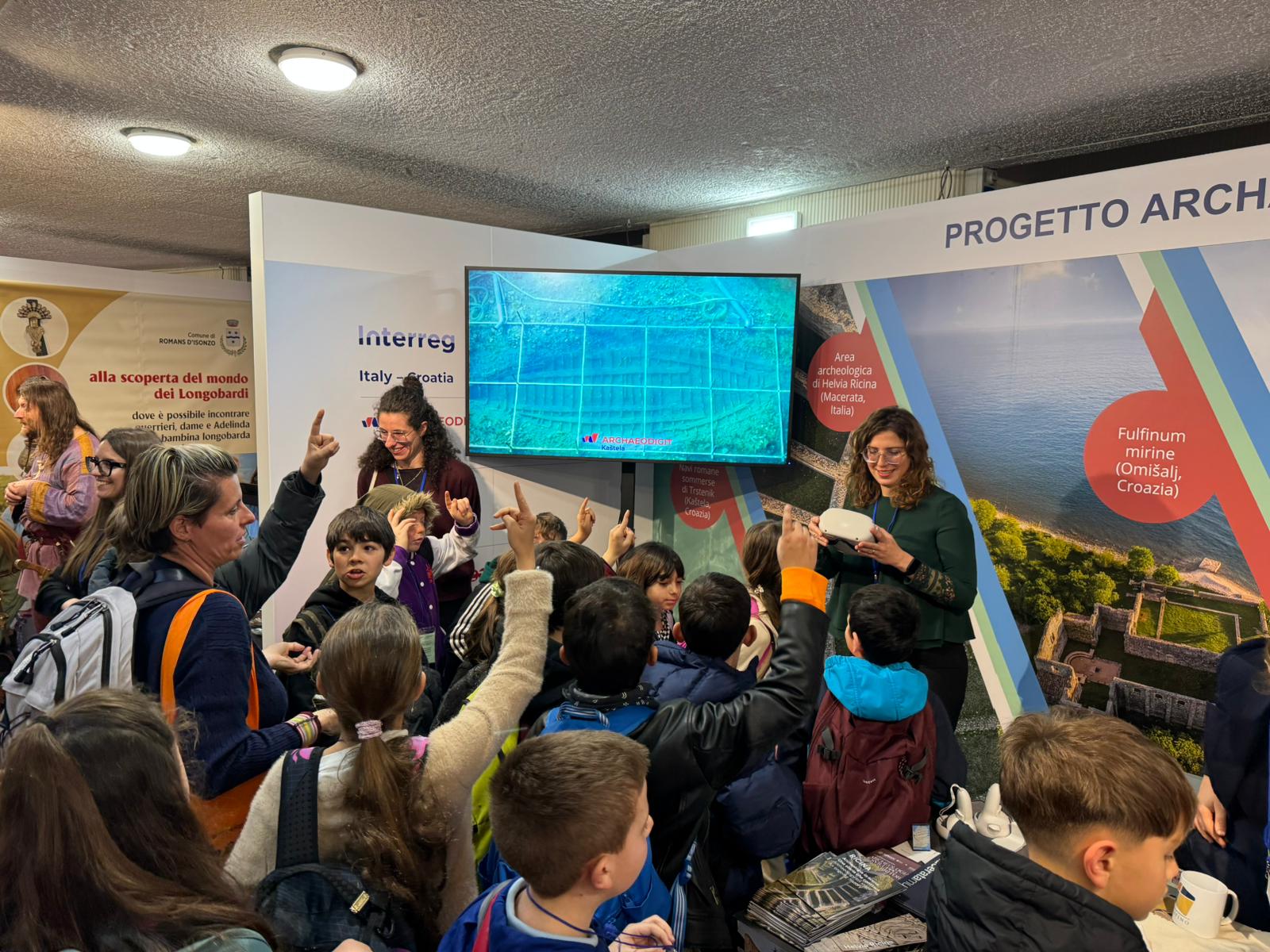
Beyond the insightful debates in the Sala Onice, the ARCHAEODIGIT project also made a significant impact on the exhibition floor with its dedicated interactive stand. Throughout the fair, the team showcased the latest digital technologies currently being implemented across the project's four test areas. The stand served as a vibrant hub of interaction, engaging a highly diversified audience—captivating curious children, inspiring university students, and exchanging ideas with seasoned archaeologists and tourism operators. By offering hands-on experiences with these innovative digital paths, the project successfully promoted its core mission, demonstrating firsthand how technology can transform archaeological sites into accessible, engaging destinations to drive sustainable cultural tourism.