


Climate Risks in the Adriatic: Insights from the ACTION Project’s New Vulnerability Assessment
03/12/2025
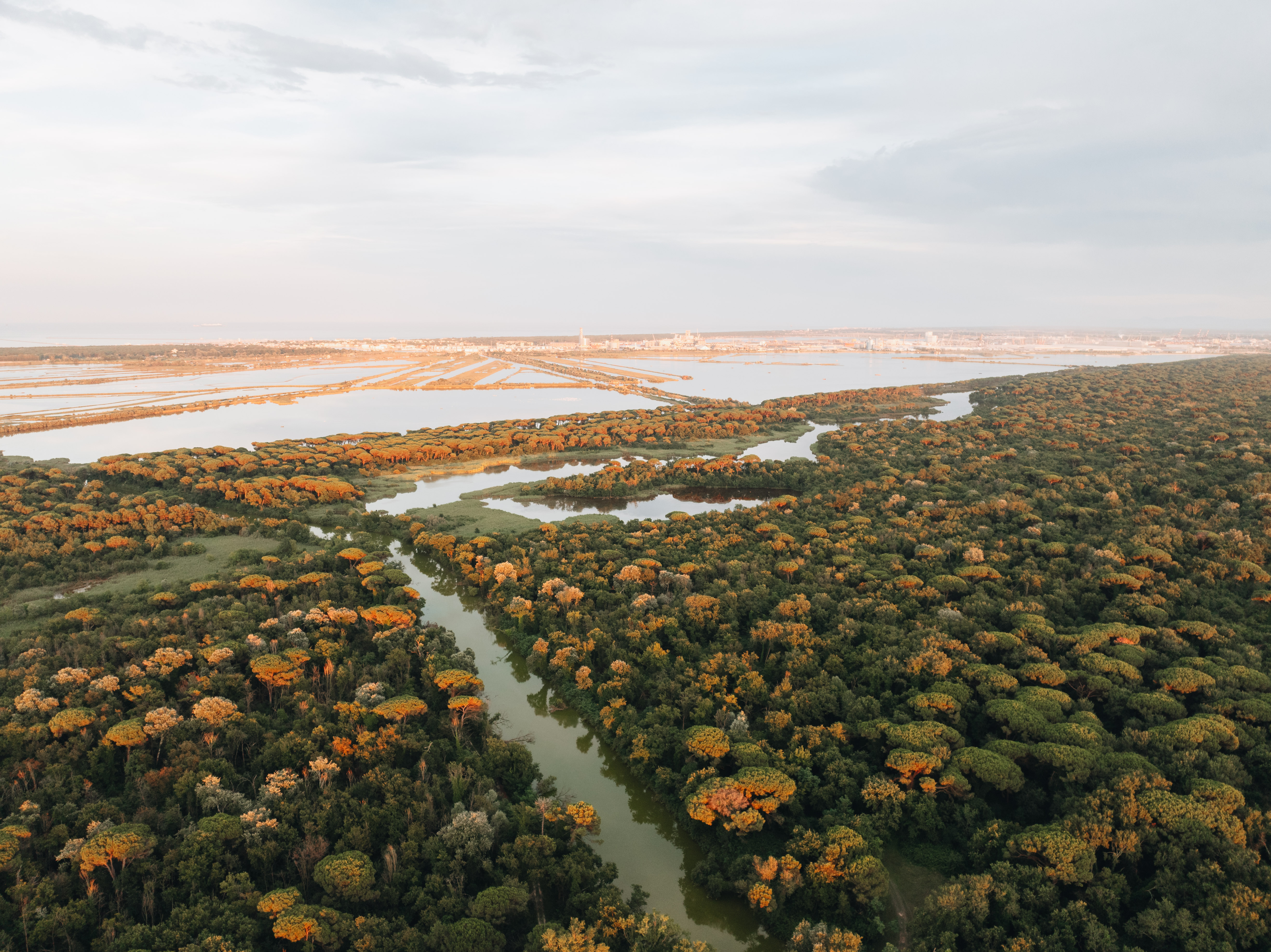
Climate change is no longer a future projection but an unfolding reality.
ising temperatures, more frequent extreme events, and altered hydrological regimes are already influencing ecosystems, economies, and communities.
Coastal and rural zones are among the mostexposed, as their ecological sensitivity intersects with economic reliance on natural resources.
In this context, the ACTION project (Increasing Coastal Ecosystem Resilience to Climate Change) analyses the vulnerability and resilience of selected pilot areas in the Adriatic.
These areas differ in their ecological and socio-economic profiles, but they share common concerns: safeguarding biodiversity, ensuring sustainable tourism, supporting agriculture, and maintaining fishing and aquaculture activities.
To support informed decision-making, the project employs a structured approach that translates expert knowledge into comparable numerical scores (matrix-based methodology) aligned with the European Commission’s Technical Guidance on Sustainability Proofing for the InvestEU Fund (2021).
This approach enables the comparison of different contexts by breaking down vulnerability into measurable components and combining ecological, social, and governance dimensions transparently.
The study aims to:
● determine how sensitive each component is to climate threats;
● assess expected exposure under two climate scenarios;
● identify existing adaptive capacities and strategies;
● and calculate residual vulnerability to highlight priority risks.
ACTION’s analysis
The evaluation process follows a clear and interconnected logic. It begins with understanding
how sensitive each thematic component - whether a habitat, a tourism service, an agricultural
landscape, or an aquaculture activity - is to specific climate pressures.
Sensitivity is assessed qualitatively but converted into a numerical score to allow objective comparisons.
Climate pressures are grouped into four broad categories: those related to temperature (including heatwaves, frost, and wildfire risk), wind (changes in wind regimes or storms), water (altered rainfall patterns, sea acidification, saltwater intrusion, sea-level rise, and flooding), and solid-mass factors such as coastal erosion, soil degradation, landslides, and subsidence.
These pressures are then associated with corresponding risk categories: thermal risk, hydraulic and hydrogeological risk, wind and storm risk, and geological and land degradation risk.
Once sensitivity is established, the next step is to evaluate exposure. This means understanding not only current conditions, but also how risks might evolve across the seasons in different future scenarios. The first considered scenario assumes a world where development continues at a moderate and regular direction, with CO₂ emissions stabilising until mid-century before edging downward (Intergovernmental Panel on Climate Change (IPCC) SSP2-4.5 scenario).
In contrast, the second one (SSP5-8.5) imagines a future defined by intensive fossil-fuel use, rapid energy consumption, and temperatures rising by around 4.4°C by 2100. Comparing exposure under both scenarios reveals how vulnerabilities intensify in extreme climate futures.
With sensitivity and exposure defined, the analysis shifts to adaptive capacity - the ability of
each area to respond to and manage climate threats. Adaptation can take different forms.
It may involve infrastructure, such as sea barriers or improved drainage systems; managerial
actions, like land-use planning or better irrigation management; formative measures, including awareness and training programmes; or ecosystem-based strategies, from wetland restoration to green infrastructure.
Adaptive capacity is again translated into a numerical scale ranging from high to low, depending on governance quality, financial and technical resources, and existing implementation structures.
Under SSP2-4.5 (first scenario), this capacity is fully considered.
Under the extreme SSP5-8.5 pathway, it is fixed at the lowest score to reflect the reality that, in such a scenario, local adaptation measures would be largely overwhelmed.
A distinctive aspect of the methodology is the triangulation of evaluations. Each pilot area is assessed independently by three actors: a research organisation providing scientific input; a public administration offering a governance and planning perspective; and a protected-area authority or environmental management body contributing grounded, site-specific expertise.
The convergence or divergence among these viewpoints strengthens the legitimacy and depth
of the final results.
All this feeds into the final step: calculating residual vulnerability, which combines sensitivity and exposure while factoring in adaptive capacity. This produces a numerical score ranging from 1 to 9. Low scores (1–2) indicate low residual vulnerability, moderate scores (3–5) signal manageable but notable risk, while high scores (6–9) highlight sectors or areas requiring urgent intervention.
The results
This study demonstrates that a matrix-based approach offers a practical, transparent, and comparable method for understanding climate vulnerability across different thematic areas
and socio-ecological contexts. By integrating sensitivity, exposure, adaptive capacity, and residual vulnerability, the methodology helps prioritise risks and provides a basis for targeted interventions.
The results underscore the importance of strengthening adaptation strategies, especially those
rooted in ecosystems and governance, under moderate climate scenarios.
They also reveal a stark warning: high-emission pathways would likely exceed local capacities, making
adaptation alone insufficient to protect biodiversity, tourism, agriculture, and fisheries.
Triangulating assessments across scientific, administrative, and environmental actors proves particularly valuable, as it reduces bias and exposes differences between perspectives.
These divergences highlight the importance of integrating scientific evidence more fully into public
policy.
Replicable in other regions, this methodology contributes to robust decision-making
processes and helps communities prepare for a future where climate risks are not just
possible, but unavoidable.

