TRANS MARIS Mentorship Programme Kicks Off with a Series of Online Learning Sessions
12/08/2026
The TRANS MARIS mentorship journey is sailing full steam ahead into the future through
an extraordinary and deeply enriching series of online webinars! The last week of July his
collaborative cross-border initiative has brought together young participants from both
sides of the sea, setting them on an intense educational voyage to rediscover and
safeguard the shared cultural roots of the Adriatic.
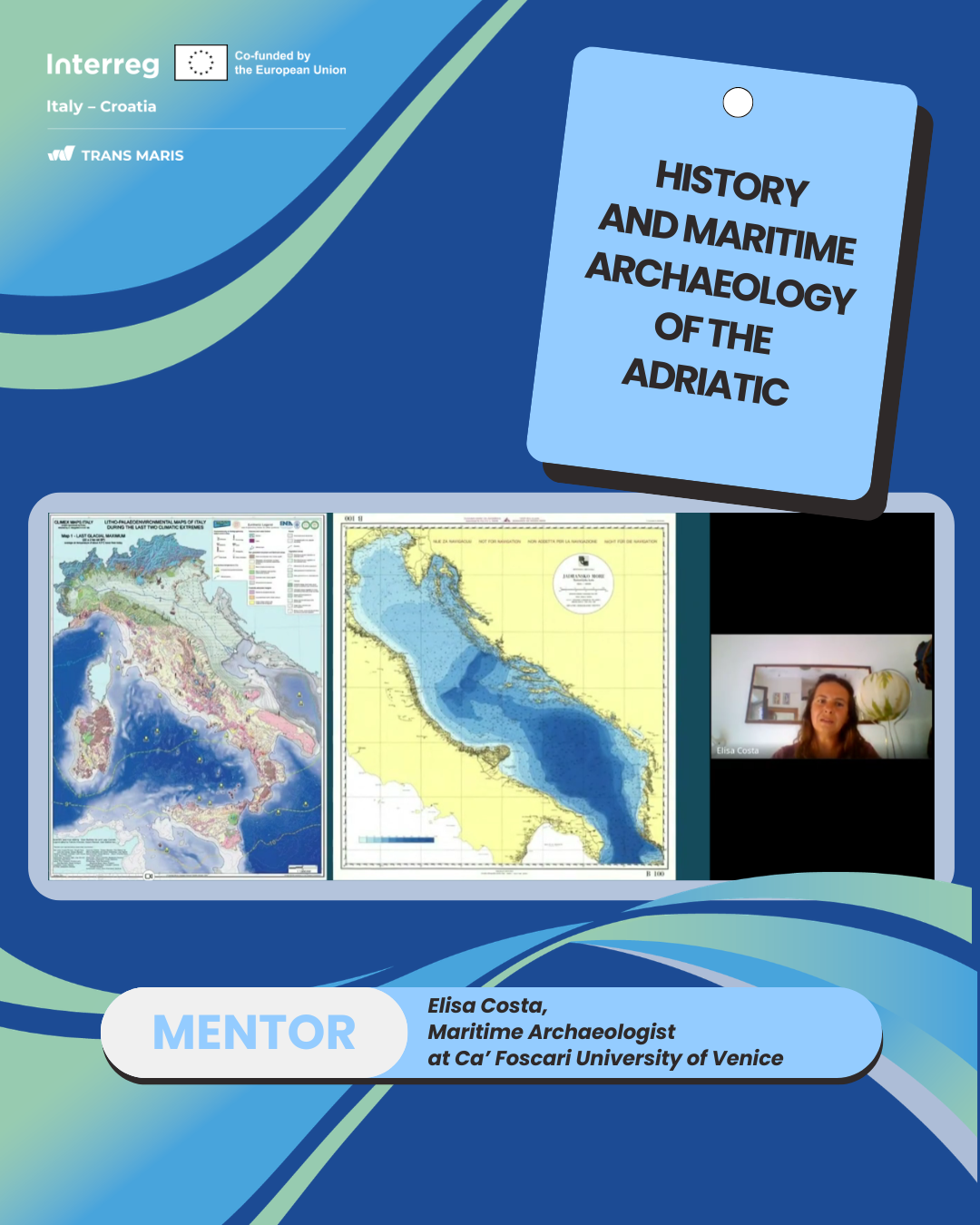
The journey began by diving deep into the past with expert maritime archaeologist Elisa
Costa. Under her guidance, the participants explored the rich history and archaeology of
the Adriatic basin, analysing ancient trade routes, early seafaring challenges caused by
shifting winds and shallow waters, and the fascinating stories behind historic shipwrecks
that connect the Italian and Croatian coasts.
The perspective was further broadened through sessions led by experts Tamara Nikolić
Đerić and Davide Gnola, who explored the profound cultural value of traditional wooden
boats not merely as objects of maritime heritage, but as expressions of intangible cultural
heritage, embodying traditional knowledge, craftsmanship, skills, practices, and the
relationship between communities and their environment. The sessions also examined the
role of community-led museums and ecomuseums in safeguarding and transmitting this
living heritage to future generations. Particular attention was given to international
safeguarding frameworks and UNESCO approaches and good practices, illustrated
through the experiences of the Ecomuseo House of batana and the joint initiative of
safeguarding ‘al terzo’ sailing.
To ensure these historical narratives and living practices are transmitted to future
generations, mentors Giorgio Affanni and Federica Cozzio introduced the group to the
world of cultural and anthropological storytelling. The youth received valuable, practical
training in audiovisual documentation, learning how to capture the living memory of coastal
communities through video documentaries and a series of 10 upcoming podcasts built
around authentic interviews with the people who care for the sea and its traditions.
This comprehensive cycle of meetings highlighted how traditional maritime knowledge —
from sailing with ‘al terzo’ sails to wooden boatbuilding and related skills — represents a
living heritage capable of connecting communities across the Adriatic. Through TRANS
MARIS, these shared traditions become a platform for cross-border exchange, networking
and capacity building, while creating meaningful opportunities for participants to develop
new skills and perspectives. The project now moves into its next phase, where participants
will put the knowledge and experiences gained into practice in the field.

