
Advancing Accessible and Inclusive Coastal Tourism in Fano
05/08/2026
Advancing Accessible and Inclusive Coastal Tourism in Fano
On 27 and 28 July 2026, project partners met in Fano for the second visit to the local pilot areas, combining on-site inspections, a public event and a dedicated training session for tourism stakeholders.
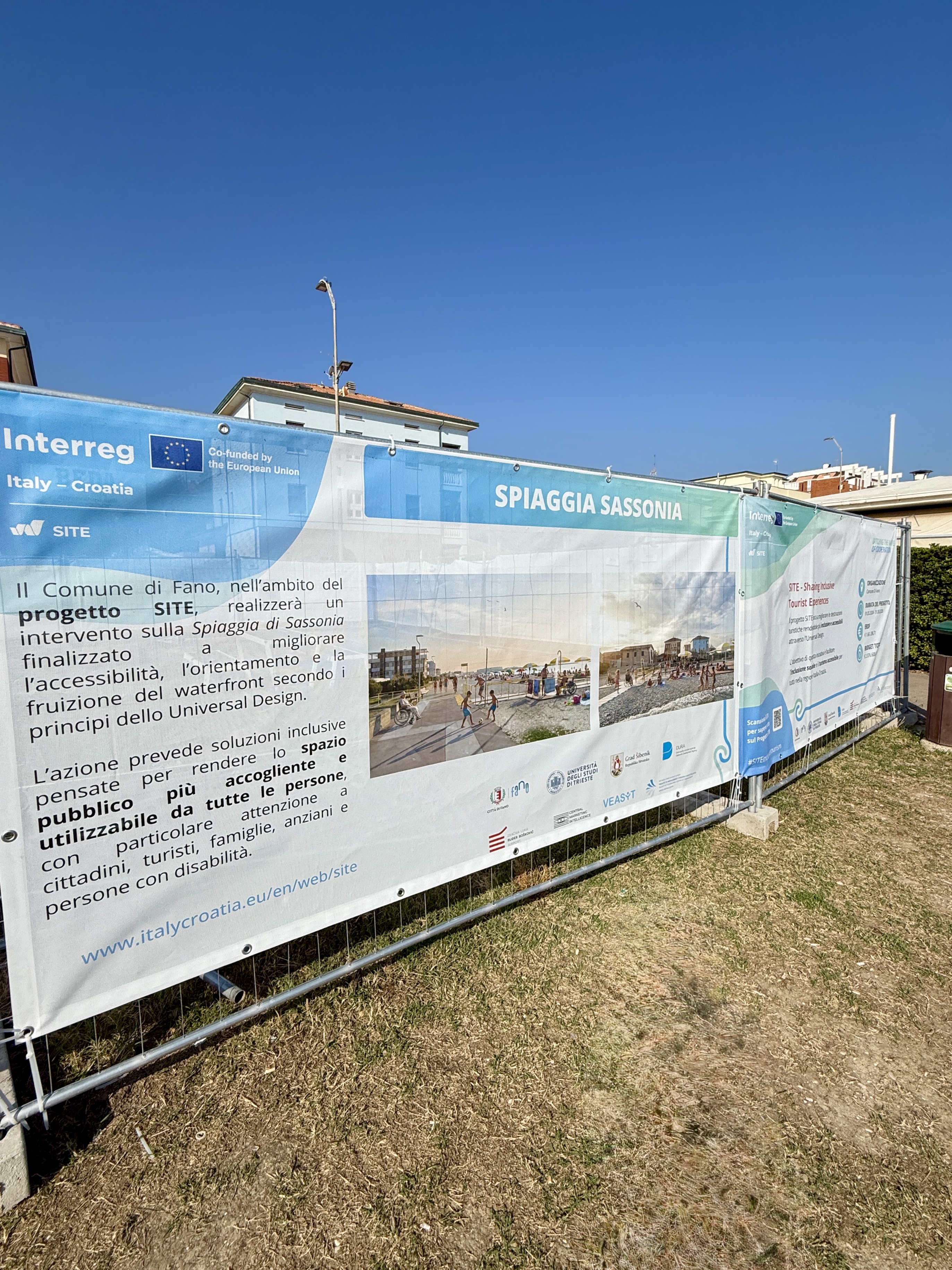
The visit provided an opportunity to review the progress of the pilot actions at Sassonia Beach and Ponte Sasso Beach, discuss the design choices behind the interventions and strengthen local knowledge on accessible and inclusive tourism.
Reviewing progress at Sassonia and Ponte Sasso beaches
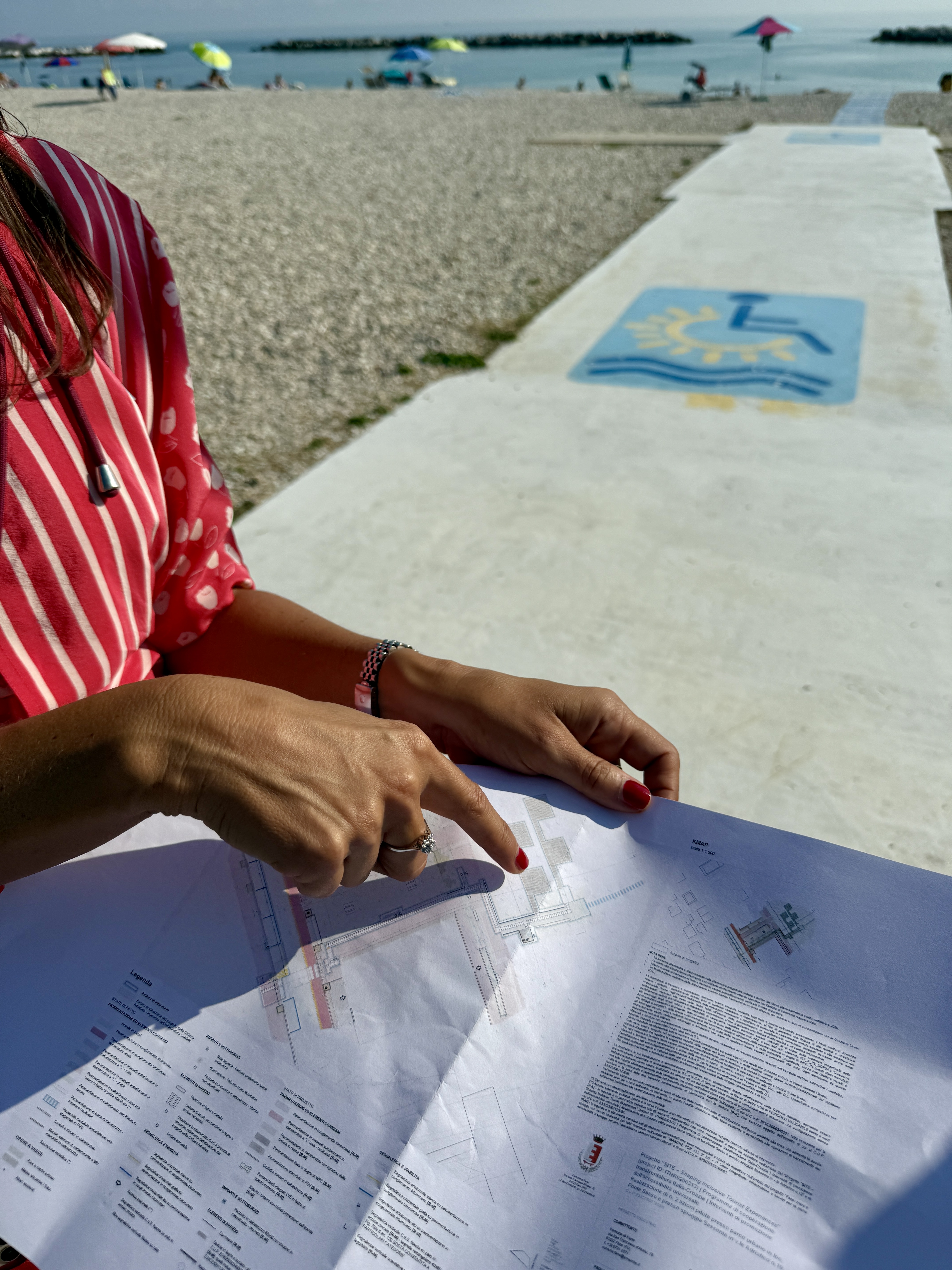
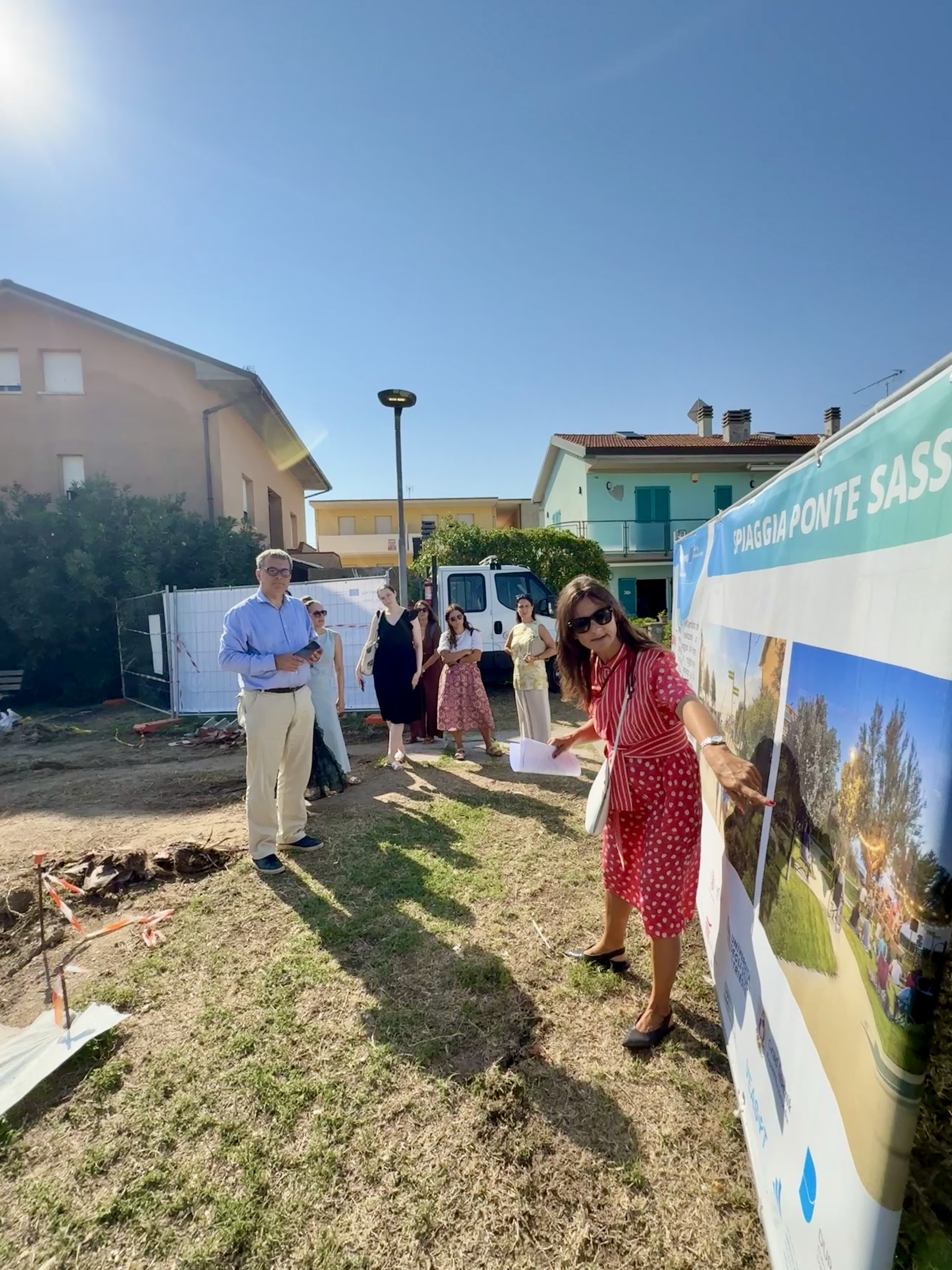
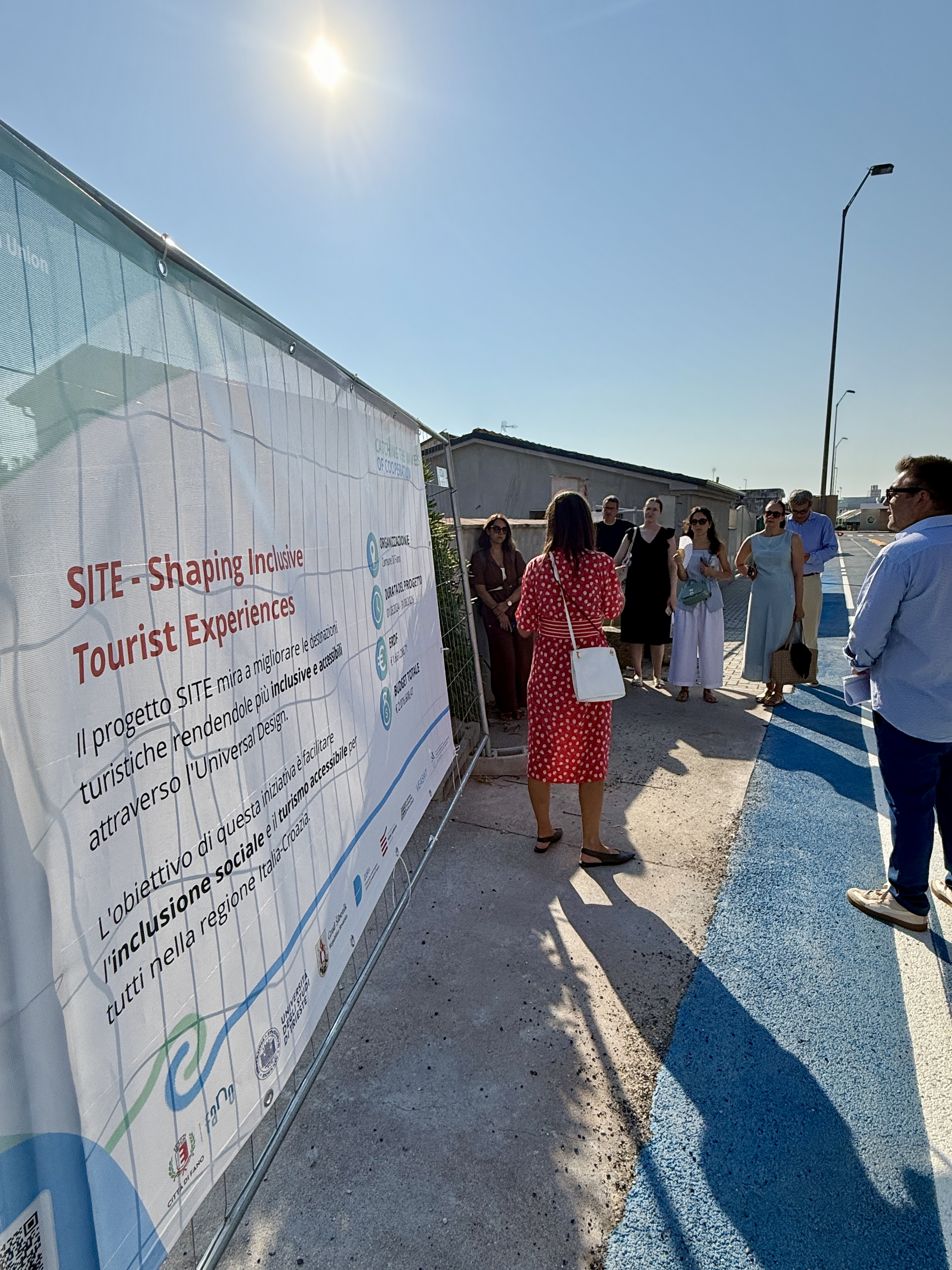
The morning of 28 July began with on-site inspections at Sassonia Beach and Ponte Sasso Beach, the two areas involved in the Municipality of Fano’s pilot actions.
Guided by Studio Stradivarie, project partners visited the construction sites and reviewed the final stages of the interventions. The works have been designed to improve accessibility, orientation and the overall use of the waterfront, creating safer and more welcoming public spaces for residents and visitors with different needs.
Particular attention has been given to solutions that can benefit people with disabilities, older people, families with children and anyone who may encounter difficulties when moving through or using coastal public spaces.
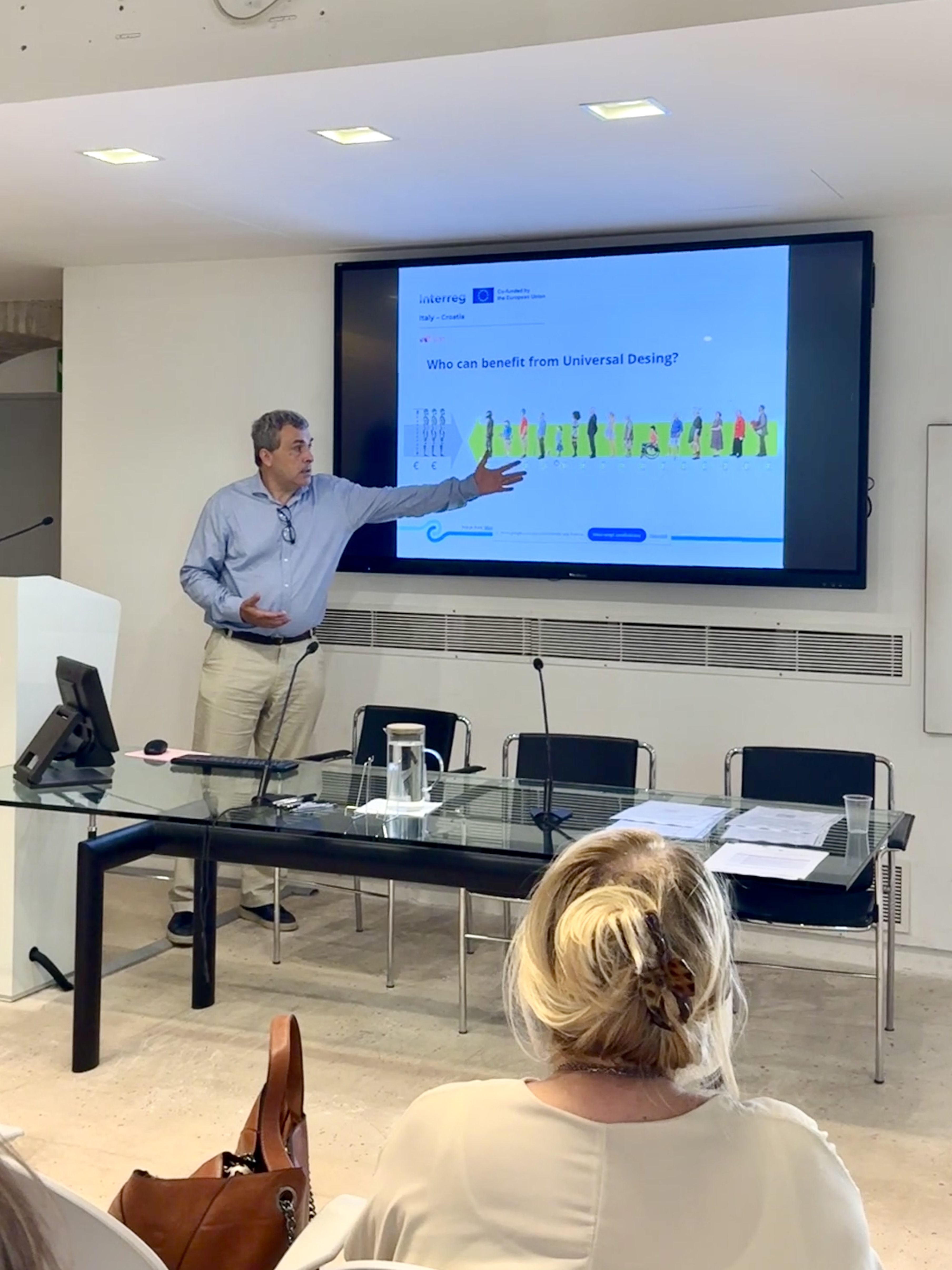
The interventions reflect the principles of Universal Design, which promote environments that can be understood and used by as many people as possible without requiring separate or specialised solutions.
The works at the two pilot areas are expected to be completed by 31 August 2026.
Accessibility as part of urban regeneration
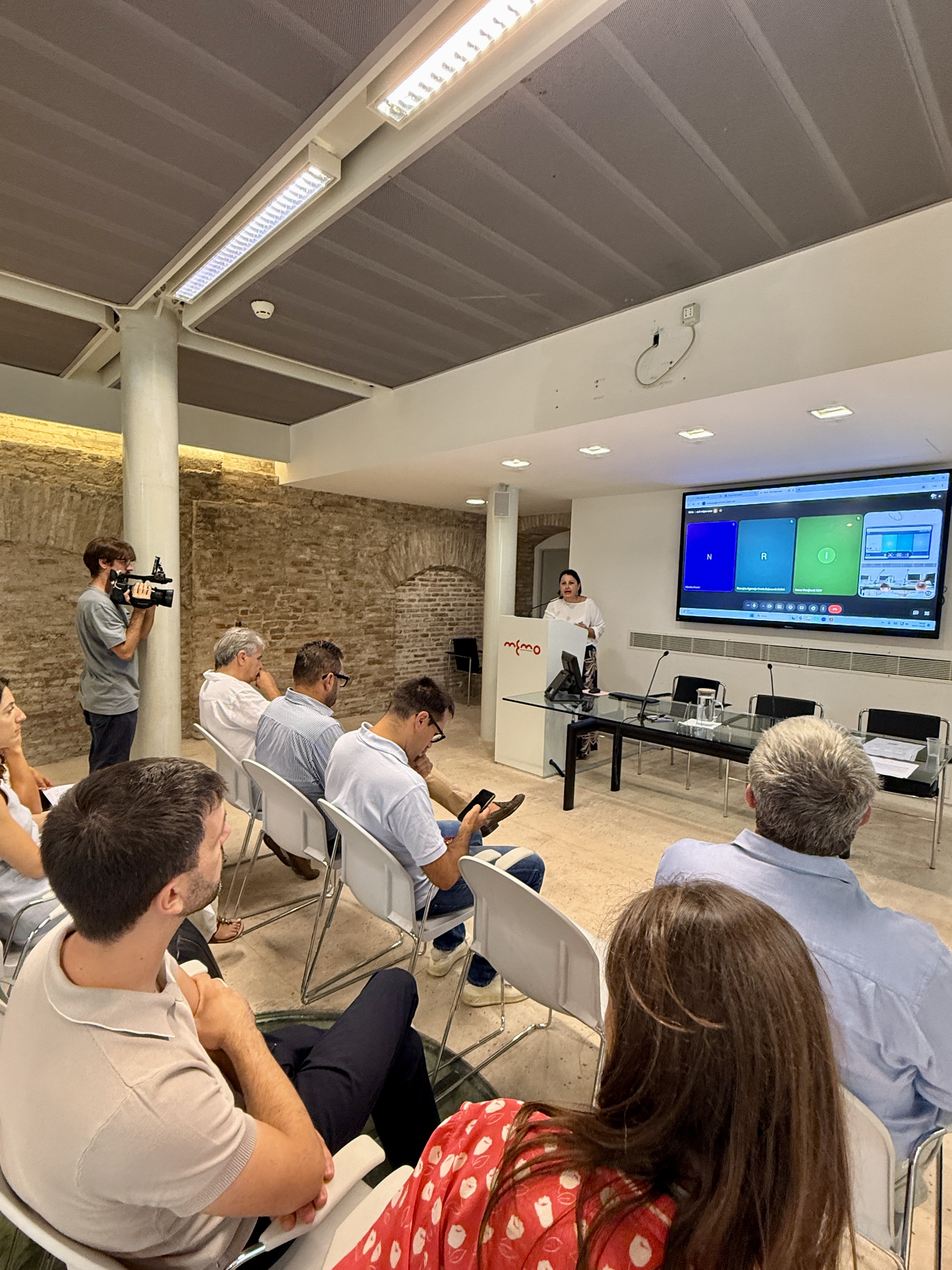
Following the site inspections, the programme continued at MeMo – Mediateca Montanari with a public event dedicated to accessible tourism, Universal Design and the regeneration of coastal public spaces.
Representatives of the Municipality of Fano, including the Mayor, Deputy Mayor and Councillor for Social Policies, highlighted the strategic role of initiatives that combine accessibility, tourism development and social inclusion.
Lorenzo Castelli from the University of Trieste introduced the project’s objectives and presented the principles of Universal Design.
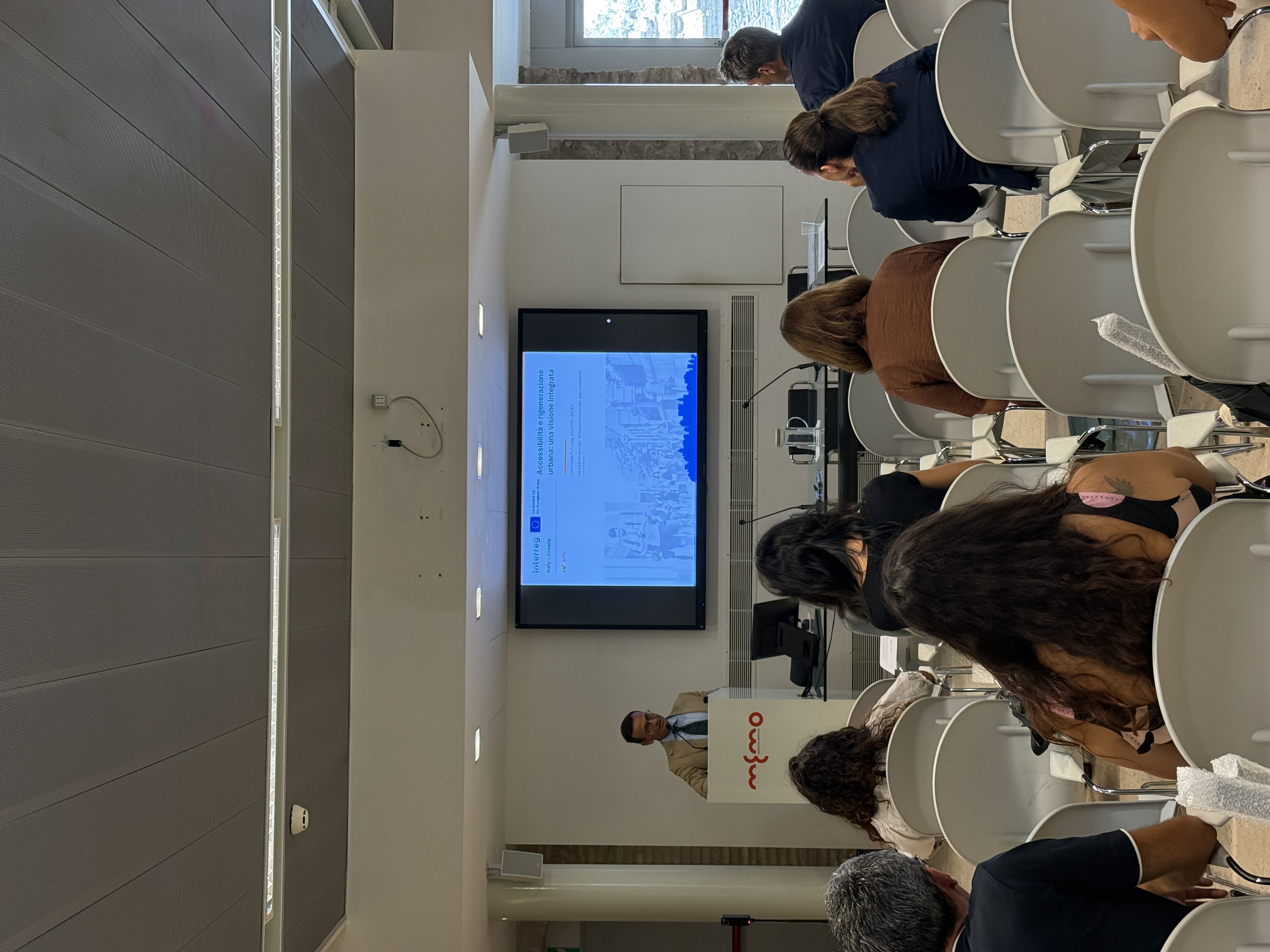
Prof. Francesco Rotondo from Università Politecnica delle Marche then explored the connection between accessibility and urban regeneration, focusing on how inclusive planning can contribute to the broader development of Fano.
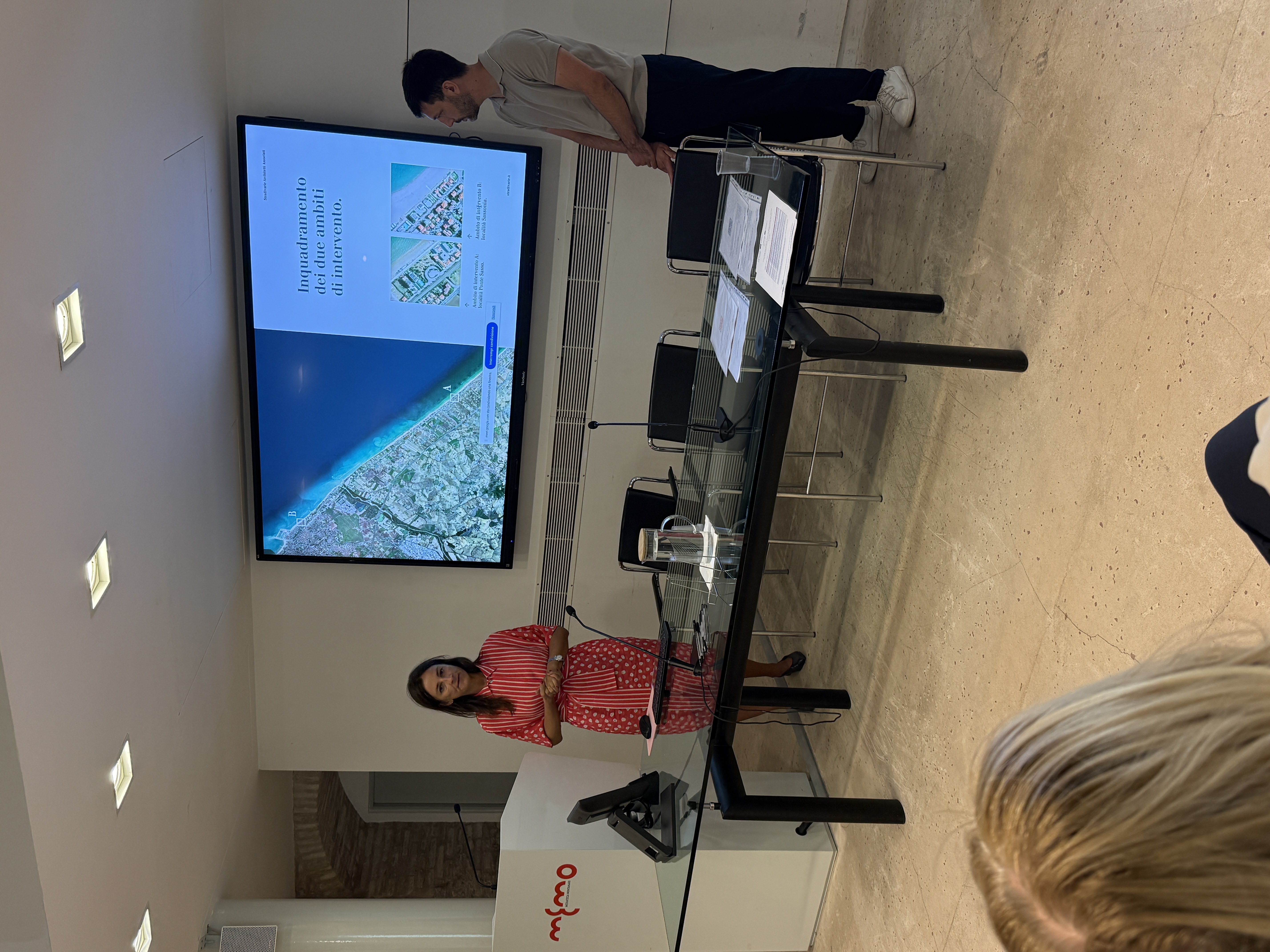
Arch. Marcon from Studio Stradivarie Architetti Associati presented the pilot actions implemented at Sassonia and Ponte Sasso, explaining the approach and design choices behind the interventions.
Training tourism stakeholders
The second part of the event was dedicated to a training session for tourism stakeholders.
Experts from different partner organisations shared knowledge, terminology and practical examples related to inclusive tourism. The programme included:
- Easy Language, presented by Federica Loro from VEASYT;
- Terminology of accessible and inclusive tourism, presented by Hana Paleka from the Faculty of Tourism and Hospitality Management;
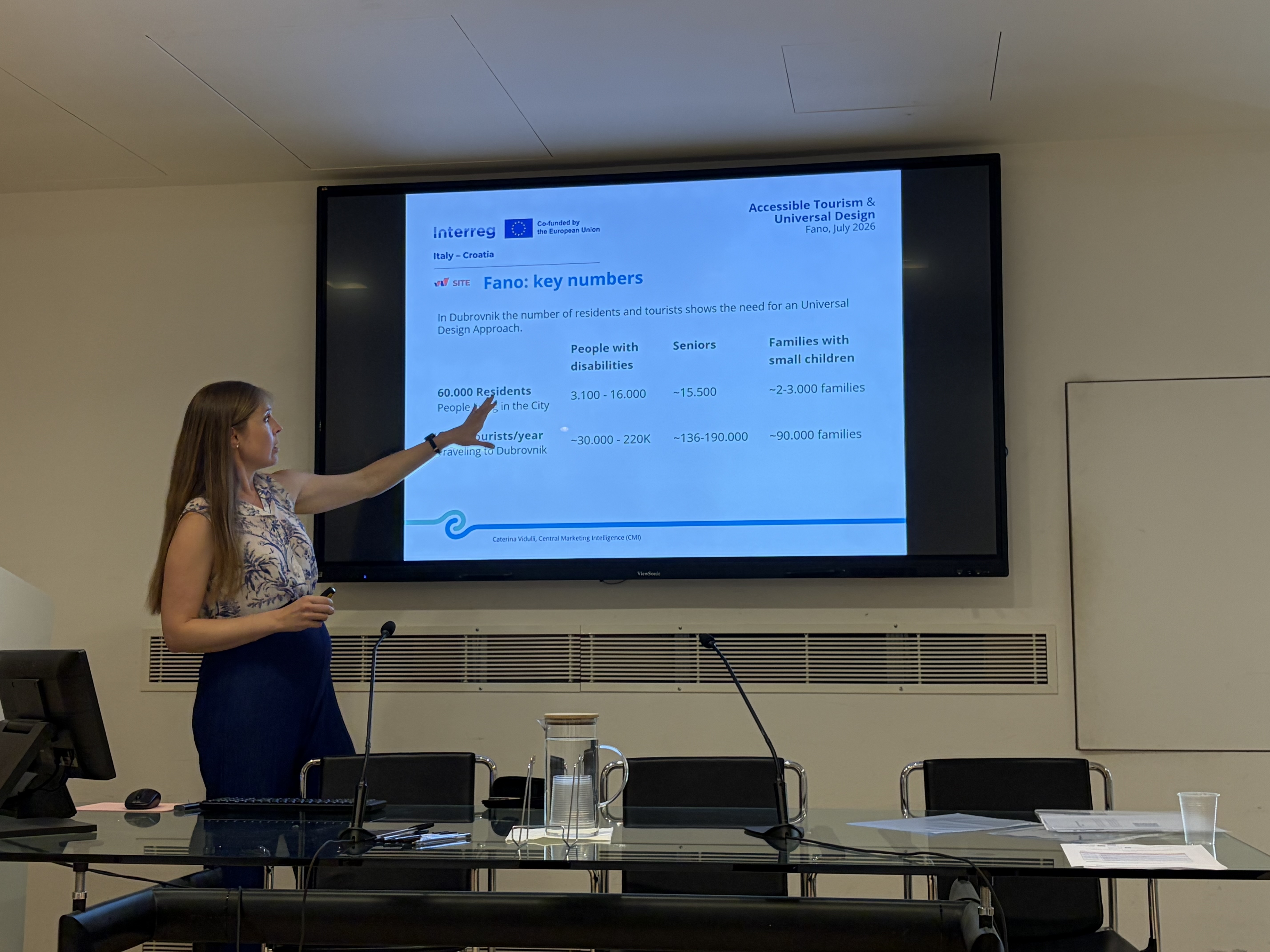
- Accessible communication for target groups, presented by Caterina Vidulli from Central Marketing Intelligence;
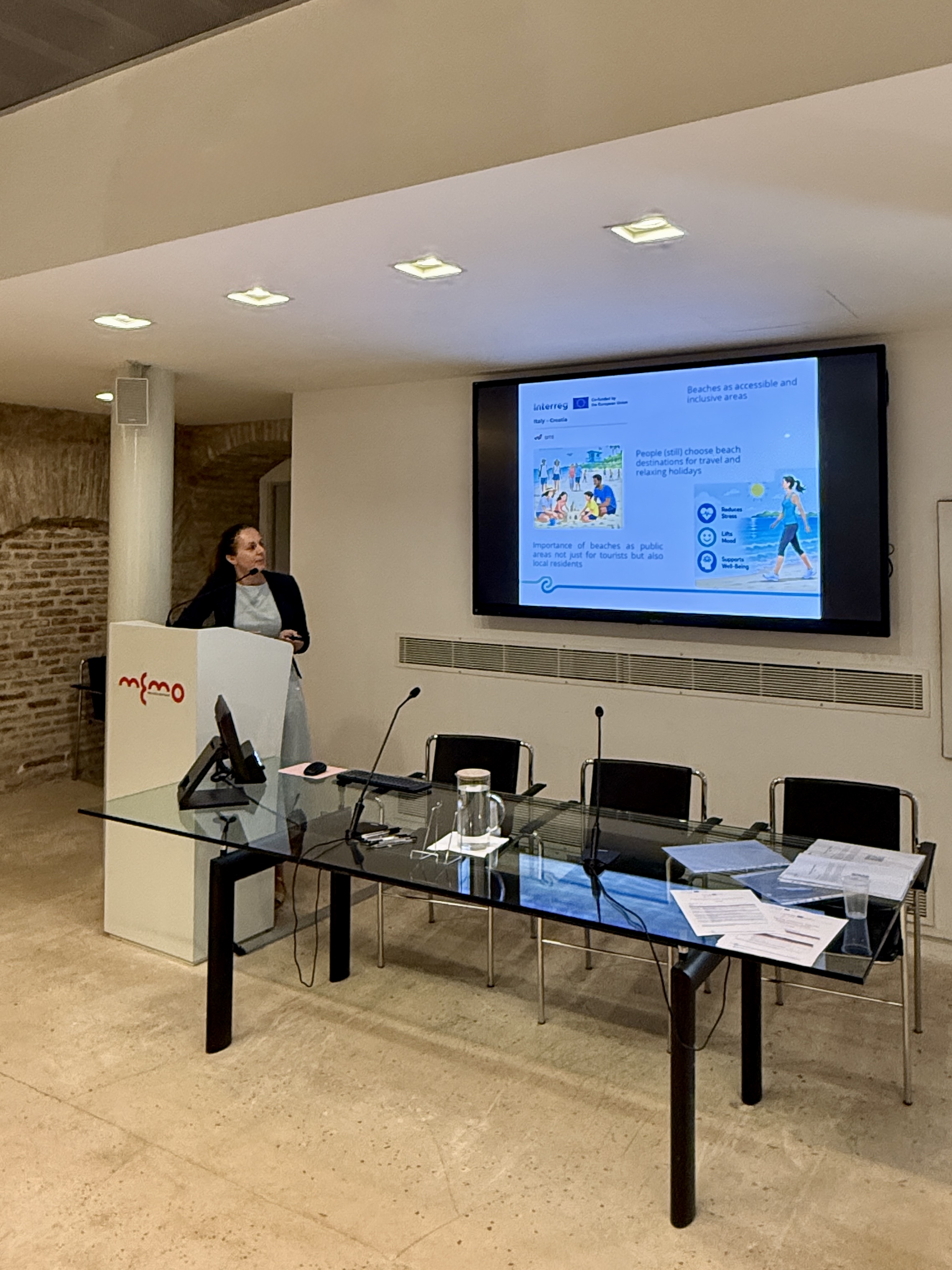
- Accessible and inclusive beaches and public areas: examples from practice, presented by Jelena Durkin Badurina from the Faculty of Tourism and Hospitality Management.
Participants were also invited to provide feedback through questionnaires concerning the pilot site and the application of Easy Language in Fano. The official agenda concluded with a partners-only working session to review the study visit and discuss the next steps.
Building more welcoming coastal destinations
The visit showed how accessibility can become an integral part of coastal regeneration rather than an additional measure introduced at a later stage.
By combining physical improvements, clearer orientation, inclusive communication and stakeholder training, the Fano pilot actions aim to create public spaces that are easier and more enjoyable for everyone to use.
The exchange between project partners, local institutions, designers and tourism stakeholders also reaffirmed the importance of collaboration in developing destinations that are accessible, inclusive and welcoming throughout the year.
The findings gathered during the visit will support the final stages of implementation and the evaluation of the pilot actions, while also providing practical examples that may be transferred to other coastal destinations.
Explore the photo gallery to discover the main moments of the second project visit to Fano.