
Interreg ECOFOODCYCLE Project Comes to a Close: Results, Pilot Actions, and Legacy for Food Sustainability
30/09/2026
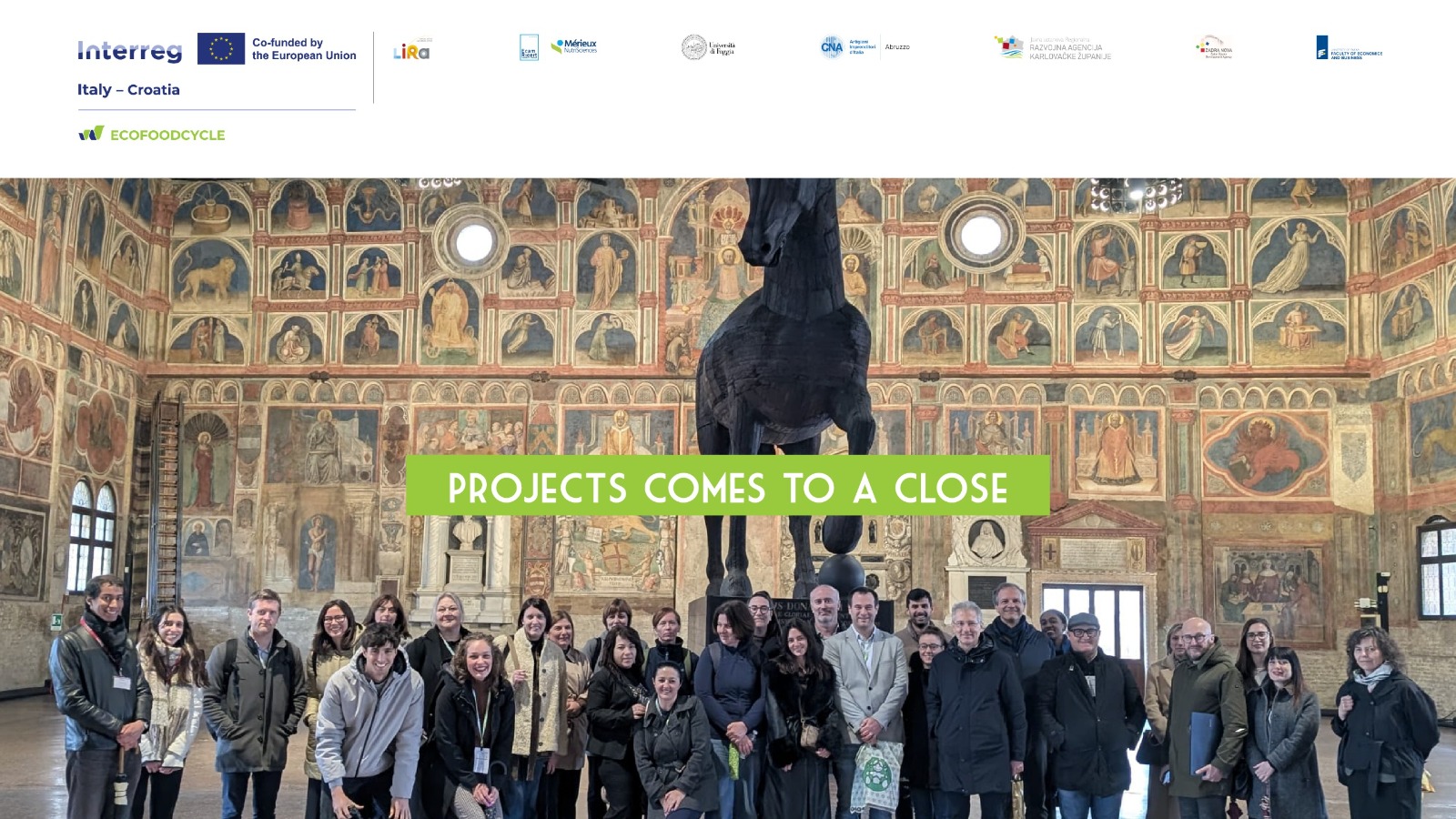
30 September 2026 – Today marks the official conclusion of ECOFOODCYCLE (Reducing Food Wasteand its Environmental Footprint through Sustainable Food Systems), the project co-financed by the Interreg Italy-Croatia 2021–2027 Programme aimed at preventing and reducing food waste through systemic, inclusive, and sustainable models.
A Concrete Commitment Across Local Territories
The initiative brought together a synergistic collaboration between Italian and Croatian partners committed to developing innovative methodologies to measure, monitor, and reduce the environmental impact of food waste across the agri-food supply chain and in daily consumption contexts.
Among the most significant achievements were the Small Scale Pilot Actions (SSPA) conducted across the regions:
- Scientific monitoring and audits in school canteens: Quantitative and qualitative audits conducted to establish the baseline of food waste flows.
- Experiential and educational activities with students: Initiatives such as the Ecofood Waste Truck, educational workshops dedicated to the Sustainable Development Goals (SDGs) of Agenda 2030, and anti-waste recipe books created by the students themselves.
- Involvement of families and communities: Circular cooking workshops and leftover recovery techniques organized in collaboration with professional chefs to transfer the skills acquired at school directly into household management.
Measurements carried out at the end of the trials recorded a drastic drop in average per-capita waste in canteens (with reductions exceeding 45%), demonstrating the effectiveness of an integrated approach that combines scientific data, education, and active engagement.
Materials and Reports Availble in the Library Section
In view of the project conclusion, all final reports, impact assessments, and documentation regarding the pilot actions implemented by all partners have been officially approved and published.
To consult the reports, download open-source materials, and explore the results and replicability of these best practices, please visit the Library section of our website.
Acknowledgements
The project consortium wishes to express its sincere gratitude to all institutions, schools, teachers, students, families, technical partners, and local stakeholders who contributed with enthusiasm and dedication to achieving these milestones.
One project officially ends today, but friendships, ideas, collaborations and new adventures are just getting started.
This is not goodbye - it’s see you soon!

