Introduction library: When Nature Becomes the Best Defense - The AcquaGuard Project
AcquaGuard brings together Italy and Croatia in a shared effort to protect people and the environment from the growing threat of floods through nature-based solutions (NbS). Instead of relying solely on concrete barriers and traditional infrastructure, the project uses the power of wetlands, forests, green and river corridors—proving that nature itself can be our strongest ally in adapting to climate change.
By connecting the Veneto region in Italy and Karlovac County in Croatia, AcquaGuard develops innovative tools, data systems, and decision-making models to help authorities plan smarter and act faster. The project focuses on strengthening local communities, building climate resilience, and promoting sustainable water management across borders.
Through collaboration, knowledge exchange, and pilot actions, AcquaGuard shows that when we work with nature—not against it—we can create safer, greener, and more resilient regions for generations to come.
Risk portfolios for the project regions
Facing climate Risks: A Cross-Border Overview of Karlovac and Veneto
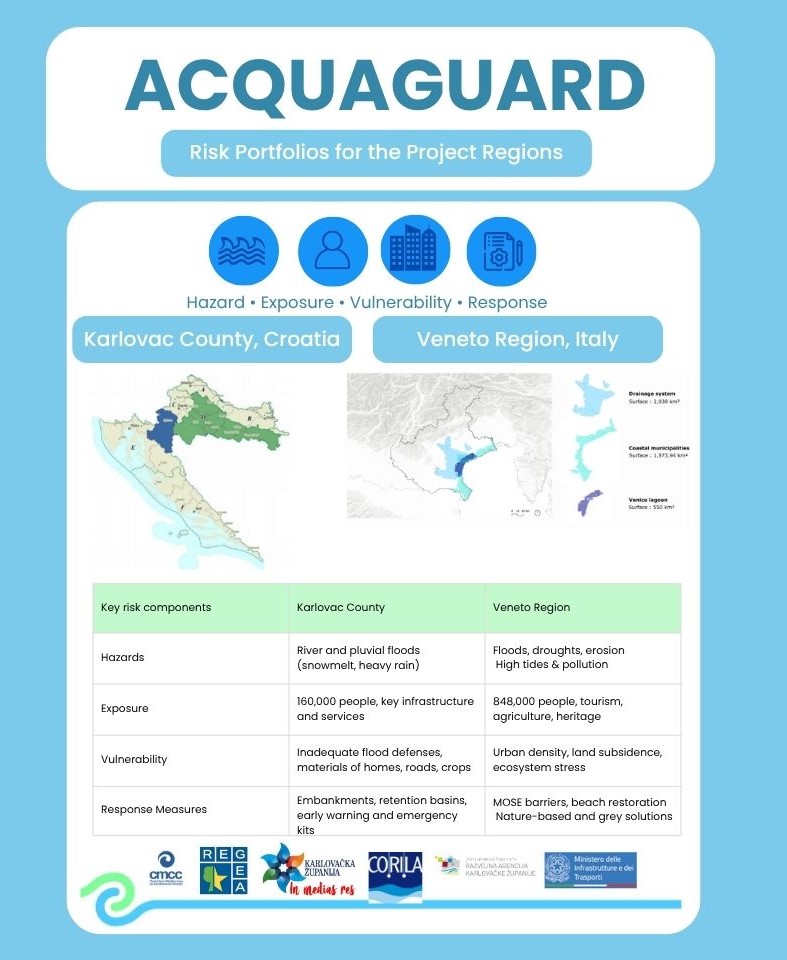
D.1.1.2. Risk portfolios for the project regions
This document provides an integrated overview of climate-related hydrological risks in two pilot regions: Karlovac County in Croatia and the Veneto Region in Italy. Both areas face significant challenges due to changing climate conditions and increasing exposure to extreme weather events, particularly floods and related hazards.
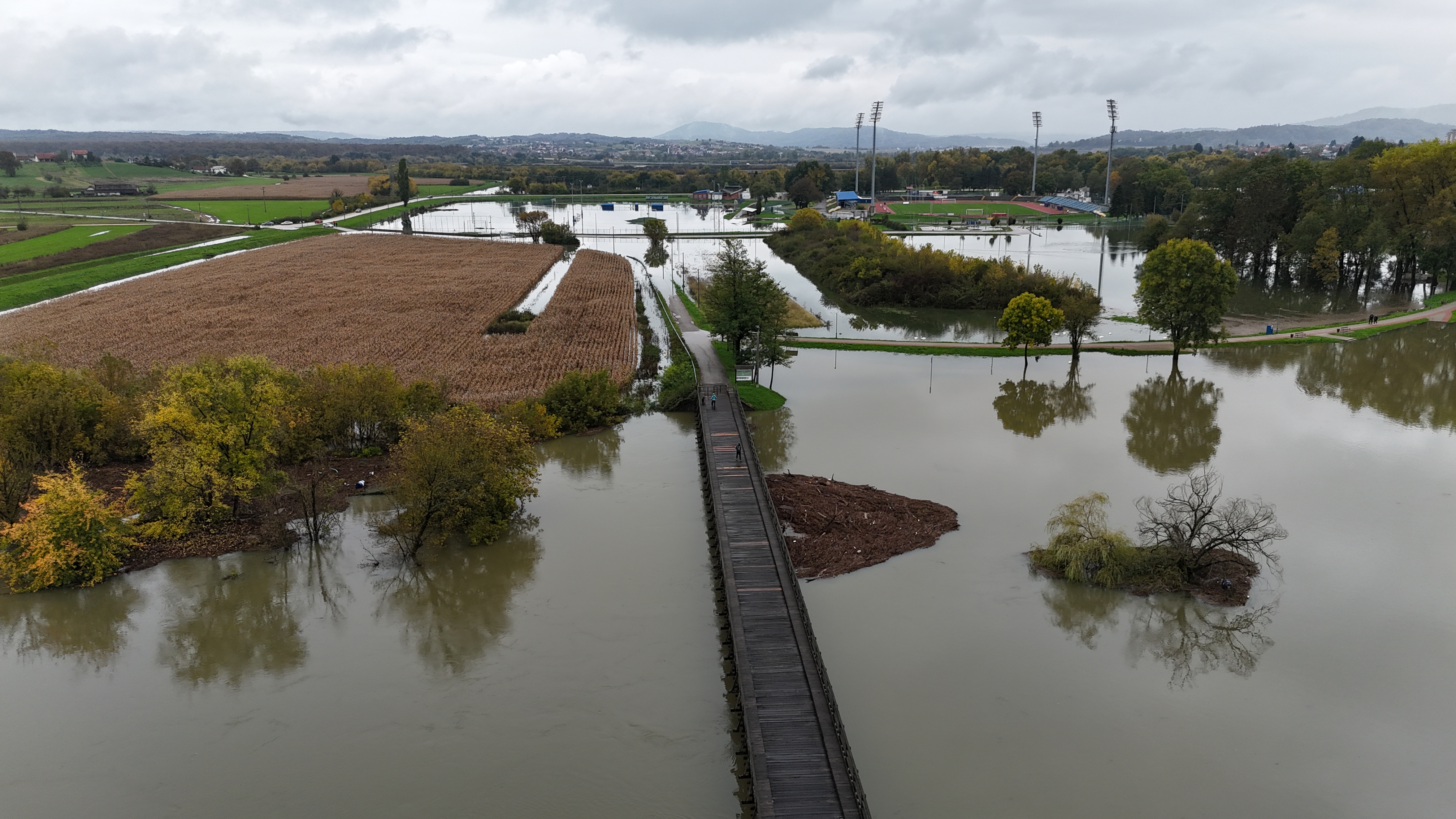
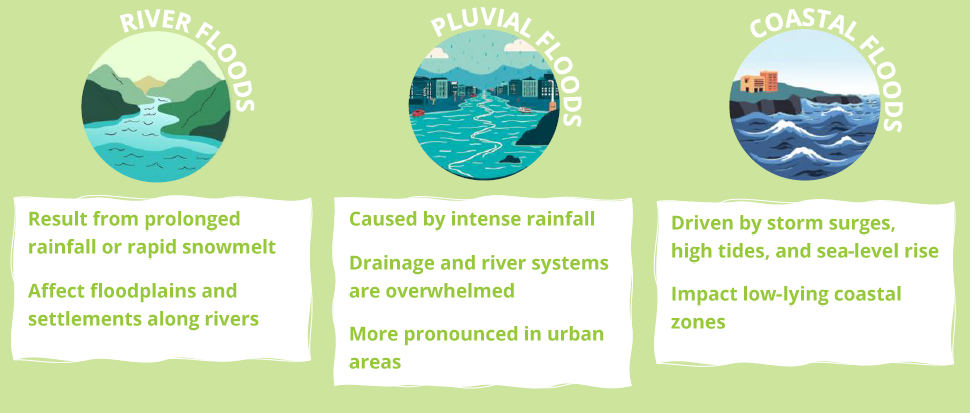
In Karlovac County and its bordering areas, the primary risks are riverine and pluvial floods, often triggered by snowmelt and intense rainfall. Approximately 160,000 people and vital infrastructure are exposed, while flood protection remains limited. The region suffers from underdeveloped flood defenses, including insufficient levees and retention fields, as well as a lack of effective early warning systems, making it particularly vulnerable to recurring flood events.
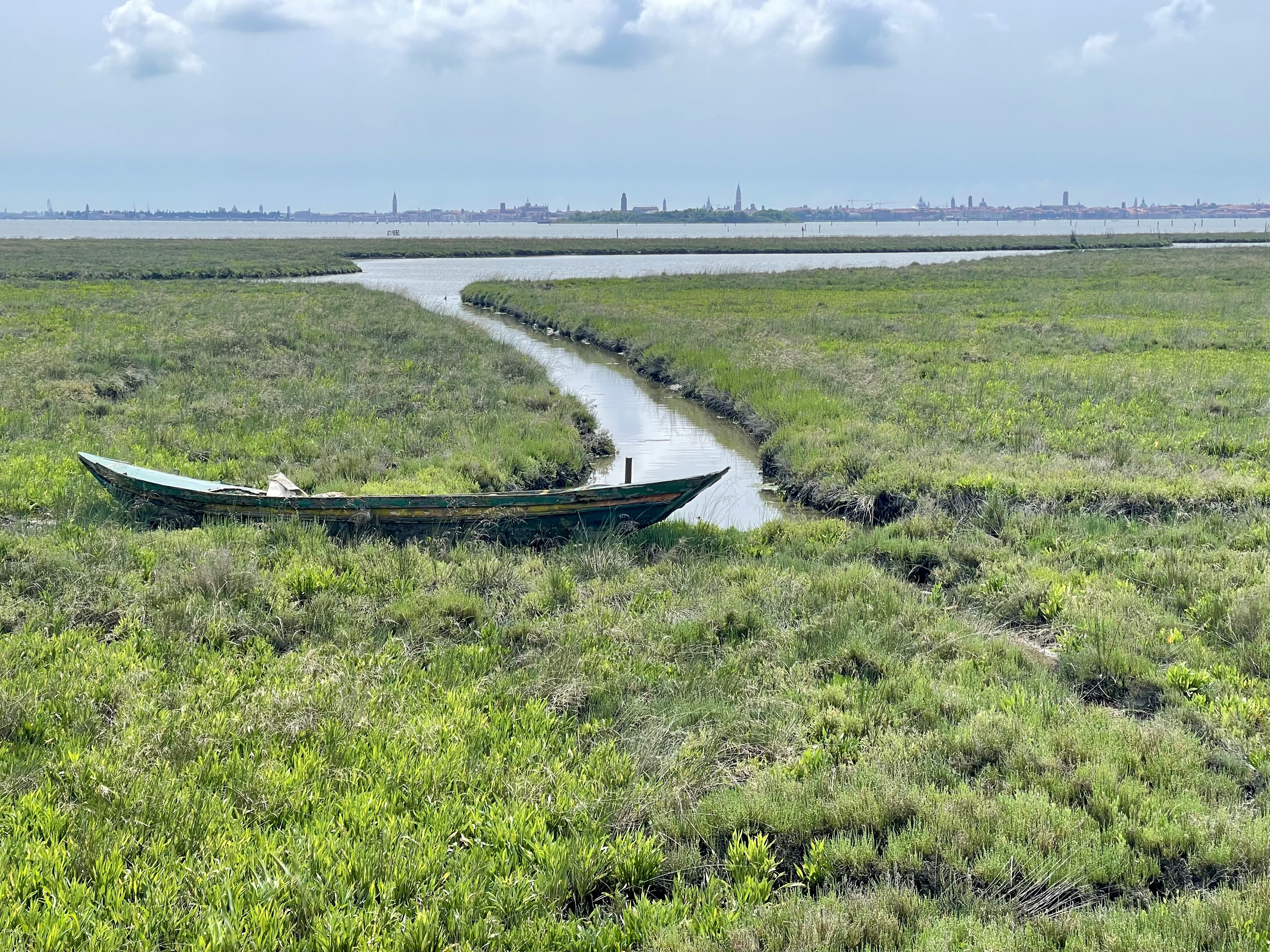
The Veneto Region, meanwhile, is confronted with a broader spectrum of hydrological and environmental risks. These include flooding—especially from high tides—as well as droughts, coastal erosion, water pollution, and land subsidence. With around 848,000 residents exposed, the region is highly urbanized and economically significant, particularly in the fields of tourism and agriculture. However, intense urban development and mounting pressure on fragile ecosystems have exacerbated existing vulnerabilities. To address these issues, the region has implemented large-scale infrastructure such as the MOSE barriers, alongside coastal restoration initiatives and a combination of grey and nature-based solutions.
Together, these two regional profiles reflect the urgent need for strategic, evidence-based, and adaptive risk management approaches. The comparative analysis highlights how diverse geographic and socio-economic contexts influence both the type and intensity of climate risks, as well as the capacity for effective response. The findings serve as a foundation for the development of targeted adaptation strategies that prioritize resilience, stakeholder engagement, and the long-term sustainability of local communities and ecosystems.
Documents
Capacity Building for Climate Change Adaptation and NbS Replication
Activity 3.4 – Capacity building on climate change impacts for other regions and potential replicators
D.3.4.2. Climate change impact Capacity building materials
This Activity is designed to extend the impact of the project beyond the pilot areas by strengthening the capacities of other regions interested in applying Nature-based Solutions (NbS) for flood prevention.
Building on earlier project results, the partners organize knowledge-sharing events such as workshops, conferences, site visits and webinars, enabling stakeholders to exchange experiences and practical i.nsights on climate risk management and NbS implementation.
The activity promotes peer-to-peer learning by establishing networks among stakeholders from different regions and encouraging cooperation and transfer of best practices. In parallel, the project develops structured training materials and manuals that improve stakeholders’ understanding and technical competence in planning and implementing NbS. These materials are made publicly available and adaptable to different territorial contexts.

In essence, A3.4 strengthens transferability and scalability by creating a broader community of practice capable of replicating AcquaGuard approaches in other regions.
All the materials were developed to strengthen the capacities of public authorities and stakeholders for the planning, prioritization, and implementation of Nature-based Solutions in the context of flood risk management.
In addition, related video materials can be viewed in the Insights section on the official project website.