

Strategy and Action Plan
15/06/2026
Among its final achievements, the official version of the TESTEAT Strategy and Action Plan. This strategic document marks the transition from the experimental phase to the long-term implementation of sustainable tourism guidelines developed within the framework of the Interreg Italy–Croatia programme.
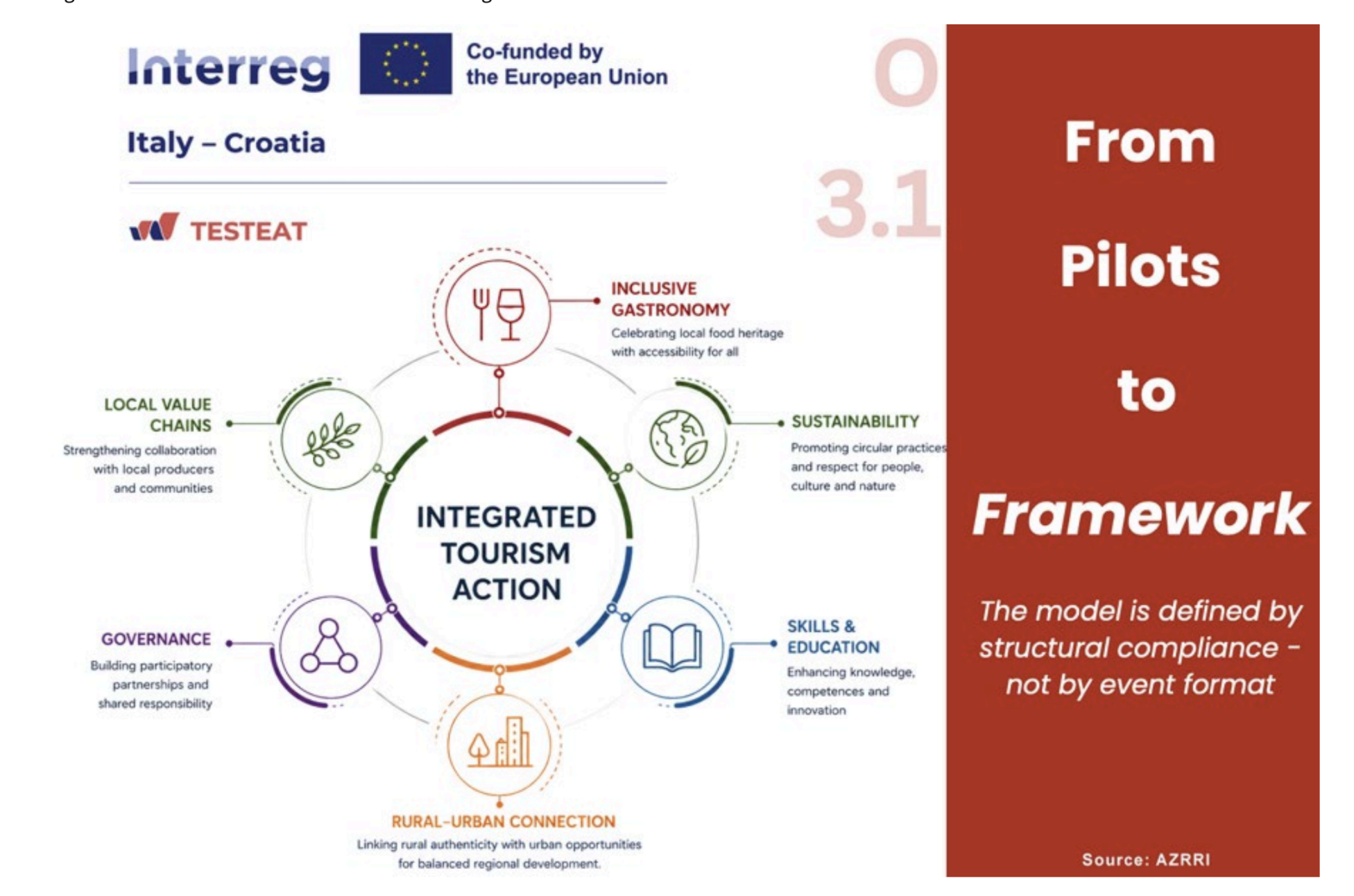
The strategic plan serves as a launching pad to transform the traditional culinary heritage of the Adriatic region into a powerful driver for socio-economic development. The TESTEAT approach directly addresses contemporary challenges in the HORECA (Hotel, Restaurant, and Catering) sector through four core pillars:
- Food Inclusion and Accessibility: adapting traditional gastronomy to evolving dietary preferences and requirements (food allergies, intolerances, vegan, vegetarian, and gluten-free diets) while fully preserving the authenticity of local heritage dishes.
- Skills Enhancement (Upskilling & Reskilling): delivering continuous training and professional development for industry operators, educators, and hospitality students on sustainability and digital transition topics.
- Circular Economy and Sustainability: reducing food waste, promoting short supply chains, and tackling seasonality by spreading tourist traffic beyond peak periods.
- Digital Innovation: adopting user-friendly digital tools to help tourism SMEs and catering businesses respond effectively to changing traveler behaviors
The effectiveness of the TESTEAT model was tested and validated through five pilot events hosted across the partner territories:
- The SAOR Festival in Venice (Italy)
- Regional Eno-Gastronomy Day in Istria (Croatia)
- Flavours and Stories of Pelješac and Ston (Croatia)
- Days of Taste in Dubrovnik (Croatia)
- Roots of Taste in Cividale del Friuli (Italy)
In total, these pilot actions engaged over 11,000 visitors, hundreds of students, and dozens of local producers and restaurateurs.
Looking ahead, the 10 guiding principles established in the Strategy will steer local tourism policies, vocational curricula, and promotional initiatives in the coming years, ensuring that the achievements of the project remain a permanent asset for local communities and travelers across the Adriatic region.