

From Theory to Practice: TESTEAT Trains Today’s and Tomorrow’s Tourism Professionals
05/02/2026

From Theory to Practice: TESTEAT Trains Today’s and Tomorrow’s Tourism Professionals
Tourism is changing fast, and so are travellers' expectations. Authentic food, sustainable choices, personalised menus, and meaningful encounters now define how people experience a destination. The Interreg Italy-Croatia TESTEAT project is preparing the people who make tourism happen to meet this shift head-on, training students and professionals to blend tradition with innovation and sustainability across the Adriatic region.
TESTEAT equips students with practical tools to understand and promote local food and tourism excellence, while supporting professionals already working in the hotel, restaurant, café, and catering services (HORECA) sector, to innovate traditional recipes and services to meet modern dietary and sustainability requirements. By combining hands-on training with real market insights, the project ensures participants can respond to the demands of travellers who value authenticity, ethical practices, and unique experiences.
Training Resources for Vocational Education
Shaping tomorrow’s workforce is not only about transmitting knowledge: it is about shaping
mindsets. Today’s students are tomorrow’s chefs, managers, and entrepreneurs. Through
the TESTEAT project, they learn to make sustainability, digital competence, and inclusivity
the standard from the very start of their careers.
Vocational training organisations Scuola Centrale Formazione (SCF) and CIVIFORM
co-designed a Training Framework for teachers and students from Vocational Education and
Training (VET) schools and centres. SCF implemented a flexible model combining
synchronous and asynchronous learning, allowing participants from multiple regions to
attend online or in person. This hybrid approach builds on SCF’s pandemic-era experience
with virtual Masterclasses, which demonstrated high engagement and effective learning.
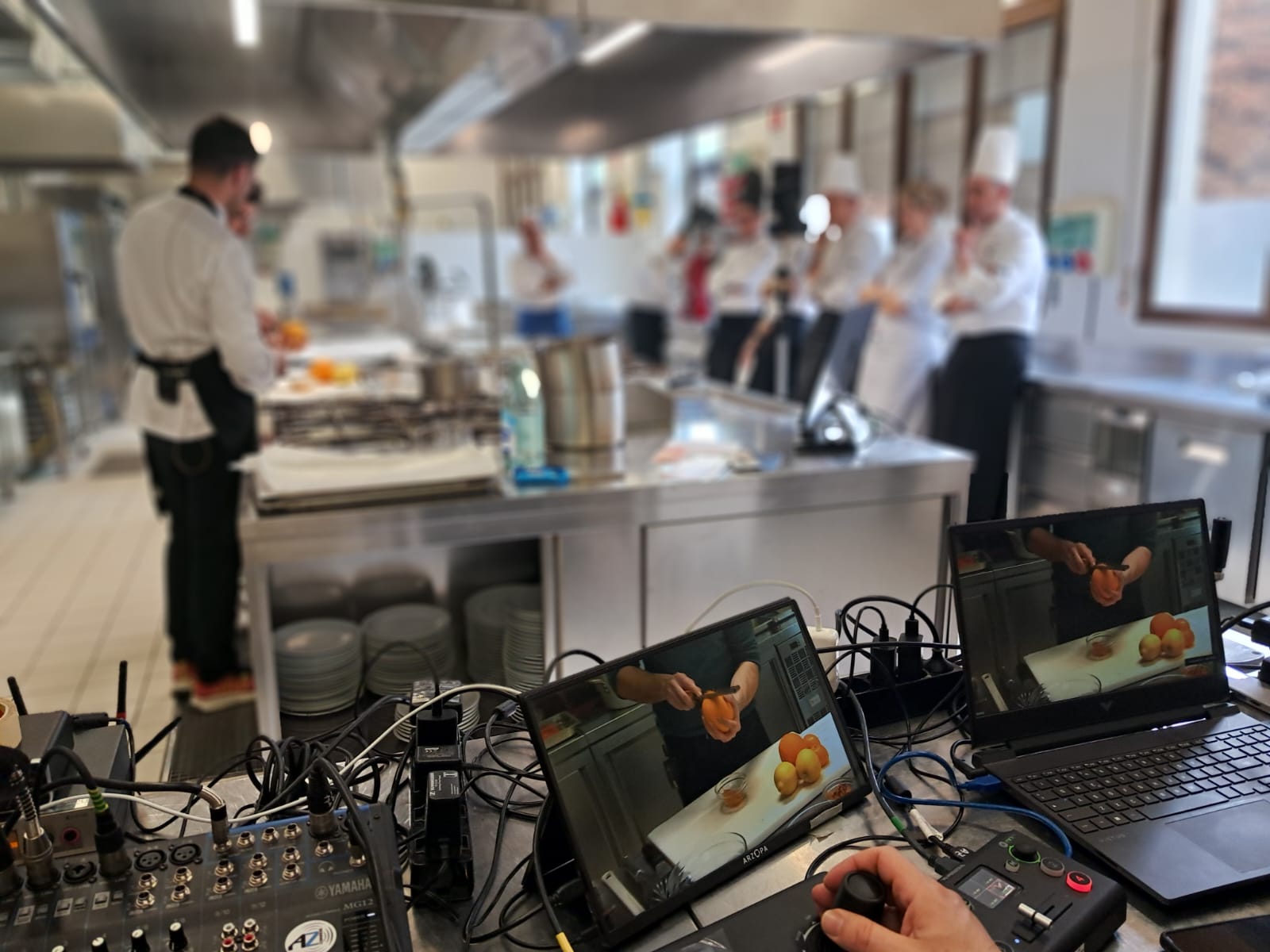
For TESTEAT, SCF integrated professional video streaming and simultaneous interpretation
to ensure high-quality hybrid training. Based on this framework, CIVIFORM developed
guidelines and modules focusing on three core competencies:
- Sustainability: adopting eco-friendly practices, reducing food waste, promoting
plant-based menus, and improving energy efficiency.
- Digitalisation: leveraging technology to improve operational efficiency, enhance
customer engagement, drive digital marketing, and apply artificial intelligence in the
HORECA sector.
- Menu Customisation: preparing inclusive culinary offerings for various dietary
needs, from gluten-free and lactose-free to vegan and vegetarian.
SCF has successfully delivered the first two “training for trainers” modules and plans to
provide the third for autumn 2025, alongside hands-on workshops for students. Together,
teachers and students tackle challenges such as seasonality, workforce shortages, and
evolving consumer trends across the Adriatic food and tourism sectors.
Higher Education and Workforce Initiatives
Cross-Border Exchange Camp, Pula (Croatia)
To foster cross-border collaboration, the Faculty of Economics and Tourism “Dr Mijo
Mirković” at the University of Pula organised a Cross-Border Exchange Camp for Higher
Education students. From 26th to 30th May, 2025, 30 students and four professors from the
University of Pula and Ca’ Foscari University of Venice explored sustainable tourism, local
gastronomy, circular economy, digital skills, and food waste management.
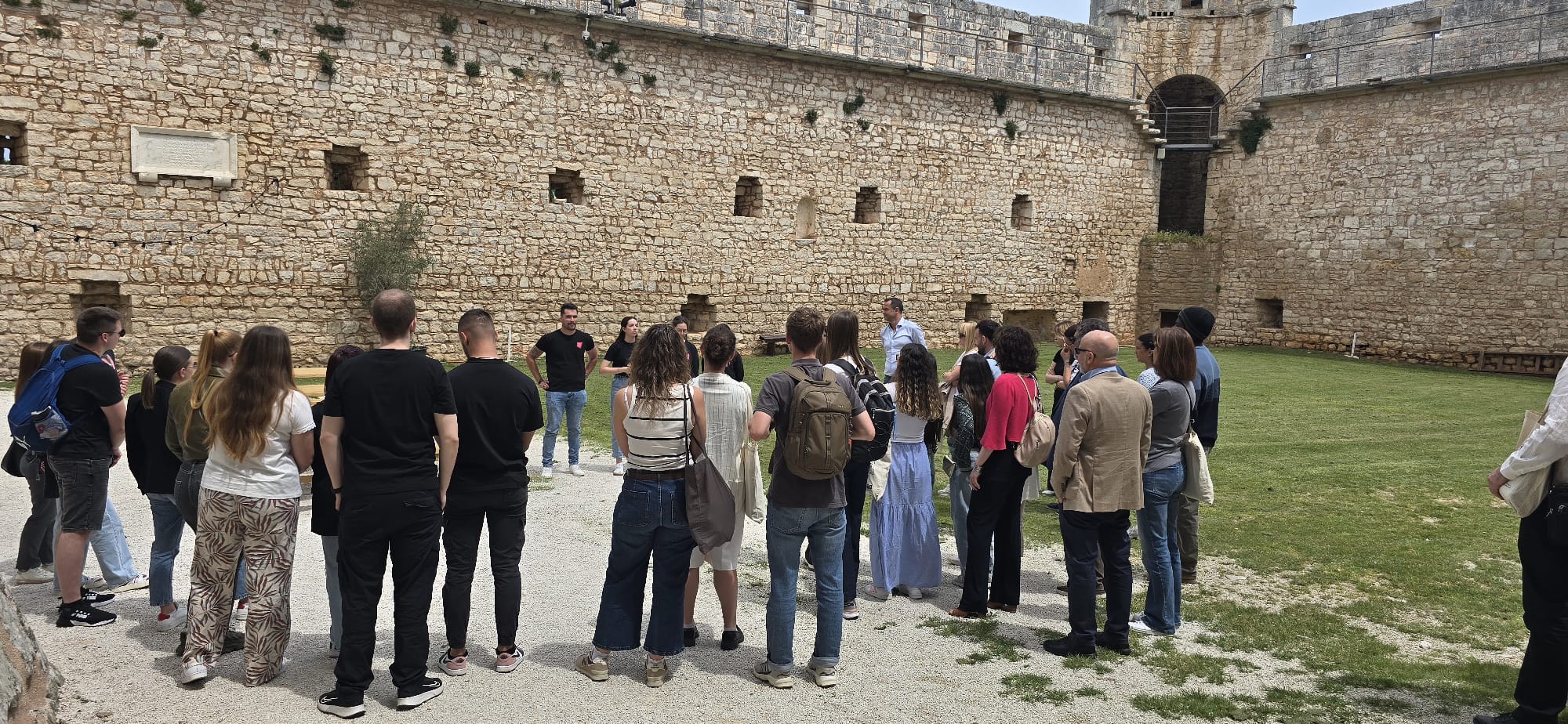
The camp combined lectures and workshops with practical site visits, such as to the Agency
for Rural Development of Istria (AZRRI), where students observed sustainable agrotourism
practices and food heritage preservation in action. Immersive cultural activities, guided tours,
and tastings helped participants connect theory with local practices.
The exchange camp encouraged knowledge sharing, teamwork, and cross-cultural dialogue
while equipping students with a holistic understanding of how sustainable and innovative
practices can shape competitive and authentic tourism models. Reciprocal exchanges at Ca’
Foscari University will allow Croatian students to experience Italian contexts, deepening
regional collaboration and knowledge transfer.
Training for the Workforce, Ca’ Foscari University of Venice
TESTEAT also provides specialised training for professionals in tourism and gastronomy.
The programme focuses on understanding contemporary gastronomic trends, digitalisation,
and sustainable practices. Participants gain insights into market behaviour, digital marketing,
operational efficiency, and local sourcing, while developing strategies to reduce waste and
promote sustainability.
The training emphasises community-building and peer-to-peer learning. Modules were
co-designed with stakeholders during project HUB meetings, creating a collaborative
environment where participants exchange experiences, challenges, and best practices.
Facilitators, trained by project expert Professor Vladi Finotto, guide discussions to ensure
high-quality, consistent delivery across sessions.
Case Study: “La Mensa che Non Spreca”
TESTEAT explores best practices to integrate them as teaching examples, to show how food
waste prevention and social responsibility can work in practice within the food tourism
context. One comes from Venice, where, in 2021, the initiative “La Mensa che Non Spreca”
(The Canteen That Doesn’t Waste) was launched to collect surplus meals from school
canteens in Mestre and redistribute them to vulnerable populations through charitable
organisations, following circular economy principles and community engagement. By
studying this case, TESTEAT participants learn how local projects can combine social
responsibility, sustainability, and operational efficiency — lessons that can be applied across
the tourism and gastronomy sectors.
Conclusion
The Interreg Italy-Croatia TESTEAT project bridges theory and practice, preparing both
students and professionals to navigate a rapidly evolving tourism sector. By integrating
sustainability, digitalisation, culinary innovation, and community engagement, the project
equips participants to deliver authentic, inclusive, and competitive experiences. Through
cross-border collaboration, immersive training, and local best-practice examples, TESTEAT
is shaping a new generation of tourism professionals capable of transforming the Adriatic
food and tourism landscape — one sustainable, innovative, and culturally aware choice at a
time.
Online resources
Virtual/hybrid course for the teachers’ trainers: https://www.italy-croatia.eu/web/testeat/library
The Cross-Border Exchange Camp at the Juraj Dobrila University in Pula:https://www.italy-croatia.eu/web/testeat/dettaglio?articleId=26618946&groupId=3628024