
AcquaGuard Final Conference Held in Trieste: Two days, One shared Goal, Lasting impact
27/11/2026
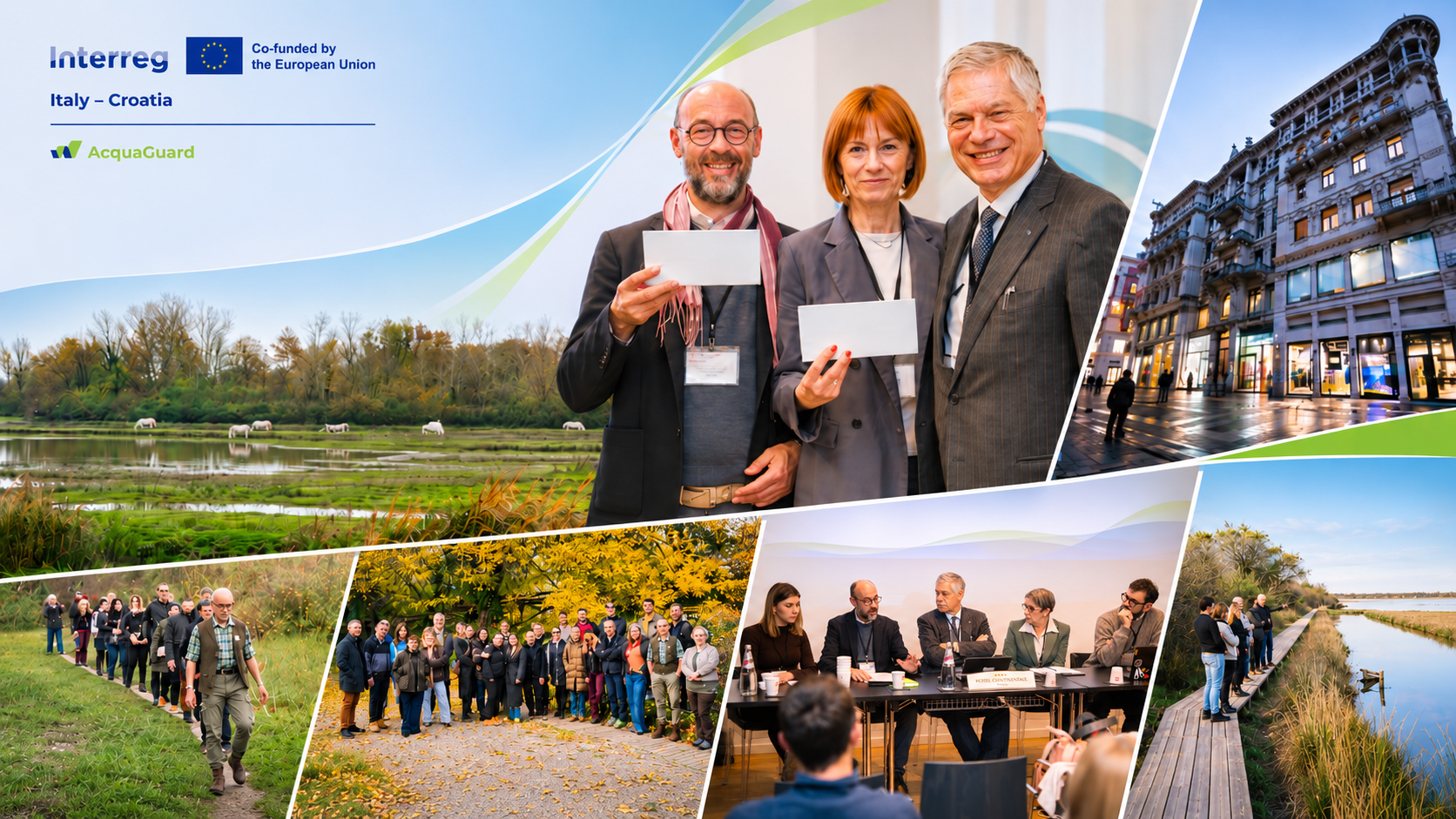
The two-day AcquaGuard Final Conference, held on 19–20 November 2026 in Trieste and at the Isola della Cona Nature Reserve, brought together Croatian and Italian partners to present the results of nearly three years of cross-border cooperation focused on flood risk reduction and Nature-based Solutions.
The AcquaGuard project, implemented under the Interreg Italy–Croatia Programme 2021–2027, aims to strengthen the capacity of local and regional authorities to systematically plan, prioritise and prepare Nature-based Solutions (NbS) for future implementation.
The project is led by the Public Institution Regional Development Agency of Karlovac County (JURRA), which coordinates a partnership of six institutions from Croatia and Italy.
From Risk Assessment to Better Decision-Making
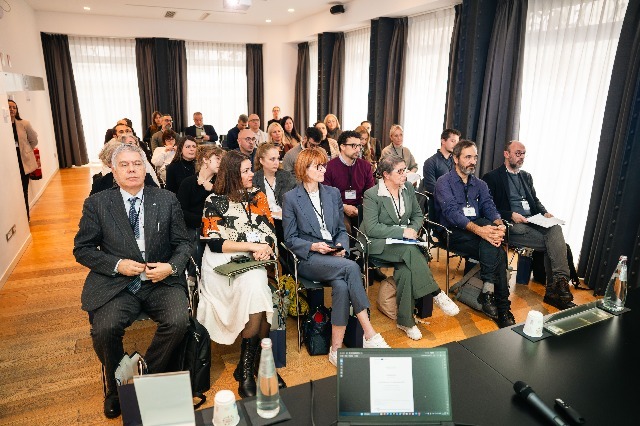
The first day of the Final Conference took place on 19 November at Hotel Continentale in Trieste.
Following the opening addresses by representatives of the partner institutions and the Interreg Italy–Croatia Programme, participants were introduced to the project's main achievements.
Through two thematic sessions, partners presented how scientific research, local knowledge and stakeholder cooperation had been combined into a shared methodology for assessing flood risks and prioritising Nature-based Solutions.
Key achievements highlighted during the conference included the development of climate risk databases and territorial risk profiles, a portfolio of potential Nature-based Solutions, decision-support methodologies and tools, including the AI-supported RHEA-DAPT system, as well as feasibility assessments and technical documentation supporting future investments.
Particular attention was given to the experiences of Karlovac County and the Veneto region. Although these territories face different types of flood risks, they share the need for more effective planning and long-term climate adaptation.
In the Croatian pilot area, two locations in Karlovac – Luščić and Jamadol – were assessed in greater detail. The proposed concepts include green infrastructure, natural stormwater retention and infiltration measures, and improvements to existing water management systems.
These results provide technical and planning foundations for potential future investments rather than representing already implemented interventions.
Beyond the Project: Ensuring the Long-Term Use of AcquaGuard Results
One of the key messages of the panel discussion “Beyond the Project” was that the results of AcquaGuard provide valuable and necessary foundations for future flood risk management.
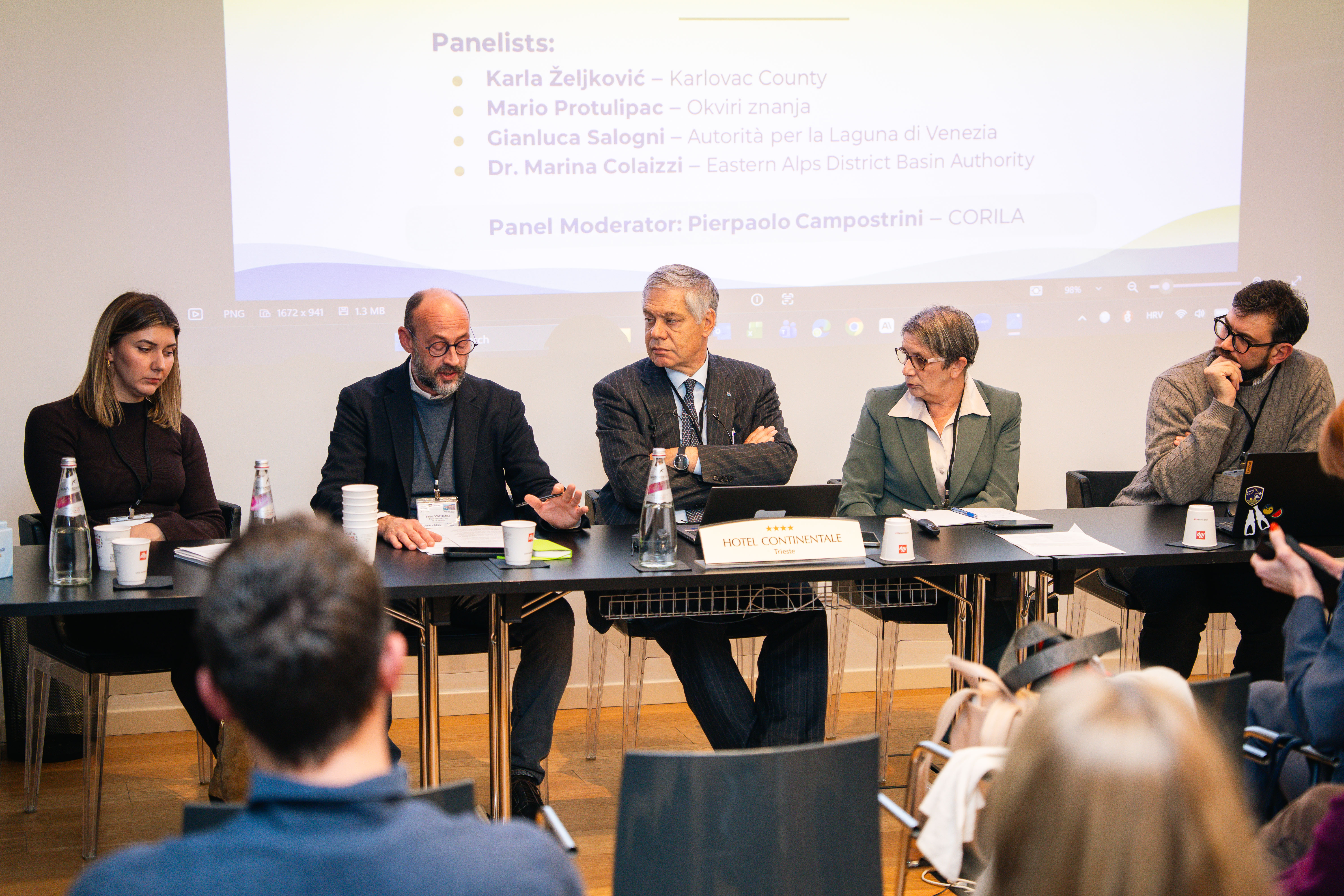
Panelists particularly emphasised the importance of the data collected, methodologies developed and decision-support tools created through the project. These resources can help public institutions make better-informed decisions regarding territorial development, land use and future investments.
The discussion highlighted the need to ensure that project results do not remain confined to technical reports and project documentation, but are actively integrated into strategic, development and spatial planning documents at regional and local levels.
As highlighted by Karla Željković, representing Karlovac County, the project’s risk databases, risk assessment methodologies and prioritisation tools can be used when preparing and revising spatial plans, regional and local development documents, and future investment programmes.
Such an approach would enable authorities to identify flood-prone areas at an early planning stage and consider the potential application of Nature-based Solutions before development and investment decisions are finalised.
Karlovac County has already taken a concrete step in this direction. Several Nature-based Solutions proposed through AcquaGuard have been incorporated into the County's Green Infrastructure Development Study, which provides a technical basis for preparing future amendments to the Spatial Plan of Karlovac County.
This represents an important example of how project-generated knowledge can contribute directly to regional planning processes.
The panel also underlined the importance of stronger cooperation between regional and local authorities, water management institutions, technical experts and other relevant stakeholders.
Such cooperation is essential to ensure that the knowledge and methodologies developed through AcquaGuard continue to be used after the project ends and can be adapted and transferred to other regions.
The discussion was moderated by Pierpaolo Campostrini (CORILA) and brought together Karla Željković (Karlovac County), Mario Protulipac (Okviri znanja), Gianluca Salogni (Autorità per la Laguna di Venezia) and Dr Marina Colaizzi (Eastern Alps District Basin Authority).
Knowledge Capsules: Preserving and Sharing Project Experience
Another distinctive moment of the conference was the Knowledge Capsules Ceremony, facilitated by Elisa Furlan from the CMCC Foundation.
The ceremony presented 19 concise insights and lessons derived from the cooperation between project partners and stakeholders.
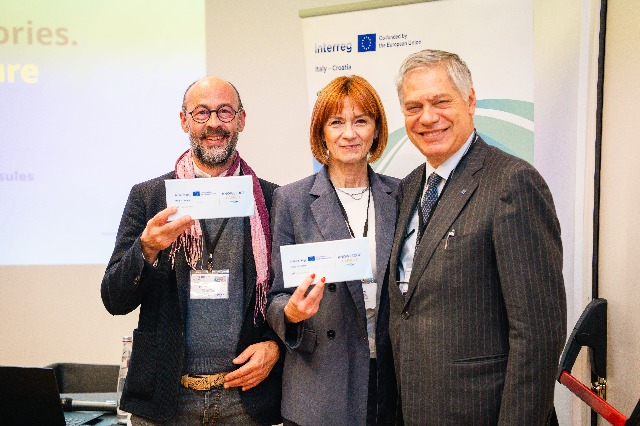
The Knowledge Capsules address four interconnected areas: stakeholder engagement, learning and knowledge transfer, capacity building, and the development and selection of Nature-based Solutions.
Their purpose is to preserve the experience accumulated throughout the project and make it accessible for future learning, planning and application beyond the partnership.
Isola della Cona: From Conference Discussions to Field Experience
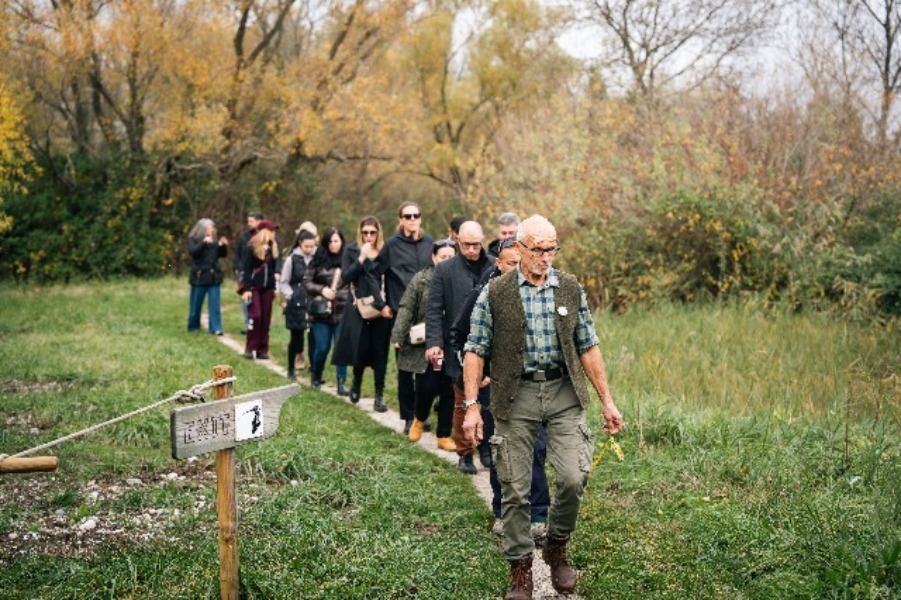
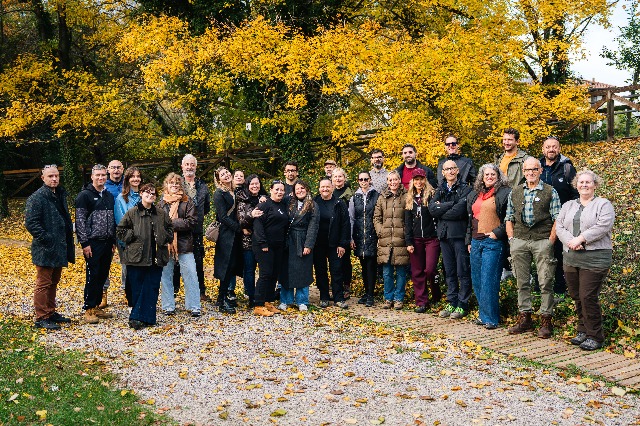
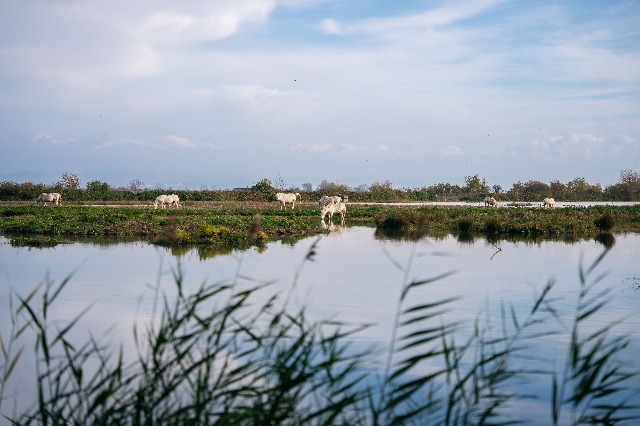
On 20 November, the conference continued with a guided study visit to Isola della Cona, located within the Isonzo River Mouth Nature Reserve in Italy.
The visit offered participants an opportunity to explore approaches to habitat restoration, water management and biodiversity conservation in a natural environment.
Through field-based learning and interactive discussions, participants reflected on how experiences from protected natural areas can contribute to the development of sustainable water management practices and how relevant lessons might be transferred to other territories.
The visit also reinforced one of AcquaGuard's central principles: Nature-based Solutions must be adapted to local environmental, spatial and institutional conditions rather than replicated without considering their specific context.
Building on AcquaGuard Results Beyond the Project Lifetime
AcquaGuard has demonstrated that effective flood risk reduction does not necessarily begin with the construction of new infrastructure. It begins with understanding risks, identifying appropriate measures, involving stakeholders and creating the conditions for informed decisions.
The project has delivered a foundation of scientific evidence, practical tools, methodological approaches, technical assessments and cross-border cooperation that can support future planning and investments.
Importantly, its achievements also demonstrate how Nature-based Solutions can be considered alongside conventional flood protection measures, contributing to broader climate resilience, biodiversity protection and sustainable territorial development.
The Final Conference therefore marked not only the conclusion of an important phase of cross-border cooperation, but also the beginning of a new challenge: ensuring that the project's knowledge and results continue to inform decisions, policies and investments.