
From classroom to seabed: how our training programs went
24/11/2026
BIOPRESSADRIA is nearing its end. After more than thirty months of joint work between Italian and Croatian partners, the project is publishing its reports. What we have learned about the pressures on marine and coastal habitats, and about the solutions that can counter them, is being brought together into a toolbox. Its purpose is to let others replicate these solutions and tackle biodiversity loss across the Adriatic, the Ionian and the wider Mediterranean.
At the end of October we published two project documents: ‘The Protocol definition for monitoring beach and leisure boating tourism pressures in pilot areas’ explained how the project measures. ‘The Report on characterization of habitat quality and pressures in pilot areas’ showed what it found: the condition of seagrass meadows, boat pressure, anchoring damage, dune trampling. We then presented ‘Training Programs’, the document that explains how BIOPRESSADRIA designed its trainings: a shared Training Model, three learning pathways and the freedom for each pilot site to adapt them to its own needs. Today we publish the next step, the ‘Training Programs Report’, coordinated by CORILA with all partners. It tells how the trainings actually went: five trainings held between November 2025 and July 2026 in Italy and Croatia, with nearly 190 participants, including public administrators, protected area managers, marine scientists, diving centres, nautical operators, students and citizens.
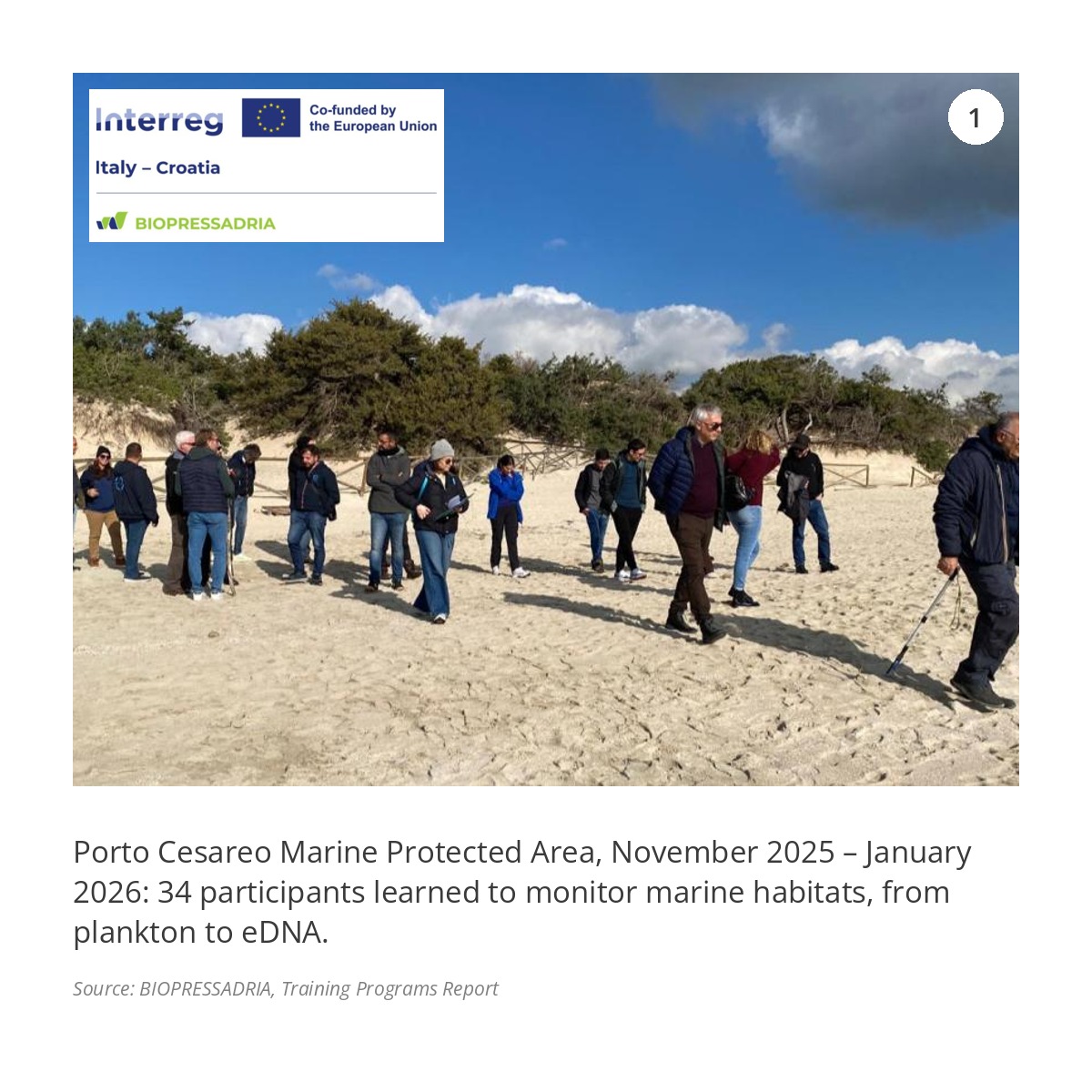
Porto Cesareo Marine Protected Area, Italy
Nov 2025 – Jan 2026: The common model held, and each site adapted it to its own needs. Porto Cesareo opened the series with an eight-day course coordinated by CoNISMa for 34 researchers, MPA staff, students and SMEs. Across seven modules linked to the EU Marine Strategy Framework Directive, participants moved from classroom to field: they sampled plankton and fish fauna, surveyed beach litter, detected microplastics and collected environmental DNA. Underwater, they surveyed seagrass meadows and rocky bottoms with transects and visual censuses, and learned how damaged habitats can be restored.
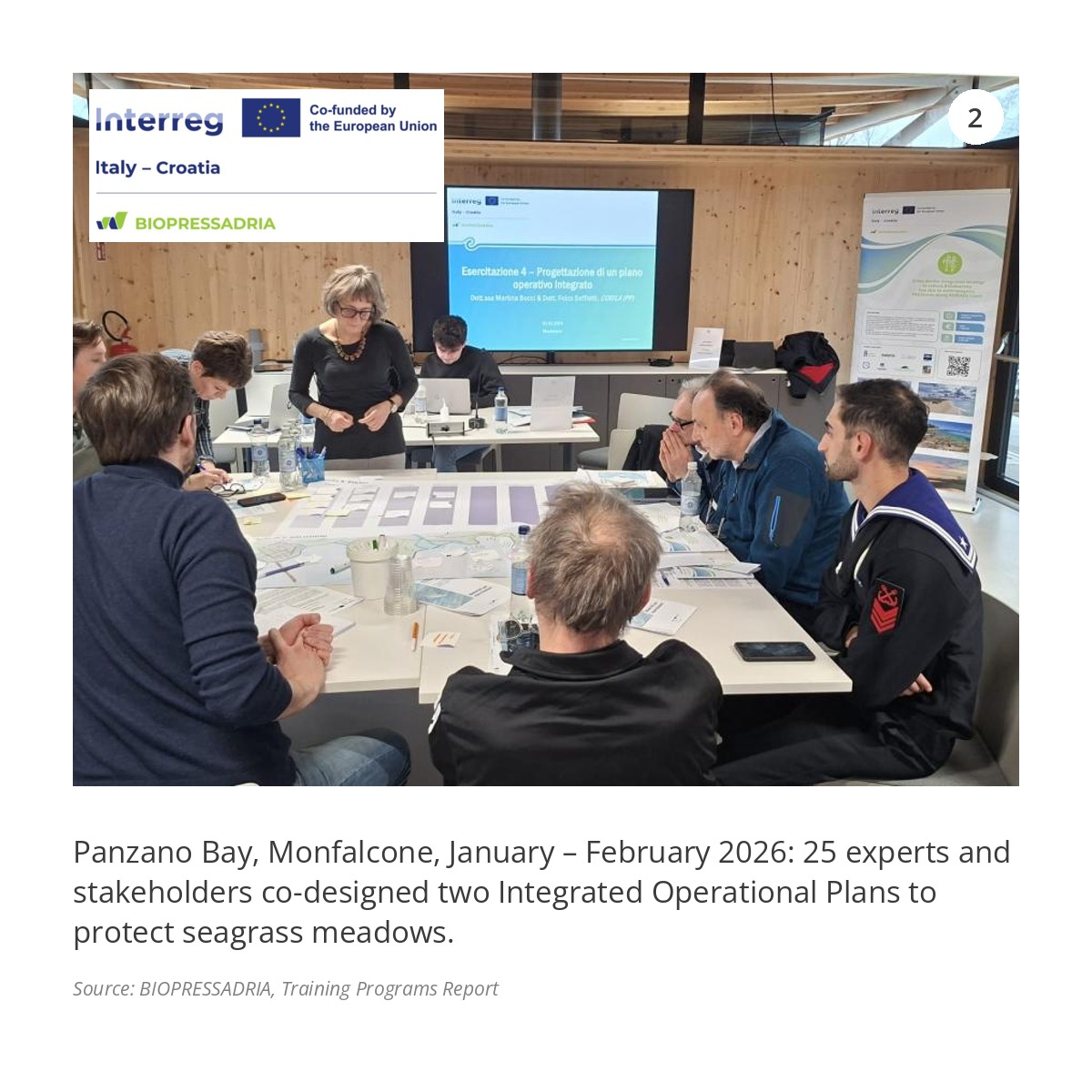
Panzano Bay, Monfalcone, Italy
In January and February 2026, the Municipality of Monfalcone, with CORILA and SELC, gathered 25 participants from public bodies, research centres and marine consultancies over two days. Working on maps, they co-designed two Integrated Operational Plans for the coastal and offshore zones, combining priority zoning, speed limits, buoy fields, habitat mapping and boater education.
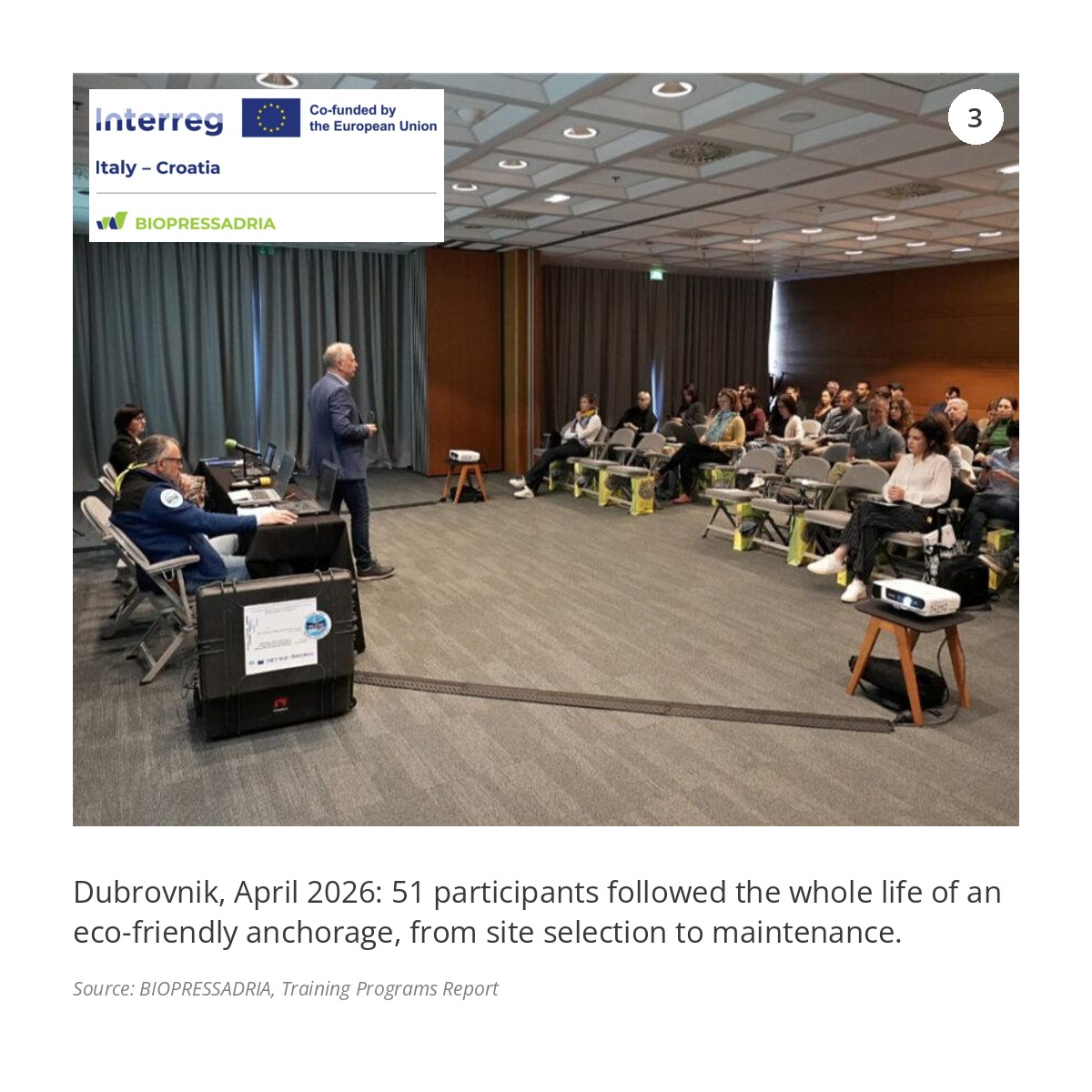
Dubrovnik, Croatia
In April 2026, Dubrovnik hosted the largest group: 51 participants from ministries, protected areas, port authorities, NGOs and companies, brought together by SUNCE and the Public Institution for Protected Areas of Dubrovnik-Neretva County. They followed the whole life of an anchorage, from site selection to long-term maintenance, while manufacturers demonstrated geotechnical anchors and elastic mooring lines. Croatian national television covered the event twice in prime time.
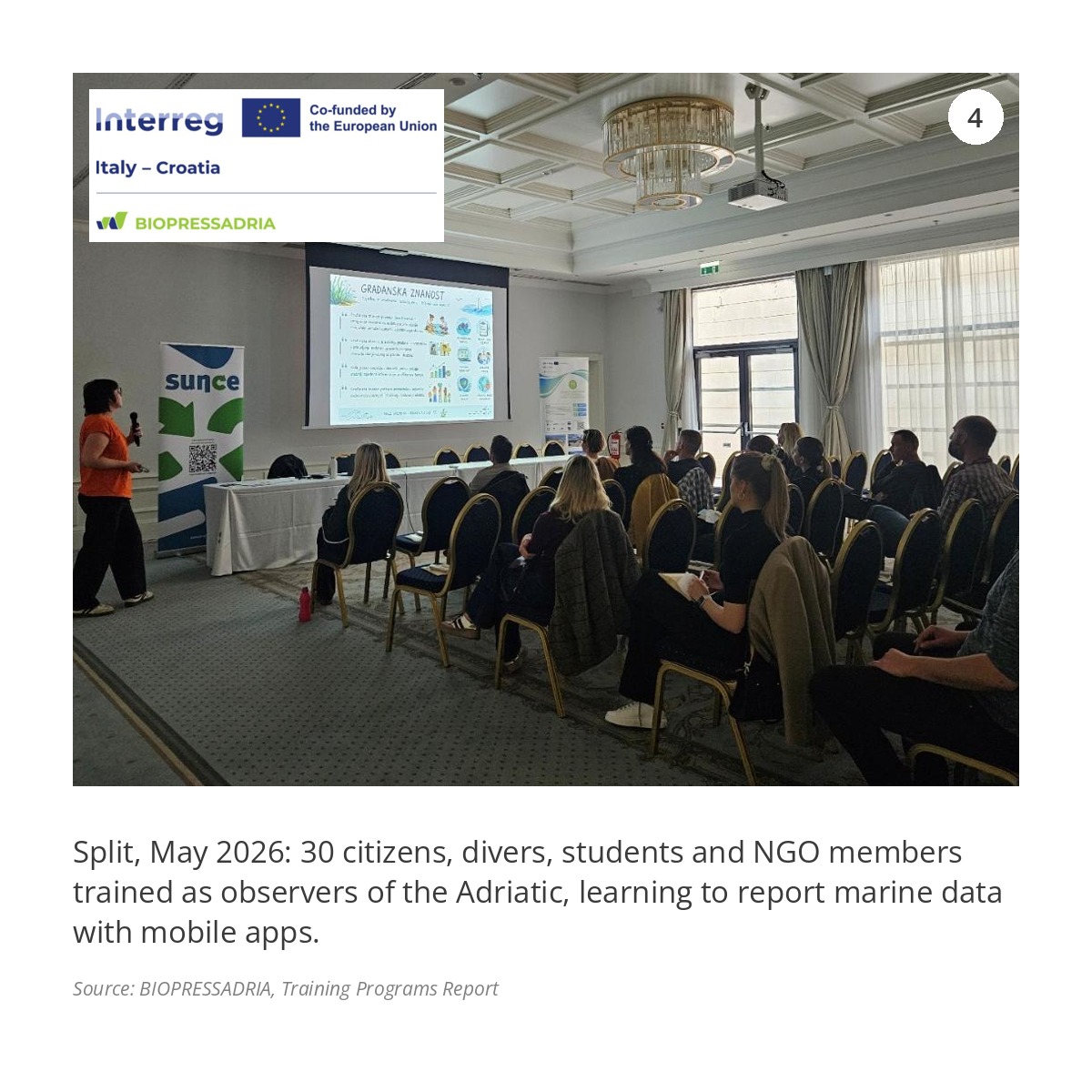
Split and Milna, Croatia
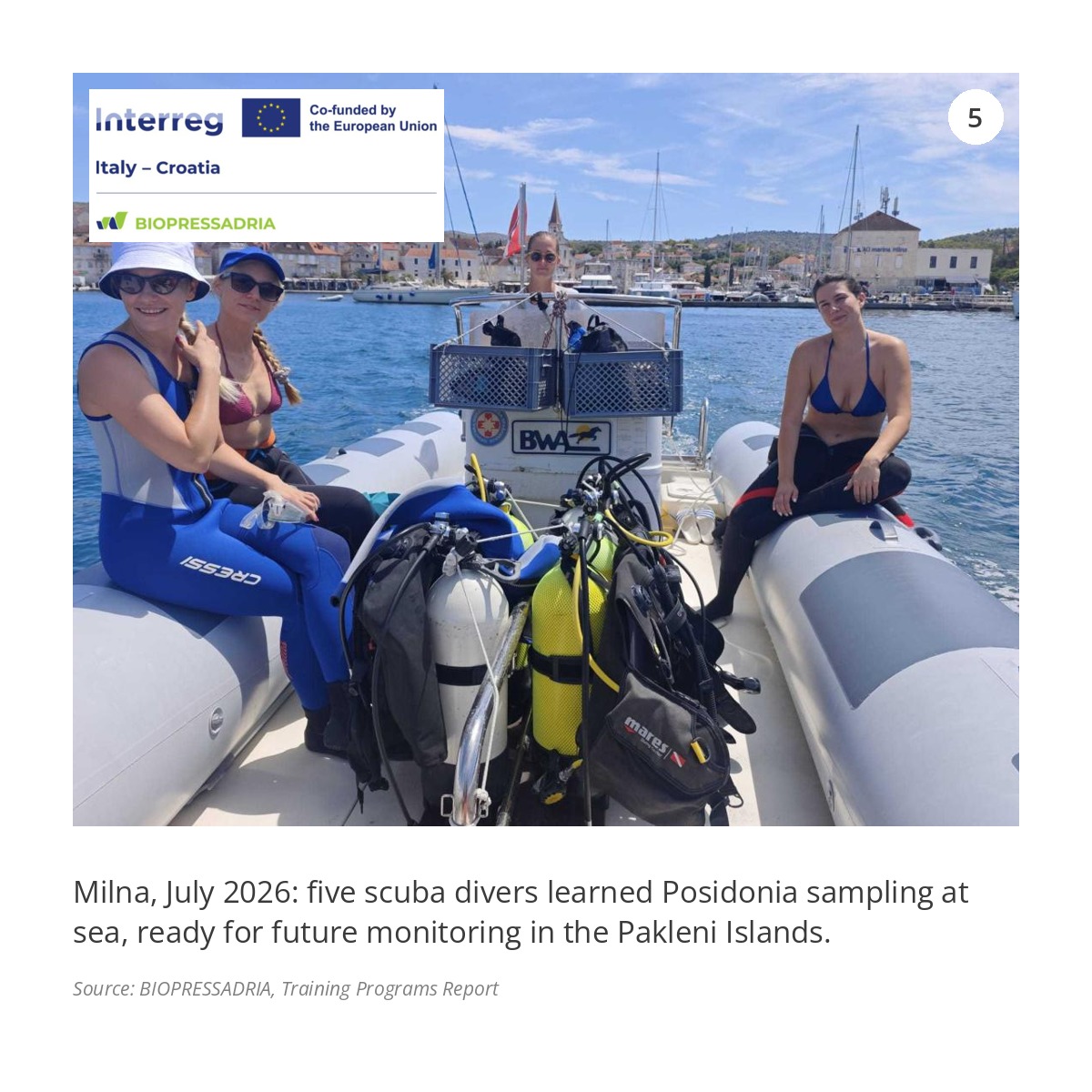
In May 2026, SUNCE brought citizen science to the wider public, training 30 participants from NGOs, diving centres and schools as "Citizens – Observers of the Adriatic Sea State". The course showed that human observation remains essential alongside digital tools. In July, five scuba divers in Milna learned Posidonia sampling for future monitoring in the Pakleni Islands.
Murter, Croatia
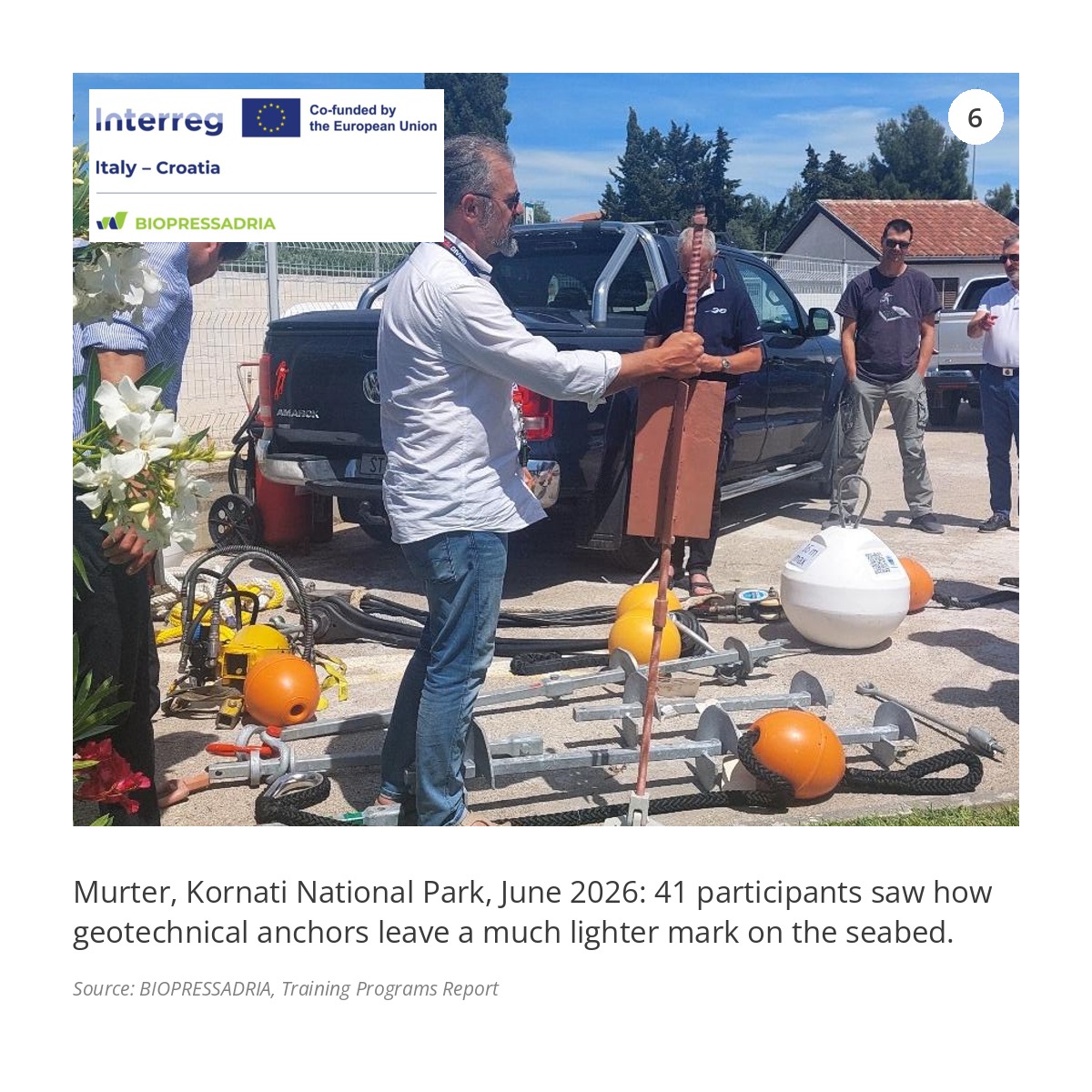
In June, at Marina Hramina in Murter, SUNCE and Kornati National Park shared the park's experience with eco-moorings with 41 participants, including the Croatian Ministry of Sea, Transport and Infrastructure. Working on real bays, they saw how geotechnical anchors leave a much lighter mark on the seabed.
What the trainings taught us:
Across all sites, participants gained confidence that eco-moorings are safe and agreed on a few firm points: map the seabed before designing any anchorage, rely on certified installers, clarify institutional responsibilities and treat boaters, fishers and local communities as partners. They also proposed an official rulebook for eco-moorings, mandatory training for concessionaires, longer courses with more fieldwork and outreach to young people.
Method, data, results and people able to use them: the circle opened by the monitoring protocol is complete. The skills, plans and protocols developed in these trainings now join the BIOPRESSADRIA toolbox, ready to be reused along the Adriatic and Ionian coast after the project ends.