

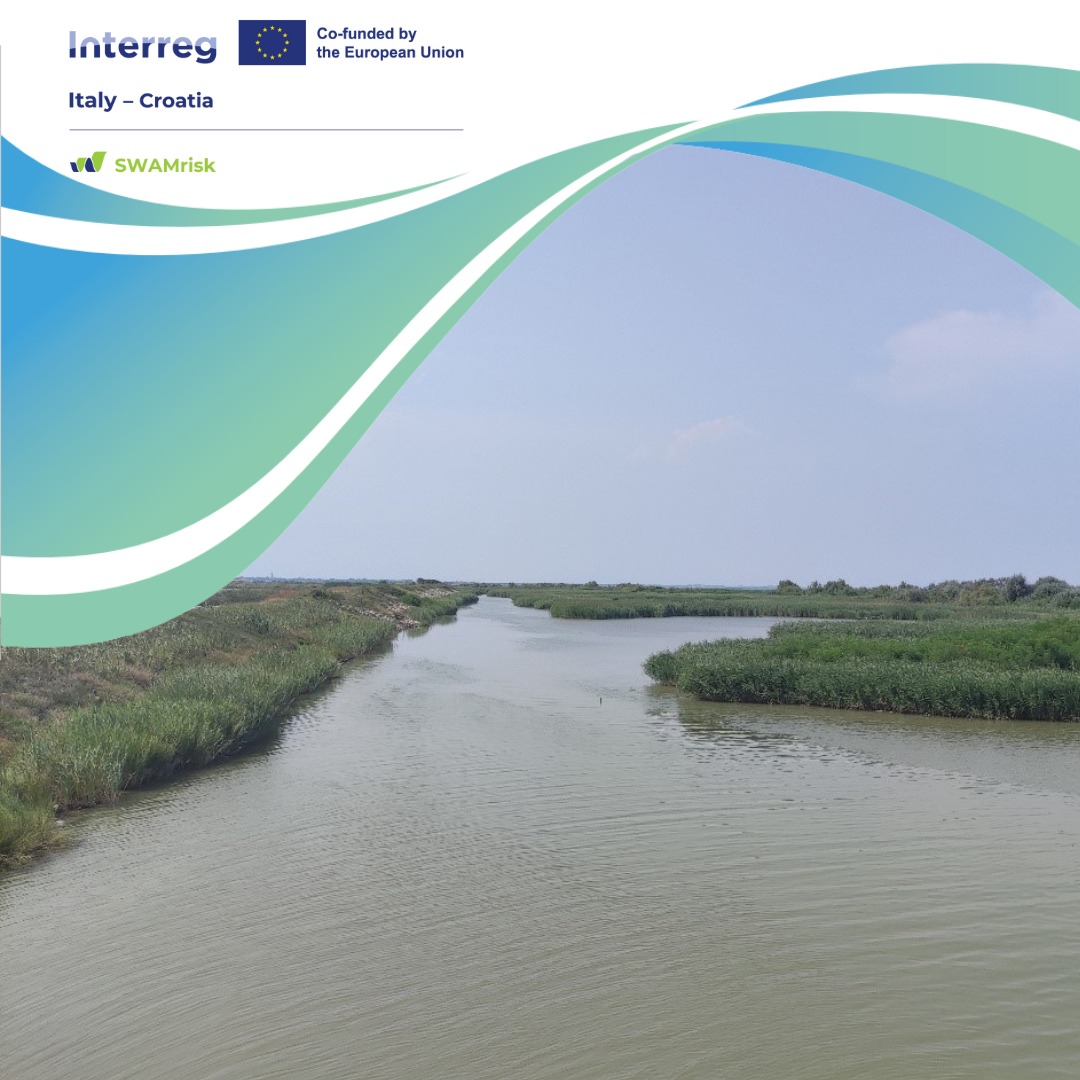
Italian Pilot Site: Delta Po - A Treasure Worth Preserving
Delta Po is Italian pilot site, representing one of the most vulnerable coastal areas in the Adriatic region to saltwater intrusion. Characterized by low-lying agricultural land and intense water use, the area faces increasing salinization risks due to climate change and sea level rise. The pilot focuses on monitoring, modelling, and developing adaptive strategies to protect groundwater and agricultural productivity.
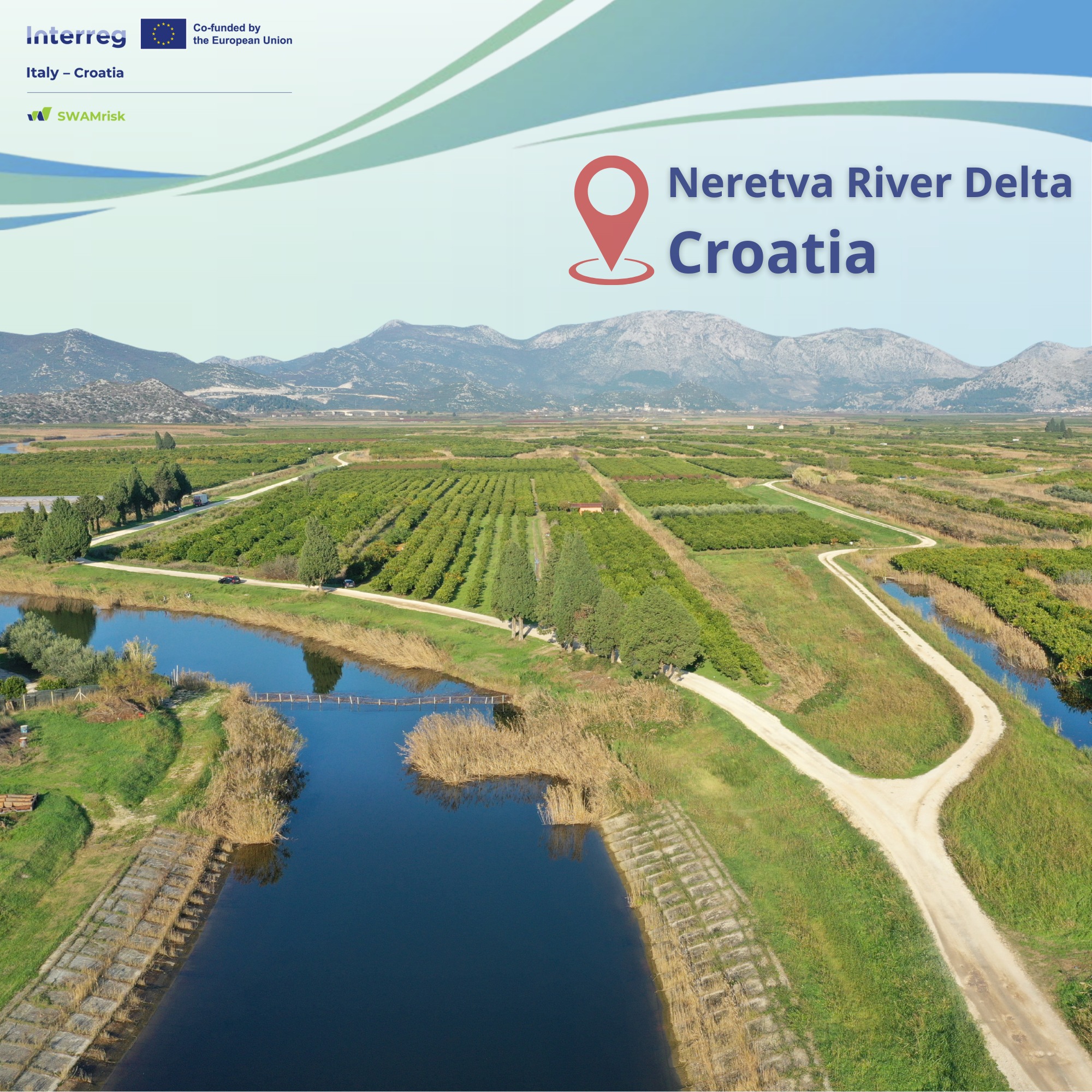
Croatian Pilot Site: The Neretva River Delta - More Than Just a Beautiful Landscape
Neretva Delta is more than just a beautiful landscape. Covering approximately 12,000 hectares, is a vital ecosystem for agricultural production in southern Croatia. A dense network of canals criss-crosses the region, providing essential drainage and irrigation. However, these canals also accumulate salt from both soil and groundwater, especially during irrigation, due to capillary rise and leaching. Climate projections indicate that this problem will worsen with rising sea levels and reduced summer precipitation.
The SWAMrisk team is dedicated to monitoring these changes and developing solutions to mitigate potential negative impacts.
Preserving the Neretva Delta is not just about protecting natural heritage - it is essential for food security and sustainable agriculture in Croatia.
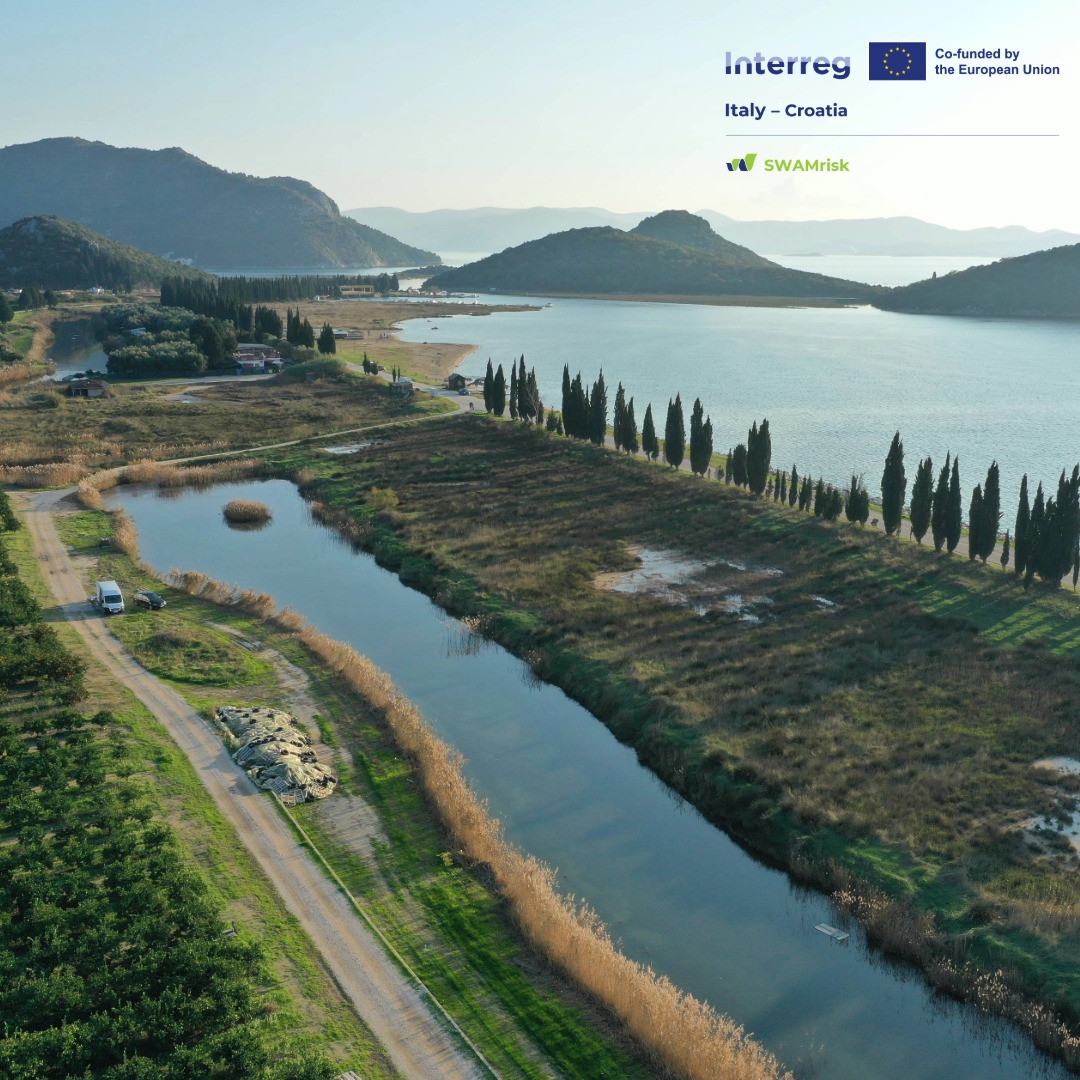
Facing the Challenges of Seawater Intrusion in the Neretva Delta
The Neretva River delta is facing serious challenges from seawater intrusion, especially during dry periods of the year. This process poses a threat to agriculture, drinking water supply, and the ecological balance of the entire area.
Within the SWAMrisk project, systematic monitoring and advanced numerical modelling are being carried out to better understand the dynamics of seawater intrusion in the delta.
By integrating long-term data series on rainfall, sea level, temperature, salinity, and local hydrological conditions with laboratory analyses of groundwater and surface water samples, we aim to identify key connections between the Adriatic Sea, the Neretva River, and coastal aquifers.
 The insights gained will enable us to better predict future scenarios and propose effective technical and operational measures to safeguard this unique and valuable region.
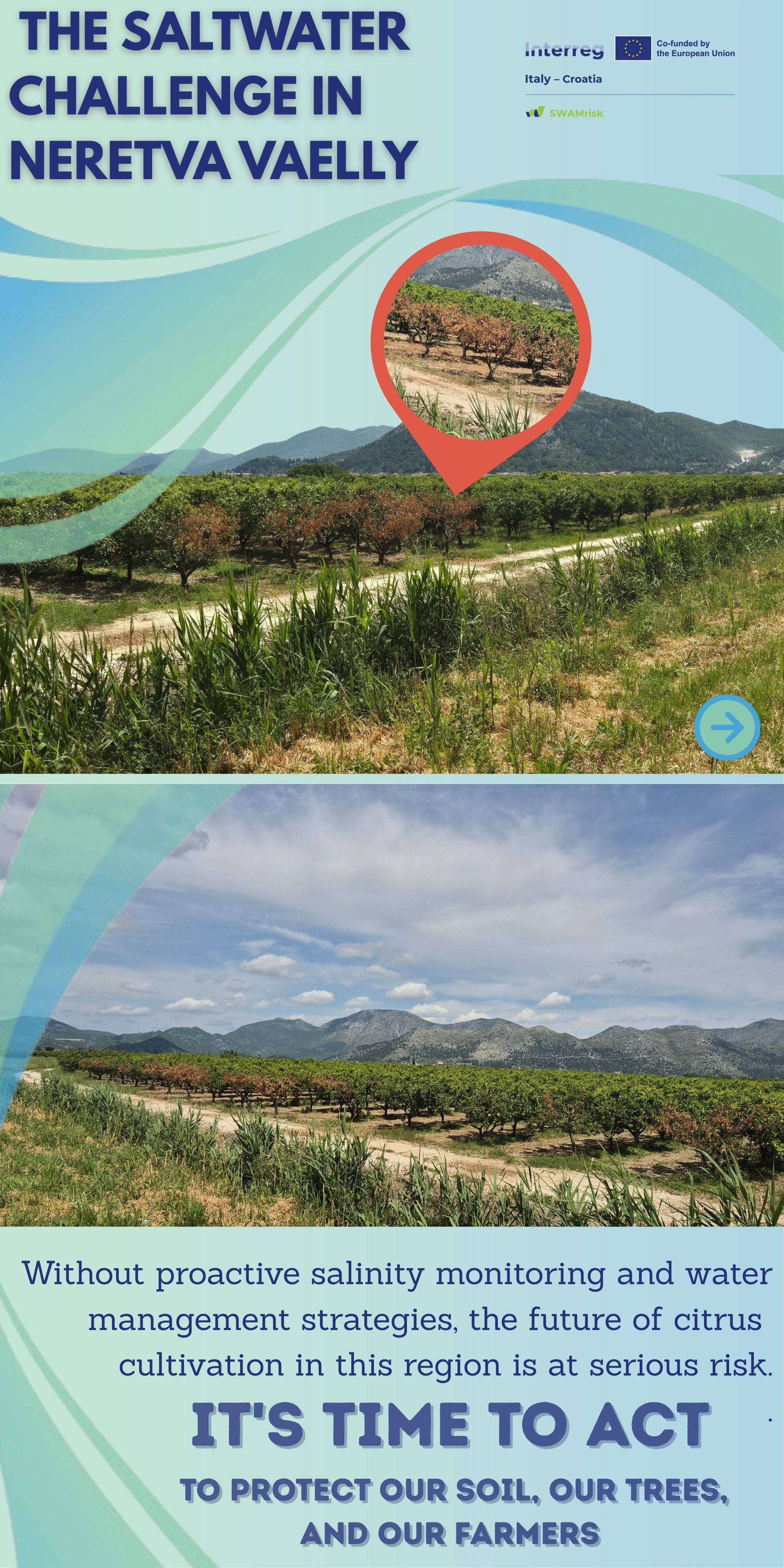
It's time to act - to protect our soil, our trees, and our farmers.
Seawater intrusion into coastal aquifers and estuarine regions can have detrimental effects on citrus trees due to increased soil and irrigation water salinity.
High salinity levels impair the trees' ability to absorb water and essential nutrients, leading to physiological stress, reduced growth, leaf burn, and lower fruit yield. Prolonged exposure to saline conditions can cause irreversible damage to root systems and may ultimately result in tree decline or death.
During the field survey in the area of the Crepina channel in Neretva Valley, mandarin trees showing severe symptoms caused by seawater intrusion were observed.
The visible impact of saltwater intrusion in the Neretva Valley is a clear warning. Without proactive salinity monitoring and water management strategies, the future of citrus cultivation in this region is at serious risk.
It's time to act — to protect our soil, our trees, and our farmers.