
Posidonia returns to protect the dunes
26/11/2026
BIOPRESSADRIA uses the knowledge gained in its pilot sites to test concrete solutions. In Porto Cesareo, the first pilot action was an analysis of the carrying capacity of the dune systems of the Marine Protected Area. The second, recently completed in Torre Lapillo (Apulia), puts that knowledge into practice. It is the only dune restoration action among all the project's pilot sites.
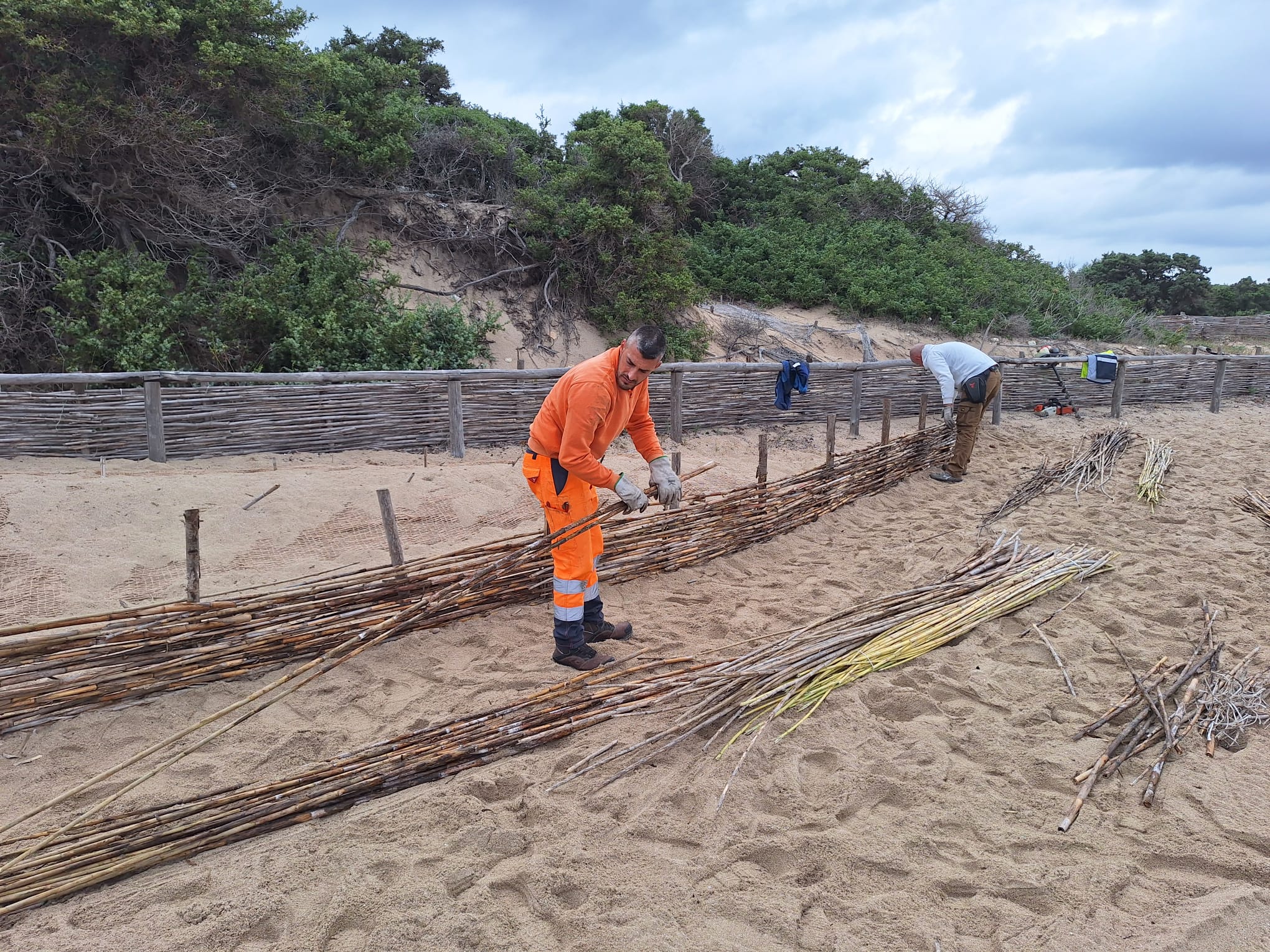
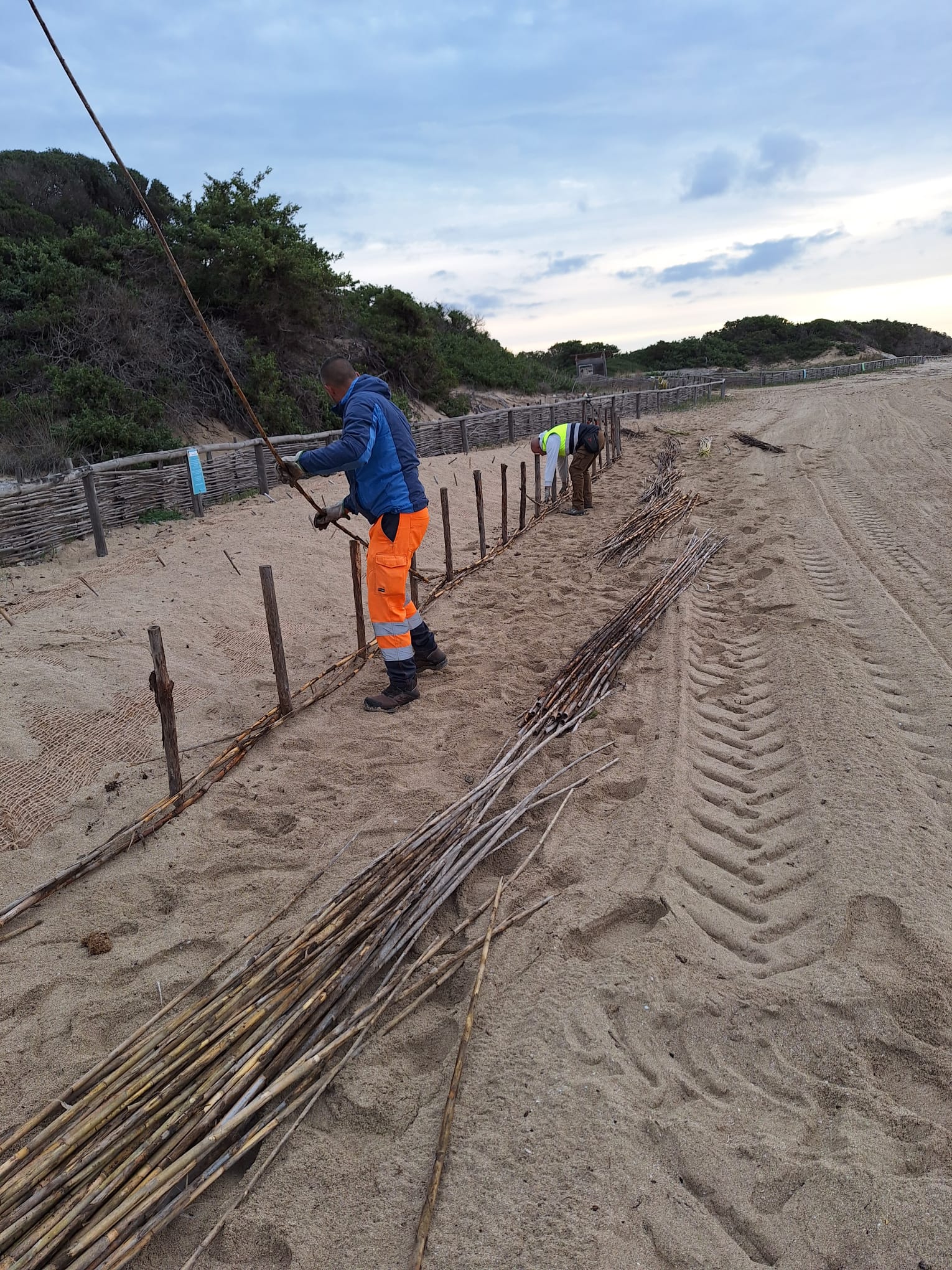
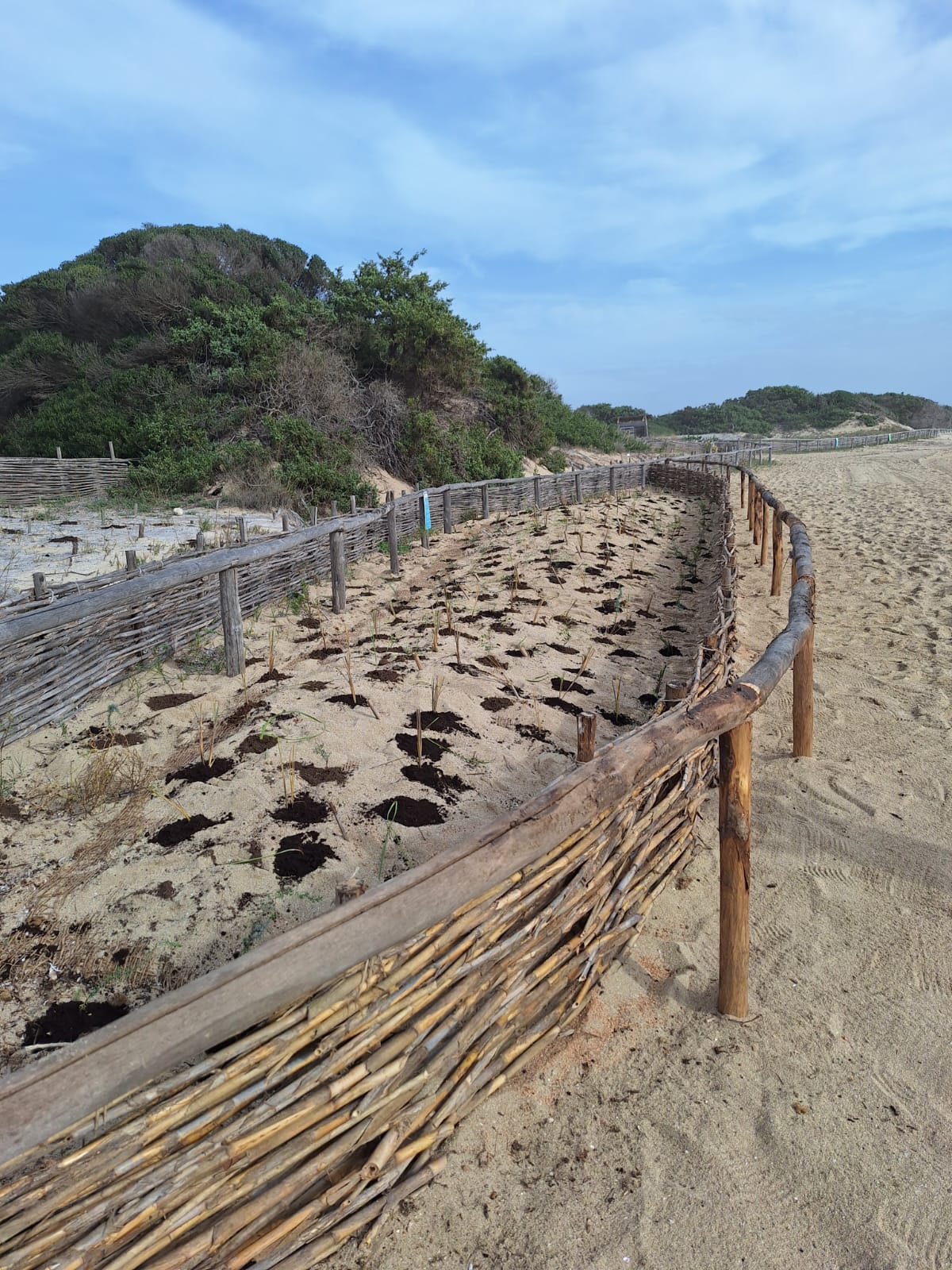
The action restored about 700 square metres of dune ridge in the Riva degli Angeli area. It strengthens the coast's natural defence against erosion and helps coastal habitats and biodiversity recover.
The key resource is Posidonia oceanica, which is useful even after it dies. On the beach, its dead leaves pile up in banquettes that shield the shore from erosion. Often seen as waste, they were here mixed with sand to rebuild and reshape the dune ridge and to hold wind-blown sediment in place. The works also included dune stabilisation and the planting of native dune species.
"Beached Posidonia oceanica leaves are not waste, but a valuable part of the coastal ecosystem," said Marco Dadamo, Director of the Porto Cesareo MPA. "They can become a concrete tool for restoring dunes and protecting the coast from erosion."
The area is land confiscated from the mafia, now co-managed by the Porto Cesareo MPA, the Municipality of Porto Cesareo and the association Libera. It is a place returned to the community that now also protects nature.
The results were presented at the BIOPRESSADRIA final international conference in Venice on 10–11 November, where Italian and Croatian partners shared the solutions developed in their pilot sites. At the conference, Pasquale Coppola, President of the Porto Cesareo MPA Management Consortium, signed the BIOPRESSADRIA Network Memorandum of Understanding. This commitment will keep the cooperation and the exchange of knowledge going beyond the end of the project.
Torre Lapillo shows that biodiversity protection, the fight against erosion and the care of common goods can go hand in hand. It is also a model that other Adriatic coasts can replicate.