
Final conference in Venice: protecting the sea without giving up enjoying it
18/11/2026
How can the development of boating be reconciled with the protection of marine habitats?
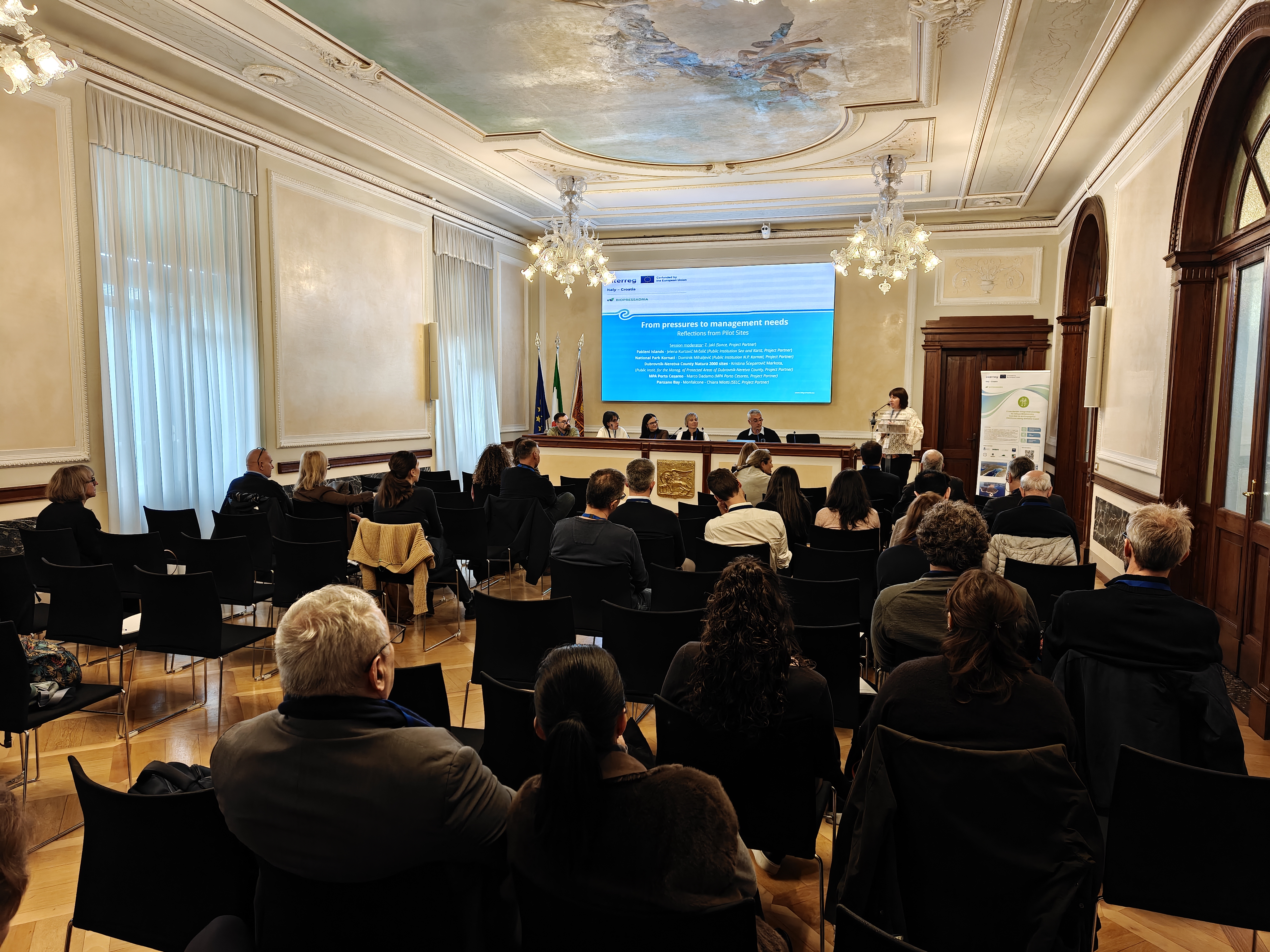
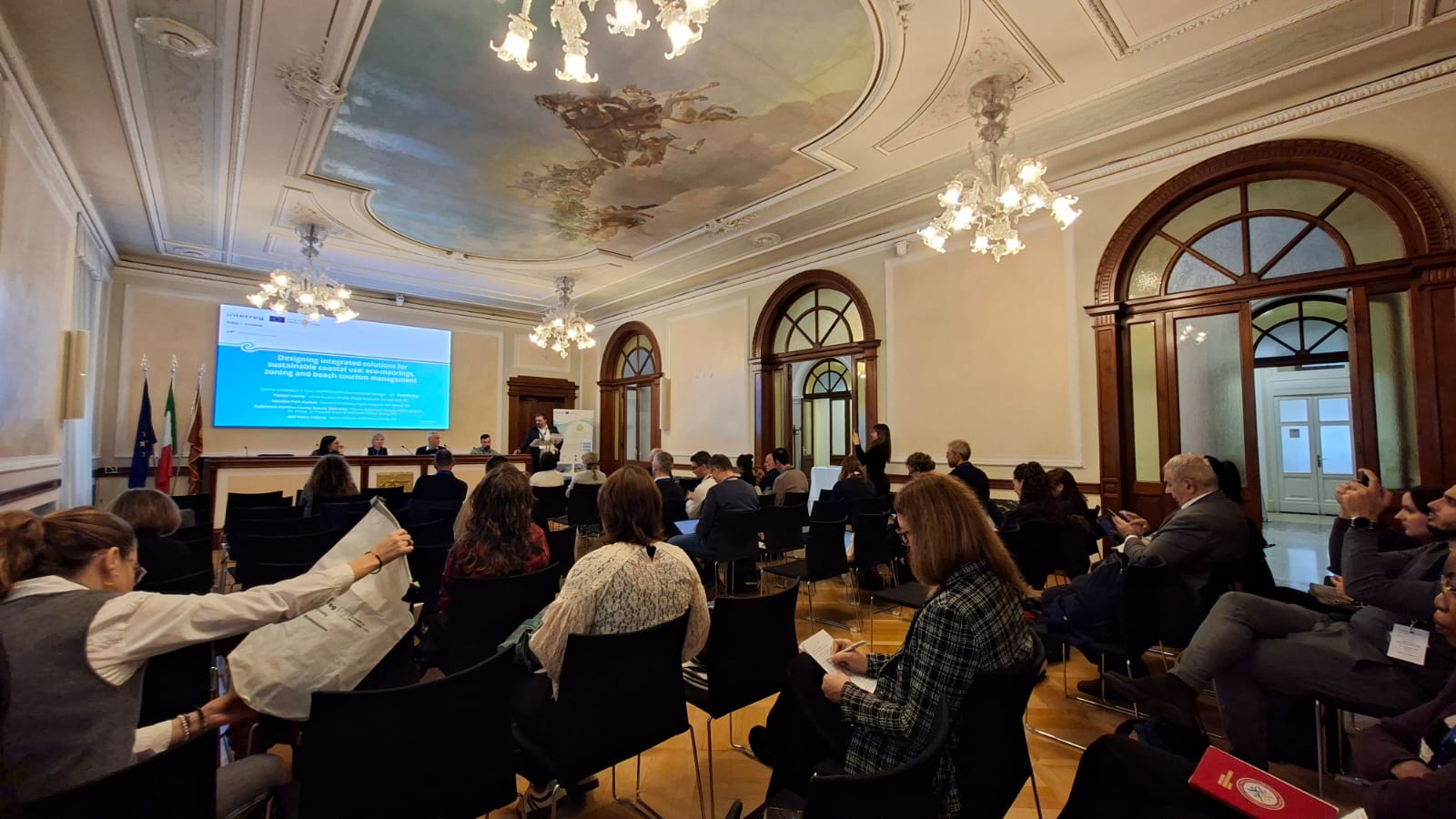
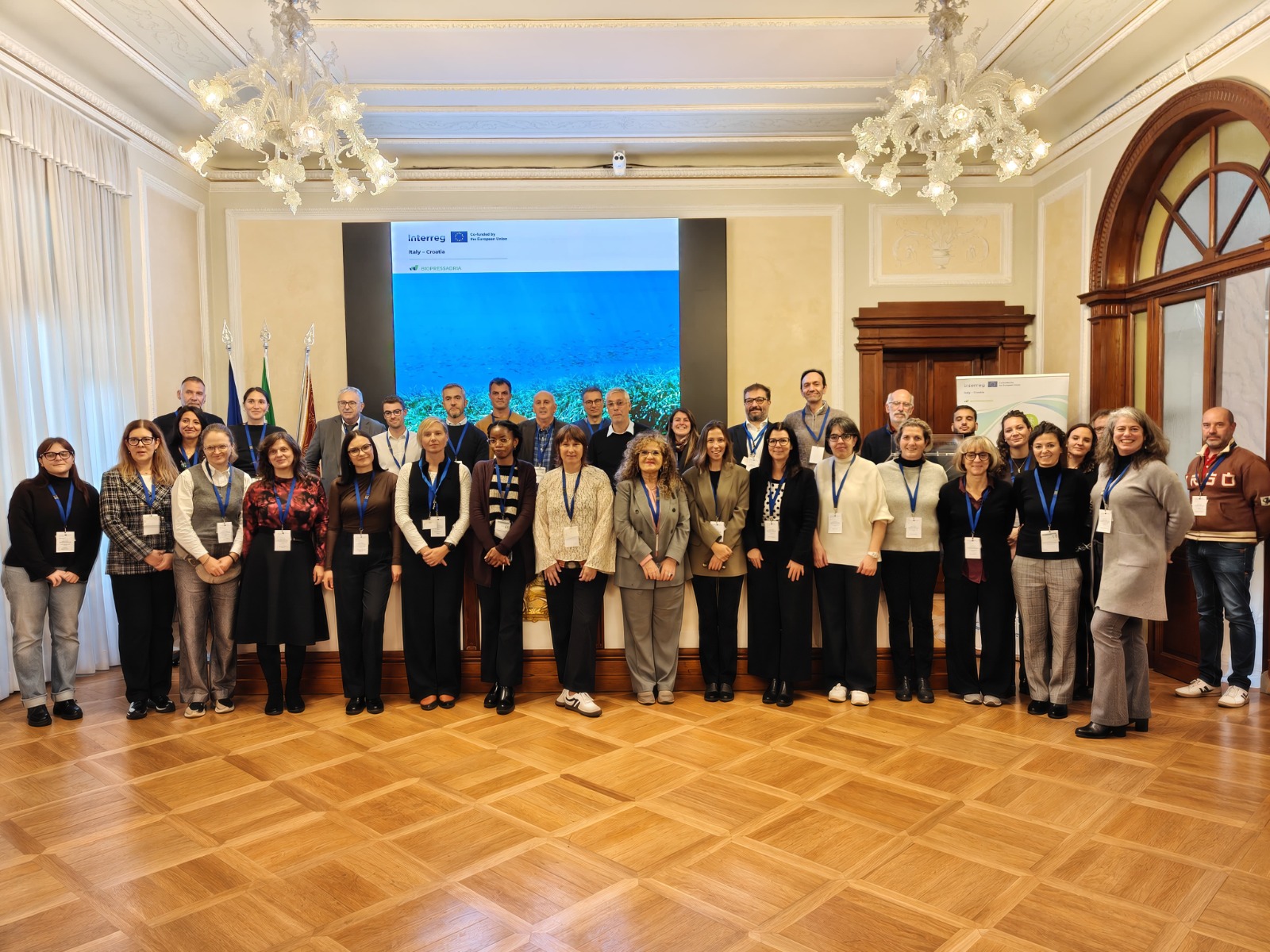
This was the question addressed in Venice on 10 and 11 November by the Italian and Croatian partners of BIOPRESSADRIA. The final conference was hosted and organised by CORILA at Palazzo Grandi Stazioni, in collaboration with the Municipality of Monfalcone (LP) and SELC. The event brought together institutions, researchers, managing bodies and operators from both shores of the Adriatic and Ionian Seas.
The project's message is not to give up visiting the coast, but to learn to experience it better. This means understanding its value and adopting solutions that reduce pressures on the most fragile habitats. It is a goal that also speaks to recreational boating, a sector increasingly attentive to the quality of the marine environment.
A heritage under pressure
At the heart of the project are seagrass meadows, such as *Posidonia oceanica* and *Cymodocea nodosa*. They are essential for biodiversity, for protecting the seabed and for the life of many species. They grow mainly in shallow coastal waters, the very ones most frequented by small boats. Anchors and chains can uproot them and alter the seabed, and the extremely slow growth of Posidonia makes recovery difficult. Satellite monitoring carried out in 2023 and 2025 at several Croatian sites found that between 25% and 65% of the boats observed were anchored on Posidonia meadows. The lowest values were recorded where eco-friendly moorings are available, which is why it was stressed that solutions of this kind are essential for protecting marine and coastal biodiversity.
Day one: from knowledge to solutions
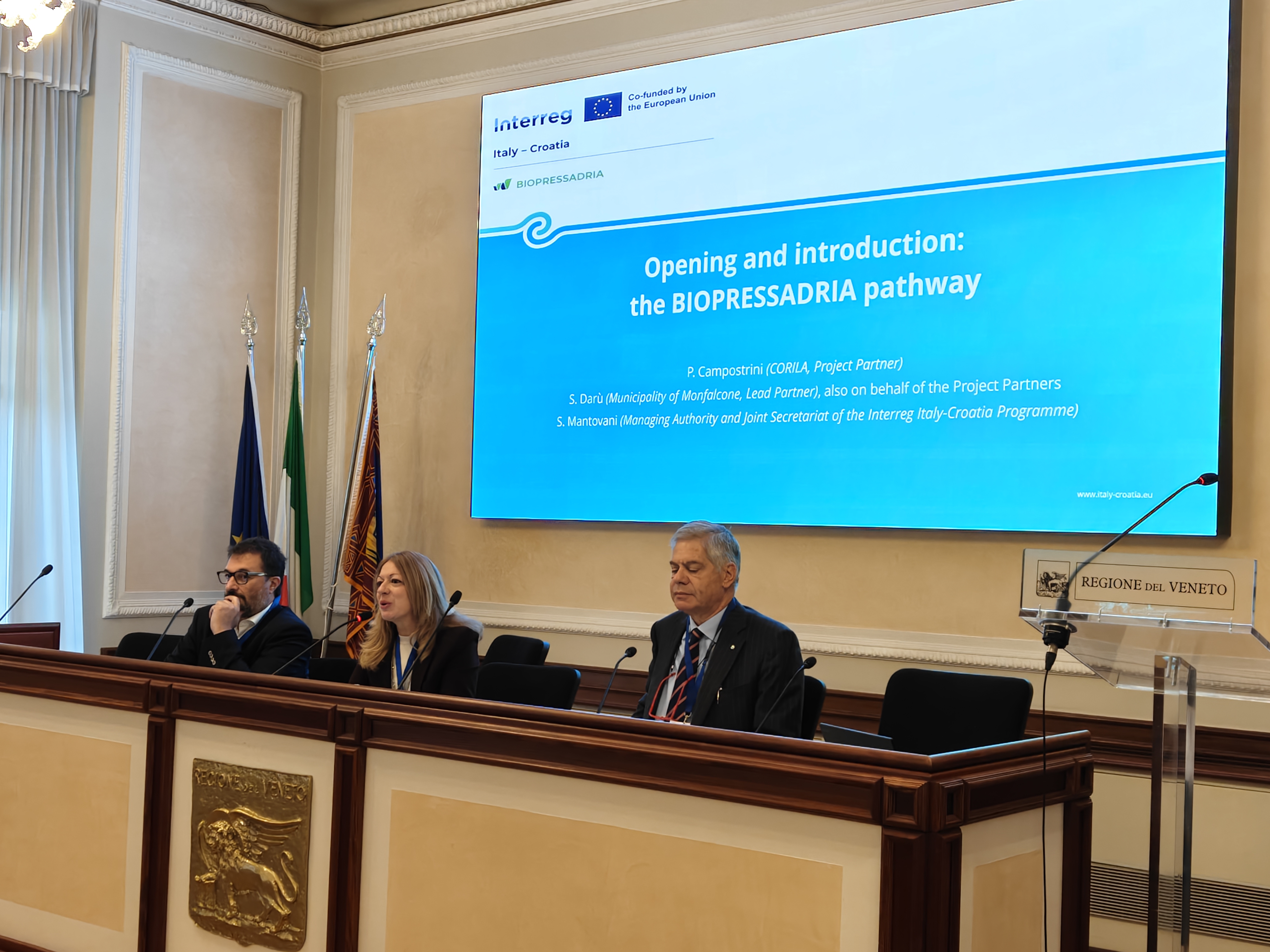
The conference was opened by CORILA, the Municipality of Monfalcone and the Managing Authority of the Interreg Italy-Croatia Programme.
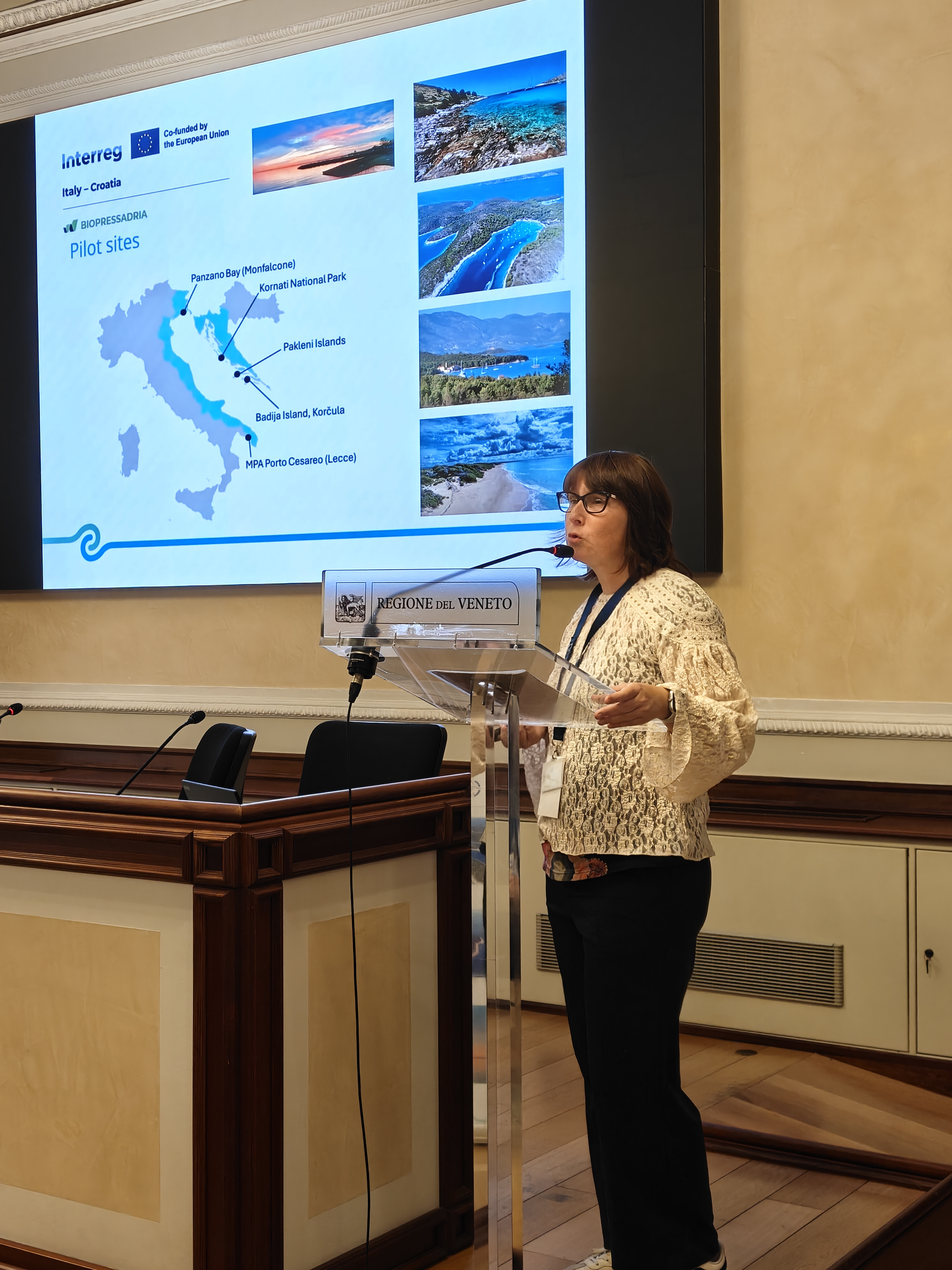
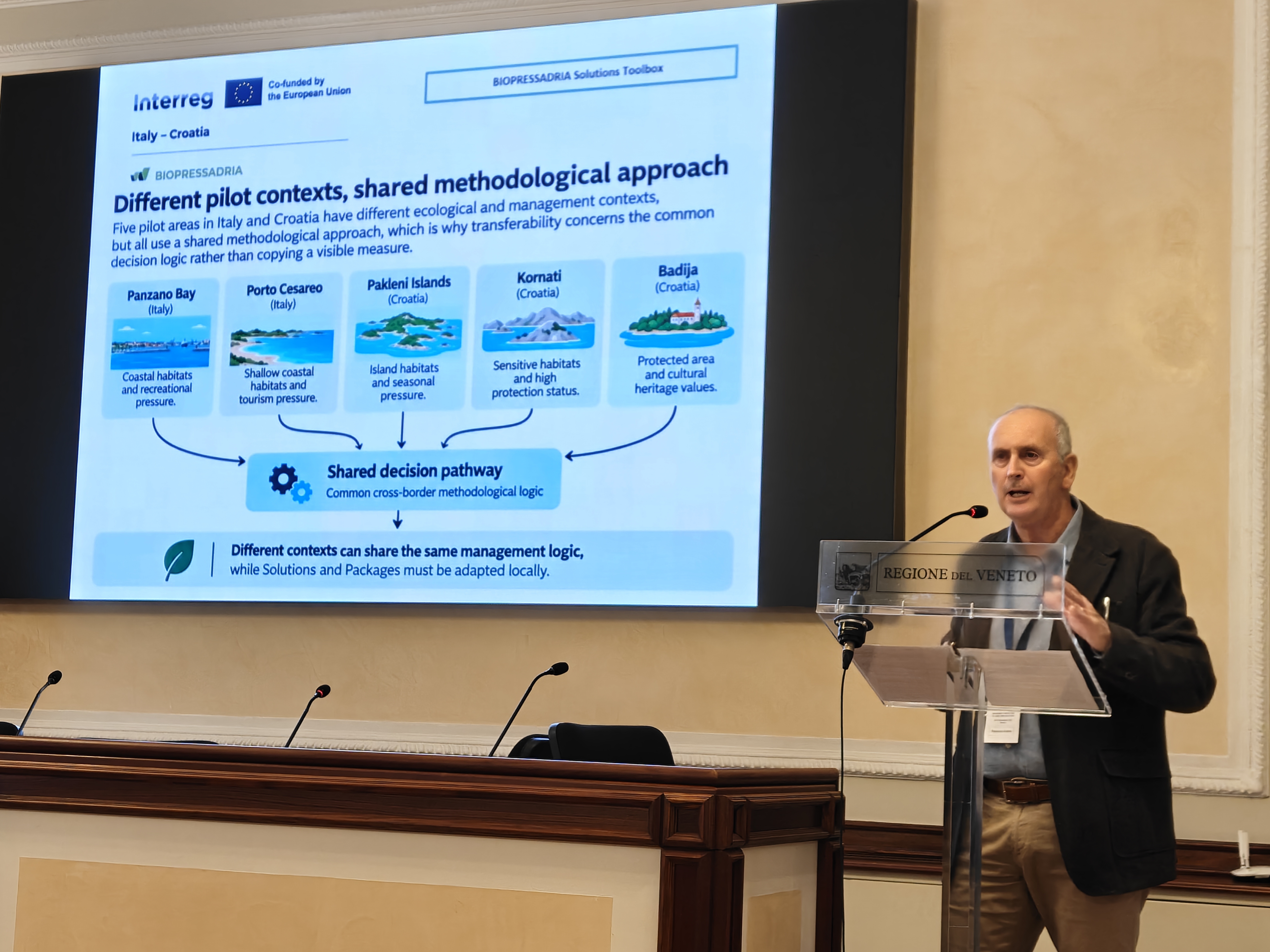
In the first session, representatives of the pilot sites reported what they had found about the state of the habitats and the pressures threatening them. The pilot sites covered by the monitoring were Panzano Bay in Monfalcone, the Porto Cesareo Marine Protected Area in Apulia with its dune systems, Kornati National Park, the Pakleni Islands, and the Korčula and Badija archipelago in Dalmatia. Discussion focused on how much the scientific data from the monitoring had supported dialogue with stakeholders, and on the gaps that remain in moving from science to management.
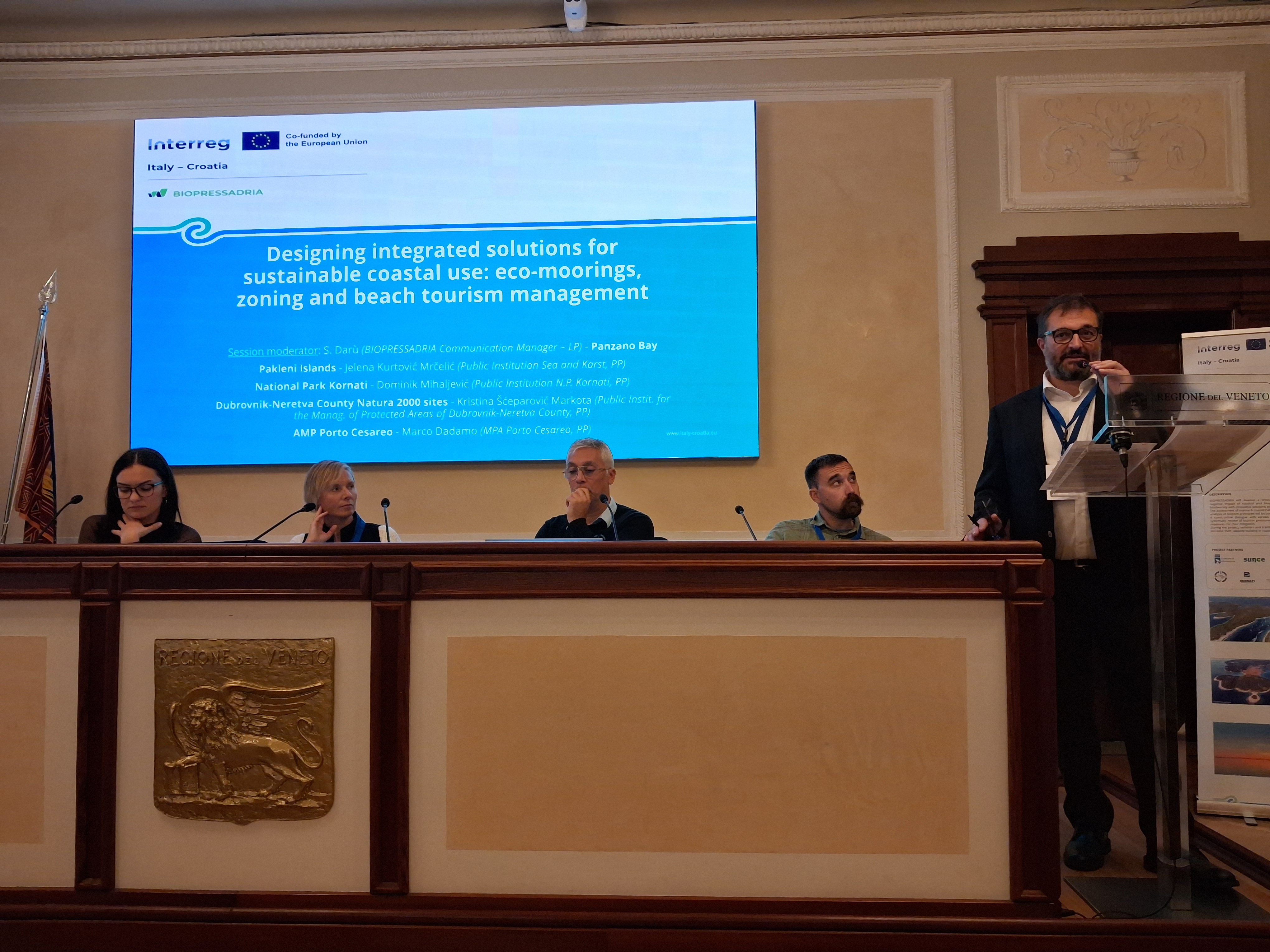
The second session, moderated by the Municipality of Monfalcone, was dedicated to the solutions tested (both conceptual and practical), presented through five short videos:
- in Kornati National Park, eco-friendly moorings have been installed with environmental and nautical monitoring;
- in Porto Cesareo, the carrying capacity assessment defined beach access with a view to protecting the dunes, while also identifying the focus of dune restoration;
- in the Pakleni Islands, mooring zones have been included in Hvar's urban planning;
- in Dubrovnik-Neretva County, monitoring of twelve Natura 2000 sites is guiding future measures.
Participants explained how they turned needs into workable solutions and what is required for them to last over time and be transferable elsewhere. Stakeholder engagement, from administrations to operators and sea users, was one of the most important outcomes. It was a dialogue that was not always easy, and it showed how much shared solutions matter: solutions able to meet both conservation needs and the needs of those who live on the coast every day. The BIOPRESSADRIA app was also presented. Developed within the project and designed for sea users, it shows the eco-mooring fields at the five pilot sites and provides updates on the rules to follow for responsible mooring.
In the afternoon, external experts took the floor. ISPRA shared experiences in restoring seagrass meadows in the Mediterranean, and the Veneto Region presented the BRAVE project.
Day two: cooperation beyond the project
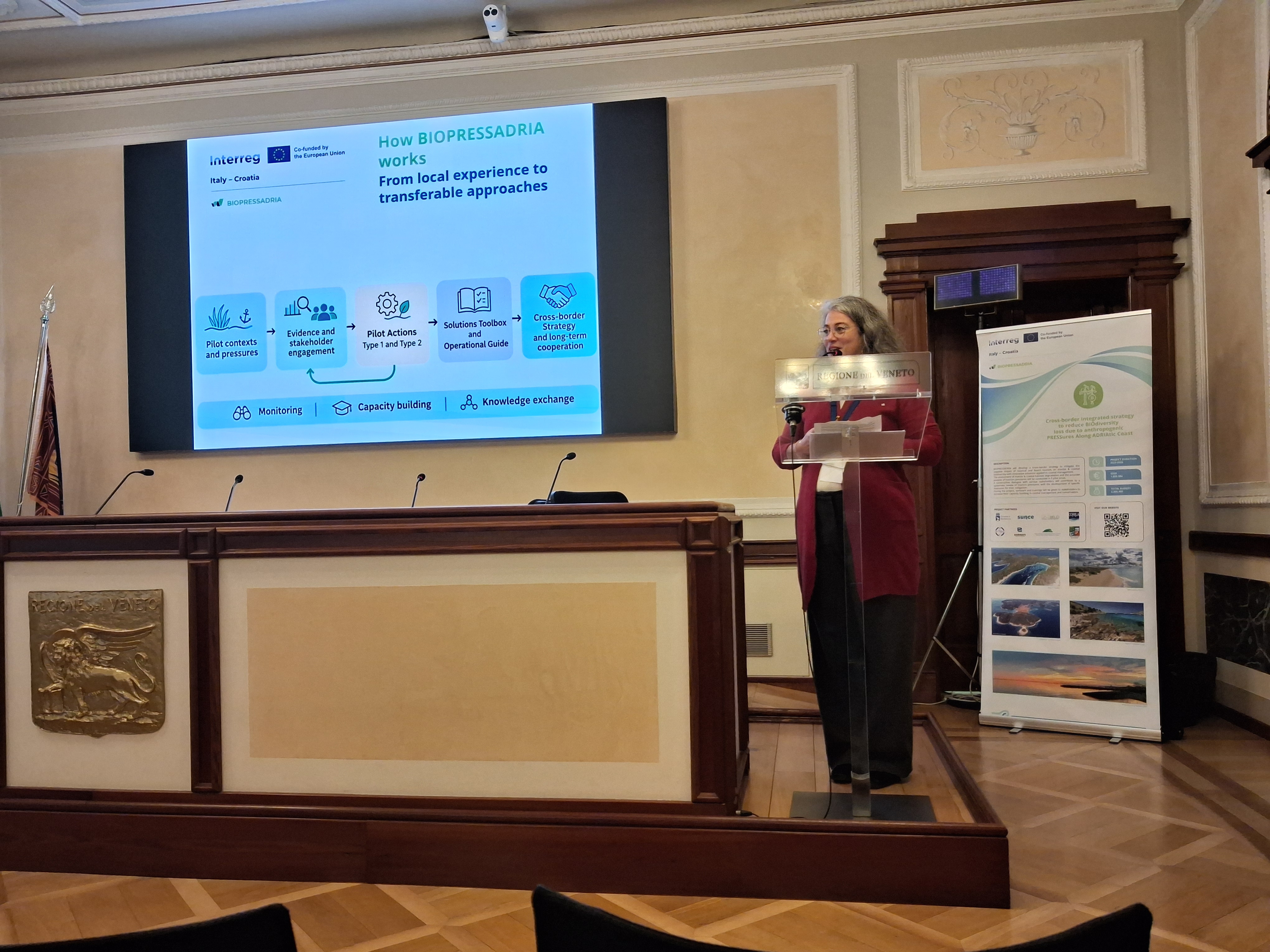
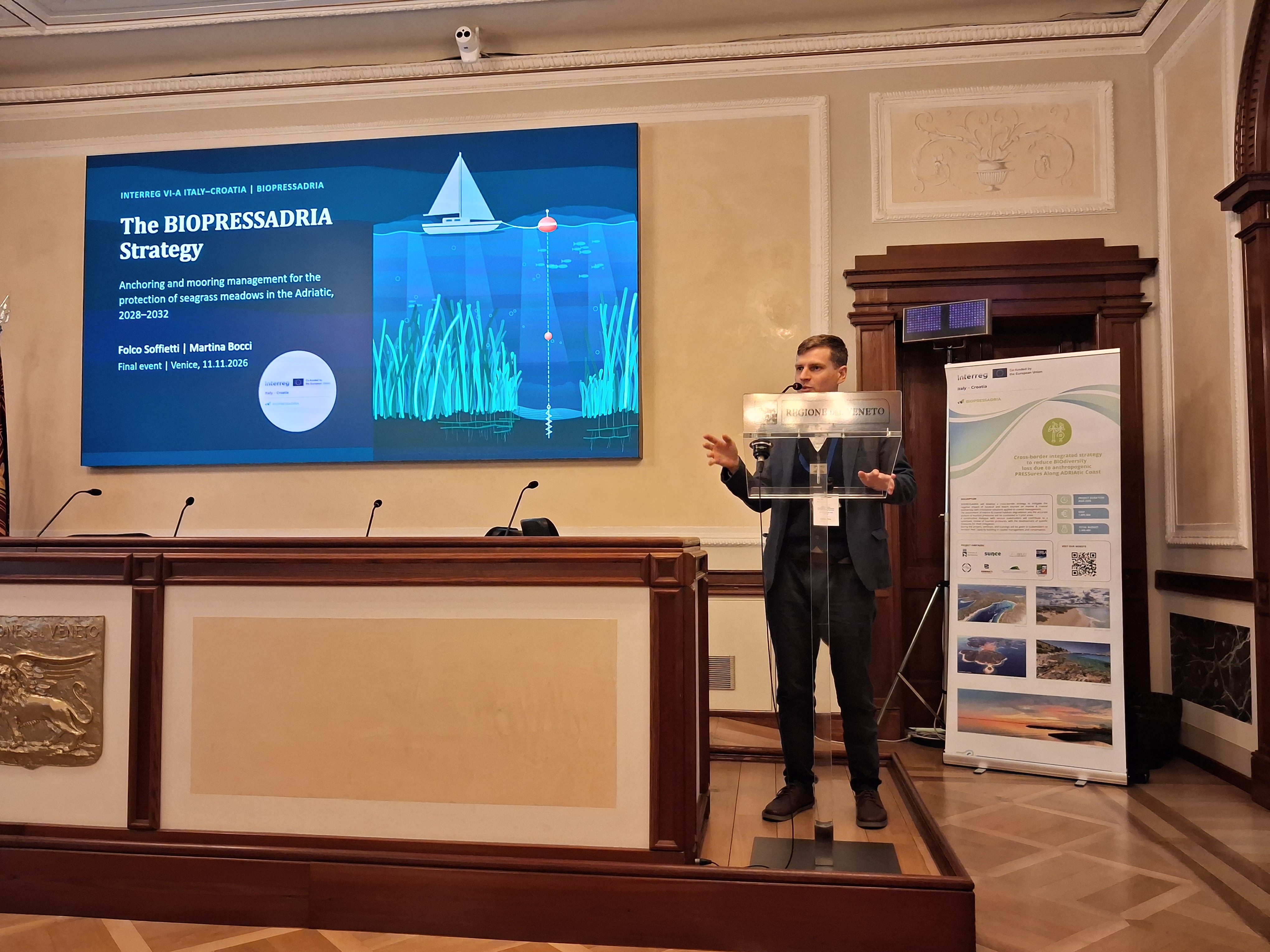
The second day opened with greetings from the Ministry of Environmental Protection and Green Transition of the Republic of Croatia and from the Municipality of Monfalcone. The two tools that carry forward the project's legacy were then presented. The first is the BIOPRESSADRIA Solutions Toolbox, developed with the scientific and technical contribution of SELC, which also handled the assessment of environmental pressures and the pilot actions. It brings together twelve tools that help bodies and managers tackle different problems with a common approach that can be adapted to local conditions. The second is the Cross-border Strategy, drawn up by CORILA, which sets out priorities and implementation pathways for each site and promotes continued cooperation between the two shores.
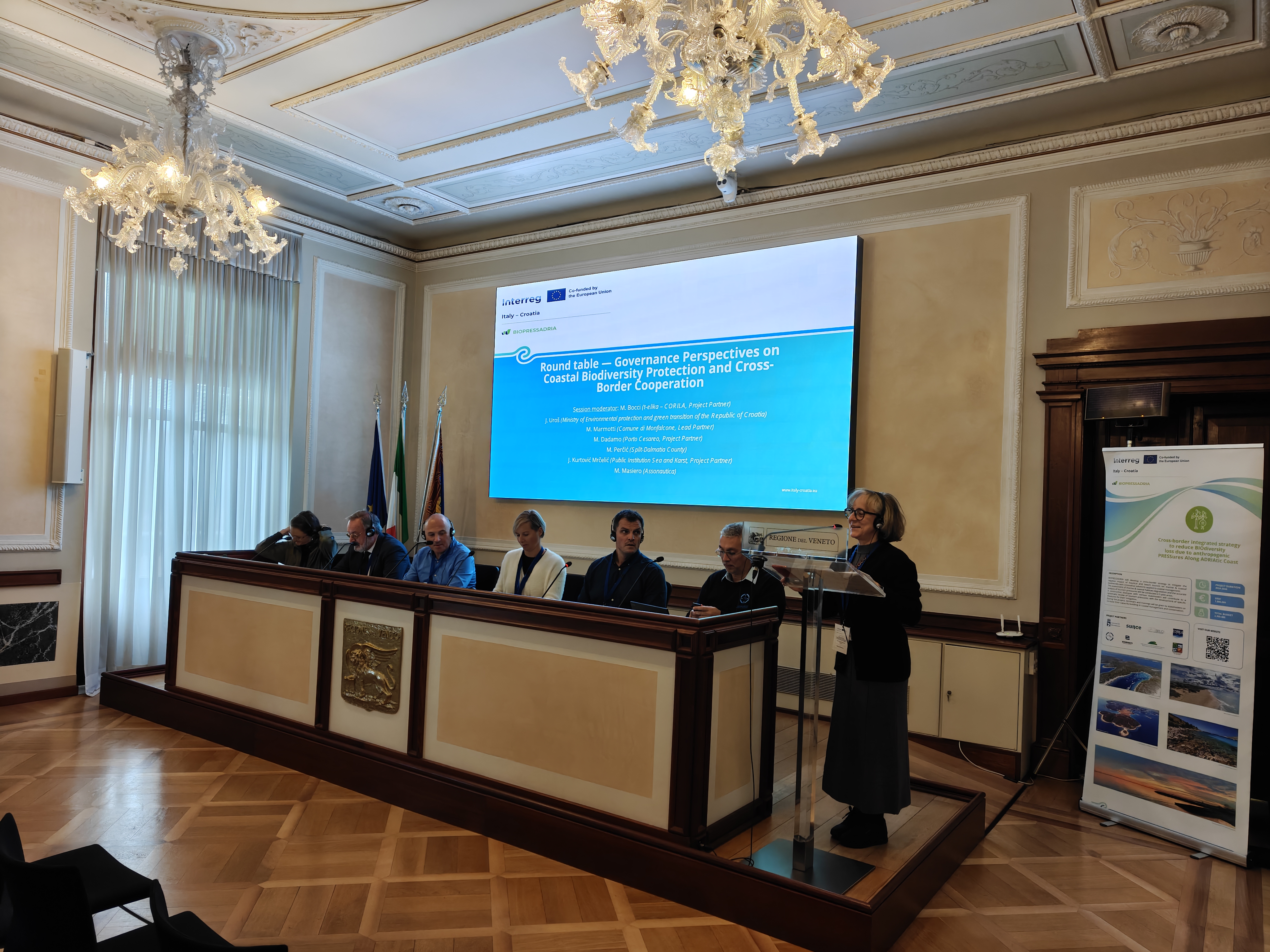
The round table on governance included the Ministry of Environmental Protection and Green Transition of the Republic of Croatia, Split-Dalmatia County, the protected area managers of Dubrovnik-Neretva and Split-Dalmatia, and Assonautica. The underlying question was what is needed for these solutions to become part of ordinary management. Topics included joint design, skills, regulation, economic sustainability and cooperation between institutions.
The BIOPRESSADRIA Network is born
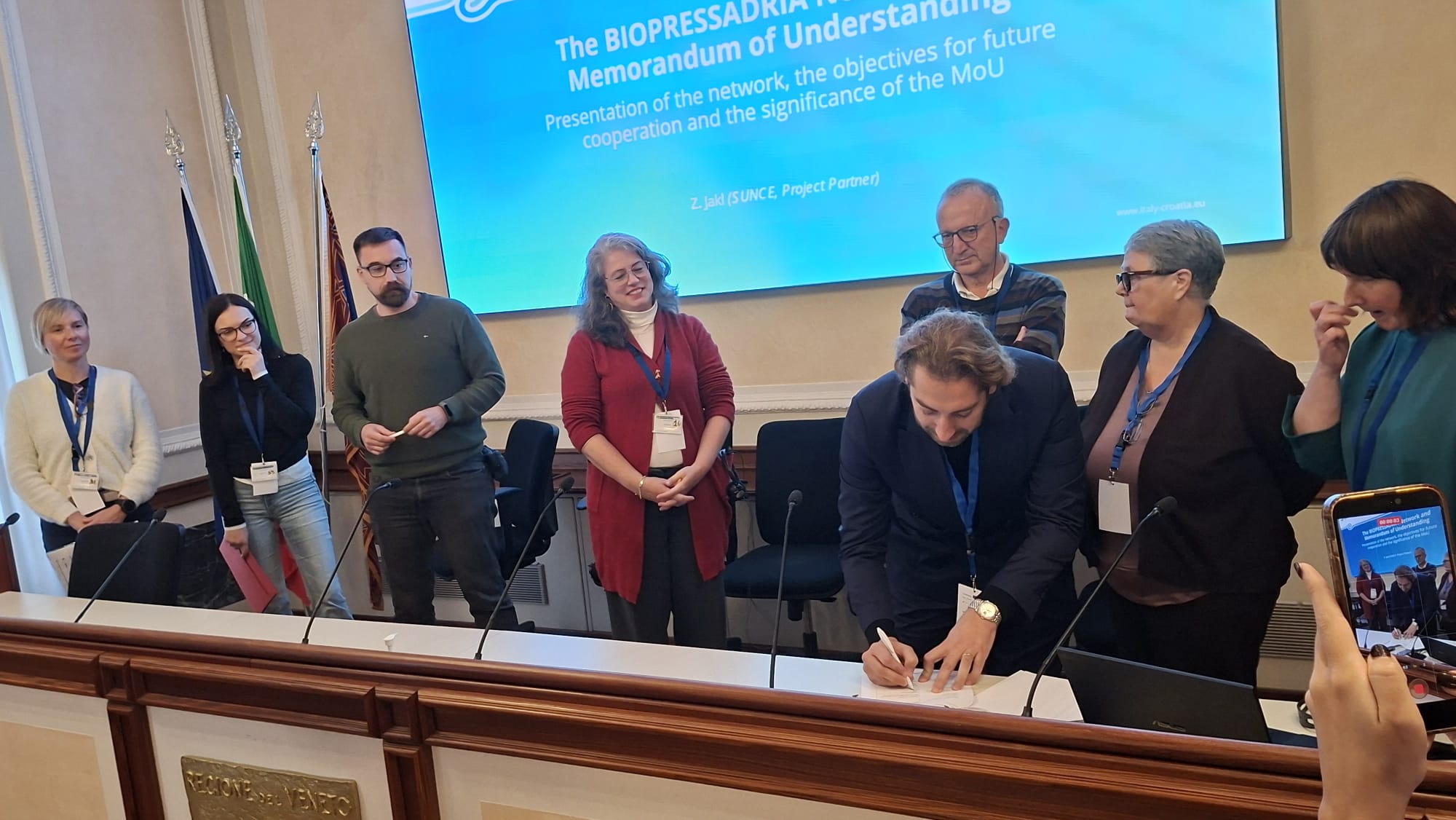
The conference closed with the presentation of the BIOPRESSADRIA Network and the signing of the Memorandum of Understanding by representatives of all project partners. Under the agreement, the partners commit to continuing their cooperation to protect biodiversity in the Adriatic and to bringing the tested solutions to other coastal areas.
The Venice conference therefore marked more than the end of an international cooperation experience. It also looked to a future in which conservation and use of the sea go hand in hand, thanks to greater knowledge, appropriate technologies and shared responsibility. Because protecting the sea does not mean giving up enjoying it, but learning to enjoy it more mindfully.