
From climate policies to concrete action: Interreg Italy-Croatia at the EUSAIR event in Ancona
18/11/2026
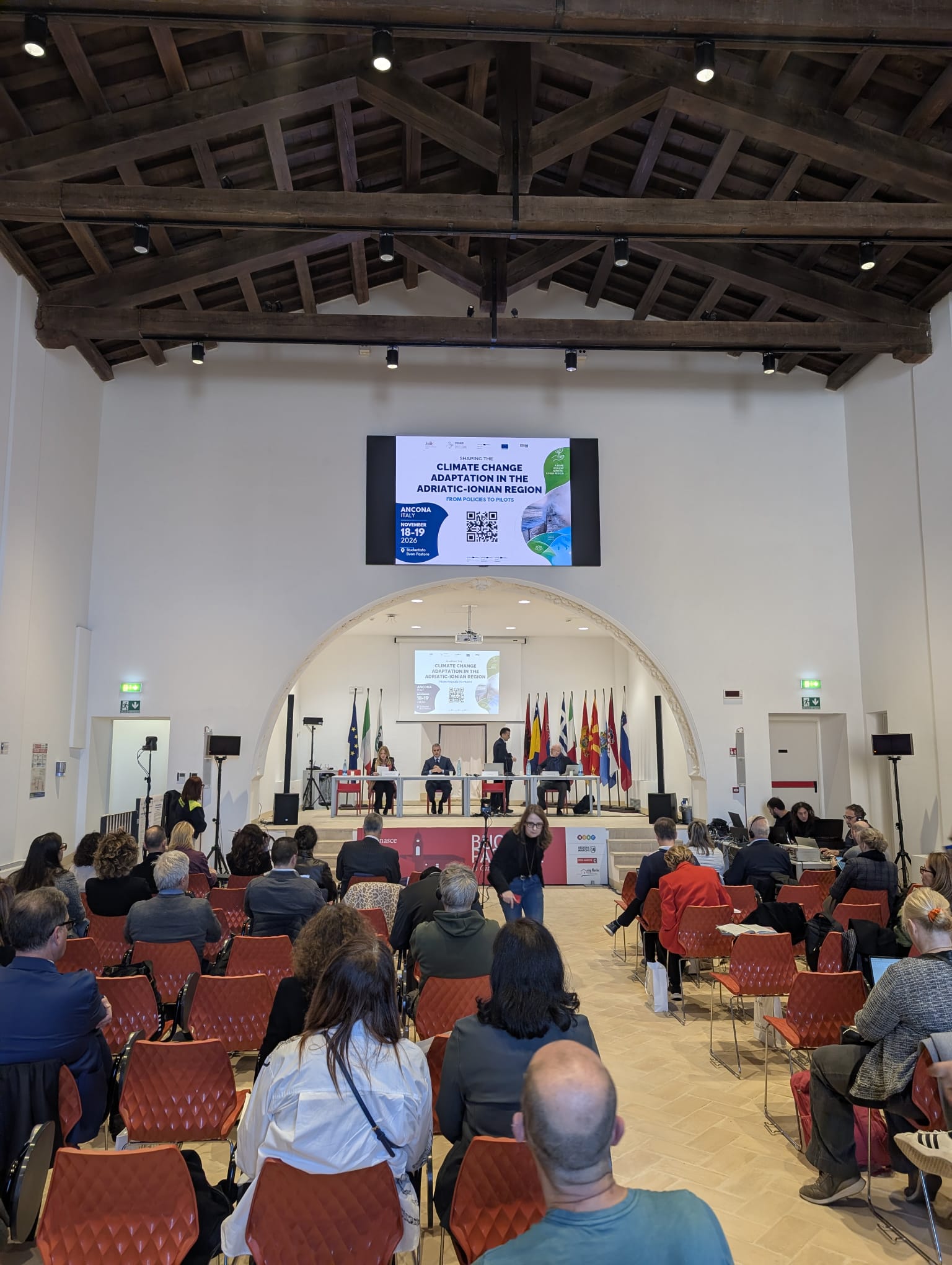
For two days, Ancona has become a hub of discussion on climate policies across the Adriatic thanks to the Conference “Climate Change Adaptation in the Adriatic-Ionian Region: From Policies to Pilots”, organised by Marche Region within the Italian Presidency of the EU Strategy for the Adriatic and Ionian Region (EUSAIR) 2026–2027, and in connection with the OSI REALIST.
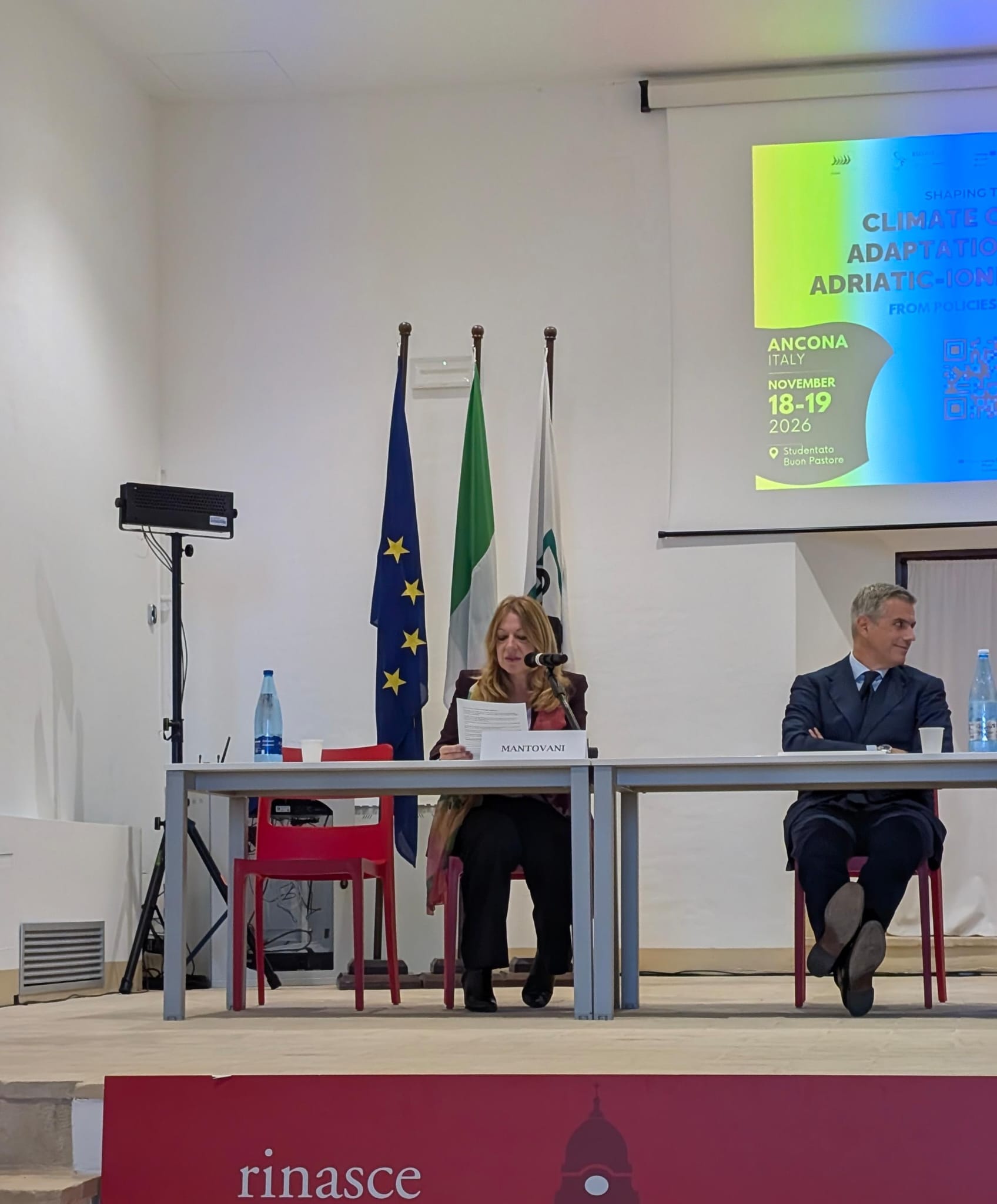
The Head of the Managing Authority of the Interreg Italy-Croatia Programme, Simonetta Mantovani, is taking part in the event, contributing to the discussion on how European territorial cooperation is strengthening climate resilience and turning shared challenges into coordinated action across the Adriatic.
Ms Mantovani opened her intervention with a direct, challenging question: “What does it take to turn what we know about climate change and its threats into what we do?”. In her view, we should adopt a very operational, concrete approach.
“We should coordinate – she said – to turn climate change into a matter of governance and cooperation. We should build the capacity to anticipate risks and act before it’s too late, with the right policy framework and greater awareness. And we should make sure that what we build lasts”.
“Europe is moving in this direction. The new EU Framework for Climate Resilience, presented by the European Commission in October, aims to move from reacting to climate-related disasters towards anticipating risks and preparing for their impacts. The Italian Presidency of EUSAIR offers a framework to put that thinking into practice at macro-regional level”.
She then continued by underlining the essential dimension of territorial cohesion. “No single administration or territory holds all the knowledge, resources and expertise needed to address these complex challenges. This is where European territorial cooperation adds value: it lets us combine complementary expertise and develop common approaches that territories might not develop alone or would develop more slowly. And on climate, speed is crucial. That is why Interreg works as a real laboratory: territories share scientific knowledge and test solutions in pilot actions, instead of each starting from zero, while strengthening institutional and technical capacities”.
The Interreg Italy-Croatia Programme in particular is already contributing to this process. Under Priorities 2.1 and 2.2, 39 projects have been financed to support a greener and more resilient environment, addressing environmental challenges and promoting climate adaptation across the cooperation area.
A concrete example of this approach is REALIST, an Operation of Strategic Importance financed under Priority 2.1, with a budget of over €7 million and 14 partners from Italy and Croatia. The project addresses some of the most pressing challenges facing Adriatic coastal areas, including sea-level rise, coastal erosion, flooding and increasingly severe marine weather events. By combining scientific knowledge, improved early warning systems and pilot actions, REALIST aims to develop practical solutions while laying the foundations for a permanent framework for cross-border cooperation: the Adriatic Sea Climate Observatory.
“Looking ahead to 2028-2034 – Ms Mantovani concluded – the draft policies on the future of Cohesion Policy continue to recognise these priorities as fundamental, alongside better cooperation governance as a specific objective of Interreg, with emphasis on capacity-building and the transfer of results into regional policies. Our ambition should be clear: territories better equipped to face climate risks today, and with the institutional capacity to adapt to the challenges of tomorrow. So, going back to my initial question, what does it take to turn what we know into what we do? I think the answer has three parts: cooperation, because no territory can act alone; capacity, so that we can anticipate risks and act in time; and continuity, so that what we build together outlasts the projects that start it”.