


Discover the innovative solutions tested in Venice
29/10/2026
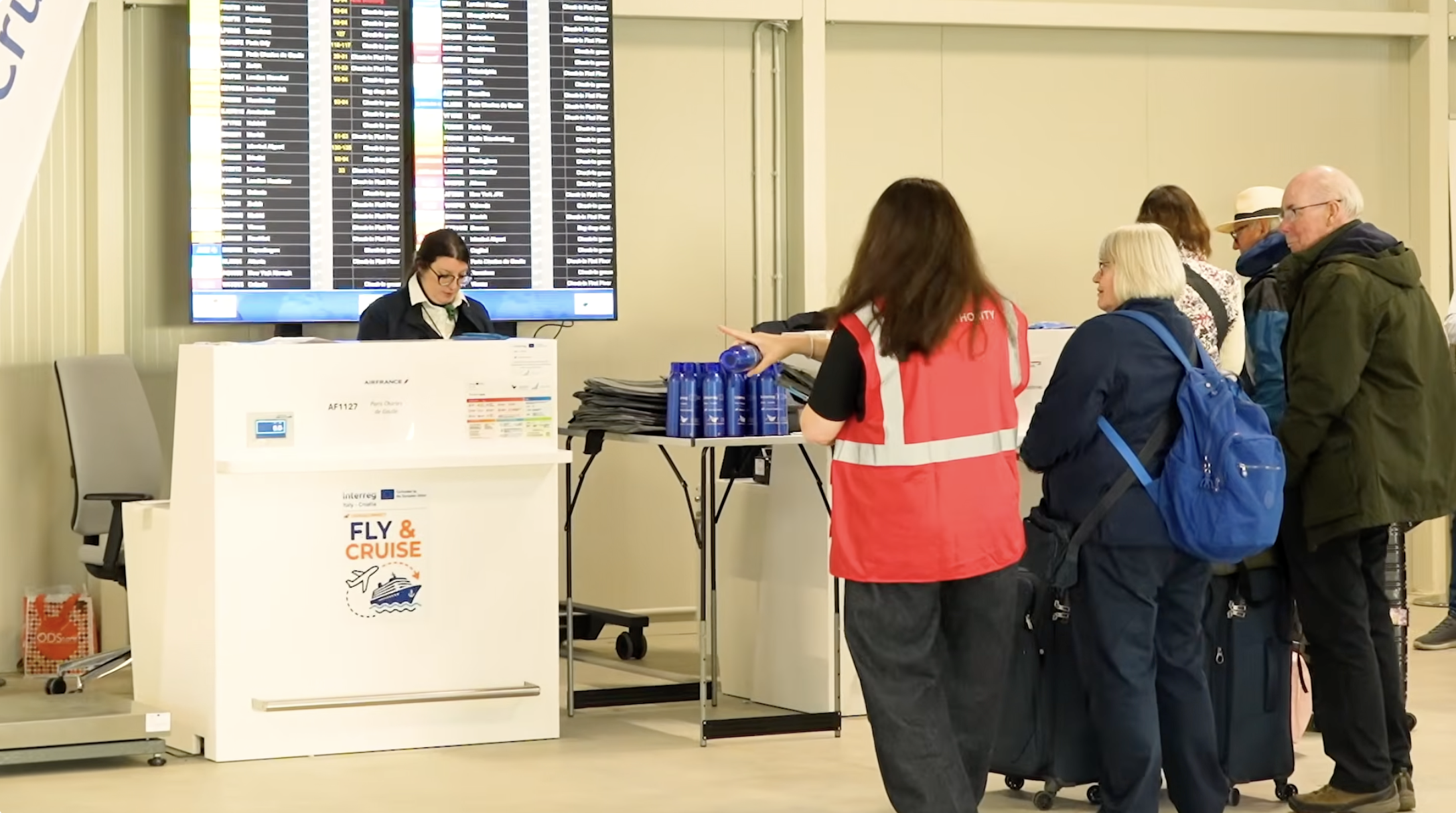
The CROSSCONNECT project has released the first of eight short videos presenting the pilot actions implemented by project partners in Italy and Croatia. The series aims to show how the solutions developed and tested during the project can improve connections between ports, airports and urban transport networks, making passenger mobility across the Adriatic more efficient, accessible and sustainable.
The first video takes us to Venice, where the North Adriatic Sea Port Authority (NASPA) and SAVE – Venice Airport have been working together on a pilot action focused on improving connections between Venice Marco Polo Airport and the cruise terminals of Venice and Chioggia, with particular attention to baggage handling, check-in procedures and the coordination of passenger services.
Venice is one of the main cruise hubs in the Eastern Mediterranean, with an estimated 200,000 cruise passengers travelling through Marco Polo Airport. However, passengers transferring between the airport and cruise terminals often face several operational challenges. Those arriving by air generally need to collect their luggage, complete customs formalities, transport their baggage to the port and undergo additional security checks before boarding. Similar difficulties arise for cruise passengers travelling in the opposite direction, from the port to the airport.
These procedures are largely the result of differences between the security and customs requirements applied in maritime and air transport. They can lead to longer transfer times, additional handling of luggage and increased pressure on transport operators, particularly during peak tourist periods.
To address these challenges, the Venice pilot combines technical studies, digital solutions and infrastructure investments aimed at developing a more integrated Fly & Cruise experience.
One of the main activities, coordinated by the North Adriatic Sea Port Authority, concerns a feasibility study examining the possibility of introducing a sterile baggage transfer procedure between the port and airport. The long-term objective is to allow luggage to move between the two transport infrastructures without repeating certain security and customs checks, provided that the necessary regulatory conditions and agreements are established.
The study examines the technical, operational and legal requirements for such a system, including the harmonisation of security procedures and cooperation between customs authorities, border police, airport operators, cruise companies and other relevant stakeholders. This work is particularly important because improving port-airport connections requires not only new technologies but also coordinated procedures and agreements between the institutions involved.
Alongside this regulatory work, the pilot includes investments in infrastructure and passenger services. At the Port of Fusina, two fully equipped remote airline check-in stations have been introduced to support the development of more integrated port-airport operations.
These stations are designed to provide functions normally available at airport check-in desks, including passenger processing, baggage weighing and the printing of luggage identification tags. Their technical configuration includes aviation-grade computer systems, interfaces with airline Departure Control Systems (DCS), baggage printers compliant with IATA standards and secure network connectivity to airport operational systems.
The objective is to enable passengers to complete certain airline check-in procedures directly at the cruise terminal, reducing the number of operations required once they reach the airport. The full operational use of these facilities remains subject to the applicable airline, security and regulatory requirements.
Another important aspect of the pilot concerns the exchange of operational information between port and airport systems. The project has worked on a data-sharing framework connecting port information systems with airport operational databases, with the aim of improving access to information on cruise schedules, flight departures and other relevant transport operations.
Better coordination of this information can help operators manage passenger transfers more efficiently, particularly in situations involving changes to flight schedules, cruise arrivals or other operational conditions.
The pilot also includes improvements to passenger information services at the cruise terminal in Chioggia, through LED information displays designed to provide updated information on ship and flight departures, as well as relevant traffic conditions.
Security is another important component of the intervention. The technical solution includes Explosive Trace Detection (ETD) technology, which can identify microscopic traces of explosive substances on passengers' belongings and luggage. This equipment is intended to support efficient passenger processing while maintaining the security standards required in airport operations.
Taken together, these interventions address different aspects of the same challenge: making the transition between maritime and air transport easier for passengers while improving coordination between the operators responsible for managing their journey.
Beyond the individual investments, the Venice pilot also provides an opportunity to examine how port and airport authorities can work together to develop more integrated services. The technical solutions and feasibility study offer a basis for further cooperation and could support the introduction of similar procedures in other Adriatic ports and airports facing comparable operational challenges.
The Venice experience is now presented in the first video of a series of eight short videos produced within CROSSCONNECT, two for each pilot area: Venice, Brindisi, Pula and Dubrovnik.
The series offers two complementary perspectives. The “Pilot in Action” videos present the solutions developed and tested in each territory, showing the practical interventions and their contribution to improving intermodal connections. The “Behind the Pilot” videos feature interviews with the people involved in the implementation, providing further insights into the challenges addressed, the work carried out and the experience gained.
Developed under the coordination of project partner STP Brindisi, the video series aims to make the project's results accessible to a wider audience, including passengers, transport operators, public authorities and other stakeholders interested in improving intermodal mobility.

