TRANS MARIS Sailing expedition
25/09/2026
Six days, three cities and one shared sea
From 23 to 28 August, Rovinj, Venice and Cesenatico were connected by the sea.
Through first-hand experience of the Adriatic’s maritime natural and cultural heritage,
TRANS MARIS explored how this heritage can be transmitted to new generations. Twenty
young participants embarked on a six-day cross-border journey combining traditional
sailing and rowing, experiential learning, heritage interpretation and visual storytelling.
Rovinj – heritage is best understood when experienced
The first stage of the journey took place in Rovinj, where the sea immediately became a
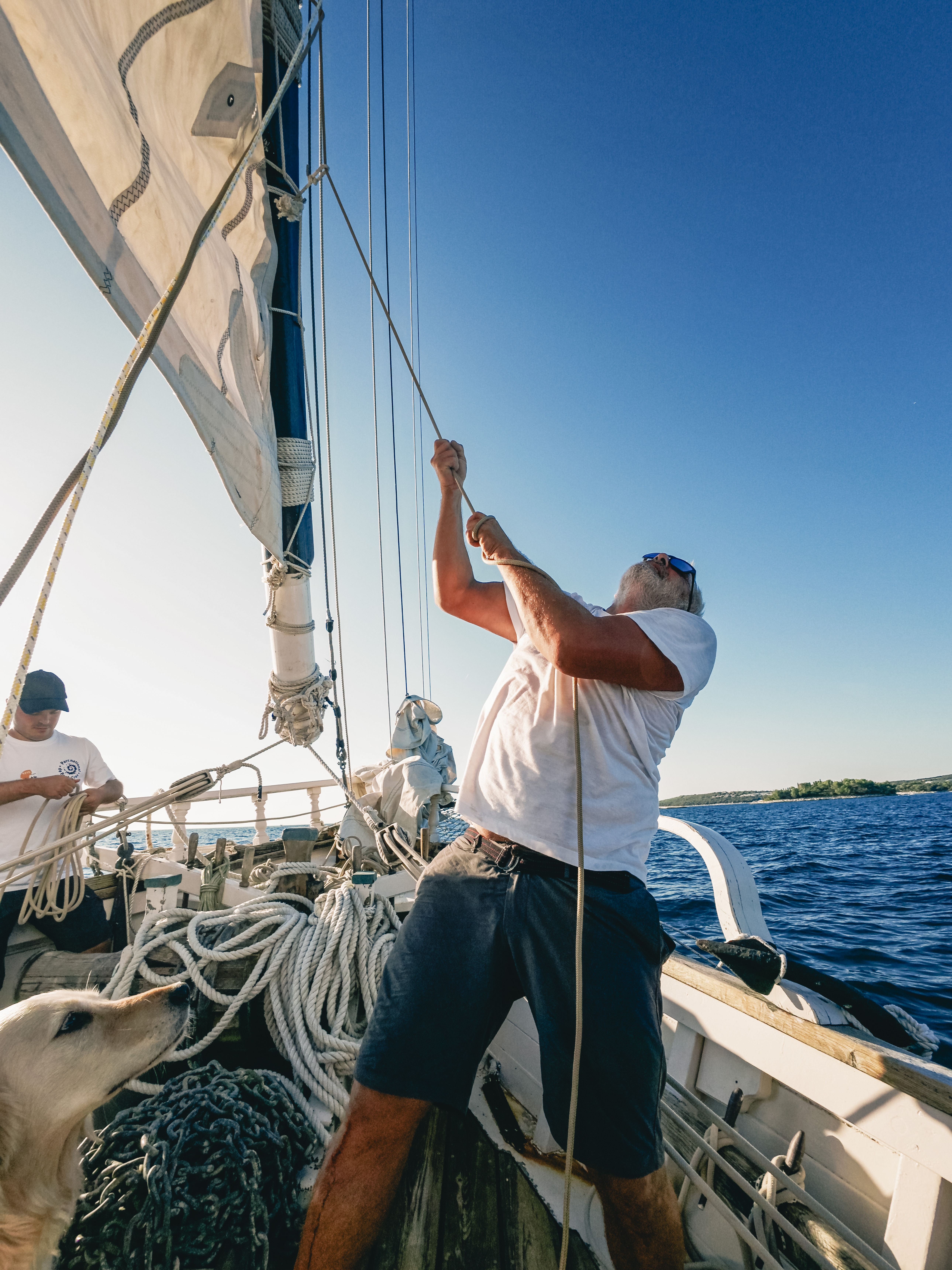
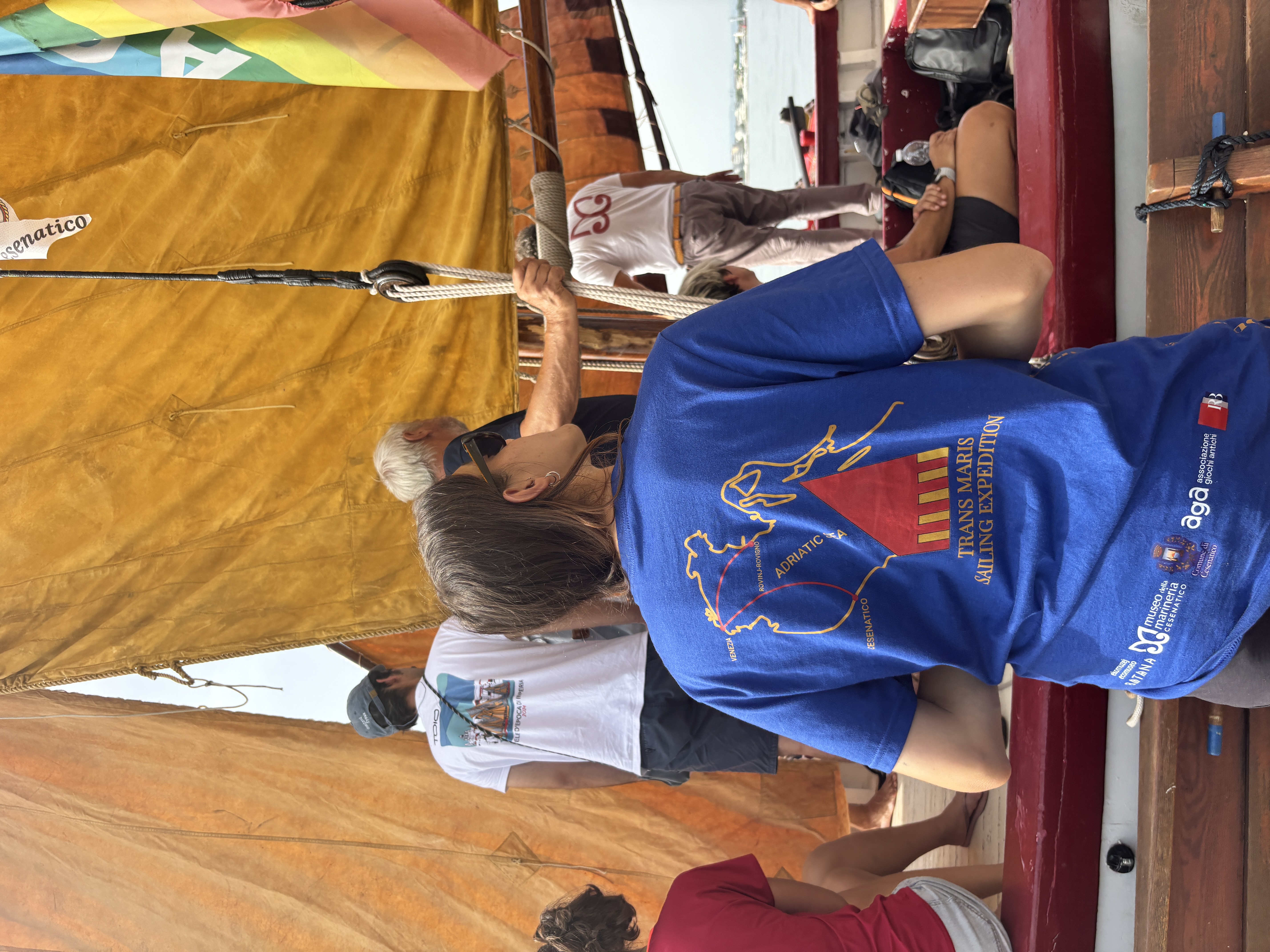
classroom. Participants sailed aboard the almost 100-year-old tartana Viareggina, a
beautiful traditional sailing vessel, discovering traditional sailing not from the shore, but
through the direct experience of being at sea.
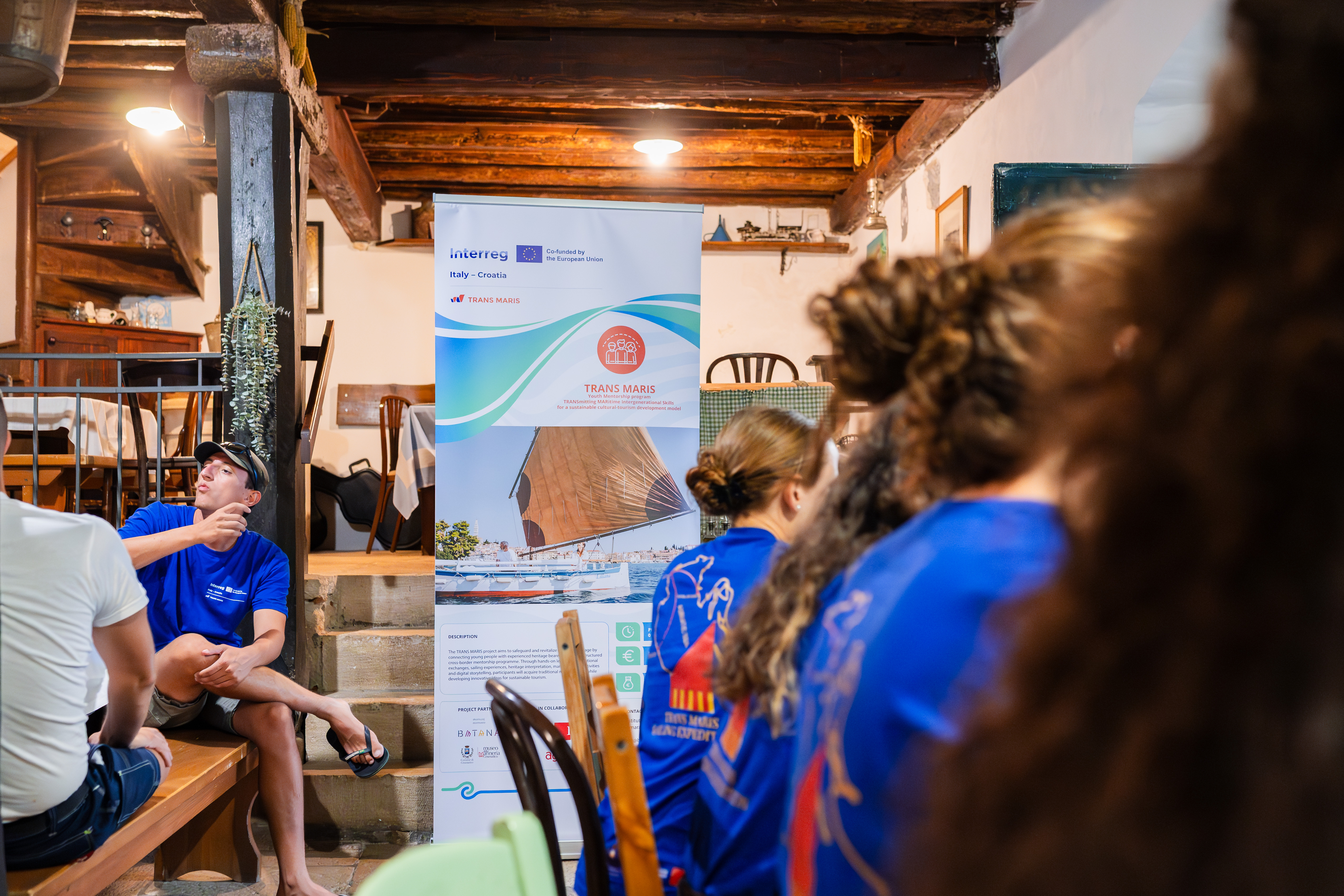
The impressions were interpreted thanks to a workshop with Manuela Hrvatin, an
experienced trainer of the Interpret Europe organisation, who introduced the young
participants to heritage interpretation, turning facts, objects, places and traditions into
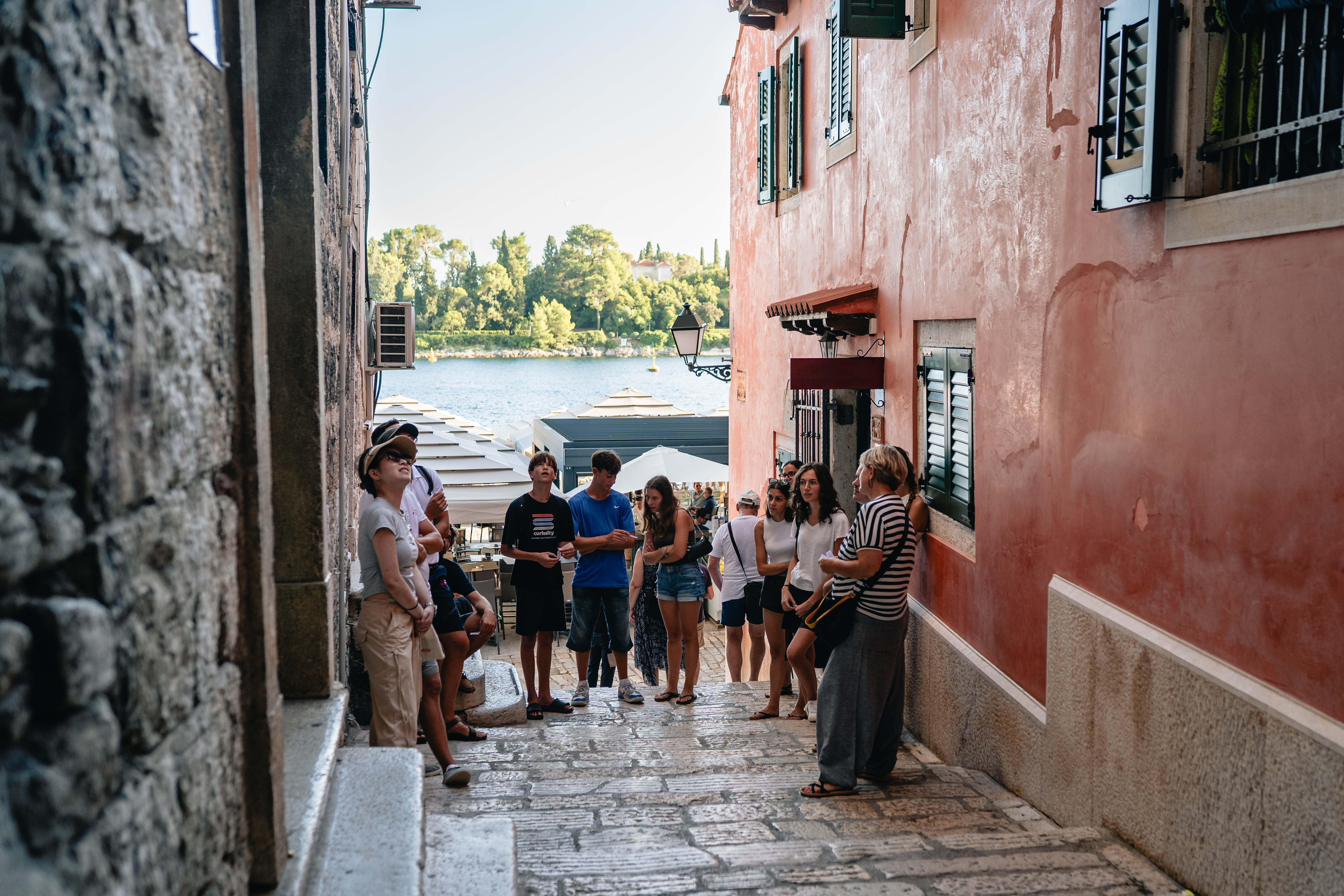
meaningful stories. Beginning at Spacio Matika and Rovinj’s historical centre and
continuing onboard the tartana, the workshop provided a common thread that would
accompany the group throughout the entire journey. The ideas first developed in Rovinj
were later revisited and transformed through other activities along the route.
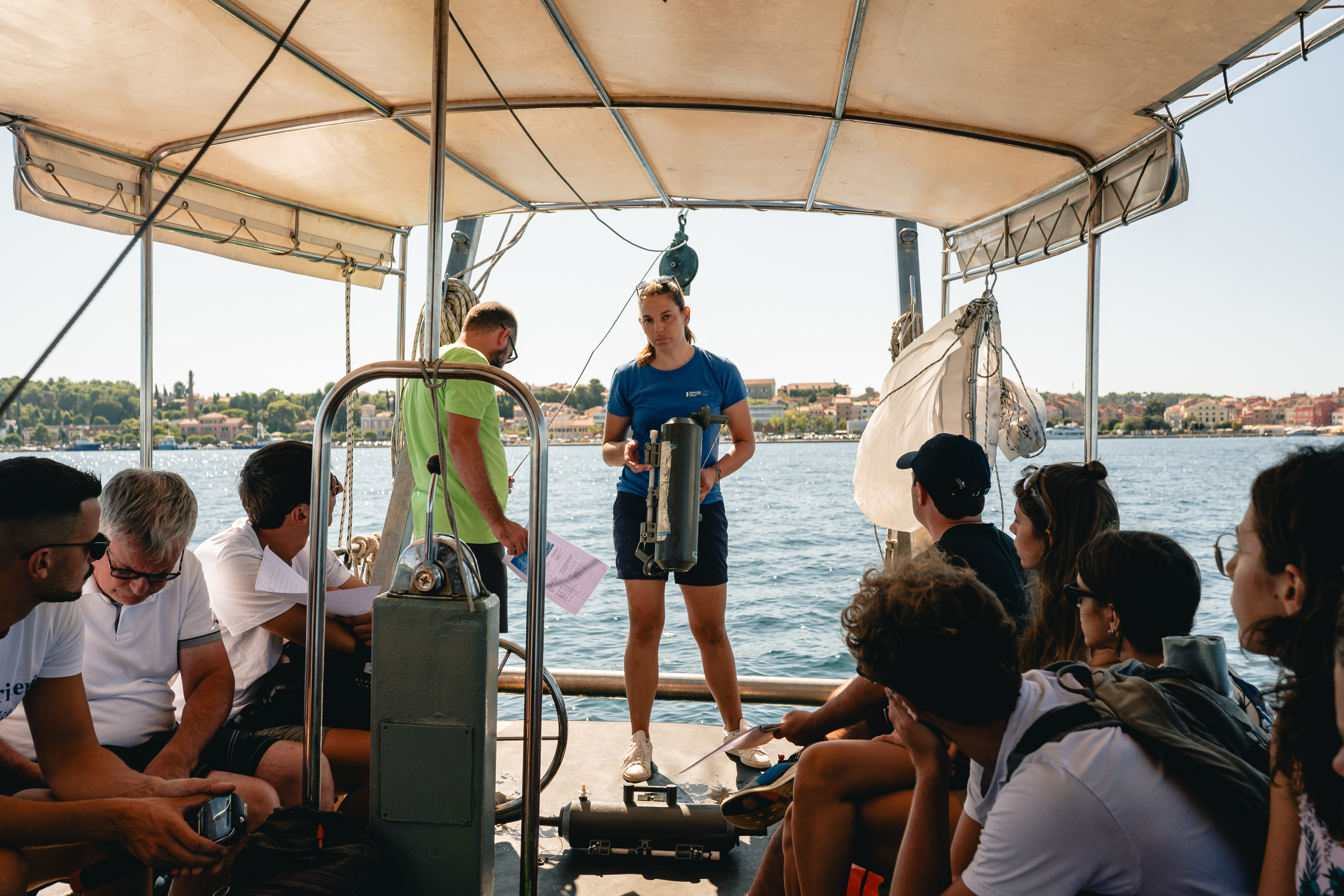
The natural heritage of the Adriatic is equally important to the TRANS MARIS team. In
collaboration with the Centre for Marine Research of the Ruđer Bošković Institute,
participants took part in a practical marine biology workshop. Exploring the marine
ecosystem and the scientific methods used by the centre, we recorded a sea temperature
of 27°C on a hot 24 August. This hands-on experience opened a broader discussion about
the environmental pressures facing the Adriatic and the challenges they pose to marine
ecosystems and coastal livelihoods.
The Rovinj programme also included another hands-on encounter with living heritage: a
ride in traditional Rovinj batanas, followed by dinner at Spacio Matika accompanied by
traditional music.
Venice – discovering the city from the perspective of the lagoon
In Venice, the focus shifted towards sustainable tourism and the role living maritime
heritage can play in creating a different relationship with a destination.
Rather than following the best-known tourist routes, TRANS MARIS brought participants
closer to the people, practices and places that reveal Venice as a living lagoon community.
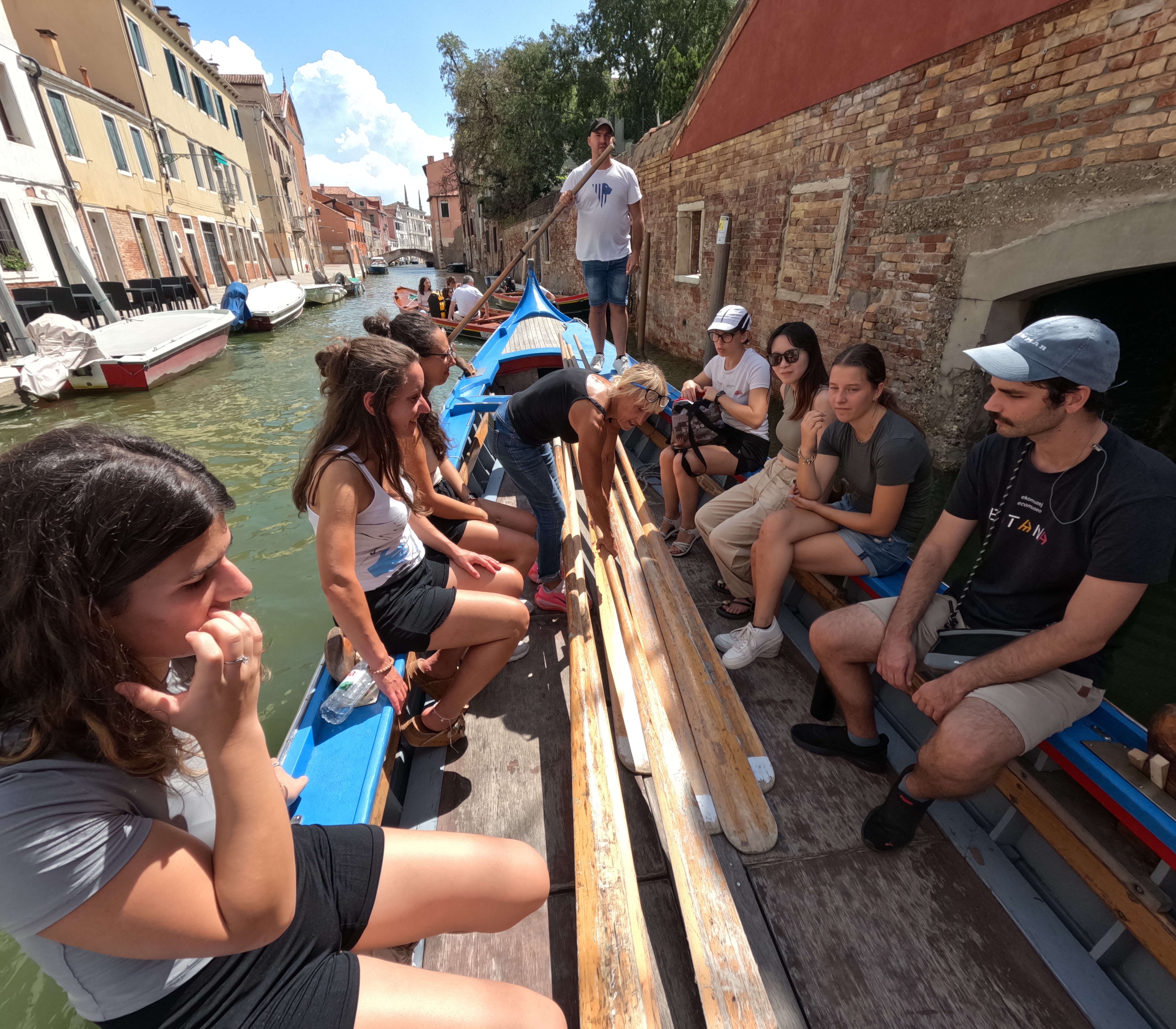
After an introduction to Venice’s maritime traditions at Cavana Tintoretto, a traditional
covered boat shelter opening onto the canal, the group boarded a gondola and tried voga
alla veneta, the distinctive Venetian technique of rowing while standing. It was a chance to
experience the lagoon through a practice that is not simply part of Venice’s past, but a
living tradition that continues to shape everyday life on the water.
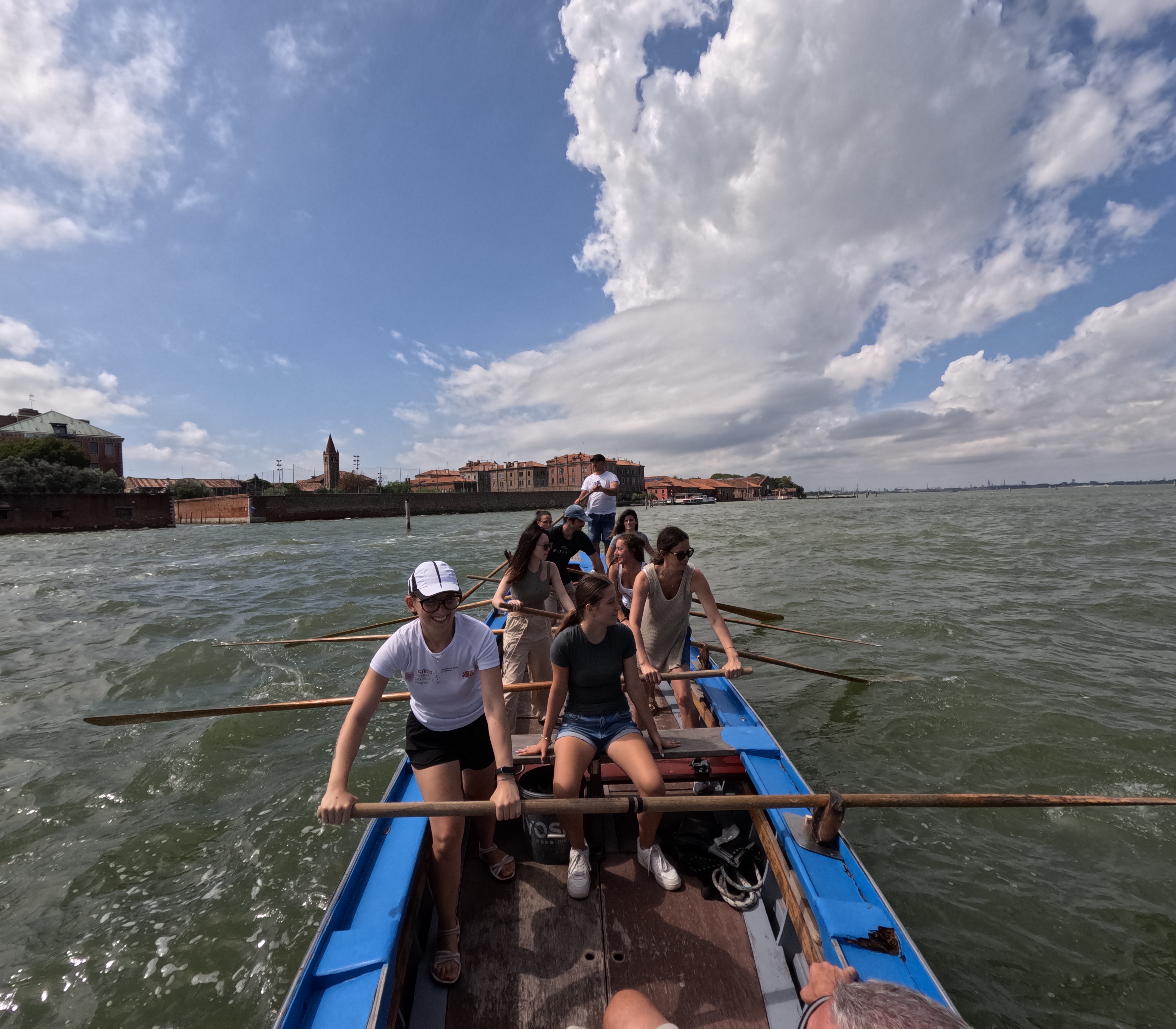
The journey then moved to Voga Camp on the island of Sant’Erasmo, revealing a very
different side of Venice, far from its busiest and most visited areas. From there,
participants set out by dragon boat to explore the lagoon’s lesser-known waterways and
landscapes, experiencing first-hand the close connections between its natural
environment, cultural heritage and local ways of life.
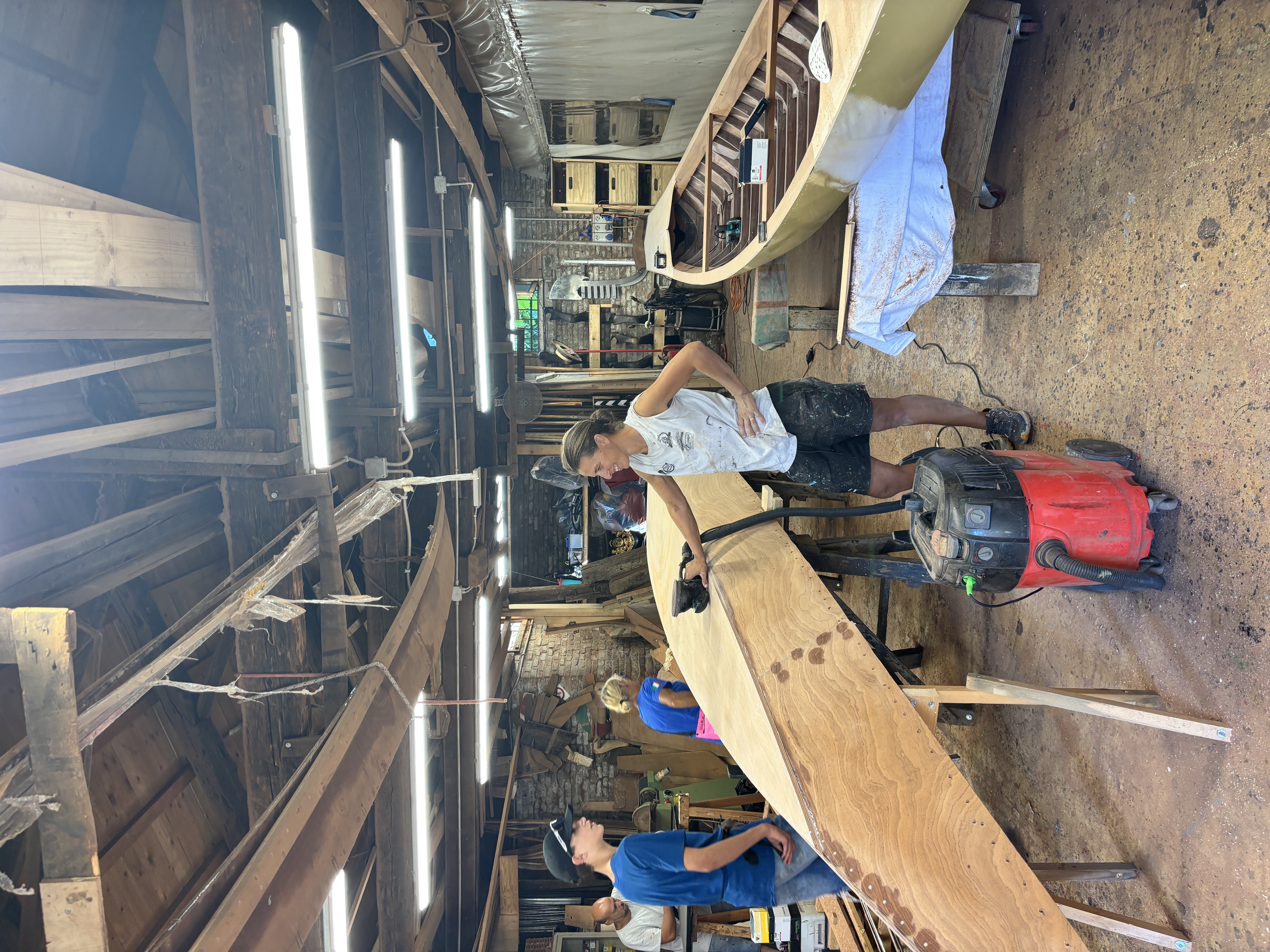
Another highlight was the Living Heritage Journeys tour, which included a visit to the
Venice Arsenal and a traditional squero – a working boatyard where gondolas are built and
maintained. Meeting practitioners and discovering the skills and knowledge behind
Venice’s maritime traditions offered a glimpse into the living heritage that continues to
shape the city. Travelling through the Venetian canals aboard a traditional bragozzo made
the experience even more meaningful, showing in practice how slower, heritage-based
ways of discovering Venice can offer a more sustainable alternative to conventional
tourism.
Throughout the Venice programme, the group was hosted by Gloria Rogliani, champion
of voga alla veneta, educator and one of the leading promoters of Venice’s traditional
rowing heritage. A six-time winner of the Regata Storica and founder of Cavana Tintoretto
and Voga Camp, Gloria is dedicated to passing traditional rowing skills and knowledge of
the lagoon on to younger generations. Organised by Gloria in collaboration with
Associazione Giochi Antichi, the Venice experience showed how living heritage can
contribute to more sustainable tourism – taking visitors beyond the usual routes to meet
local practitioners, participate in living traditions and better understand the relationship
between Venice’s communities and the cultural and natural heritage of the lagoon.
Cesenatico – turning experience into a visual story
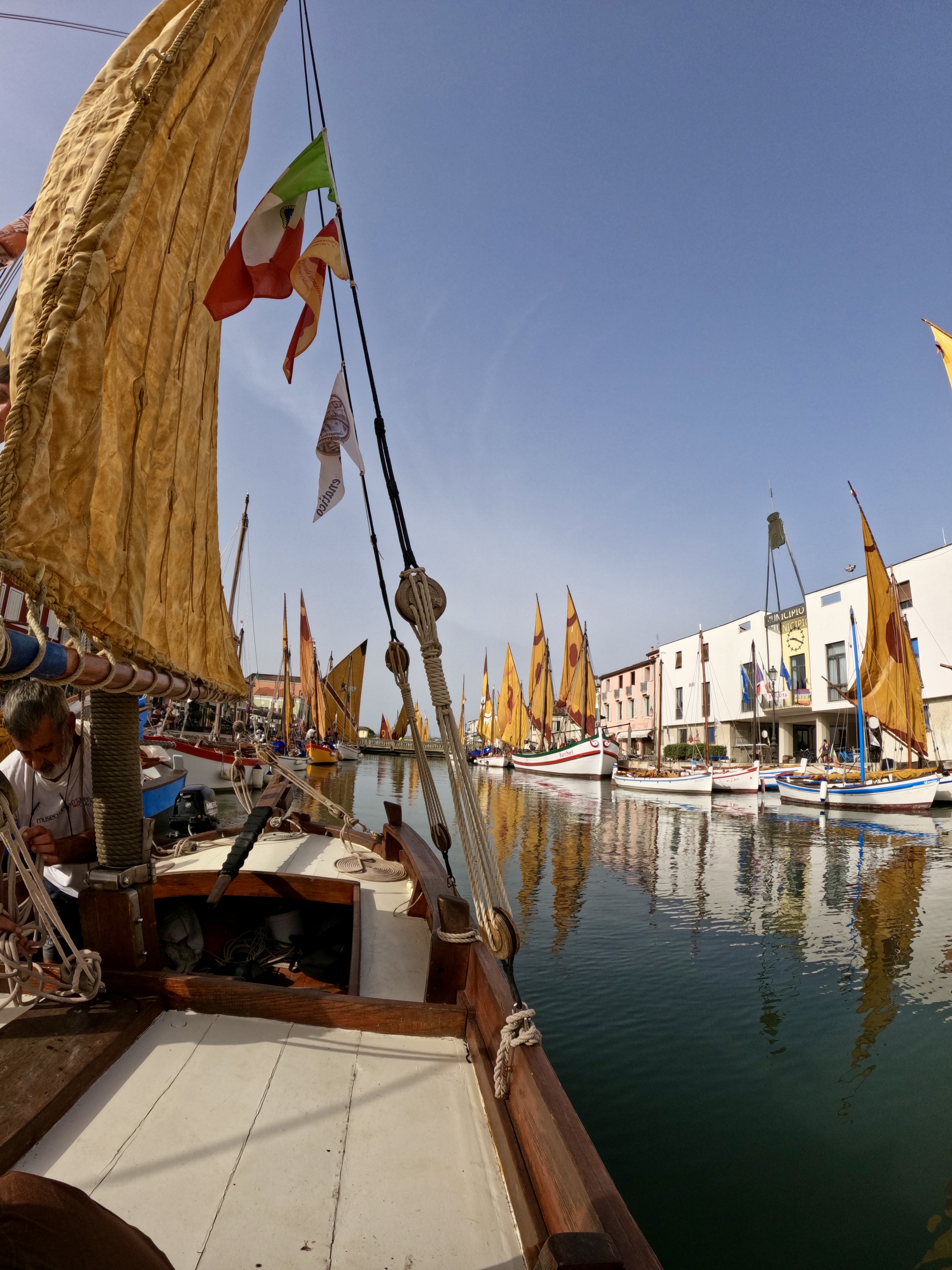
The final stage brought the group to Cesenatico and its rich maritime traditions. Once
again, the young participants went out on the water – this time aboard local bragozzi,
lancie and battane – discovering another Adriatic sailing tradition and comparing it with
what they had experienced in Rovinj and Venice.
Alongside lectures and encounters with Cesenatico’s maritime heritage, an important part
of the programme was a visual storytelling workshop. This activity was closely
connected to the heritage interpretation workshop that had begun in Rovinj: what
participants had observed, experienced and interpreted throughout the journey could now
be transformed into their own stories through photography, video, sound and other
contemporary media.
The educational journey concluded with a visit to the Maritime Museum of Cesenatico.
The TRANS MARIS Sailing Trip did not really end with the final workshop. The closing
dinner on the boats became one of the most emotional moments of the entire journey.
After six days of sailing, learning, working and discovering the Adriatic together, it was
clear that connections had been created among the young participants that went far
beyond the project itself.
They have already continued their exchanges online and are now working together on
podcasts and visual stories inspired by this shared experience.
Perhaps this is the most important outcome of TRANS MARIS: maritime heritage was not
presented as something belonging to the past, to be observed from a distance. Instead, it
became a space for encounters, shared experiences, creativity and new connections
between young people from different communities.
From the tartana and batanas in Rovinj, through the gondolas of Venice lagoon, to the
bragozzi of Cesenatico, six days at sea showed that the Adriatic does not separate our
shores – it connects them.