

LIRA Development Agency Opens the Doors of the Zero Waste Innovation Lab in Gospić
13/05/2026
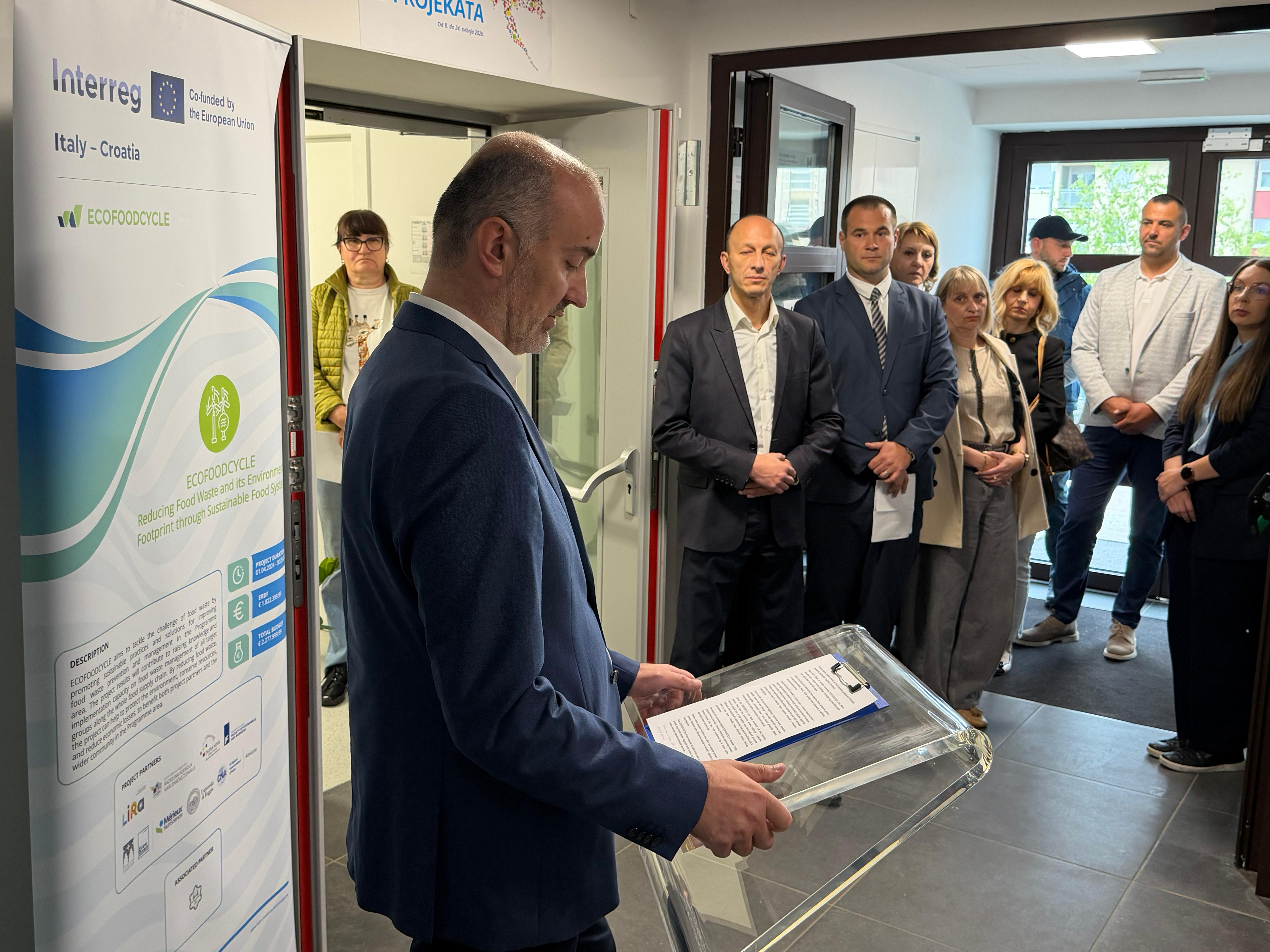
Food waste does not have to end up in landfills. It can become a resource, a new raw material, and a driver of local development. This very idea lies at the core of the ECOFOODCYCLE Zero Waste Innovation Lab, officially opened on 12 May 2026 in Gospić as part of the ECOFOODCYCLE project - a new space for knowledge, collaboration, and innovation.
A Place Connecting the Scientific Community, Institutions, Producers and Entrepreneurs
With the opening of the laboratory, Lika-Senj County positioned itself among Croatian regions that see sustainability not only as a strategic objective, but as a concrete development model based on knowledge, technology, and responsible resource management. The Zero Waste Innovation Lab was designed as a place where the scientific community, institutions, producers, and entrepreneurs can connect in order to develop solutions for reducing food waste and strengthening the circular economy.
“Today, we are not only opening a laboratory and new equipment. We are opening a space where waste becomes a resource, surplus becomes new value, and sustainability becomes a concrete practice,” said Andrija Brkljačić, Director of the Public Institution Development Agency of Lika-Senj County - LIRA. He added that the ECOFOODCYCLE project brings a new development perspective for a region rich in natural resources and high-quality food, yet facing the challenges of sustainable production management and food surpluses.
Lectures, Food Processing Demonstrations, Circular Economy Principles and a Hands-On Energy Bar Workshop
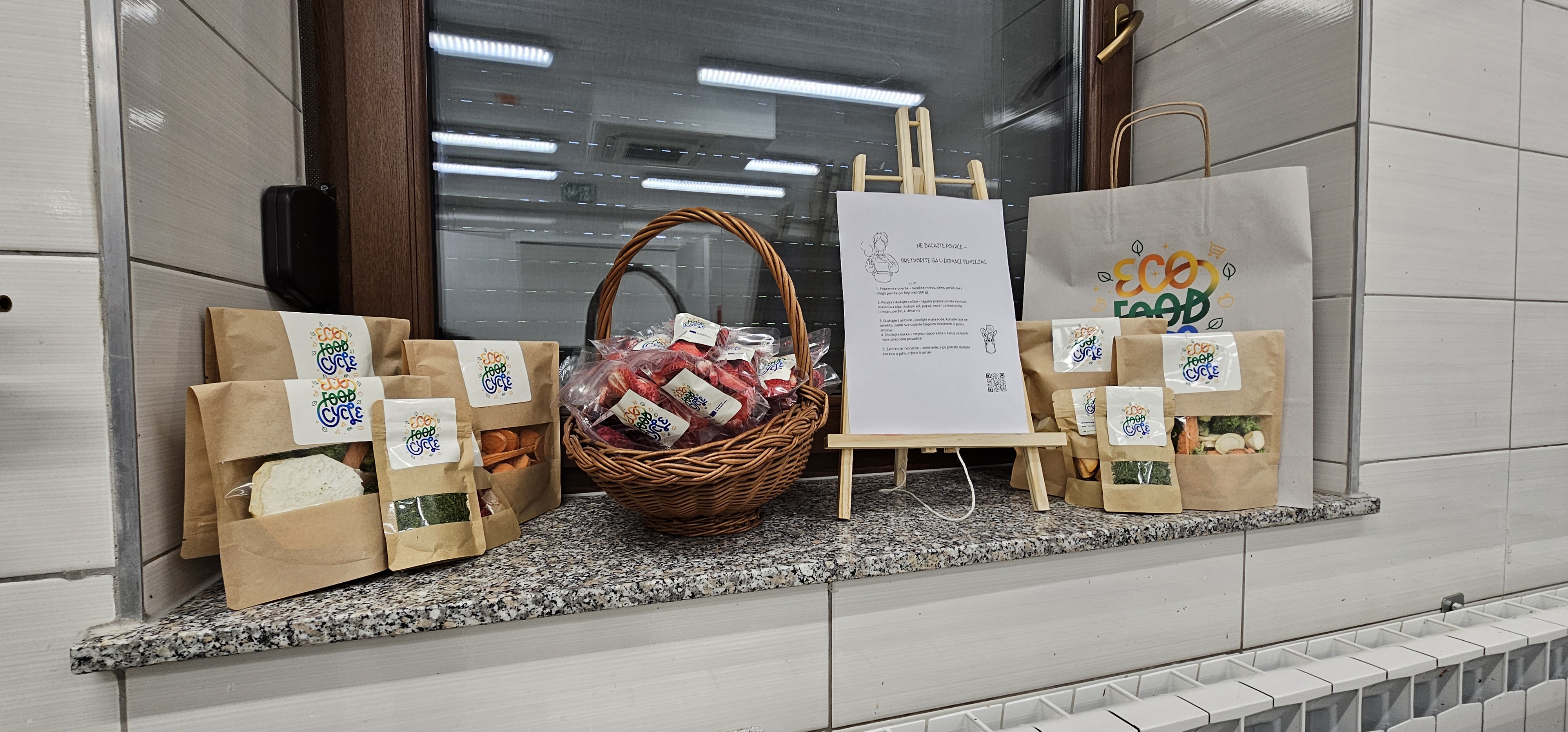
Special emphasis was placed on the practical application of innovative solutions that will be developed and demonstrated through the laboratory’s work. Through modern equipment, educational activities, and pilot actions, visitors and users will gain access to and better understanding of processes such as freeze-drying perishable fruit, transforming agricultural by-products into value-added products, and developing sustainable food systems based on circular economy principles.
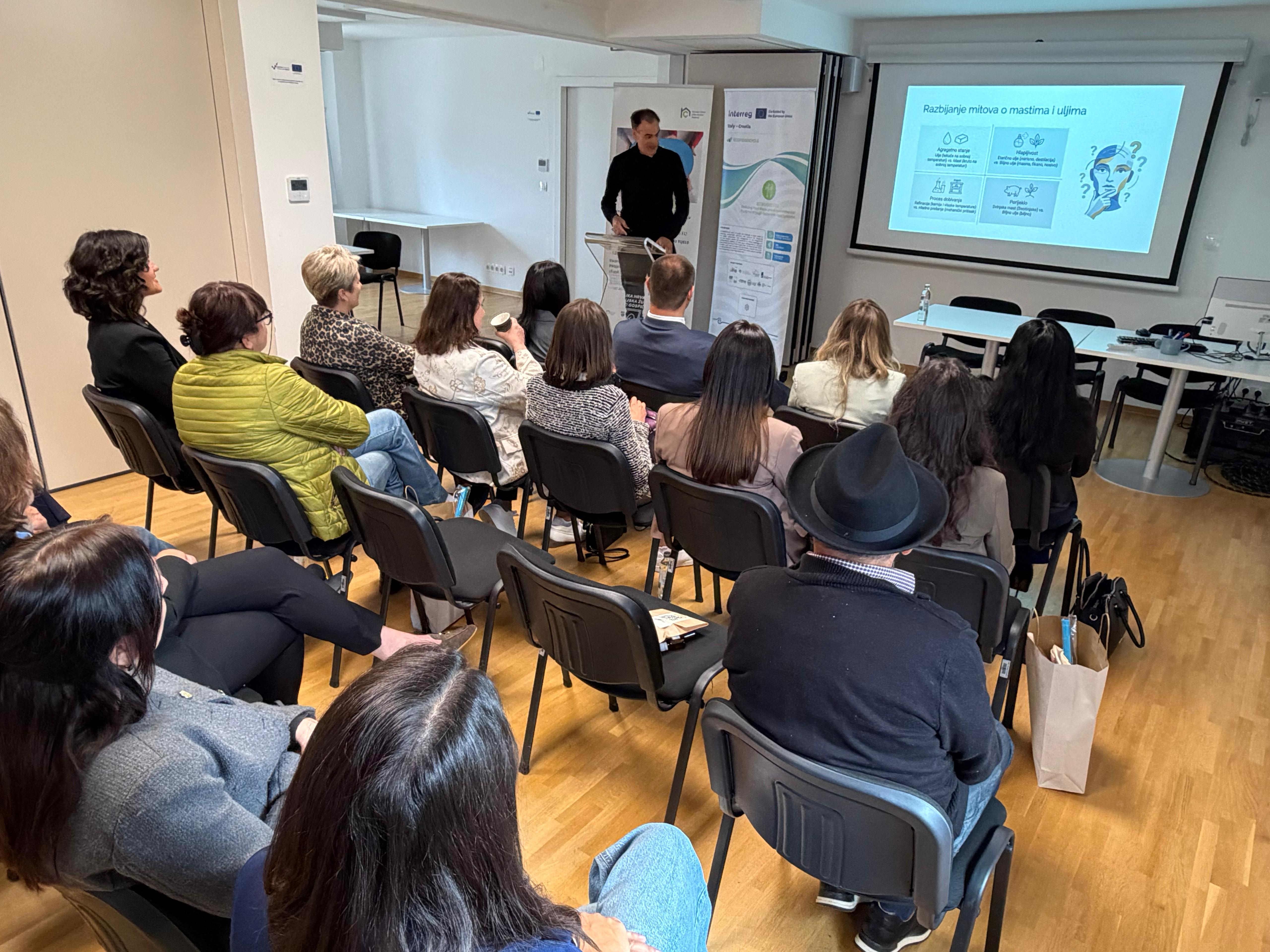
The opening of the “food waste reduction laboratory” was further enriched with activities aimed at citizens, young people, and local producers, who had the opportunity to learn through lectures and practical workshops
about concrete examples of how surplus food and agricultural by-products can be transformed into products of new value instead of waste. Through equipment presentations and demonstrations, visitors could learn how the freeze-drying process works, how the shelf life of perishable fruit can be extended, and how sustainable technologies can help reduce food losses.
Practical examples of the circular economy were also presented - from the processing of agricultural by-products into oils, pellets, and other useful products, to ways in which innovation and modern technologies can contribute to more sustainable food production and more efficient resource use.
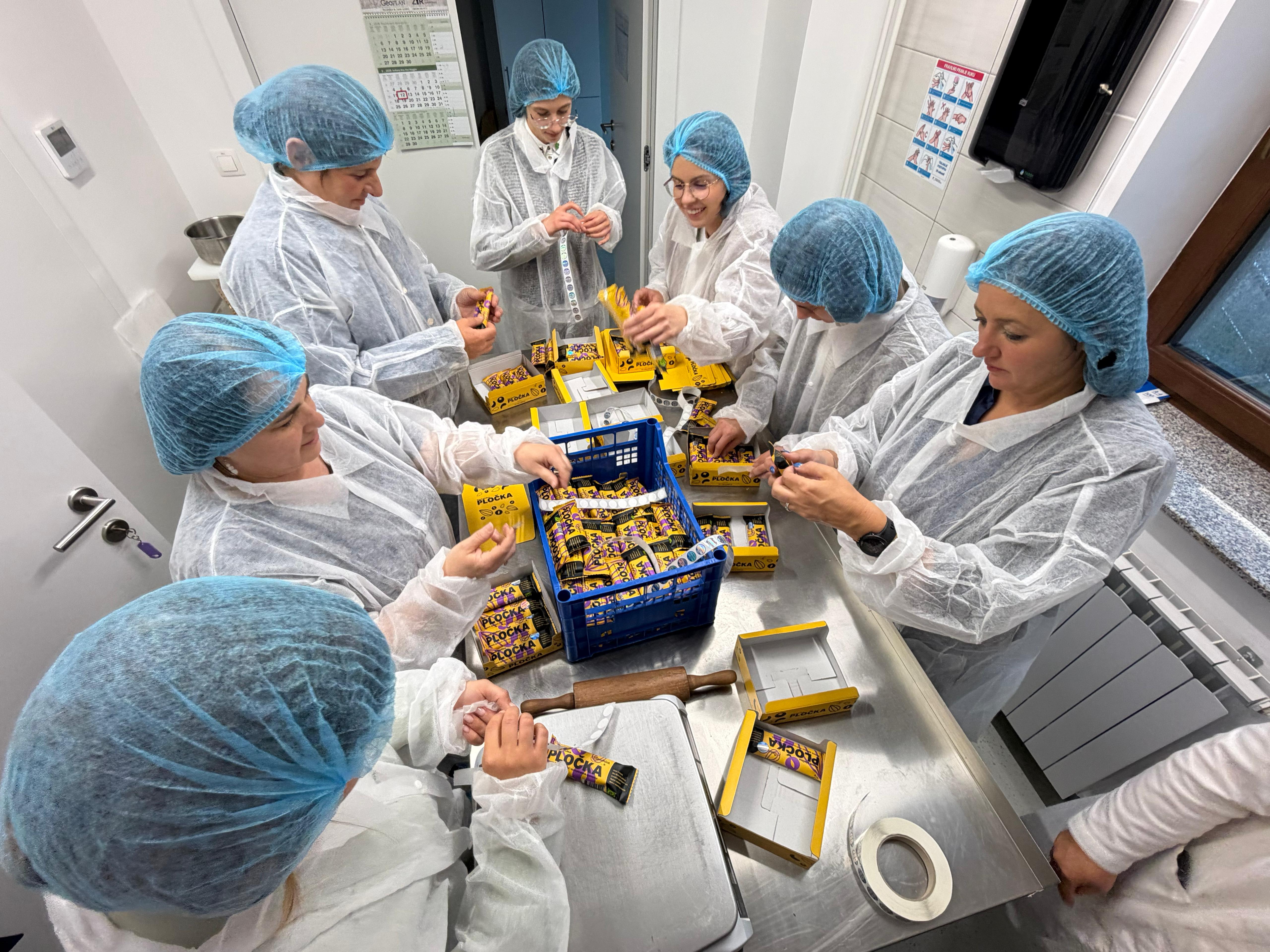
Participants also had the opportunity to hear the entrepreneurial story of Nikolina Perša, founder of the local brand Smočnica from Mušaluk near Gospić. Through her personal business journey, she explained how surplus honey from her family beekeeping business became the foundation of her company and how she developed recognizable products such as granolas, “Pločke” energy bars, and creamy honey spreads with added ingredients.
Zero Waste Innovation Lab as a Platform for Collaboration and New Ideas
She particularly emphasized the importance of local ingredients, small-batch production, and manufacturing without additives, stabilizers, or artificial ingredients, highlighting how sustainable and high-quality nutrition can successfully combine tradition with modern dietary habits.
Through her lecture, visitors learned what the development of a small local brand from Lika looks like, as well as how important innovation, persistence, and authenticity are for success on the market. In addition, participants had the opportunity to roll up their sleeves and, under Nikolina’s expert guidance, create their own versions of the tasty “Pločke” bars.
Participants were also introduced to the potential of oil production in the Lika region by Marko Obranović from the Faculty of Food Technology and Biotechnology in Zagreb.
From its very first day, the Zero Waste Innovation Lab demonstrated that it is not envisioned merely as an infrastructure project, but as an open platform for cooperation and the development of new ideas that can bring long-term benefits to the local economy and the environment.
A Project Recognized by the Local Community
The importance of this ECOFOODCYCLE pilot activity for the local community was also reflected in the attendance of numerous local representatives alongside LIRA staff, including Mile Milković, Director of the Lika-Senj County Development Centre, and Ernest Petry, Prefect of Lika-Senj County, who ceremonially cut the ribbon and officially opened the doors of the “laboratory” to all guests and visitors.