

DIGIT2COAST Joint Comparative Assessment findings on systemic barriers to cross-border care
27/04/2026
Following the creation of the DIGIT2COAST Joint Comparative Assessment, empirical findings from desk research across pilot areas in Croatia and Italy have identified persistent systemic barriers affecting mobile citizens, vulnerable populations, and coastal tourists along the Adriatic corridor. The research highlights a clear operational gap between legally guaranteed healthcare rights and the practical discoverability of essential services.
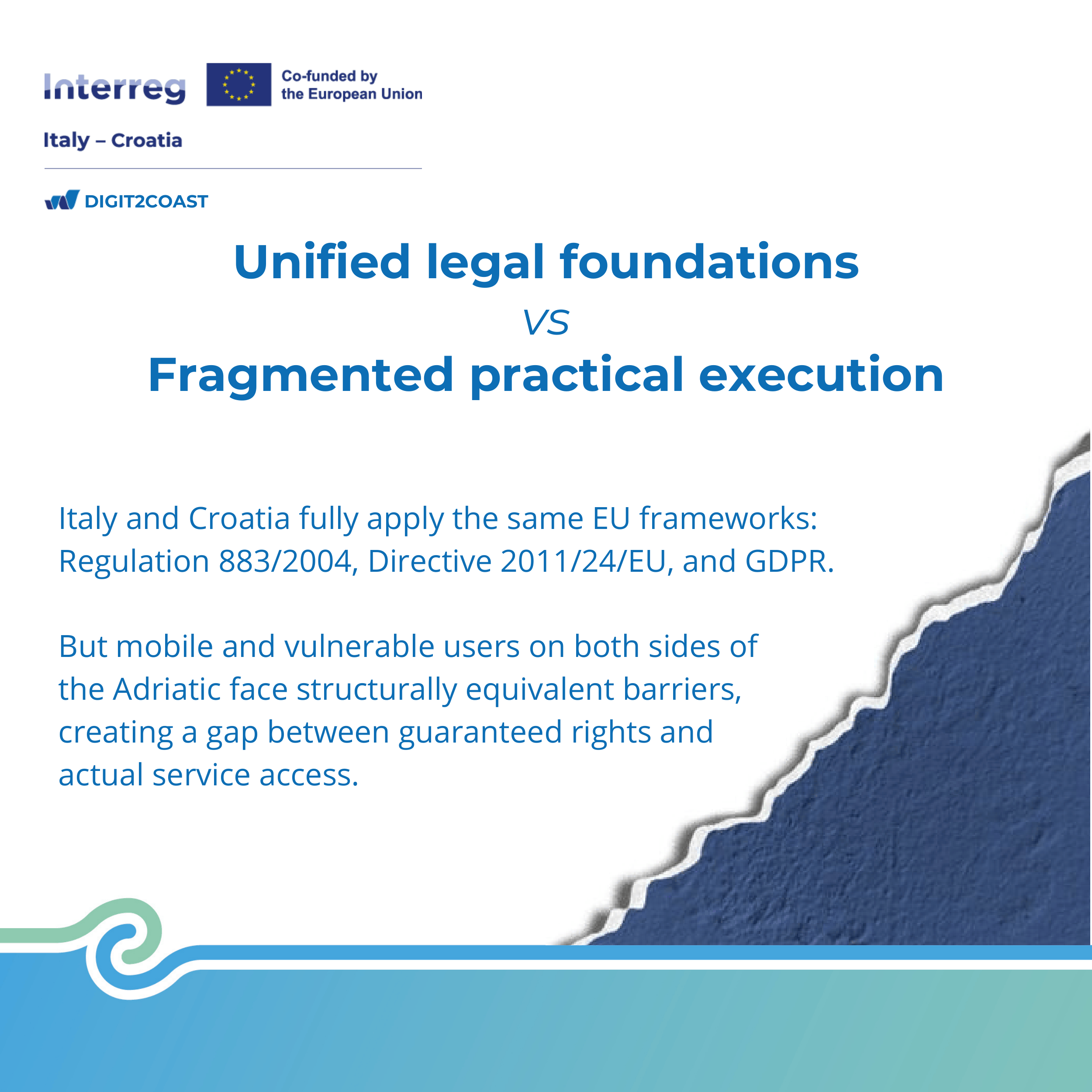
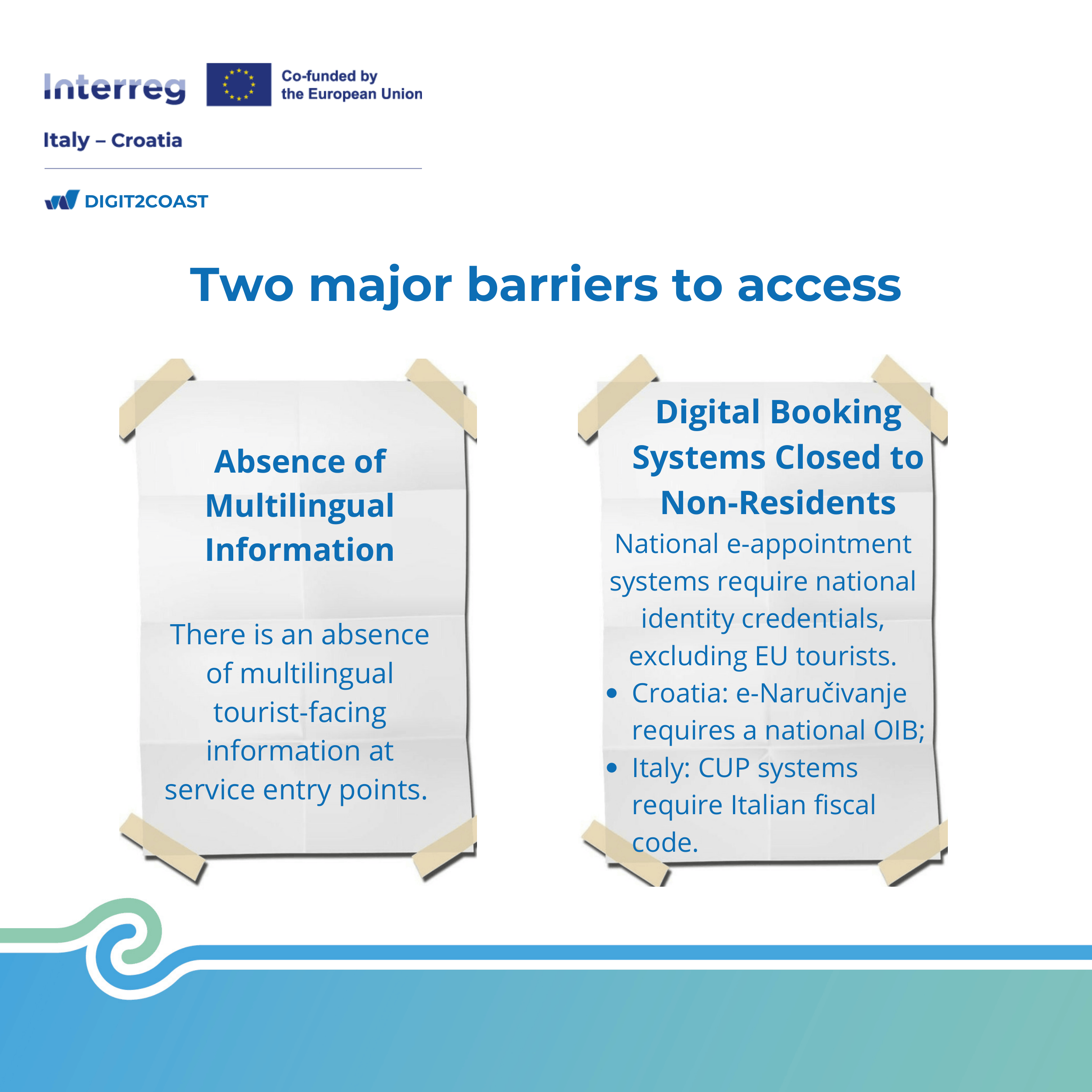
While both nations operate under shared European Union regulatory frameworks—including Regulation (EC) No 883/2004, Directive 2011/24/EU, and the GDPR—users encounter structurally equivalent obstacles on both sides of the border. These include a widespread lack of multilingual information at service entry points and digital appointment systems that restrict access for non-residents. Specifically, regional appointment portals (CUP) in Italy frequently require an Italian fiscal code, while Croatia's e-Naručivanje system mandates a national identification number (OIB), effectively excluding visiting EU citizens from online booking.
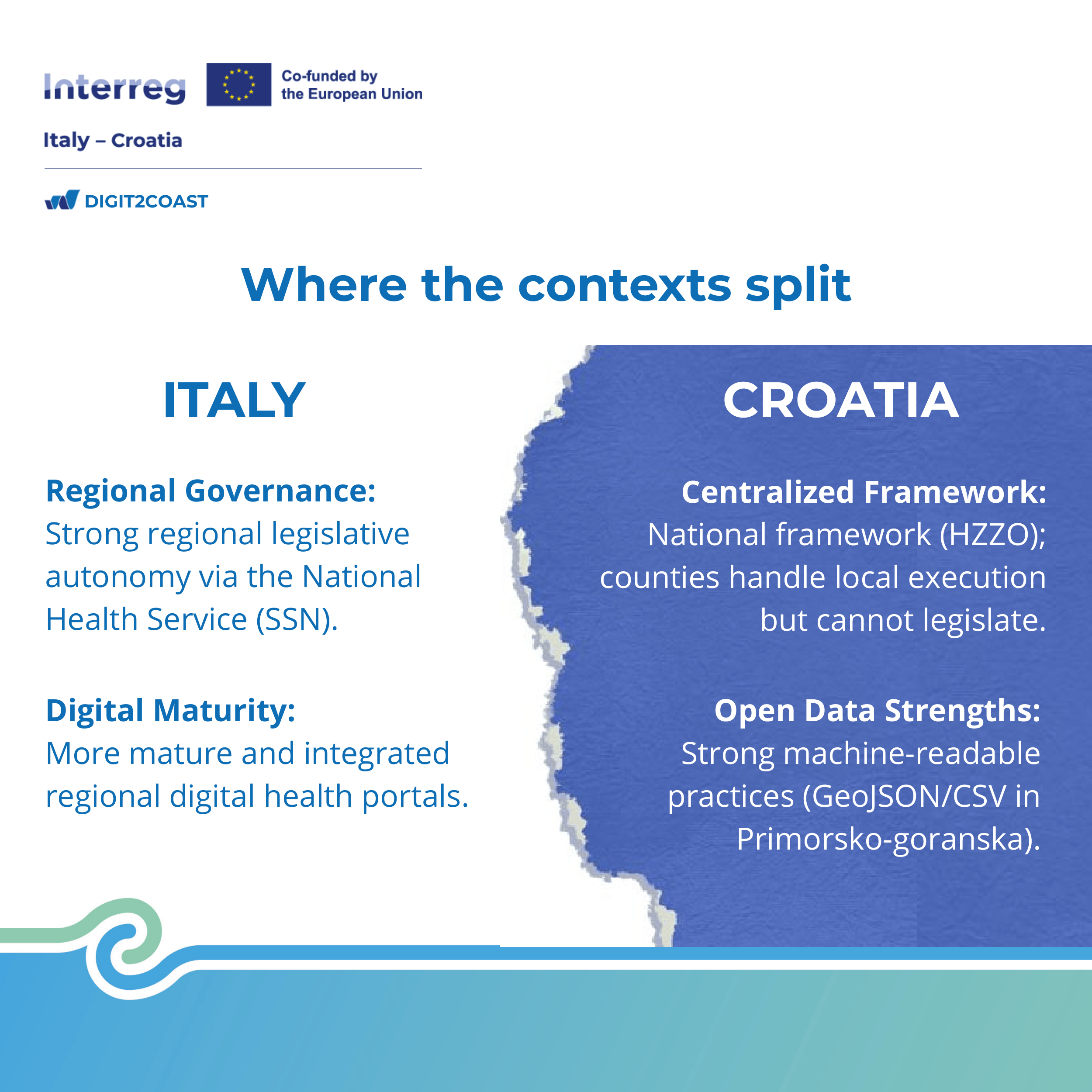
The assessment also revealed critical divergences in institutional governance and digital infrastructure. Italy’s National Health Service (Servizio Sanitario Nazionale) functions under a decentralized structure with strong regional autonomy, yielding highly developed regional digital health portals. Conversely, Croatia relies on a centralized national framework managed by the HZZO, where counties enforce national legislation without independent legislative powers. Notably, Croatian counties demonstrate higher open data maturity through dedicated portals that publish structured GeoJSON and CSV datasets.
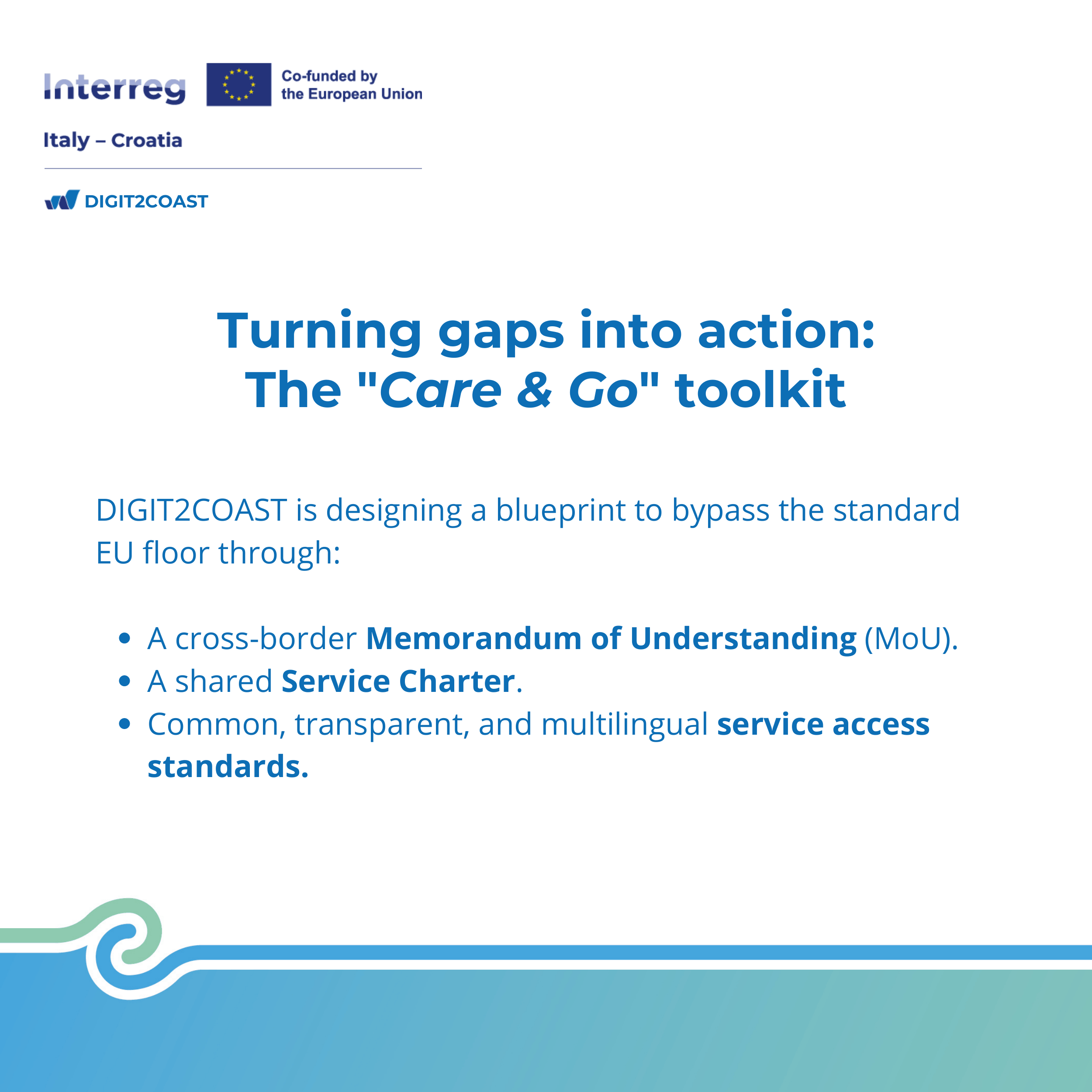
These analytical insights serve as the direct baseline for the technical design of the DIGIT2COAST Care & Go Toolkit. To overcome the identified barriers, the project partnership is actively drafting a cross-border Memorandum of Understanding and a joint Service Charter to establish standardized data access protocols and improve service continuity across the region.
Below is a media section featuring detailed infographics and data visualisations from the Joint Comparative Assessment.