

What happens when memories fade? - community dialogue on dementia and Alzheimer’s disease
01/06/2026
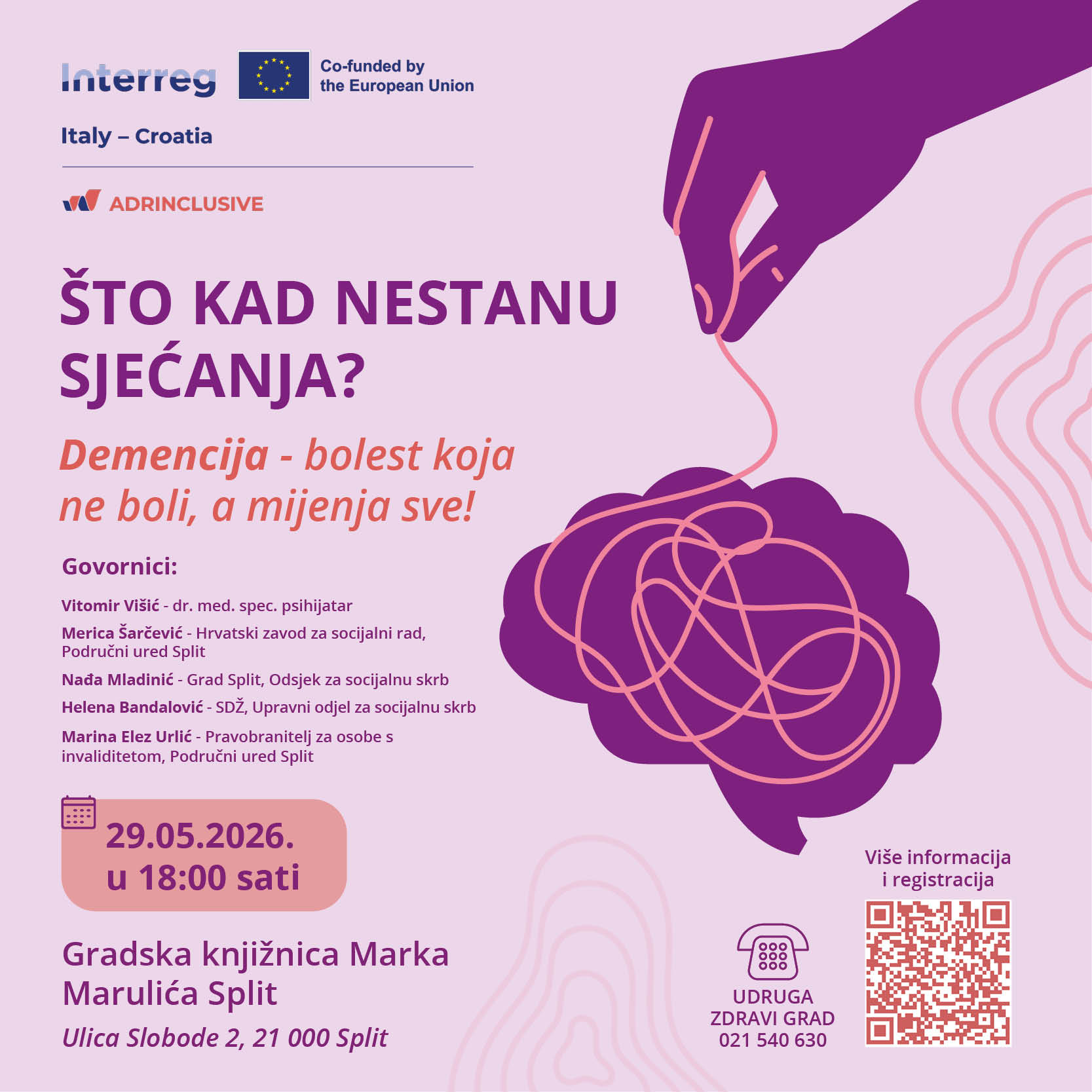
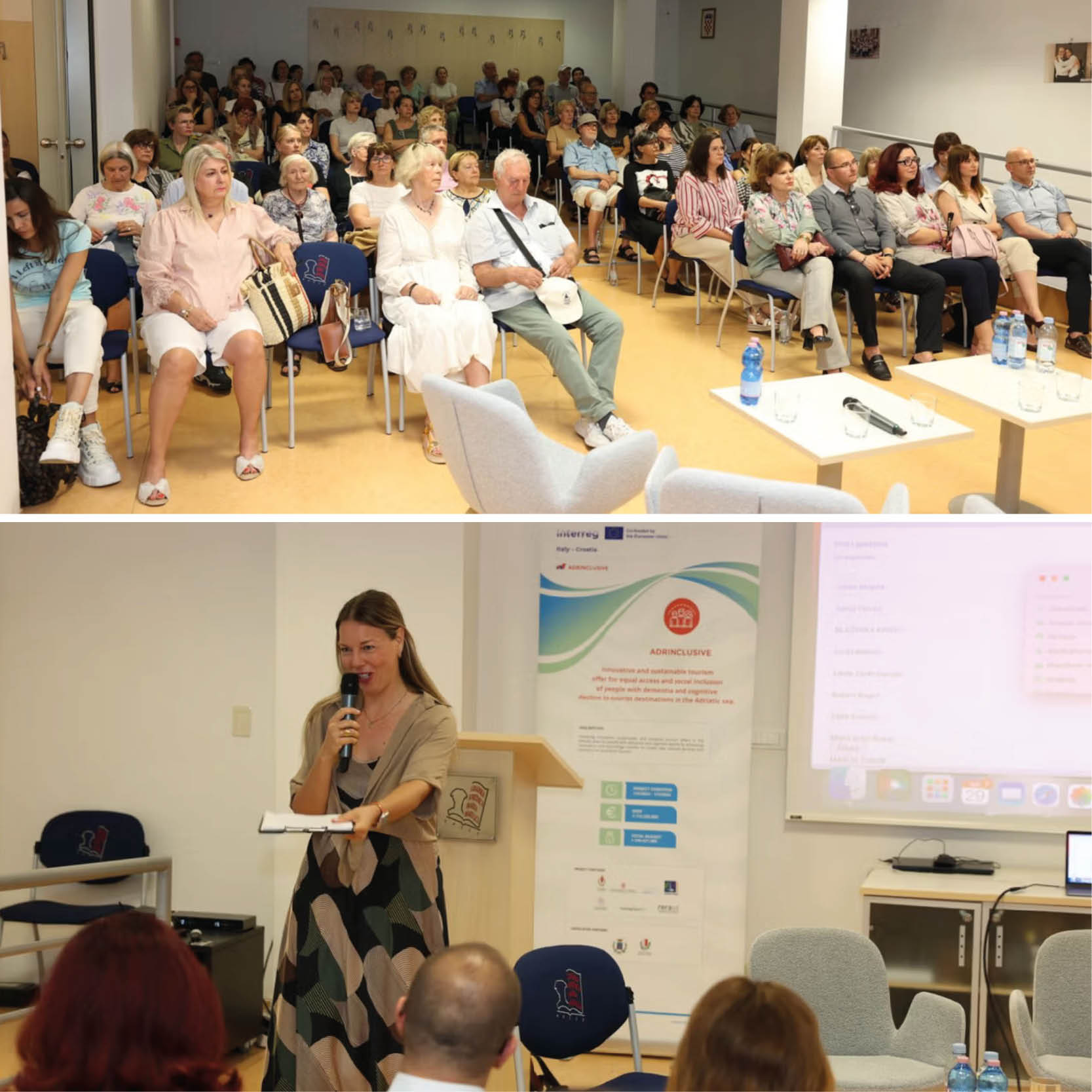
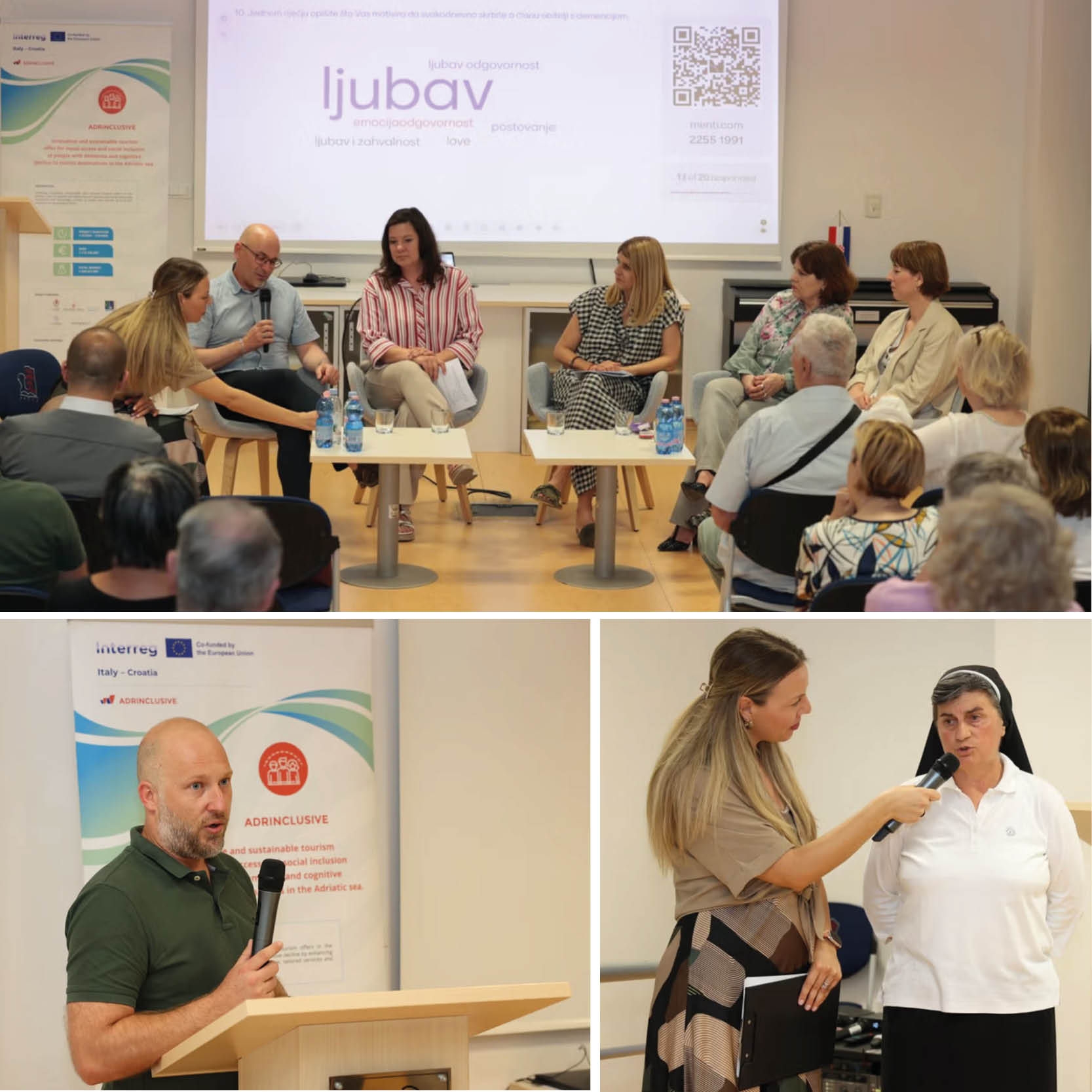
On Friday, 29 May, 2026, the City Library Marko Marulić in Split hosted an informative and engaging public discussion on dementia and Alzheimer’s disease, bringing together healthcare professionals, caregivers, family members, civil society representatives, and local stakeholders to exchange experiences and explore ways to strengthen support for people living with dementia and their families.
A particularly moving moment came when a participant shared her personal experience: “I noticed that my husband had changed, that his personality had changed.” Her testimony reflected the reality faced by many families navigating the challenges associated with dementia.
The event was organised by PI RERA S.D. and the Association Zdravi grad as part of ongoing efforts to raise awareness, encourage dialogue, and promote more inclusive approaches to dementia care. Discussions focused on key topics including early diagnosis, caregiving challenges, legal protection, mental health support, and the development of Dementia-Friendly Communities that foster inclusion, dignity, participation, and safety.
According to global estimates, more than 57 million people are currently living with dementia worldwide, with a new diagnosis occurring every three seconds. In Croatia, approximately 90,000 people are affected by dementia, including more than 2,500 residents of Split.
Participants were also introduced to Croatia’s first pilot holiday programme for people living with dementia, implemented in Makarska within the framework of the ADRINCLUSIVE project. The initiative showcased how cooperation between the tourism, healthcare, and social care sectors can contribute to creating accessible, meaningful, and inclusive experiences for people with cognitive impairments and their families.
The discussion highlighted that dementia extends beyond a medical diagnosis. It affects families, communities, and support networks, requiring coordinated responses that address both practical and emotional needs. By fostering understanding and collaboration, initiatives such as ADRINCLUSIVE contribute to building more inclusive communities where people living with dementia can continue to participate actively and with dignity.