The Travellers and Trade Route
The Adriatic Sea serves as a bridge on a unique journey connecting UNESCO-protected treasures across Italy and Croatia. This route unveils centuries of stories etched into stone, preserved in vibrant traditions, and reflected in the waters that link its shores.
Our journey begins in Urbino, a gem of the Italian Renaissance. At its heart, the 15th-century Palazzo Ducale embodies humanist innovation, housing masterpieces by masters like Piero della Francesca and Raphael. The city’s carefully planned layout is a living testament to an era that transformed the Western world.
Further north, Aquileia reveals a vast, largely unexcavated Roman city founded in 181 BC. Its Patriarchal Basilica is famed for one of Europe’s largest and most significant early Christian mosaic floors. Nearby, Cividale del Friuli, the first Lombard duchy capital, offers a deep dive into the legacy of this people, anchored by its stunning Longobard Temple. The architectural marvels continue with Palmanova, a perfectly preserved star-shaped city. Conceived by Venetian engineers in 1593, this military fortress’s nine-pointed star plan is a masterpiece of Renaissance design.
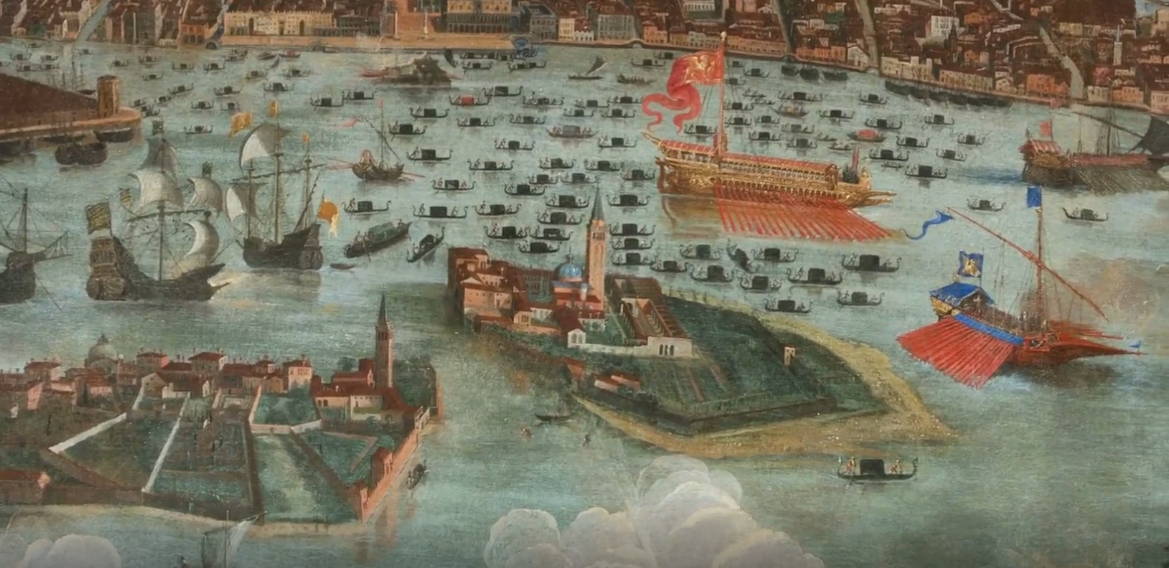
Crossing the Adriatic to Croatia, we find Zadar. Its formidable city walls, reinforced by the Venetians, are a UNESCO World Heritage site and now a beloved promenade. The city is also home to the International Centre for Underwater Archaeology (ICUA), a UNESCO hub dedicated to preserving the Adriatic’s submerged history. Our route then leads to Venice, a unique city whose power as a maritime republic was centered in San Marco. The Doge’s Palace showcases its rich commercial past as a vital Mediterranean port.
Finally, the journey embraces living heritage with the Bell Ringers of Halubje in Croatia’s Viškovo municipality. Recognized by UNESCO, this vibrant carnival tradition is a powerful community ritual to chase away winter and reinforce a shared identity. It’s a powerful symbol of the intangible heritage that thrives in the region.
The Adriatic UNESCO Route is an immersive experience through time, connecting monuments, artistic masterpieces, and living traditions that define the shared soul of the Adriatic.