Breadcrumb

The Route of Architecture 

01.Image_rchit

01.Para_archit

The Route of Architecture

The Adriatic Sea has always been a bridge: a vibrant corridor connecting peoples, cultures, and ideas across its shores. 

The Route of Architecture invites you to explore how this deep connection is imprinted into the ports of Adriatic cities through an immersive experiencethat bring their rich past into the present. Many iconic sites located in the ports of Ancona, Ravenna, Rijeka, Split, Dubrovnik, Trieste, Venice, and Ravenna. 

We begin in Ancona, a port city of Greek origin where Roman heritage still holds strong. Here, the harbor is crowned by the Arch of Trajan, proudly overlooking the sea. Built in the 2nd century AD to honor Emperor Trajan, it remains one of the best-preserved Roman monuments on the Adriatic coast. 

Heading north, we reach Ravenna, a city that once looked out over the sea and served as the Western stronghold of the Byzantine Empire. Along this route, you’ll discover early Christian churches such as Madonna del Pino and Madonna della Neve. 

The journey continues to Venice, a city born from the sea and shaped by its port. Here, you’ll discover the monumental Gate of the Arsenale, the first example of Renaissance architecture in the city. A true jewel of the architectural heritage of Venice’s harbour, it stands among the port’s most iconic structures. This was the symbolic entrance to the city’s marittime power: the beating heart of the Venetian Republic. 

Further north we find Trieste, a cosmopolitan city where Central European and Mediterranean cultures meet. Overlooking its wide harbor are three historic castles, San Giusto, Duino, and Miramare, each telling a different chapter of the city’s rich and multicultural history. 

Crossing to the eastern shore, the route gets to Rijeka, a lively port city known for its alternative art scene and industrial heritage. Above the city, Trsat Castle rises from a legendary hill, its origins rooted in Roman times and medieval defense. 

We continue then to the town of Komiža on the island of Vis, which is located near Split, Croatia’s second-largest city, ancient and modern coexist within a vibrant coastal atmosphere.  Here, sacred and industrial heritage come together: the Church of Saint Nicholas, patron saint of sailors, stands near Neptun, a former fish cannery now reimagined for contemporary use. 

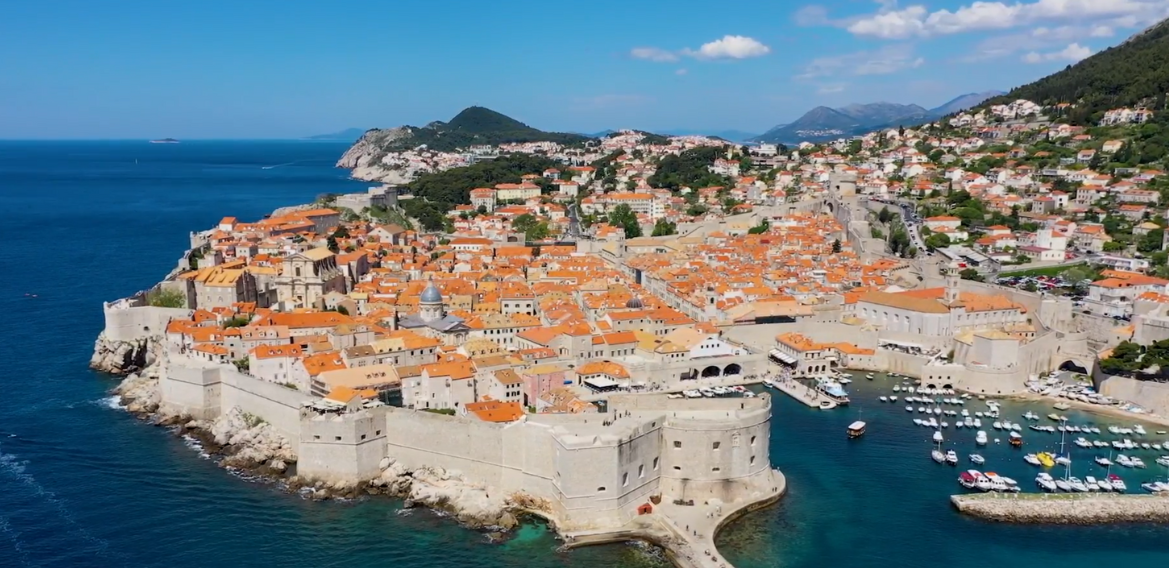
Finally, the route arrives in Dubrovnik, the Pearl of the Adriatic, where history and beauty converge. The Kaše Breakwater, a 15th-century engineering marvel, and the elegant Knežev dvor Tower bear witness to the city’s noble architectural legacy. 

The Route of Architecture is more than a journey through space it’s a journey through time, across a shared sea that continues to unite us all. 

 

03.Video_archi

Video presentation

04.Link_architect

Set sail on the Route of Architecture

LINKS

Title and description Link

Ravenna [IT] Small churches of Cervia

Ravenna [IT] The Padelloni

Trieste [IT] Duino Castle

Rijeka [HR] The leaning tower

Venice [IT] Dogana Da Mar

Venice [IT] Heritage tower

Split [HR] Church St. Nicholas

Split [HR] Factories in fishing history

Venice [HR] Industry 

Ancona [IT] The Arch of Trajan

Venice [IT] Gate of Arsenale

Trieste [IT] Castel San Giusto

Trieste [IT] Miramare Castle

Dubrovnik [HR] Rector's palace

Ancona [IT] Holy house of Loreto

Dubrovnik [HR] Kase Breakwater

Ancona [IT] Gradara Castle

Rijeka [HR] Trsat Castle

Ravenna [IT] The Almagià building

Ravenna [IT] The National Bullseye Shooting building

Zadar [HR] Broken Stones – Forum/Donat/Kalelarga

Zadar [HR] Sea Organs and Greetings to the Sun

05.Acc_architecture

The Route of Architecture

The Route of Architecture traces a journey across the Adriatic through port cities where centuries of maritime history, culture and architecture intersect. From ancient Roman monuments to medieval fortresses, from Renaissance gates to modern industrial heritage, this route reveals how sea-facing cities built their identity on architecture shaped by trade, power, and coastal life.

It is a thematic route that connects major Adriatic port cities through their architectural heritage — including monuments, historic buildings, castles, churches, harbour structures and urban features.

It highlights how maritime history and cross-Adriatic exchange shaped a shared architectural legacy, showing the layers of influence from Roman times to modern port industry.

For travellers, history lovers and architecture enthusiasts who wish to explore the Adriatic coast through its built heritage and discover the stories behind its ports and cities.

You visit a selection of Adriatic port cities — such as Ancona, Ravenna, Venice, Trieste, Rijeka, Split, Dubrovnik — and explore their architectural landmarks connected to maritime and urban history.

Ancient Roman monuments by the sea (like the harbour gate in Ancona), Byzantine-era churches, Renaissance port gates (e.g. the Arsenale in Venice), historic castles and fortresses, port-area industrial heritage, and urban landscapes shaped by centuries of cultural exchange.

It offers a rich, layered way to understand the Adriatic — not just as a sea, but as a cultural corridor where architecture tells stories of trade, empire, migration and local resilience.

Visit the platform adrijo.eu , explore the “Route of Architecture” section, choose a city or site you wish to discover, and begin exploring its architecture either in person or through virtual museum contents.

Our contact form is open for all your requests