Header - Acronym and Title
SO 2.1 - Climate change adaptation
RESONANCE
Information - Card
Information
Project specific objectives - Card
Project specific objectives
- define new guidelines for landslide risk management, prevention and urban planning in coastal areas,
- introduce an innovative method based on the use of VR/MR/AR to improve monitoring, communication and dissemination systems, decision making processes and tourism.
Project main outputs - Card
Project main outputs
- integrated survey/monitoring system in the pilot areas,
- landslide hazard and susceptibility thematic maps for jointly developed landslide mitigation strategies,
- website platform and virtual tools to improve digital competences and risk forecasting capacities,
- public events to promote virtual tools,
- joint training scheme for disseminating project results.
About section
About
The RESONANCE project has as a goal to mitigate the risks of landslides and erosion in the Adriatic Region, which pose threats to both human safety and infrastructure, impacting the regional economy and tourism. Leveraging advancements in geophysics, remote sensing, and virtual reality (VR), mixed reality (MR), and augmented reality (AR), the project seeks to enhance understanding and civil protection procedures by improving understanding about thye factors controlling coastal landslides and erosion processes.
Through the selection of four pilot sites, numerical analyses, and the development of a virtual database for data sharing and visualization, RESONANCE aims to predict future processes and improve communication and cooperation among stakeholders. The integration of VR, MR, and AR will facilitate dissemination methods, promote tourism, and inform the creation of coastal vulnerability plans and civil protection guidelines, with virtual tools playing a key role in tourism promotion.
ItItacro2127PortletLeaderpartnerCard
Search Card
News & Events
-
NEWS
31/08/2026RESONANCE – Improving Landslide Risk Prevention and Management in Coastal Areas
The RESONANCE project brought together Croatian and Italian scientific, educational and public institutions to improve the understanding, monitoring and mitigation of landslide and erosion risks along the Adriatic coast. By combining advanced field investigations, geophysical methods and digital technologies, the project delivered new tools, maps and guidelines supporting safer and more resilient coastal communities.
-
NEWS
26/08/2026Final RESONANCE Steering Committee Meeting
The final RESONANCE Steering Committee meeting confirmed the successful completion of all planned project activities and tasks, with all partners fulfilling their responsibilities. The meeting concluded with appreciation for the successful cooperation and the results achieved throughout the project.
-
NEWS
10/07/2026RESONANCE Field Visit to the Conero Regional Park Landslide Area
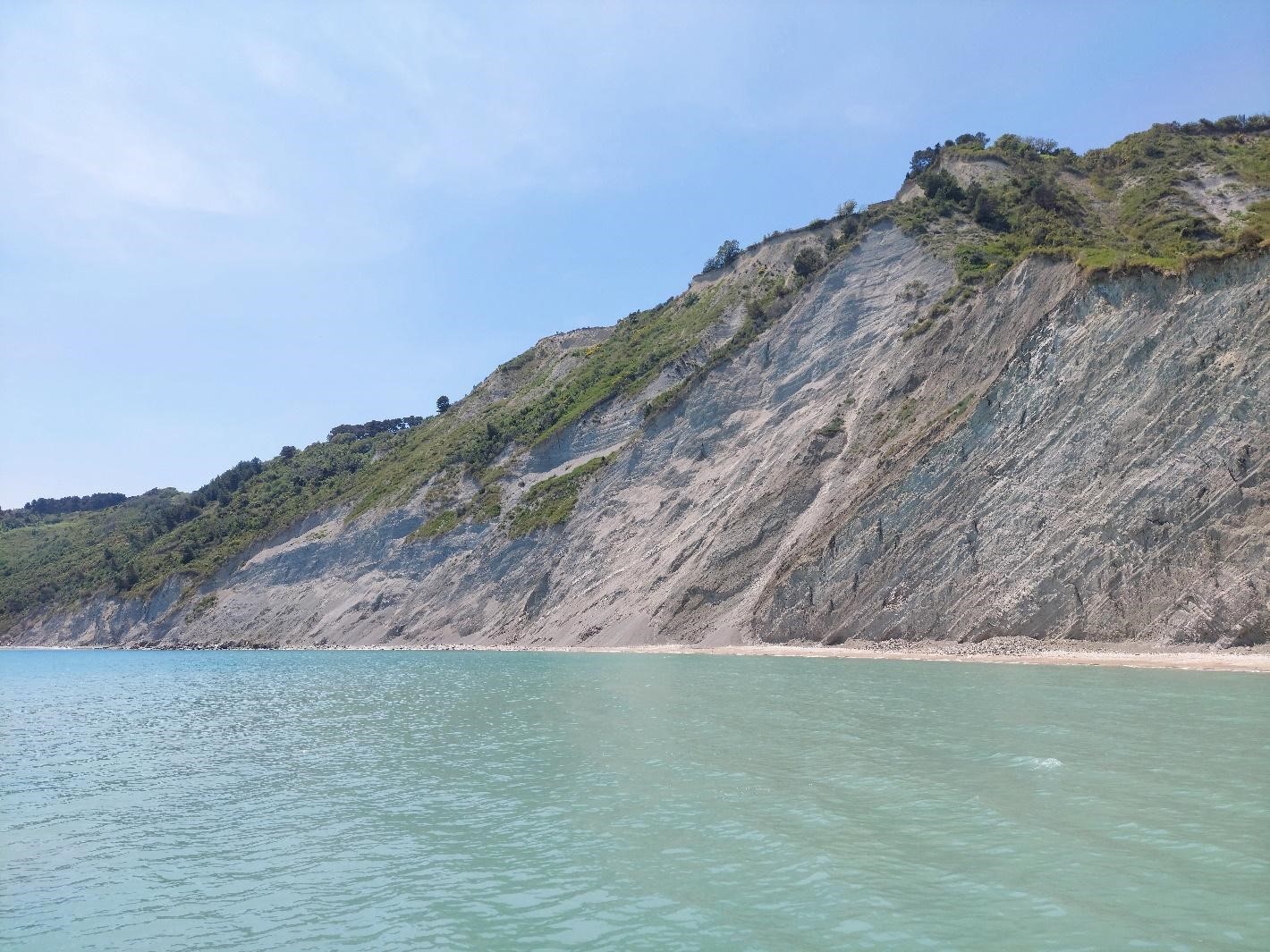
As part of the RESONANCE Public Event, we visited Conero Regional Park, a landslide-prone coastal area and one of the project’s case-study sites where field investigations were conducted. The visit connected the results of scientific research with direct observation of coastal instability and hydrogeological risks.
-
NEWS
07/07/2026Public Event on Climate Change and Hydrogeological Risks Held in Fano
A public event of the RESONANCE project was held on July 7, 2026, at Palazzo San Michele in Fano, focusing on climate change, coastal processes, and hydrogeological risks. Experts from Italy and Croatia presented current knowledge, practical examples, and modern technologies that can support a better understanding and management of risks in coastal areas.
-
NEWS
01/07/2026RESONANCE Project Presented at the AIGA National Conference
The RESONANCE project was presented at the AIGA National Conference through a case study on coastal instability in Monte Conero Regional Park, focusing on the Piangrande cliff and Mezzavalle beach. The contribution highlighted how integrated geological, geomechanical, UAV, LiDAR, geomorphological and numerical modelling methods support coastal landslide assessment and sustainable risk management.