

Youth in focus for 7th Blue Café in Campobasso
22/12/2025
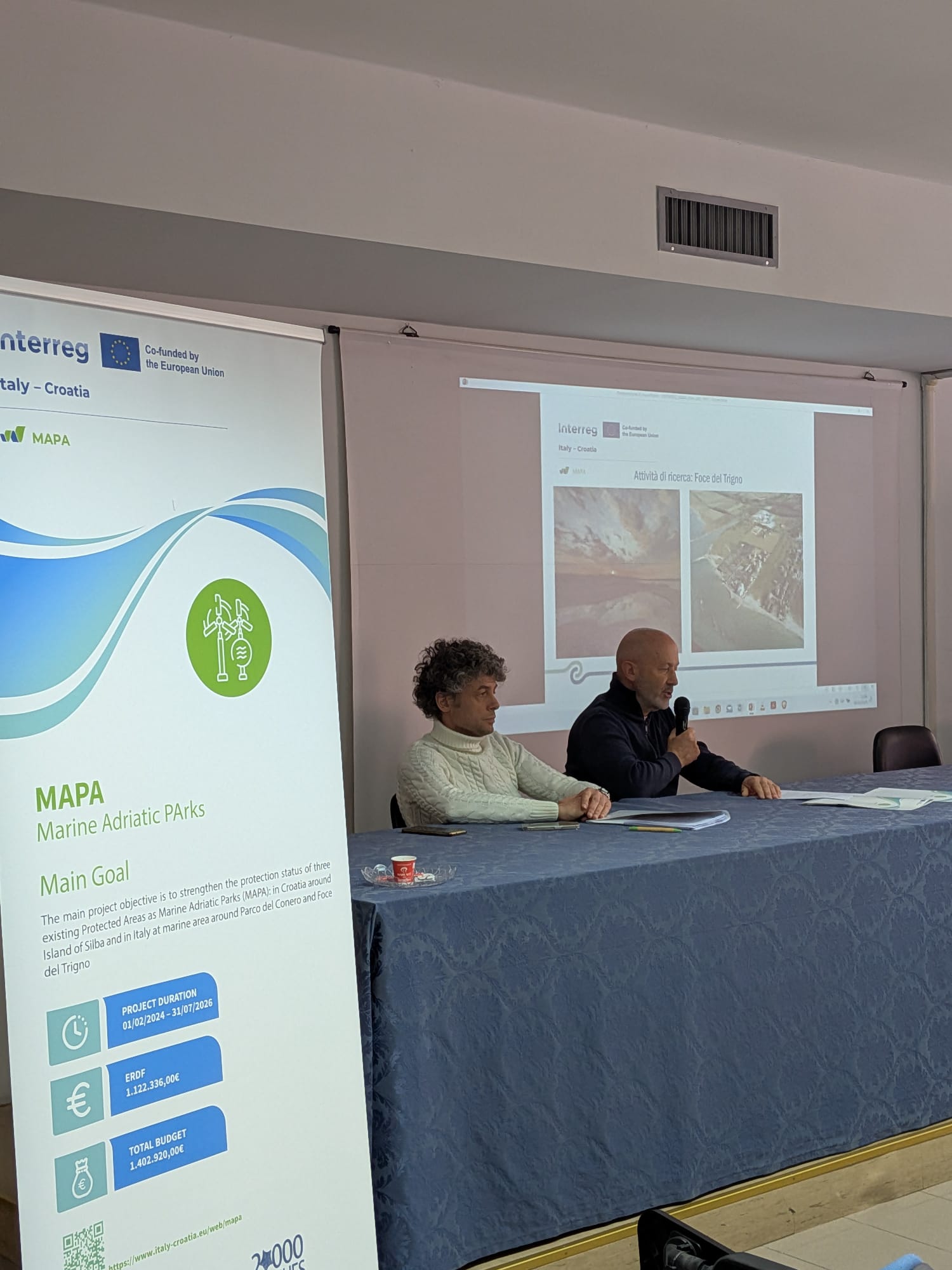
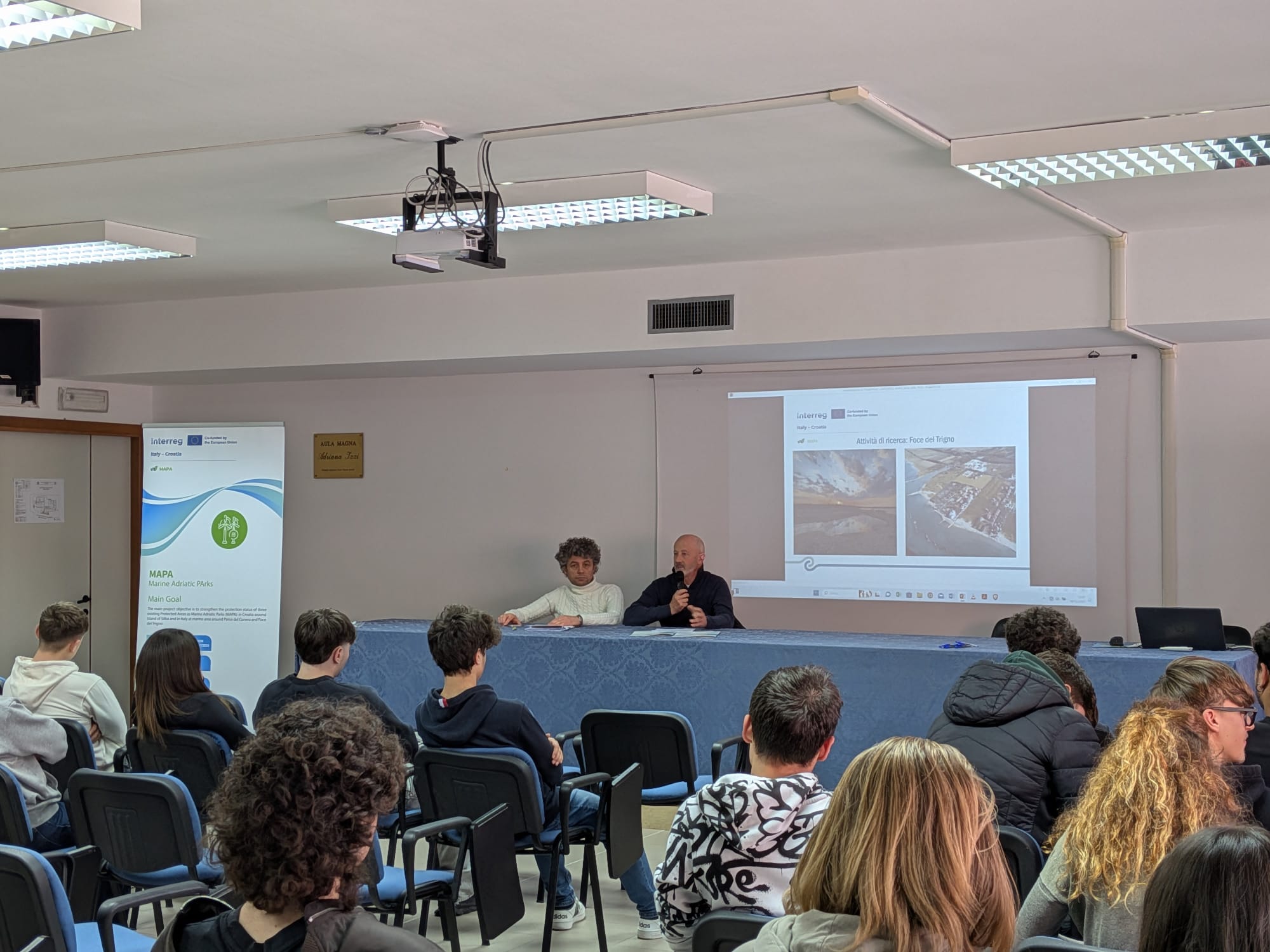
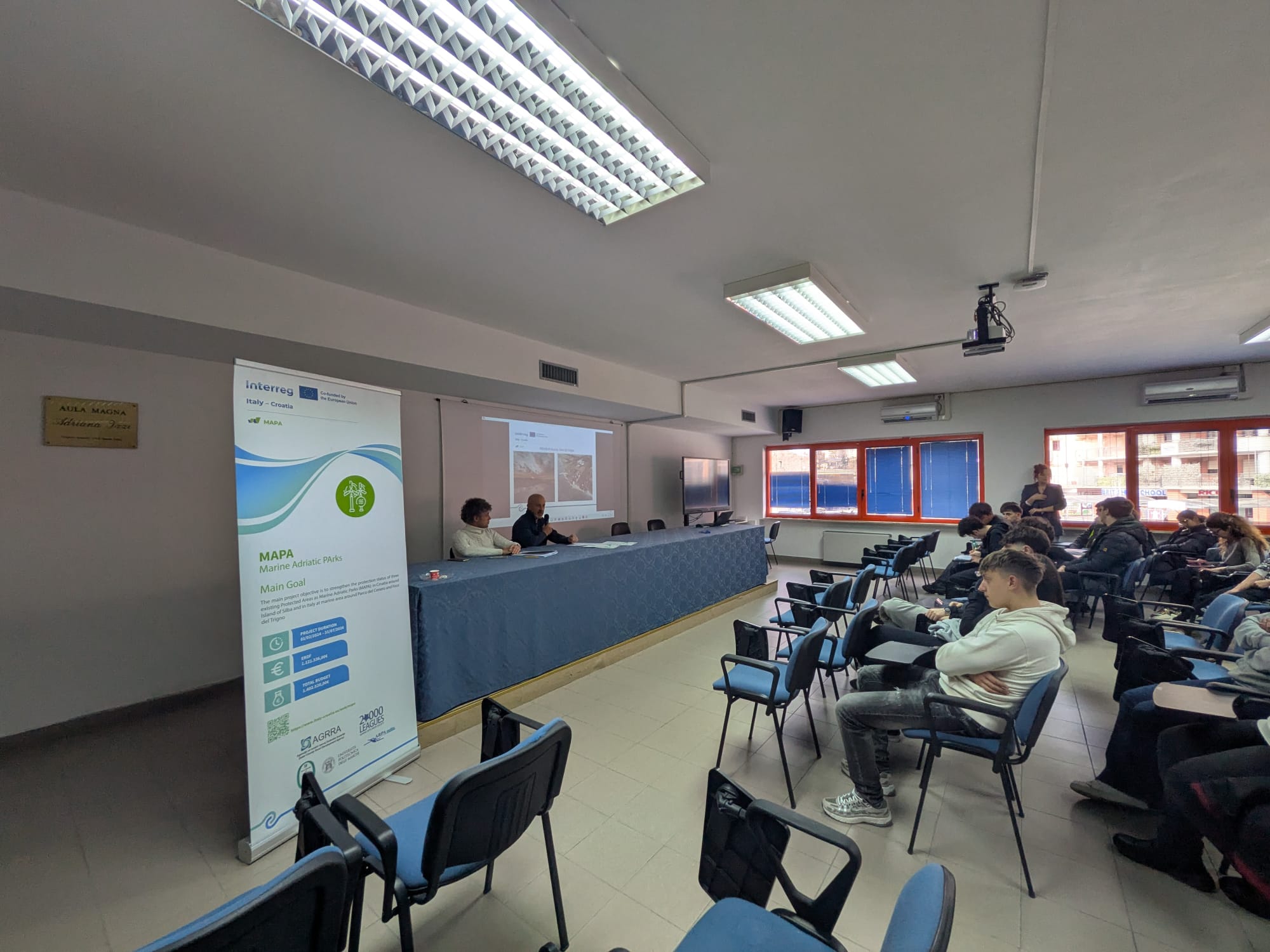
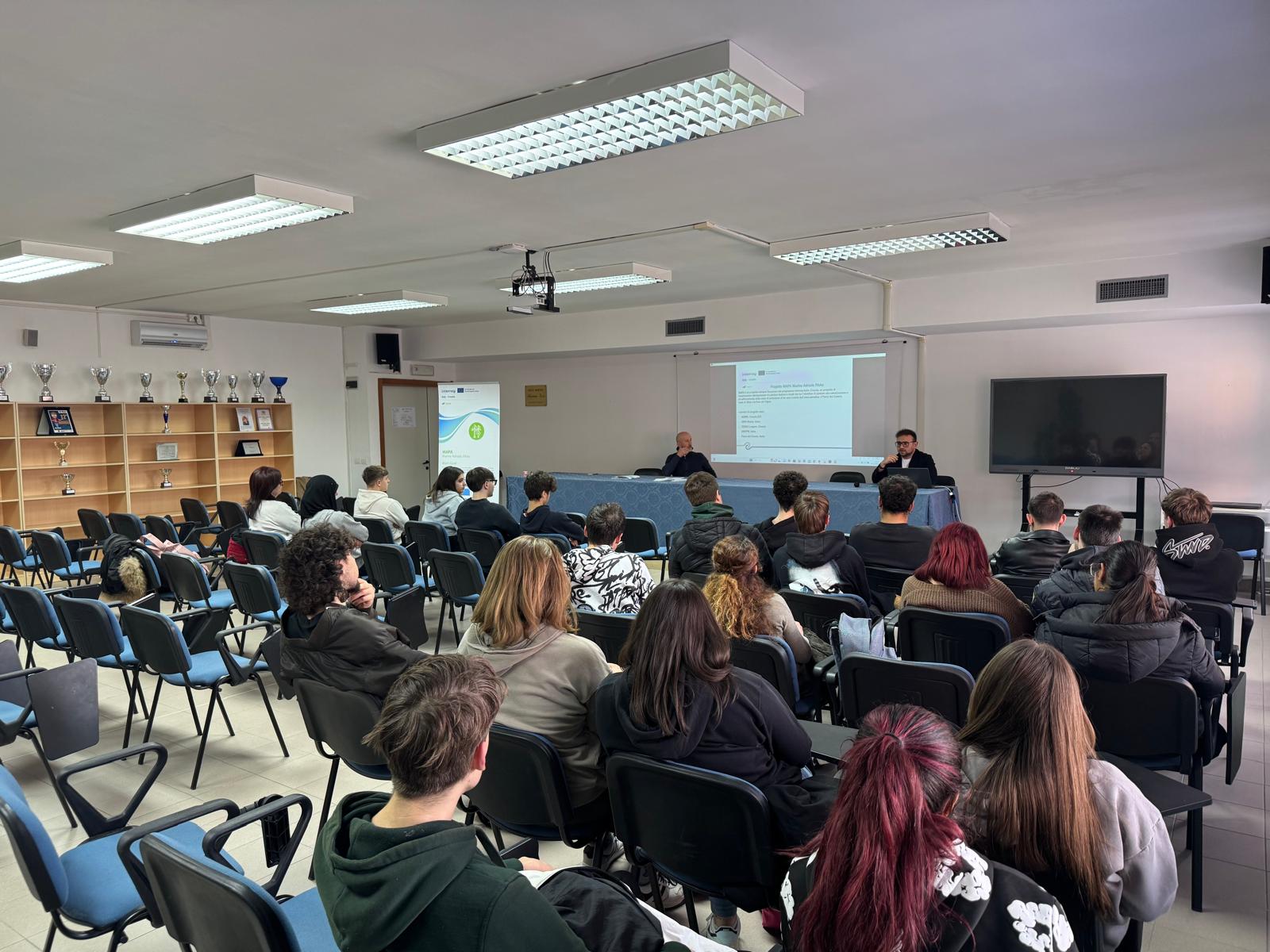
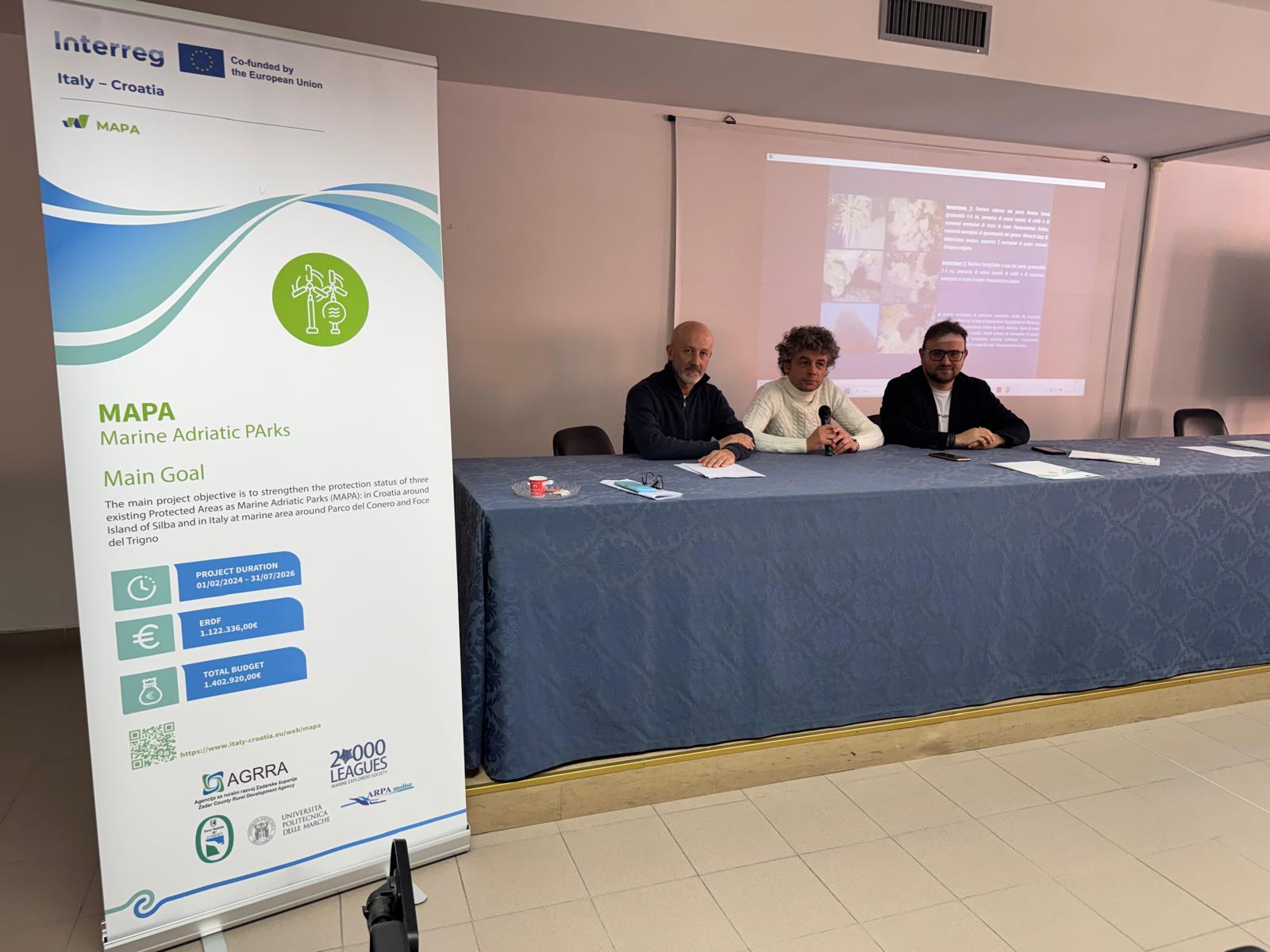
On 18 December 2025, the 7th Blue Café was held at the Istituto Biotecnologico ITAS “Sandro Pertini” in Campobasso. Hosted by ARPA Molise (PP2) and GAL Molise, the event brought together secondary‑school students, teachers and institutional representatives for an informal but focused conversation on biodiversity, Marine Protected Areas (MPAs) and the role that schools and local bodies can play in safeguarding the sea.
Bringing MAPA and Foce del Trigno into the classroom
Moderated by Paolo Mastrangelo and Giovanni Sardella from ARPA Molise, together with Alessandro Di Lallo from GAL Molise, the Blue Café began with an introduction to the MAPA project: its objectives, progress to date and ongoing activities across the Adriatic. Particular attention was given to the Foce del Trigno pilot site on the Molise coast, where ARPA Molise and partners have been carrying out field research, monitoring and stakeholder engagement to build the case for stronger protection and better management.
Through presentations and discussion, students gained insight into what ARPA does in practice—from data collection and ecological assessments to providing technical support for decision‑makers. The speakers explained how scientific evidence from Foce del Trigno feeds into proposals for enhancing the protection status of the area, and how this connects to broader European goals for marine conservation and climate resilience.
Listening to students: what do they know, and what do they need?
A central part of the event was a questionnaire administered to students about biodiversity, MPAs and environmental protection. Their responses painted a clear picture: while young people are aware of issues like climate change and species loss, the topic of marine protected areas is rarely covered in depth at school. Around three‑quarters of respondents stated that marine protection and biodiversity are not adequately addressed in their lessons.
In the open debate that followed, students and teachers discussed these findings with ARPA Molise and GAL Molise representatives. Many participants expressed a desire for more practical environmental education - field trips, citizen science, local case studies - rather than only theoretical treatment of environmental topics. They highlighted how this kind of learning could help them better understand the value of sites like Foce del Trigno and feel more empowered to contribute to protection efforts.
Why this Blue Café matters?
For MAPA, this Blue Café was an important step in linking project work on the coast with the perspectives of young people inland, in the regional capital. The event showed that:
- schools are key partners in building long‑term support for MPAs and biodiversity protection;
- there is strong interest among students in learning more about the sea and concrete local examples like Foce del Trigno;
- closer collaboration between institutions (such as ARPA and GAL), teachers and students can help fill gaps in environmental education.
The conclusions of the meeting pointed towards the need for continuous cooperation between science, institutions and schools, as well as more opportunities for youth to engage directly in monitoring, awareness campaigns and community initiatives. Participants expressed willingness to explore follow‑up activities - such as classroom workshops on MPAs, visits to the coast, or joint projects under the MAPA framework and its Youth Thinks Blue Programme - that would turn this single Blue Café into the starting point of a longer journey towards informed and active environmental citizenship among the next generation.