

Blue Café in Zadar on Protected Areas for Islands
20/10/2025
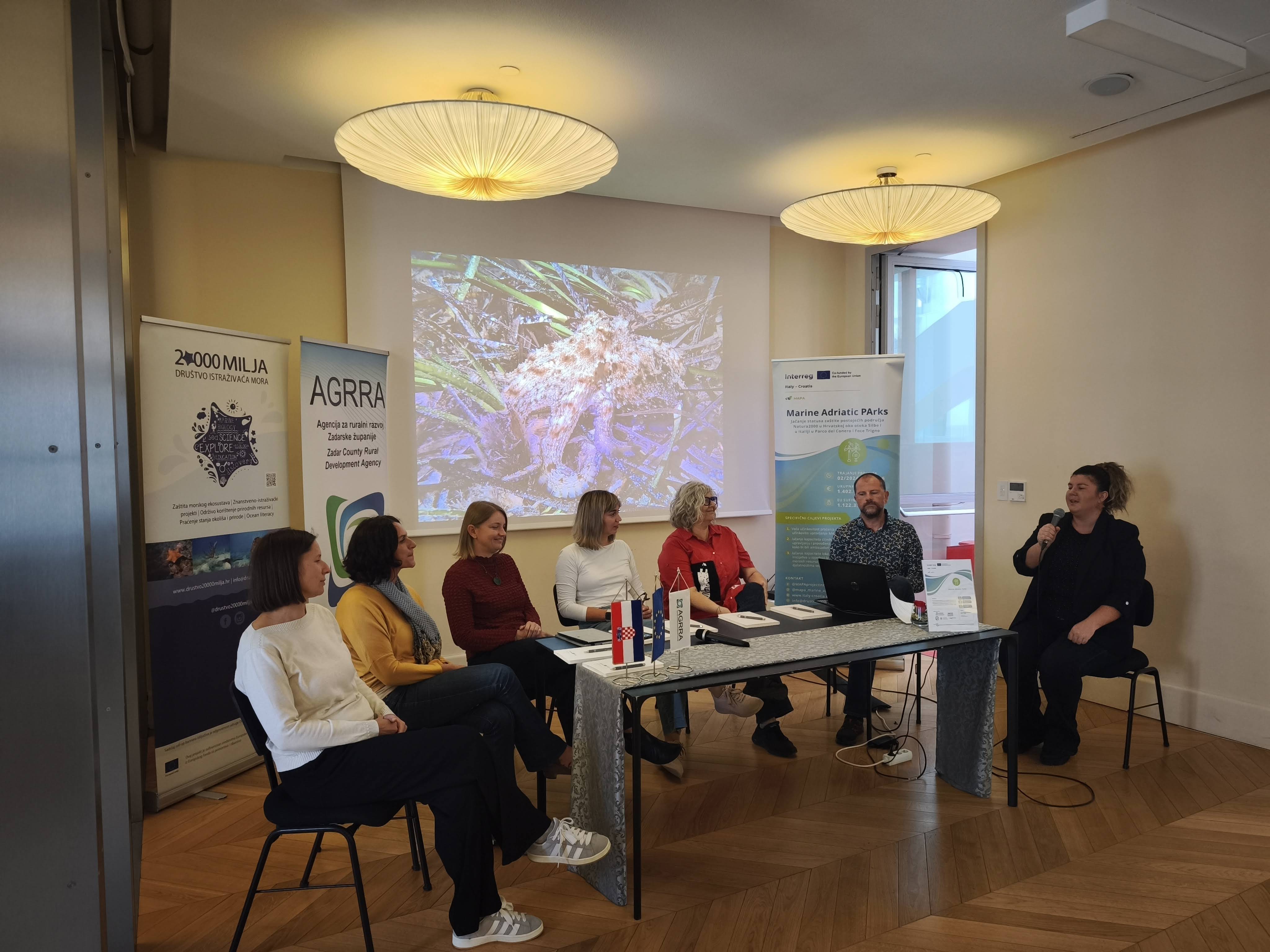
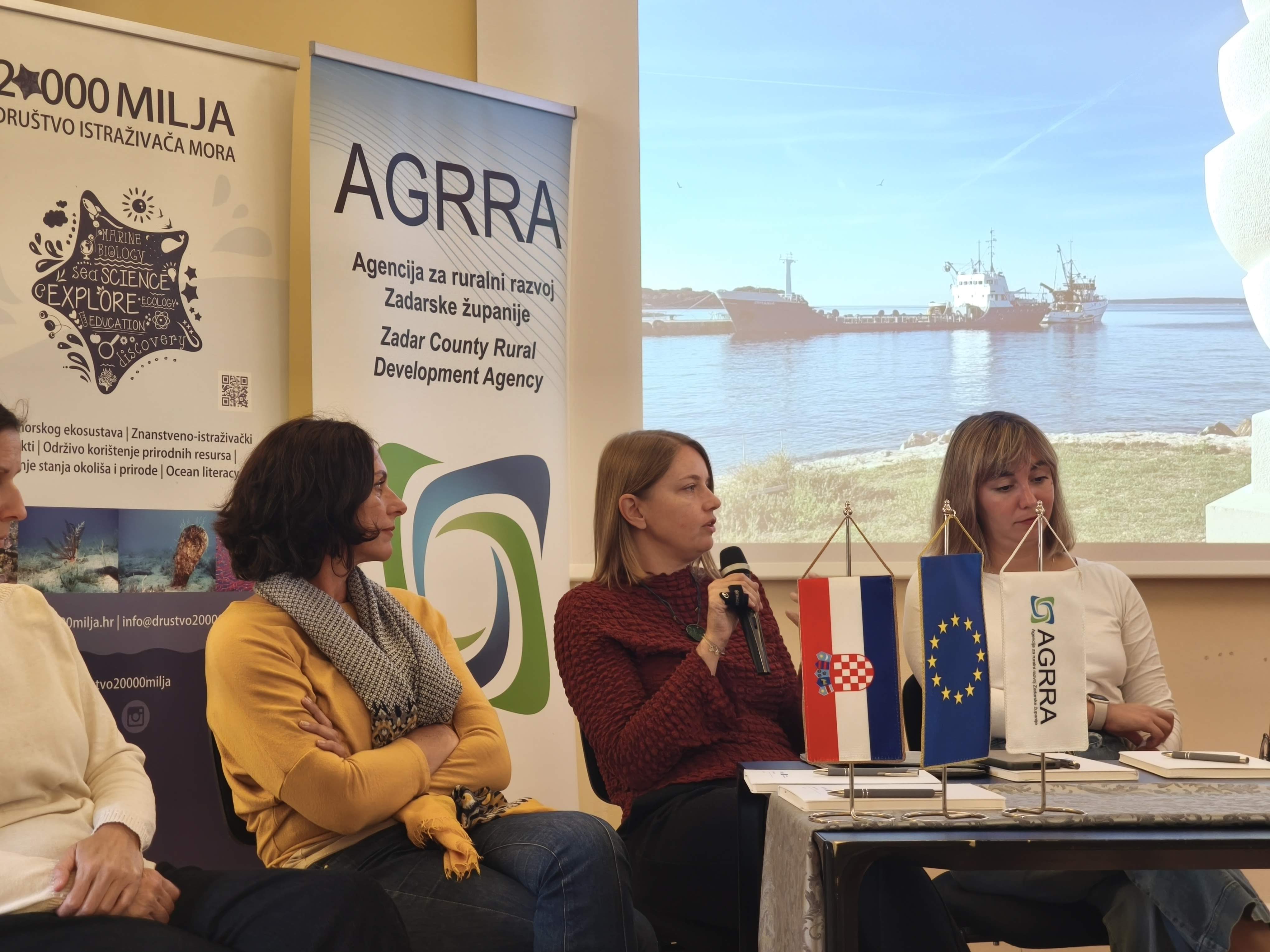
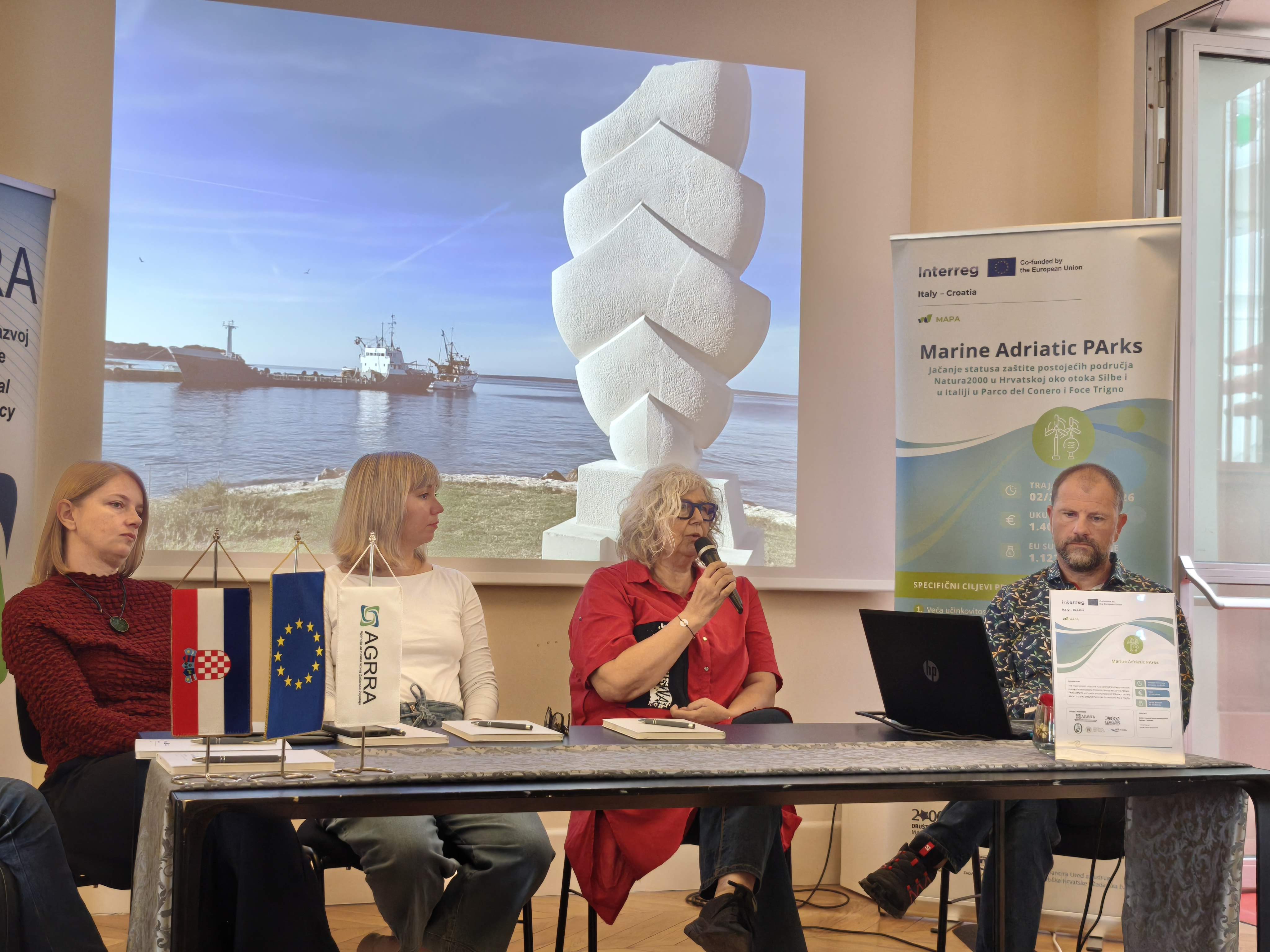
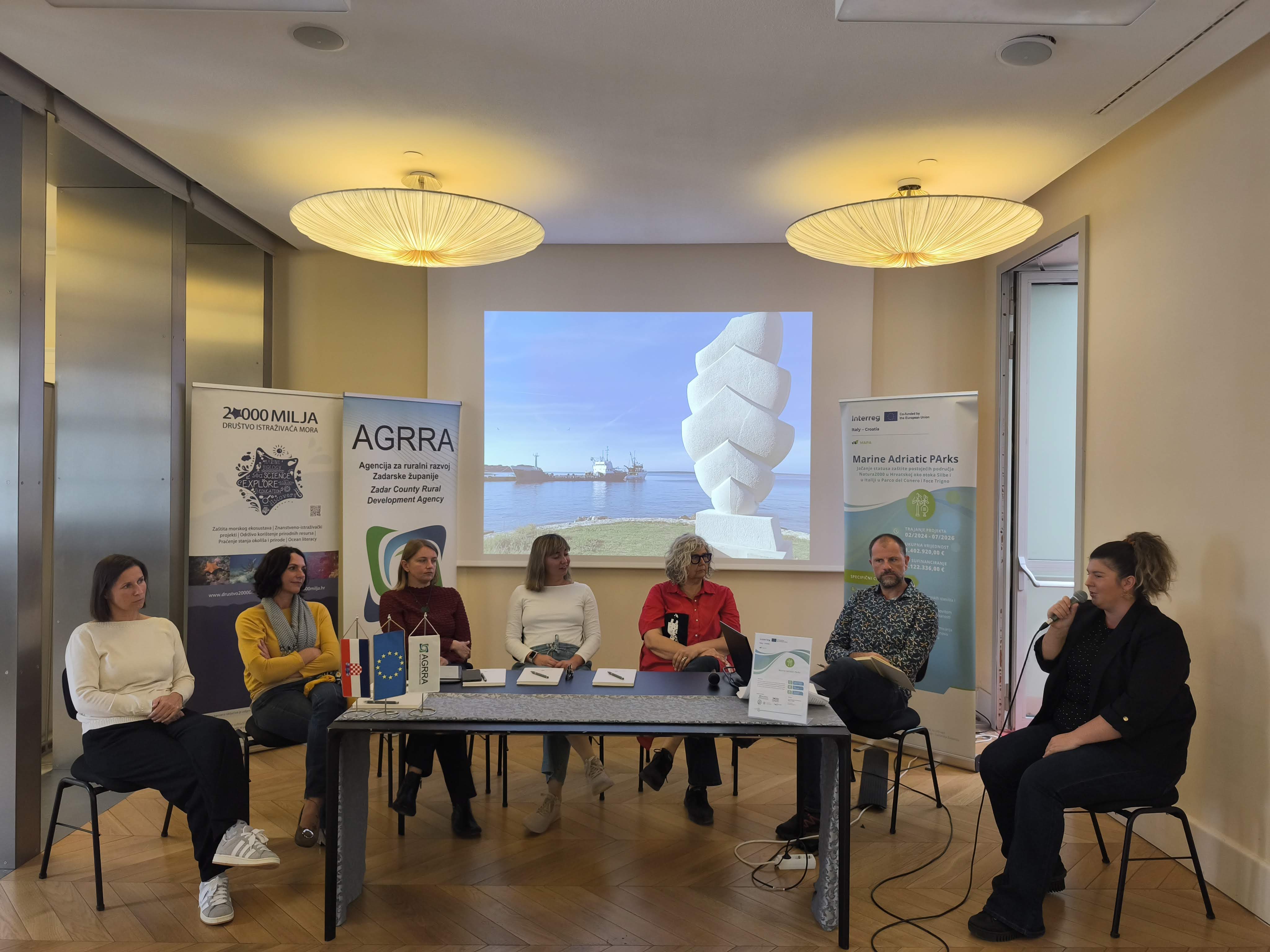
On 17 October 2025, the MAPA joined a celebratory week of EU Open Days of EU Projects with a Blue Café event in Zadar titled “Protected Areas for Islands”. Held in the Multimedia Hall of the Rector’s Palace, the gathering was co‑organised by AGRRA and 20000 Leagues.
Who was around the table?
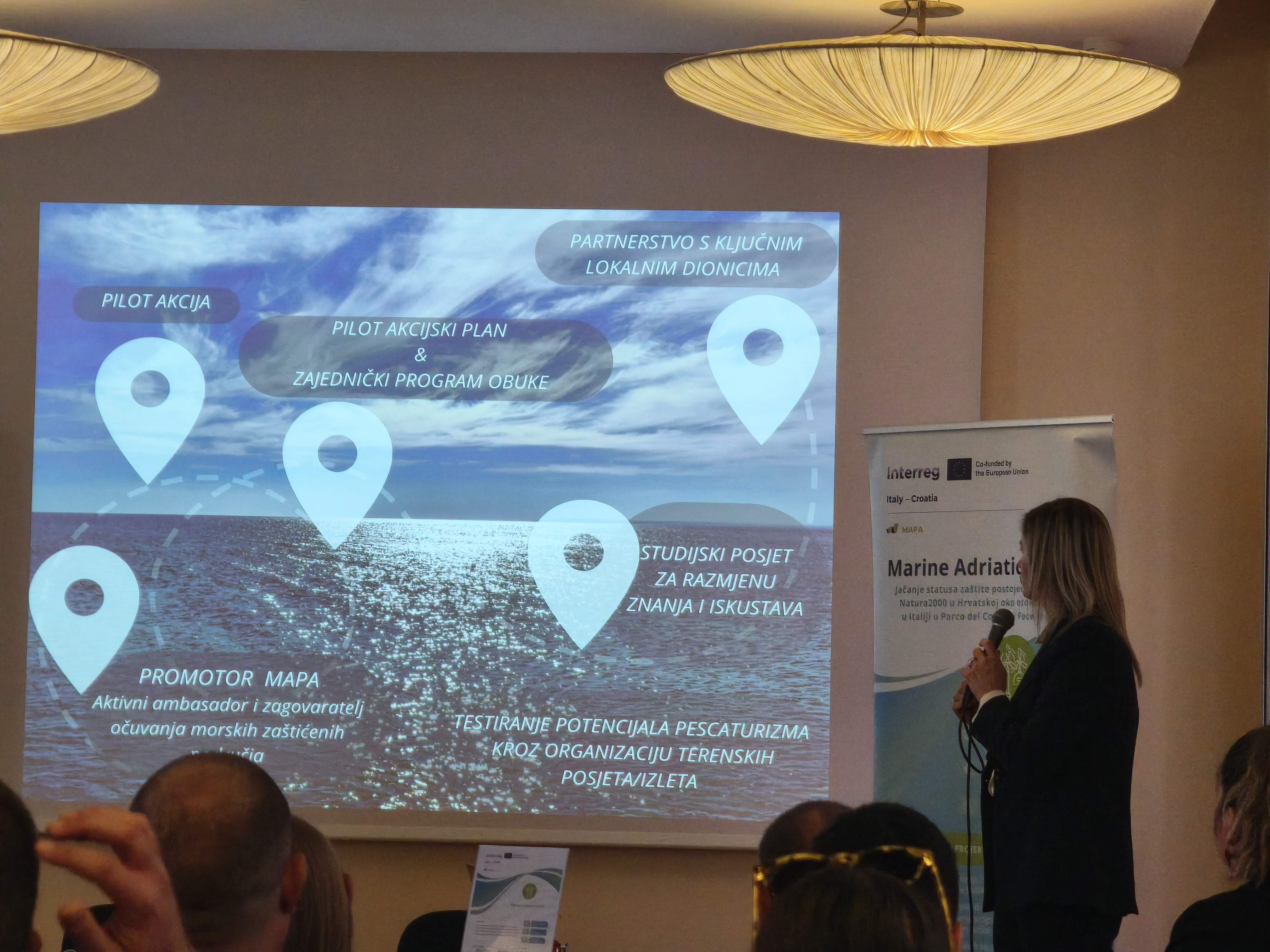
After a short introduction to the MAPA project by project manager Ivana Mamić, the discussion panel brought together experts and island advocates with different perspectives on protection and everyday life:
- Dr. Ivana Zubak Čižmek – marine biologist and ecologist from Uni Zadar
- Dr. Melita Mokos – ocean literacy expert from Uni Zadar
- Morana Bačić – Natura Jadera Public Institution (associated MAPA partner)
- Paula Bolfan – representative of Pokret otoka
- Natalija Žorž Brusić – Society for the Protection of Cultural and Natural Heritage Silba – Samotvorac
- Hrvoje Čižmek – biologist and president of 20000 Leagues
- Moderated by Barbara Čolić (20000 Leagues),
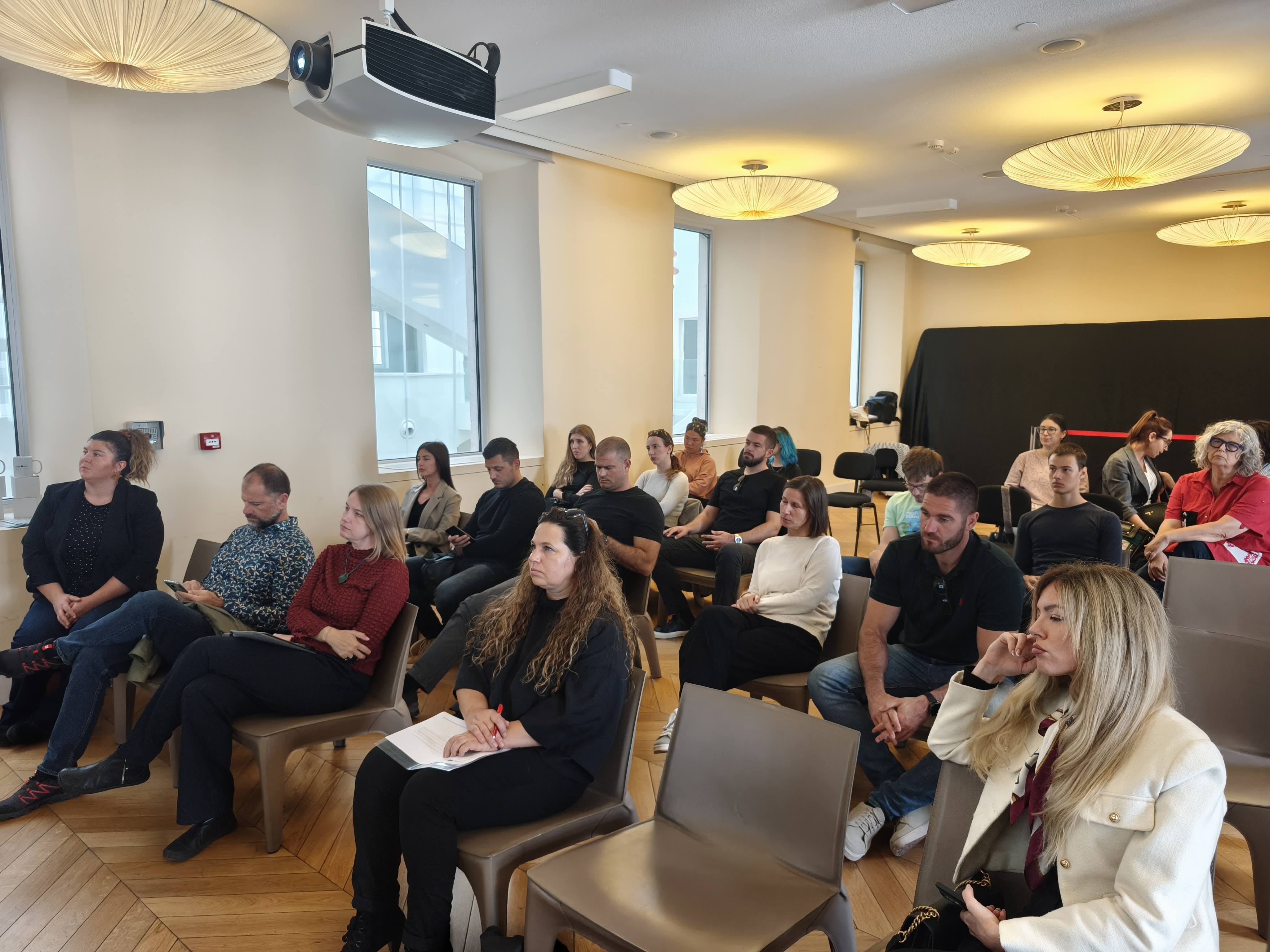
In the audience we had a diverse group of youth, NGO representatives, public authority representatives
What did they talk about?
Over the course of the Blue Café, the panel and participants explored several themes:
- How protected areas on islands are managed in practice, and what works – or fails – when trying to balance conservation, tourism and the needs of residents
- The role of science in understanding island ecosystems, from marine habitats to freshwater and terrestrial environments, and how this knowledge can (and should) guide decisions
- The importance of local communities and grassroots initiatives in starting and sustaining protection efforts.
- Climate change emerged as a cross‑cutting concern: the speakers discussed how rising temperatures, extreme weather, sea level rise and shifting species distributions are already affecting small islands, and why this makes proactive protection and cooperation more urgent.
Why are island communities so important for protected areas?
A strong message shared by all speakers was that protected areas will only succeed if islanders themselves are involved from the start. Participants underlined that local residents need to be informed, consulted and included in decisions about zoning, rules and management priorities. Additionally, education - both formal and informal - was highligted as essential to help people understand why protection is needed and how it can support long‑term well‑being and livelihoods, as well as the constant need for transparency and continuous dialogue build trust and reduce conflict around restrictions. The example of Silba featured prominently. Through almost 50 years of work, the Society Samotvorac has helped preserve the island’s authenticity, natural landscapes and cultural heritage. Their project “Roots of Resilience” supported by Dalmatian Island Environment Foundation was presented as an inspiring model that links community pride, education, and concrete conservation actions.
Connecting science, management and local knowledge
Another important thread was how to bring together three types of knowledge: scientific data, management experience, and traditional/local knowledge. Participants shared examples from their own work, including natural resource management and small‑scale monitoring of habitats and species, waste collection and marine litter monitoring actions, educational programmes for children, youth and visitors, habitat restoration and protection projects on land and at sea.
The Blue Café format allowed the audience to ask questions, vote on prompts and comment throughout, making the event genuinely participatory. This interaction helped identify priorities and ideas for future cooperation between islands, organisations and institutions.
What comes next – and why it matters
The event closed with a shared conclusion: resilient island communities and healthy island ecosystems can only be built through lasting partnerships between science, institutions and local people. Policymakers on land and islands have a key role to play, but so do citizens who are willing to engage, learn and take initiative - through what participants called “active citizenship”. The Zadar Blue Café confirmed a simple truth: when people who care about their home islands sit down together - scientists, fishers, teachers, activists and neighbours - protected areas stop being just lines on a map and start becoming shared projects for the future.