
Fishing for the Future: Study Visit to Sardinia
06/10/2025
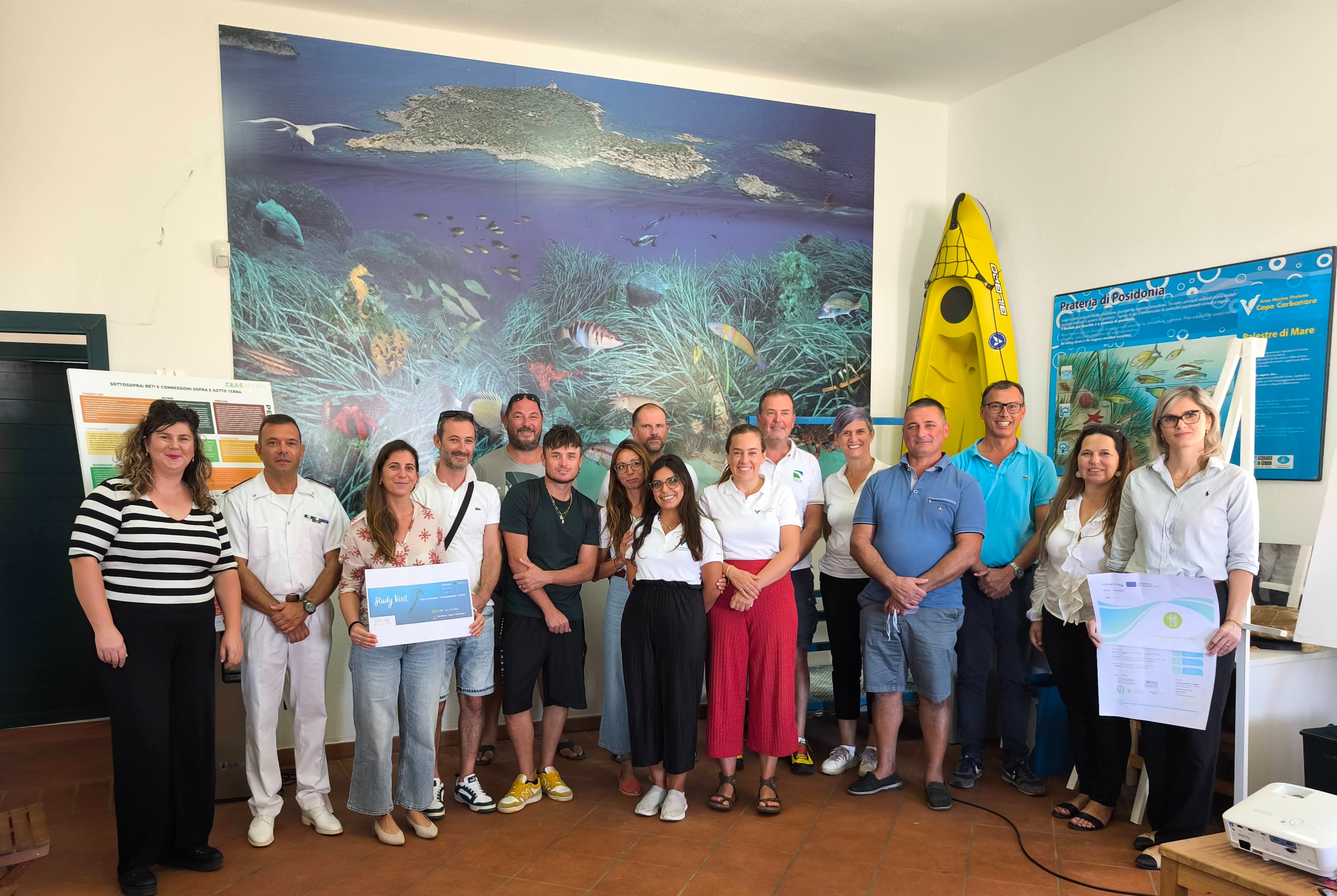
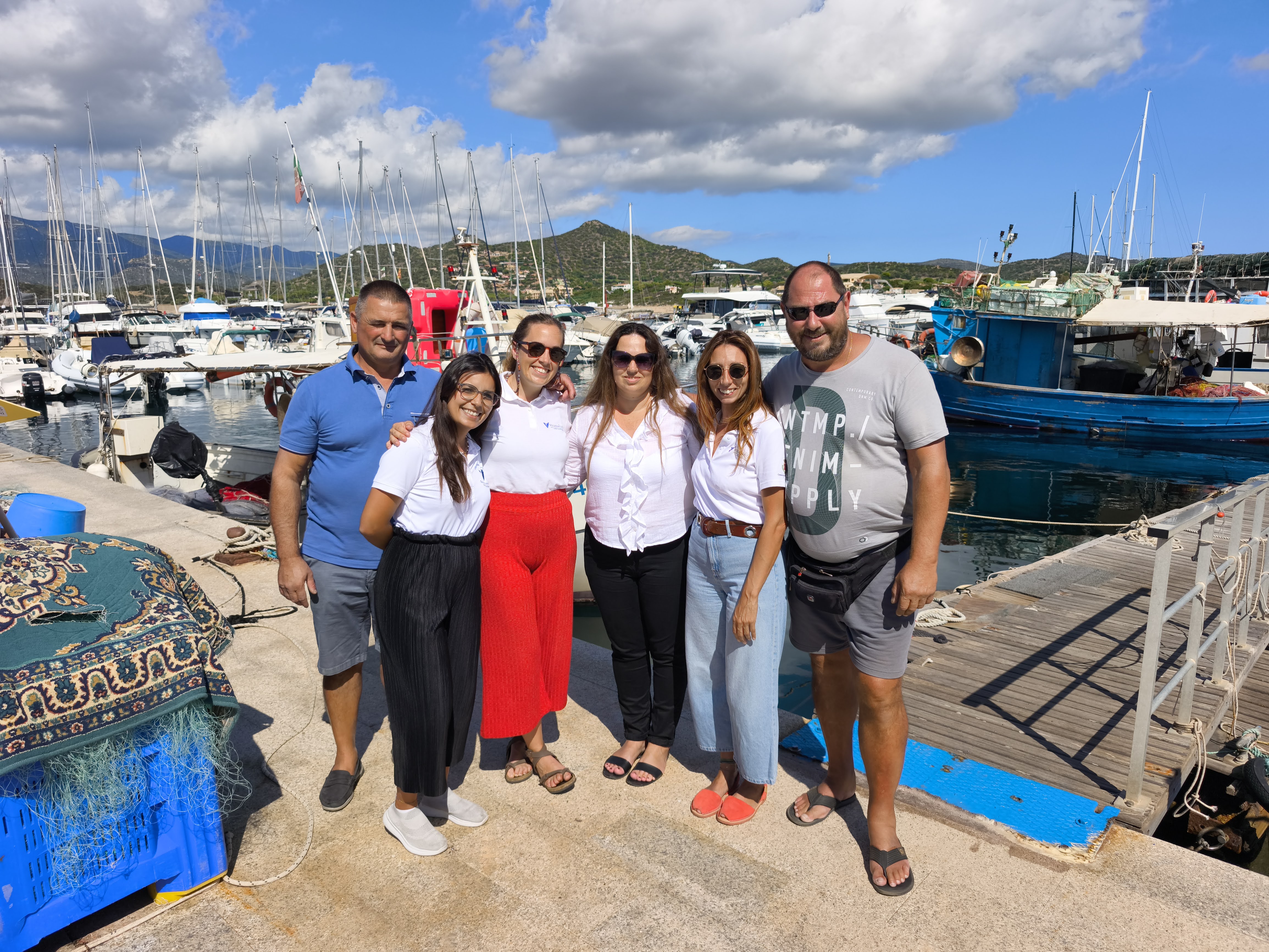
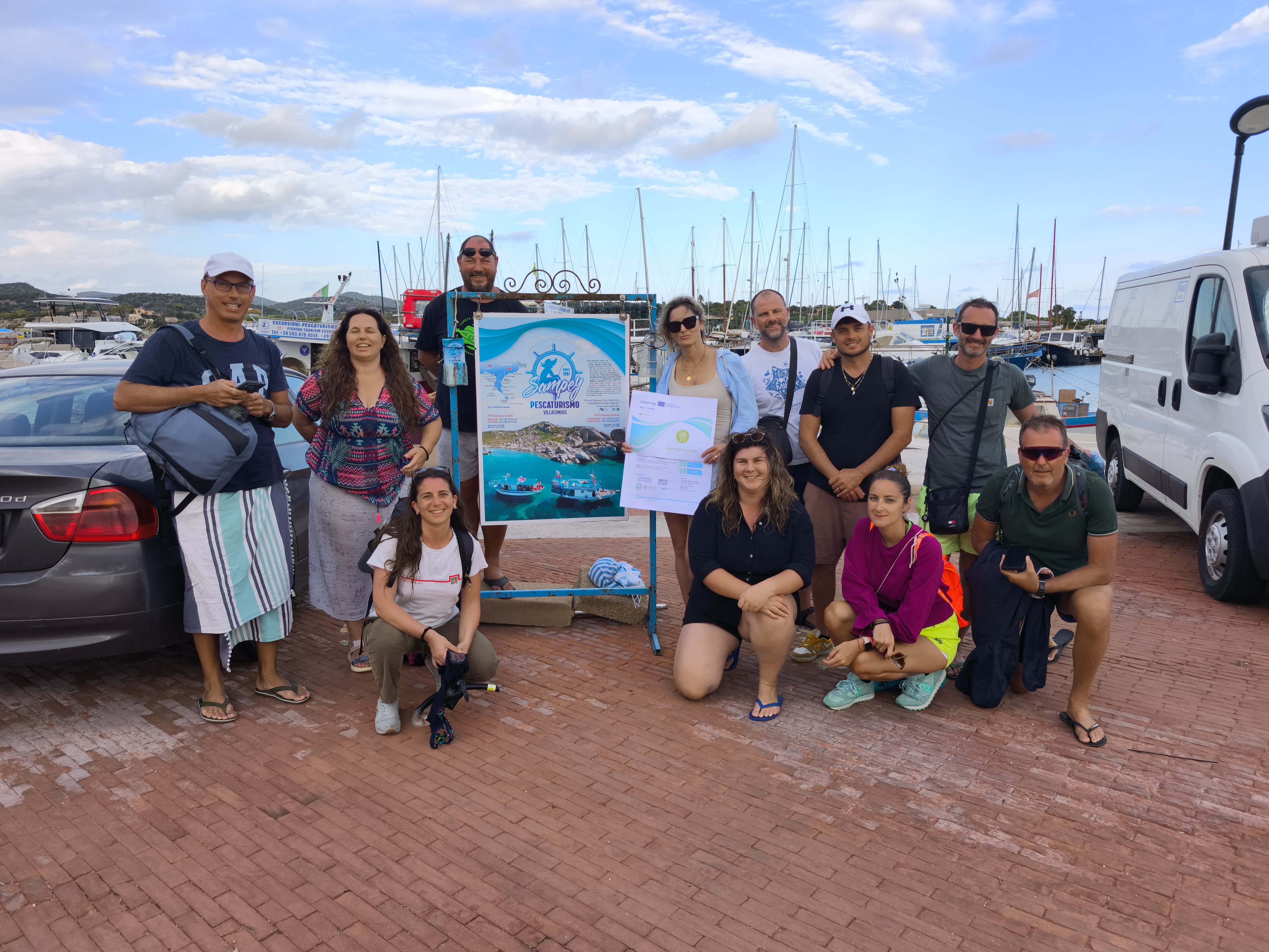
At the end of September 2025, our key-players and partners travelled to Southern Sardinia for a study visit to the Capo Carbonara Marine Protected Area (MPA). The goal was clear: learn, on the water and on land, how well‑designed MPA and pescatourism can support small‑scale fishers, enrich visitor experiences, and at the same time strengthen marine conservation. Joining the partners were key players from our pilot areas – Marco and Massimiliano from the Conero region, and Hrvoje from Silba – all eager to see what a mature pescatourism model looks like in practice.
Why Capo Carbonara?
Capo Carbonara MPA, near Villasimius, has almost three decades of experience in integrating fishing and tourism within a protected area. Here, fishers, the MPA authority, educators and the Coast Guard work as an aligned team: protection rules are clear, enforcement is credible, and pescatourism is recognised as a legitimate, sustainable livelihood. For MAPA partners working in Adriatic MPAs where pescatourism is still emerging, this was an ideal living laboratory for inspiration and honest discussion about what works, what does not, and what it takes to get there.
Getting to Know the MPA Above and Below the Surface
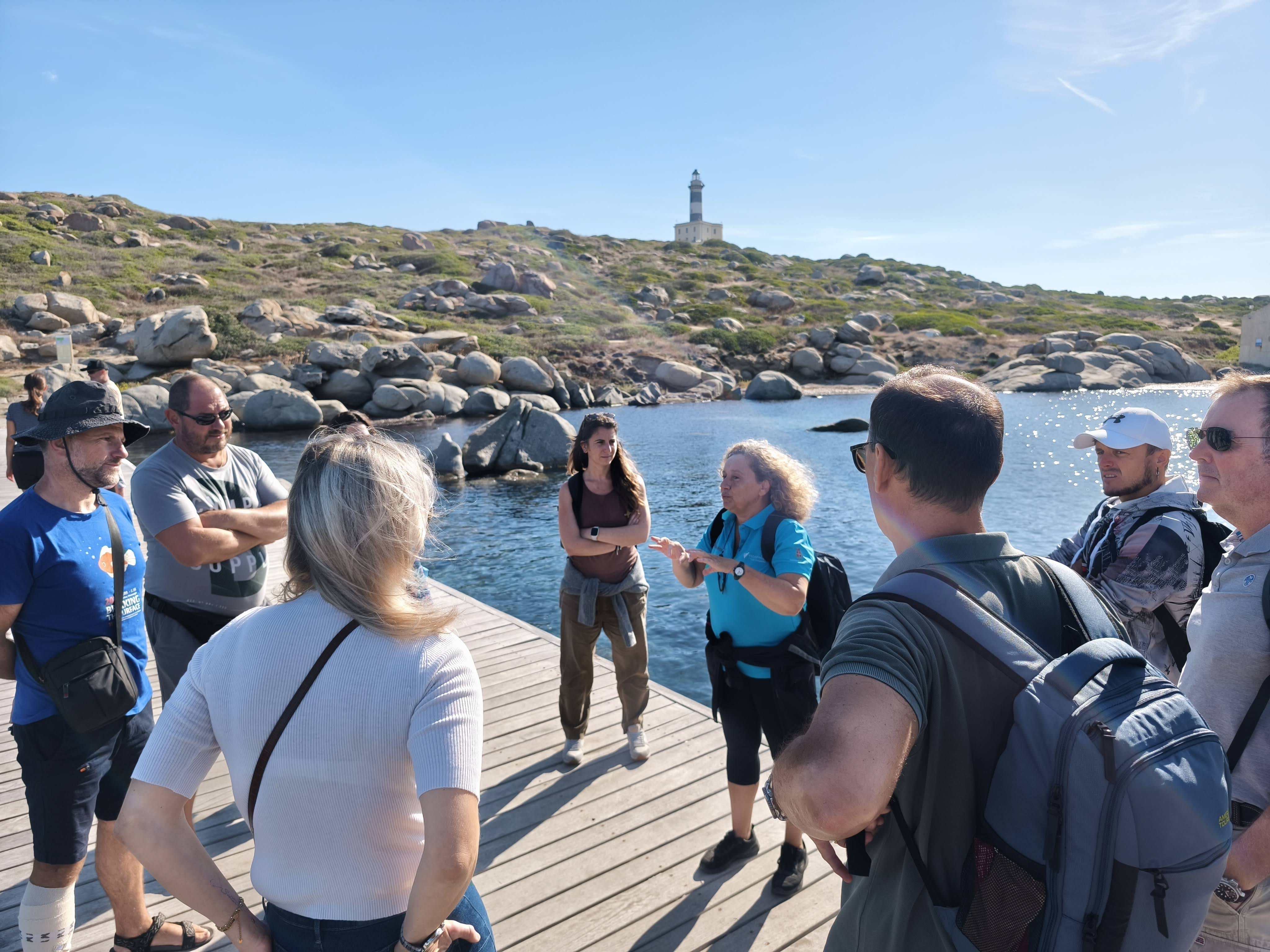
After arrivals and settling in Villasimius, the first full day focused on understanding Capo Carbonara’s natural and governance context. From the tourist port, the group sailed to Isola dei Cavoli, a small island inside the MPA, guided by environmental educator Silvia Cardia from CEAS Capo Carbonara. Inside the historic lighthouse, an exhibition on local marine and coastal biodiversity set the stage: seagrass meadows, rocky reefs, rich fish assemblages and nesting seabirds illustrated what is at stake when we talk about “good management”.
On deck and along the trail, Silvia explained how the MPA’s zoning works – from strict no‑take areas to zones where regulated activities are allowed – and how CEAS supports the MPA with education and outreach. For the visiting fishers and managers, this made the link tangible between clear rules, quality interpretation, and local acceptance.
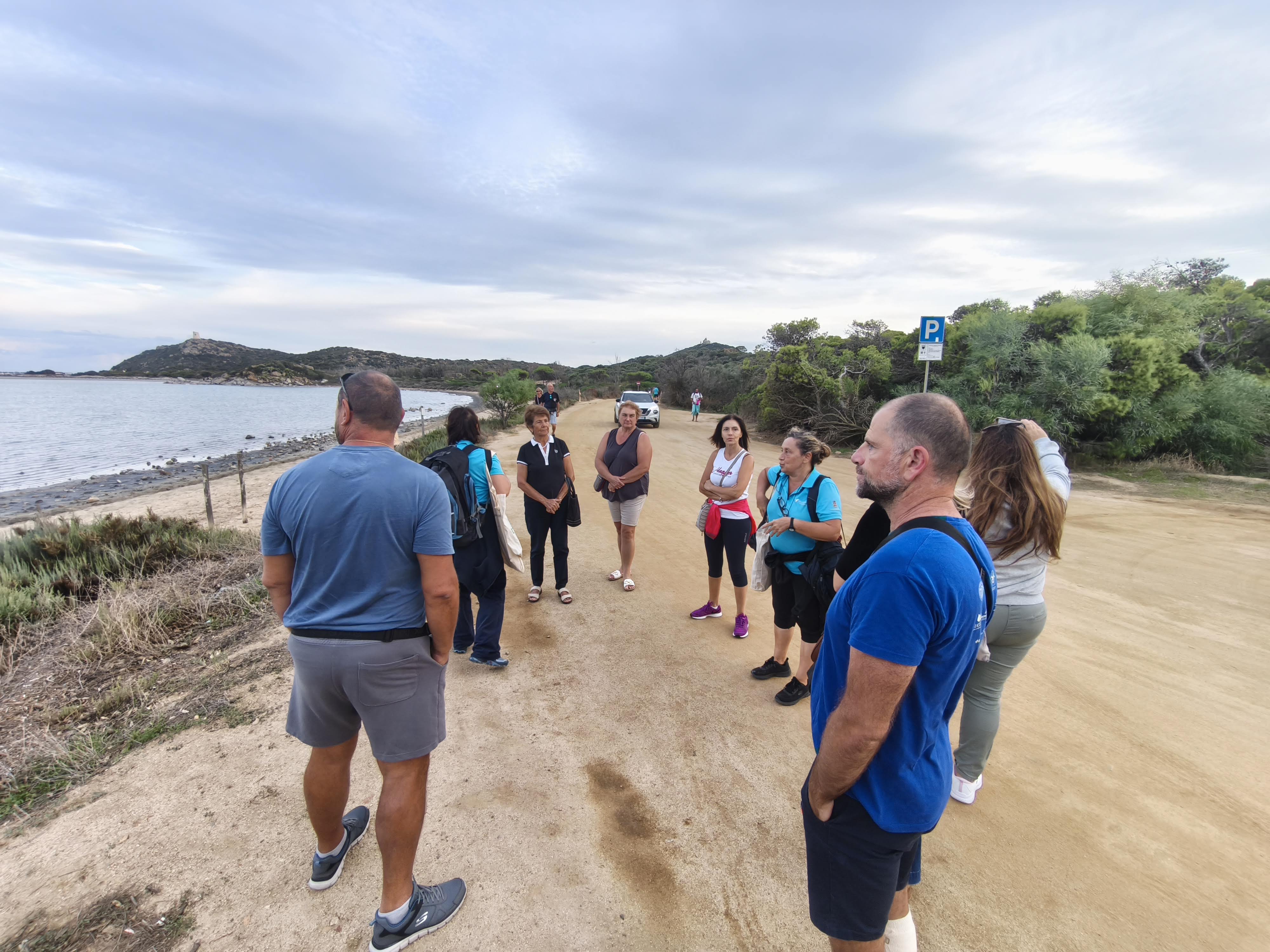
In the afternoon, the group joined “A Walk at Notteri”, an open, non‑formal education event in a lagoon area important for bird conservation. Birdwatching, discussions on invasive species, and simple interpretive tools showed how the MPA and its partners communicate science to residents and tourists in an accessible, hands‑on way. For all of us, it was a concrete example of how to make complex topics attractive to a broad public – a key ingredient if pescatourism is to be more than just a boat trip.
Round Table with Fishers, Coast Guard and MPA Managers
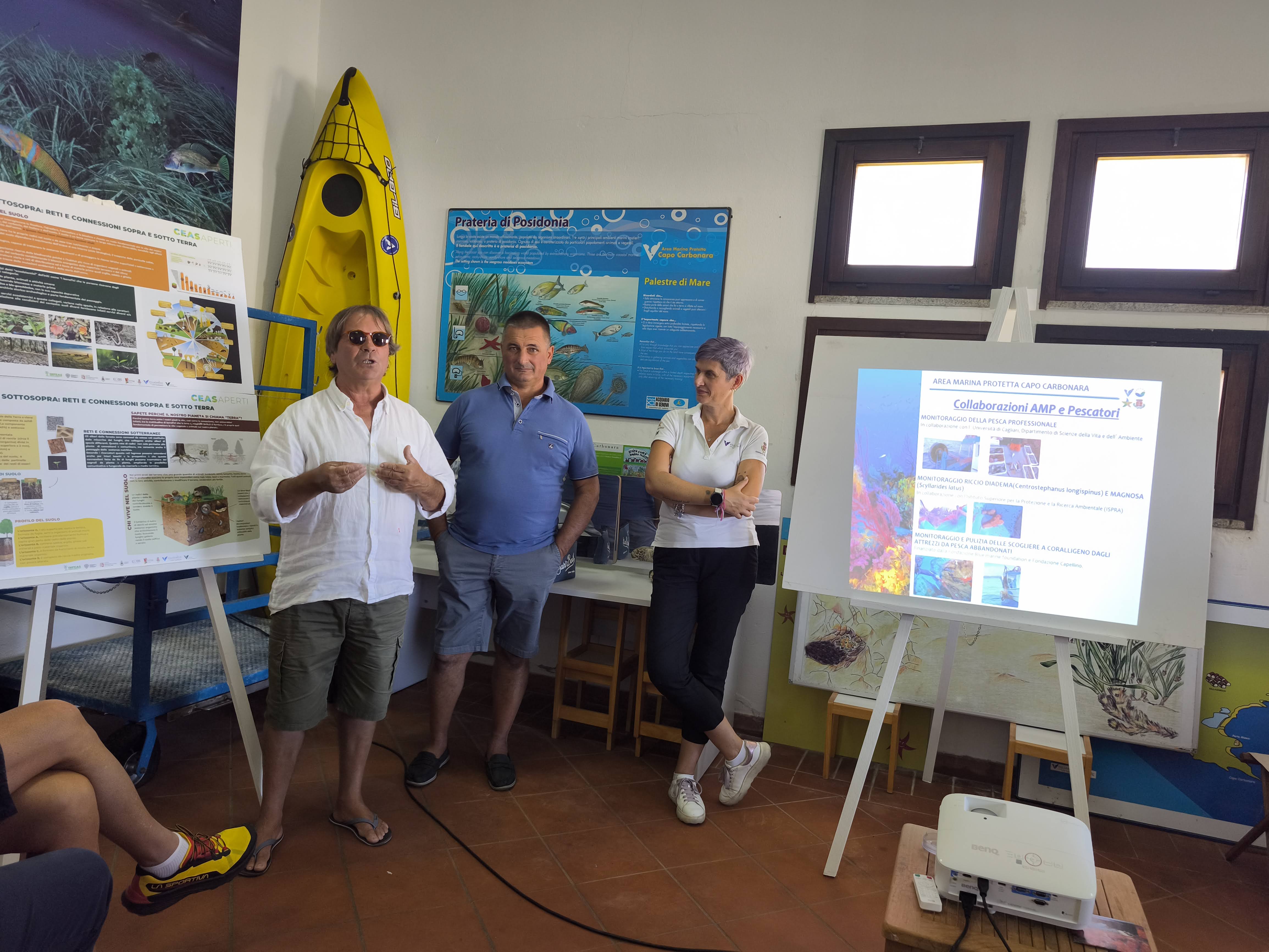
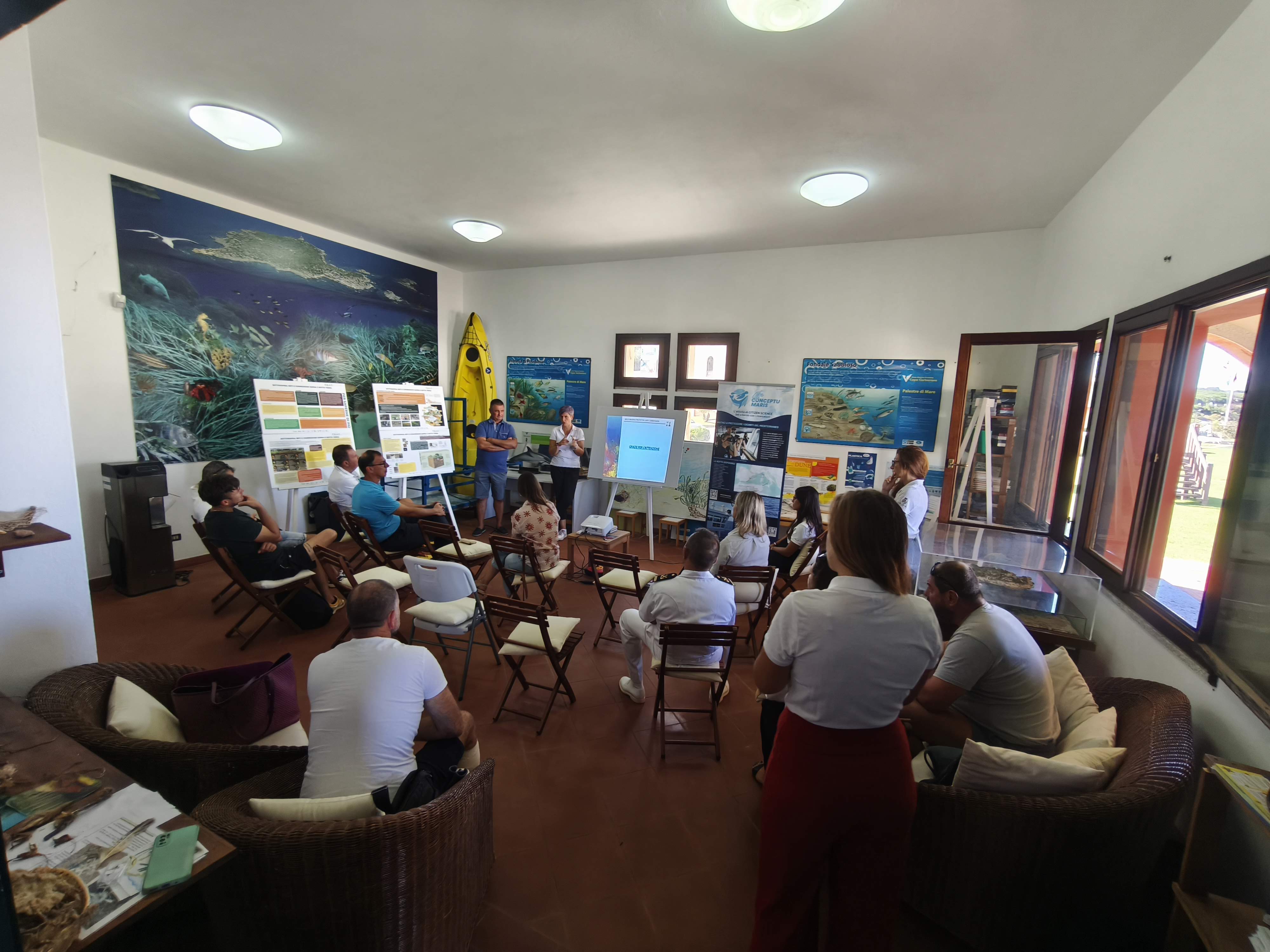
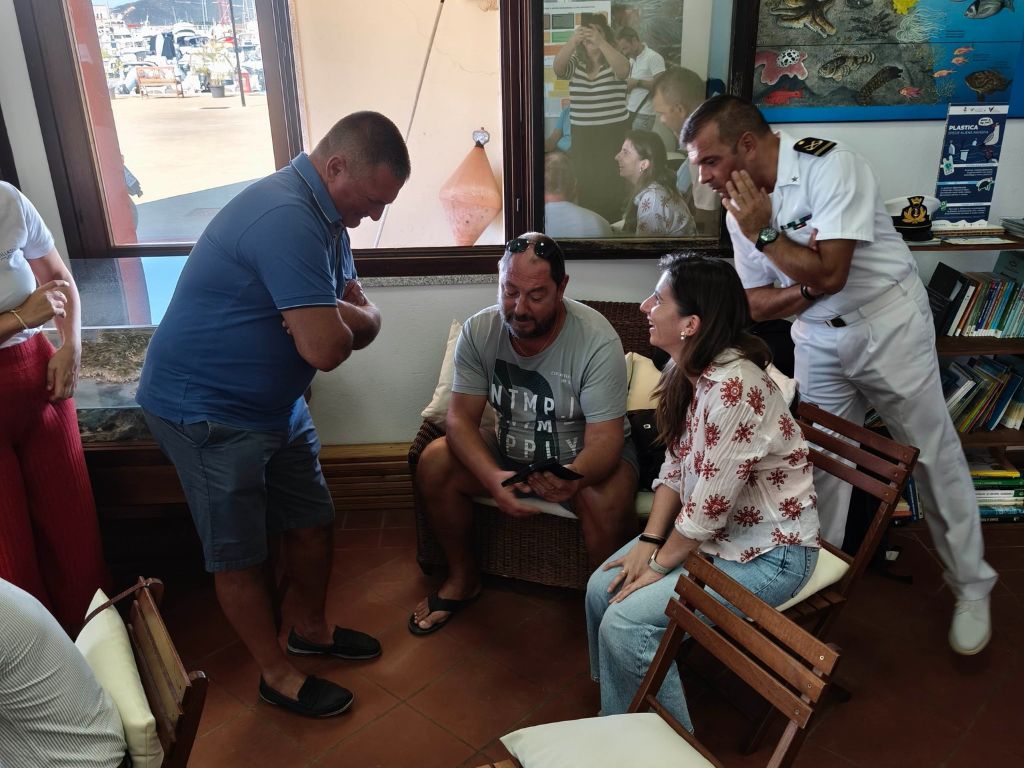
The next day centred on an in‑depth meeting at the MPA facilities in the tourist port. Director Valeria Massala presented Capo Carbonara’s zoning, rules and management approach, stressing how decisions are built on both scientific monitoring and the practical knowledge of professional sea users.
Local fishers, represented by Siverio Sandolo (President of the Villasimius Fishers’ Cooperative) and Ignazio Scano, shared how their relationship with the MPA has evolved. Initial distrust has gradually turned into cooperation: fishers now see that strict zones and strong enforcement can lead to healthier stocks and new opportunities, including pescatourism. Working together with the Coast Guard, they have helped push out illegal fishing and improve compliance.
Luca Melis from the Italian Coast Guard explained how upgraded patrol vessels, more frequent controls and close coordination with the MPA and cooperative have made rules on gear and zones more than just paper. This triangle – MPA authority, fishers’ cooperative and Coast Guard – emerged as one of the key success factors that visiting partners noted for their own areas. An open dissucion between fishers from the Adriatic and Mediterranean began with comparing catches and the biggest trophies they are proud of.
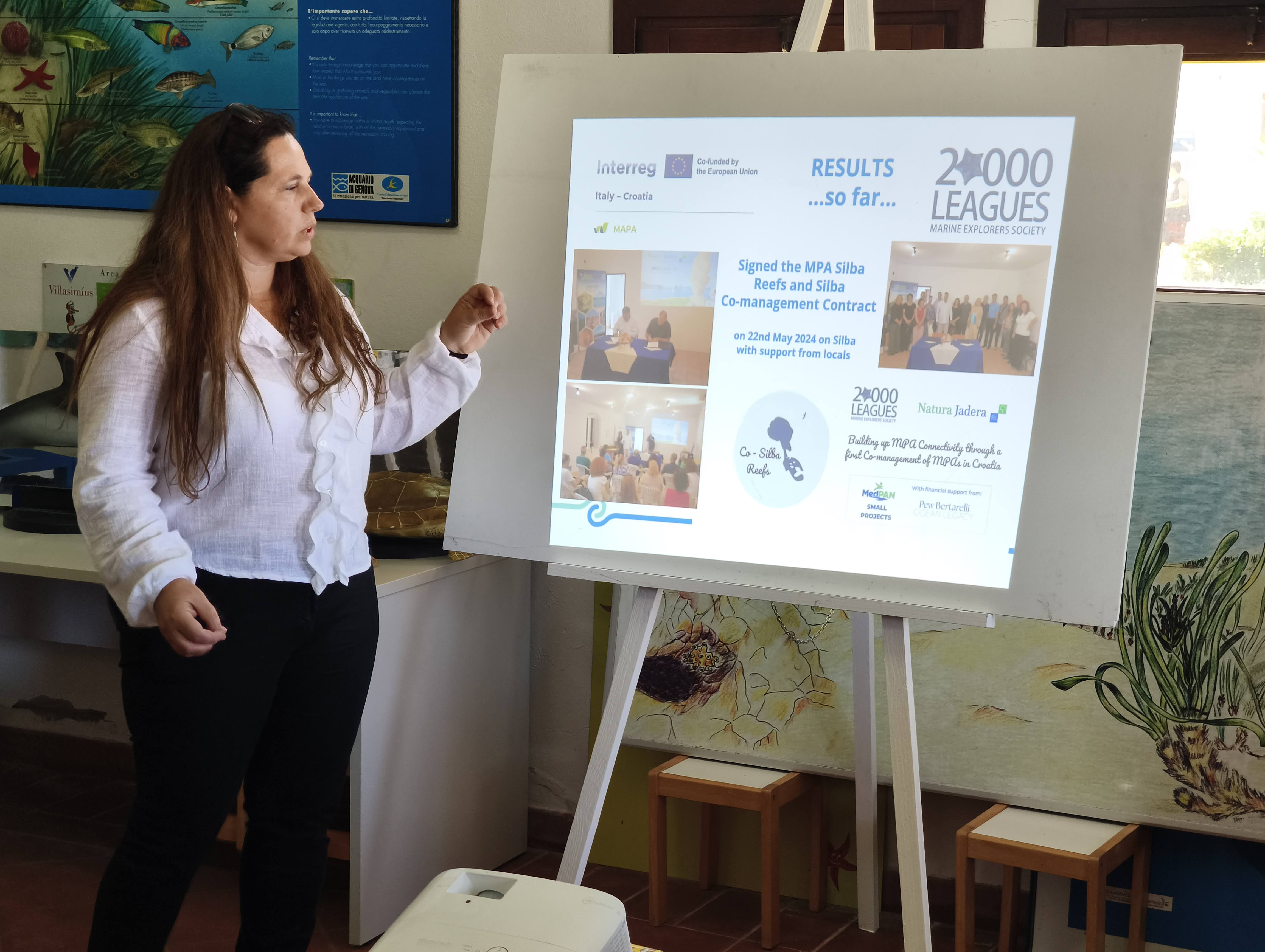
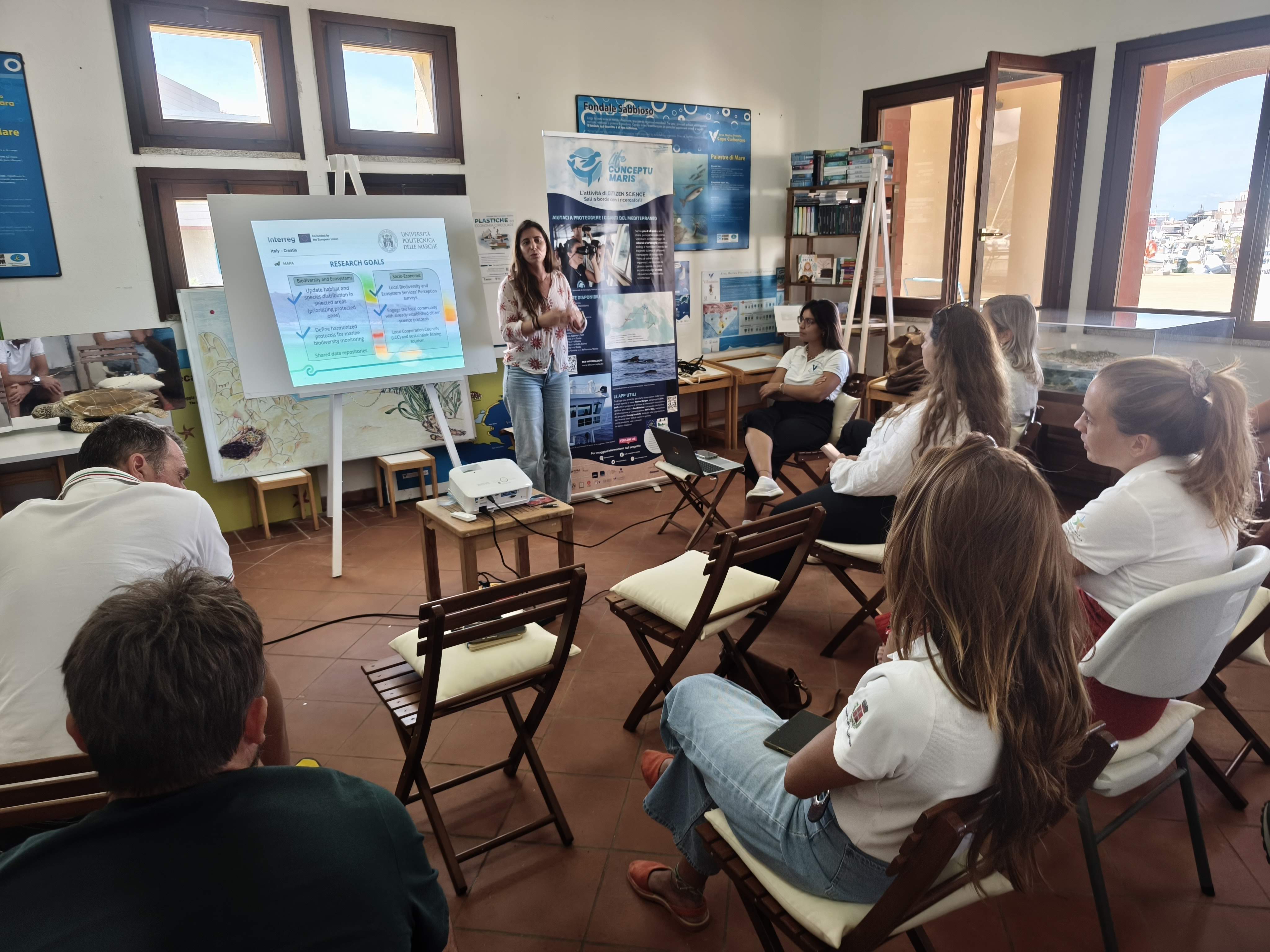
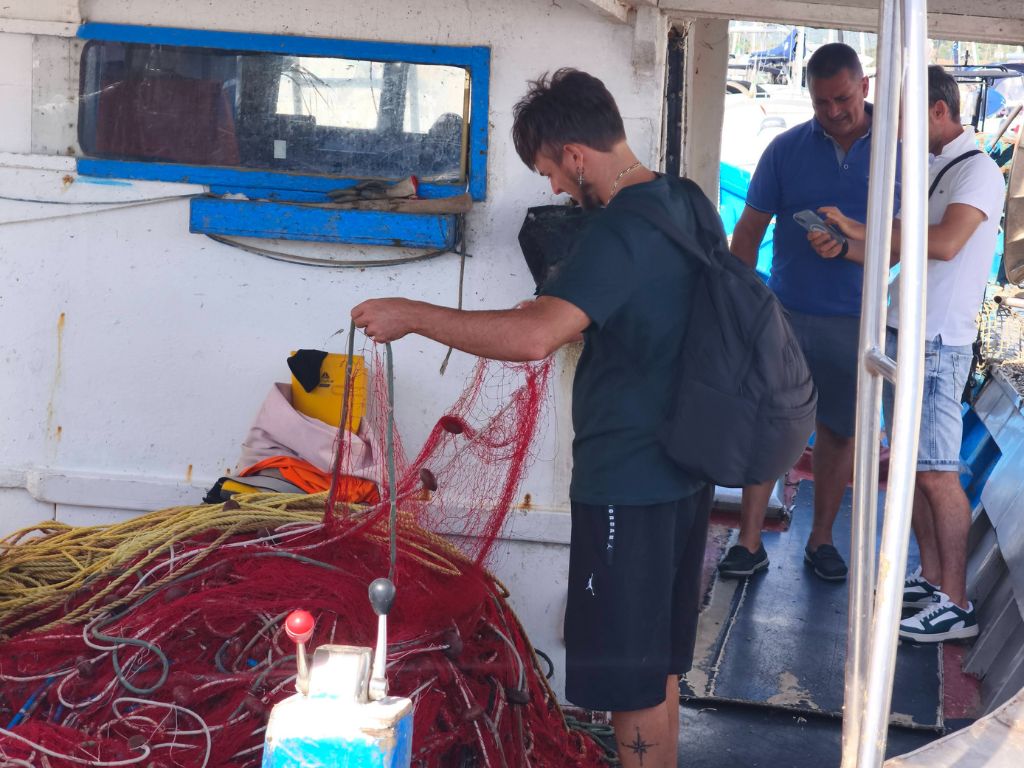
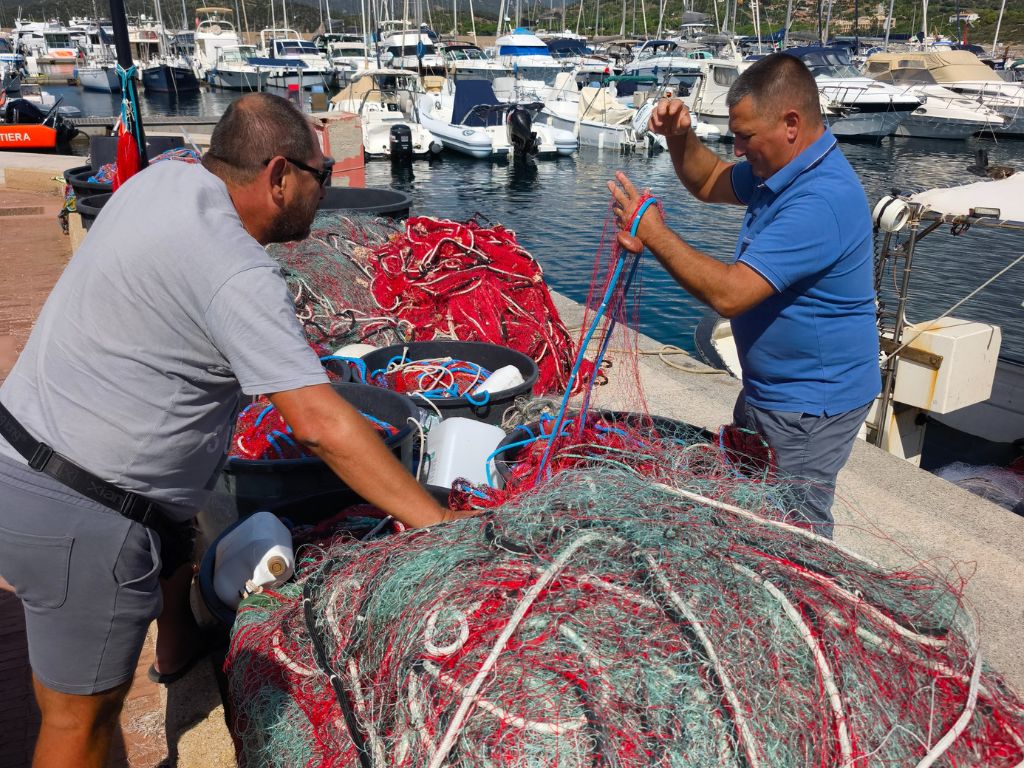
MAPA representatives then presented their contexts in the Adriatic: different ecological settings, different legal frameworks, but shared challenges – seasonal pressures, complex rules, and the search for fair, sustainable income for small‑scale fishers. The discussion quickly became practical and contined next to the dock to display the nets and the boats: what kind of licenses are needed, how to price trips, how to manage safety and food hygiene, what to do when regulations are unclear or contradictory. Sardinian colleagues were open about the long path they took, including lobbying for better rules and permanent staff for surveillance, and how forming a cooperative was crucial for speaking with one voice.
A Day at Sea with pioneers of Pescaturism
Theory turned into practice on the third working day. After a short briefing at the port, the group boarded the boat run by Sampey Pescaturism, a family business founded by Maria Grazia Piscedda – “Ignazina” – and continued by her son Simone Davide. With nearly 30 years of experience in combining fishing and excursions inside the MPA, she represents what many Adriatic fishers are only starting to imagine. Prior to boarding, Ignazina described the evolution of pescatourism from a marginal experiment to a recognised activity that diversifies income and stabilises earnings across the year. She spoke frankly about obstacles – bureaucracy, safety standards, dealing with inspections – but also about the satisfaction of sharing “her” sea with guests who want to learn, not just consume.
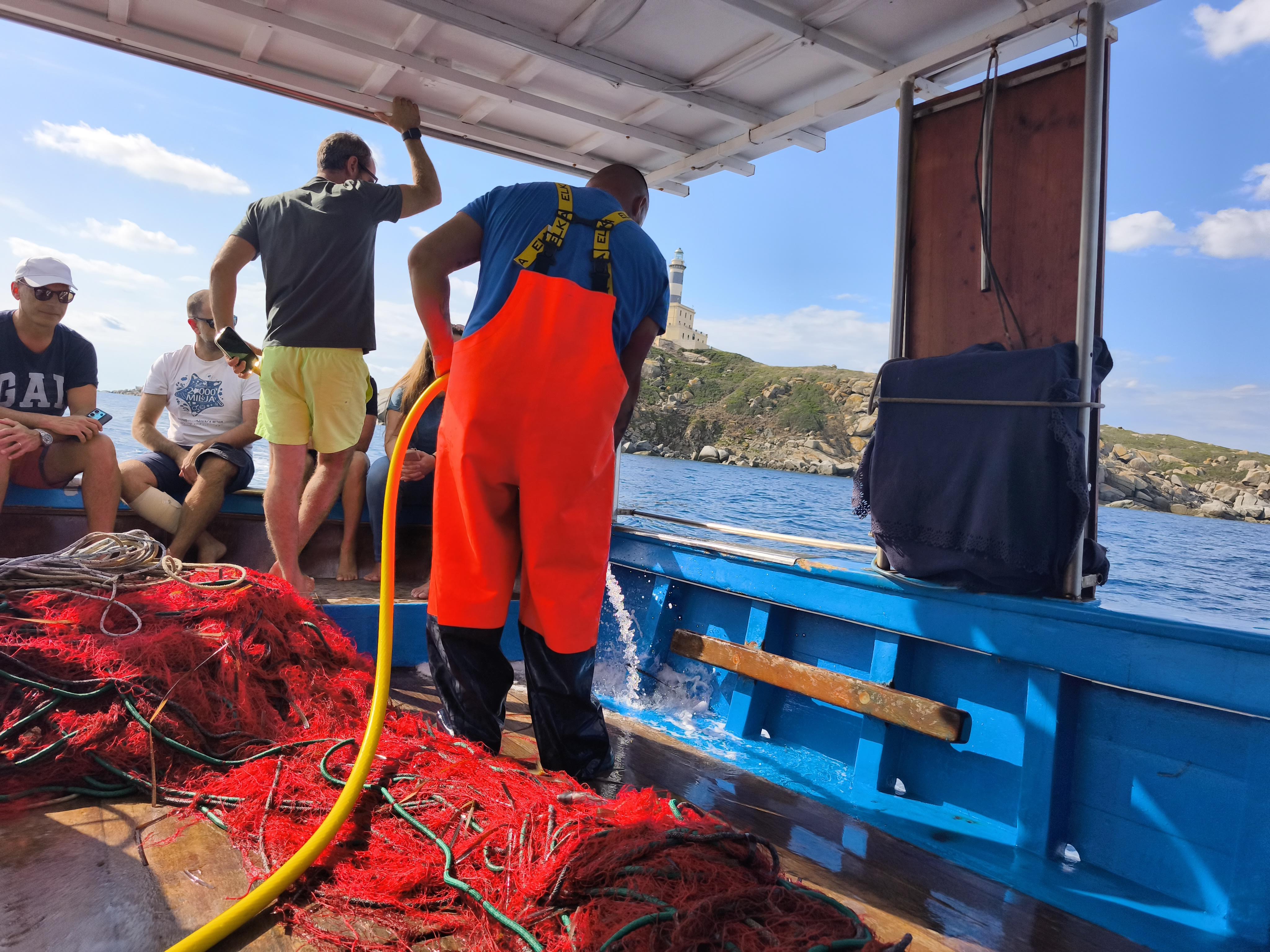
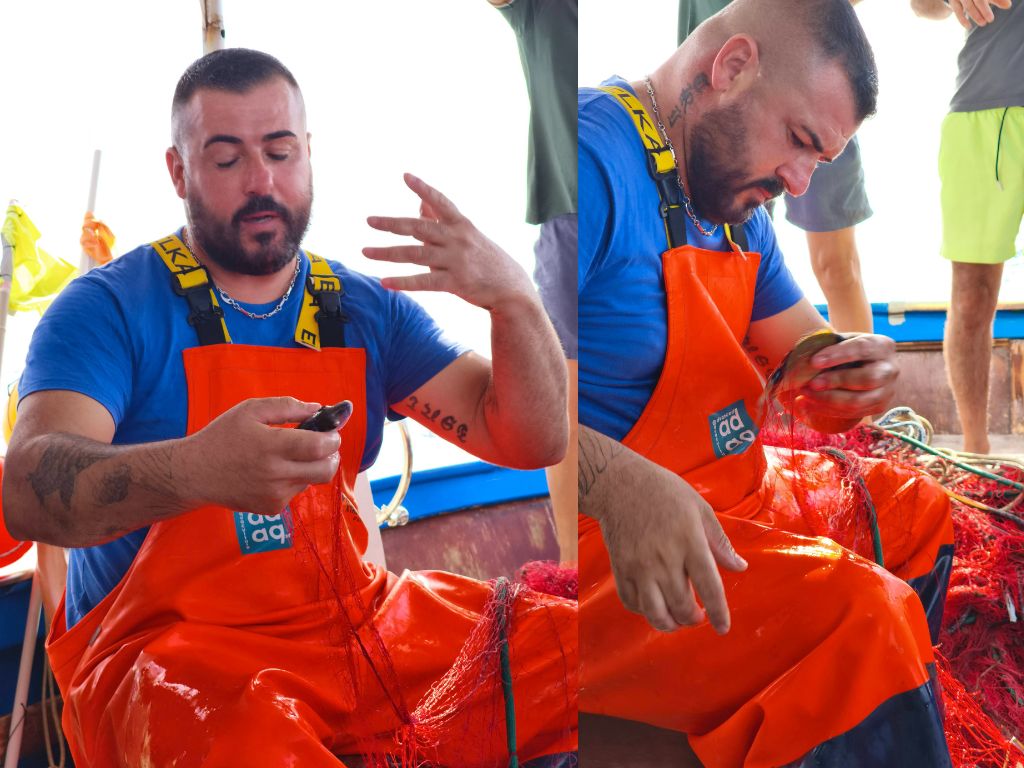
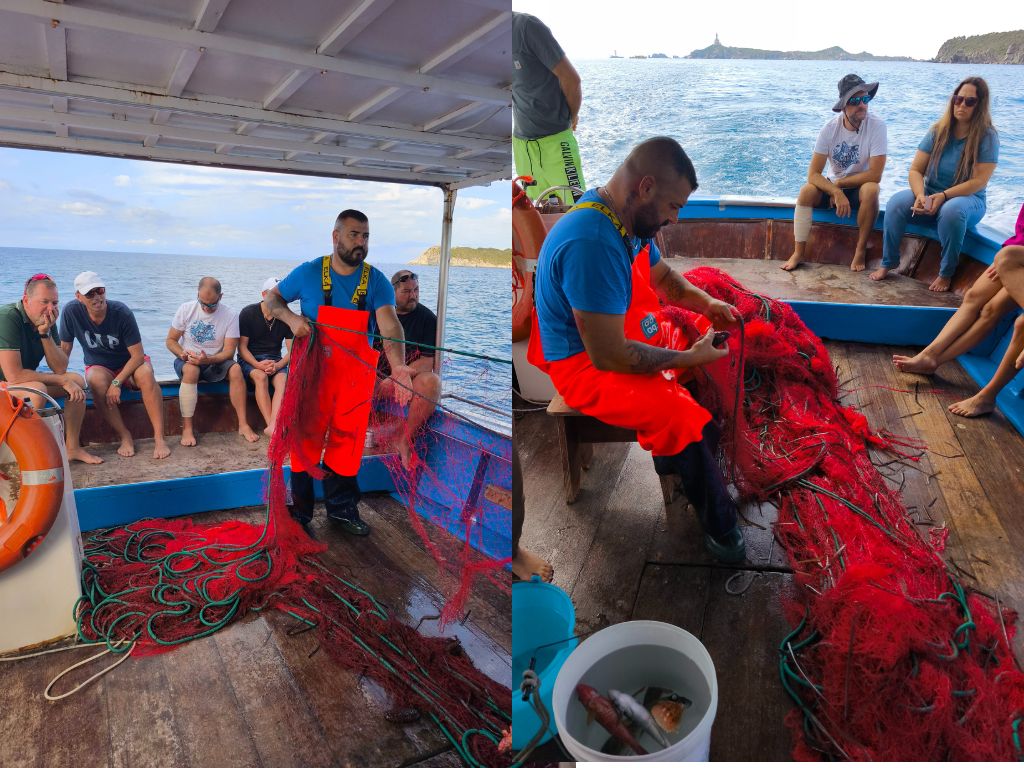
Once on board, Simone took upon himself to share insghts about the area - the cultural, natural and spiritual storytelling to bring us closer to the MPA. Than the first stop to retrive the nets. As nets were retrieved, cleaned and sorted, participants could see how catches are handled, which species are kept, and how bycatch is managed under MPA rules. Giuseppe the fisherman told us a bit more about the catch with providing more details to our expert biologist in the team who were interested in the ecology of the fish. Freshly caught fish then became lunch, prepared on board in line with health regulations, turning the catch into a shared story: where it was caught, why that area is regulated, and how choices today will affect tomorrow’s abundance. Between courses, discussions continued on how to weave storytelling, local recipes, and natural history into a coherent visitor experience.
The day ended with snorkelling and quiet time on deck to absorb the landscape, followed by a debriefing back at the port. For partners and key-plaers, this hands‑on experience clarified what pescatourism really involves in terms of time, effort, investment – and what kinds of returns (financial, social, and emotional) it can bring when done within a well‑managed MPA.
What This Means for Conero, Silba and the Adriatic
This mobility visit was not a training course in the classic sense; it was an immersion into a working system where conservation, control, education and local livelihoods are aligned around a shared vision for the sea.
Key lessons included:
- Pescatourism only works in the long term if fishers, MPA managers and enforcement agencies trust each other and co‑design rules and practices.
- Clear zoning and credible surveillance make it easier to explain to visitors why some areas are off‑limits and why others can be experienced up close.
- Good pescatourism is not just “going fishing with tourists”: it is curated interpretation of nature, culture and tradition, with attention to safety, quality and authenticity.
- Cooperatives or similar structures help fishers share costs, represent their interests, and negotiate with authorities and tour operators.
Back in the Adriatic, these insights will feed into MAPA guidelines and pilot actions on alternative livelihoods, helping adapt the Sardinian experience to the realities of Conero, Silba and other areas. For anyone who loves the sea, fishing and the life of coastal communities, the message from Capo Carbonara is encouraging: when done thoughtfully, pescatourism can keep traditions alive, put high‑quality local seafood on the table, and give the sea the breathing space it needs to recover.