
Wetland Contract for the Po di Volano in its final phase
31/03/2026
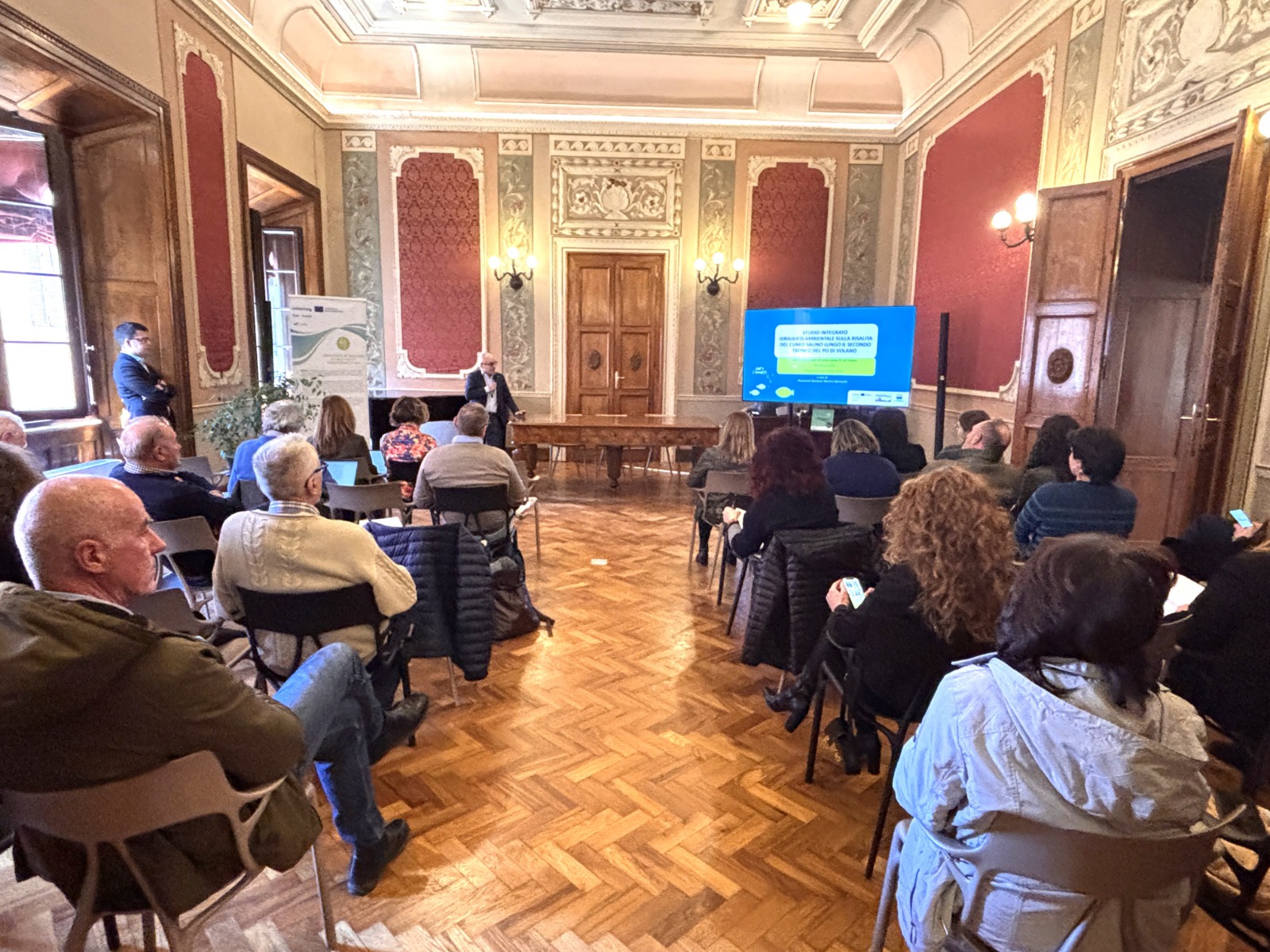
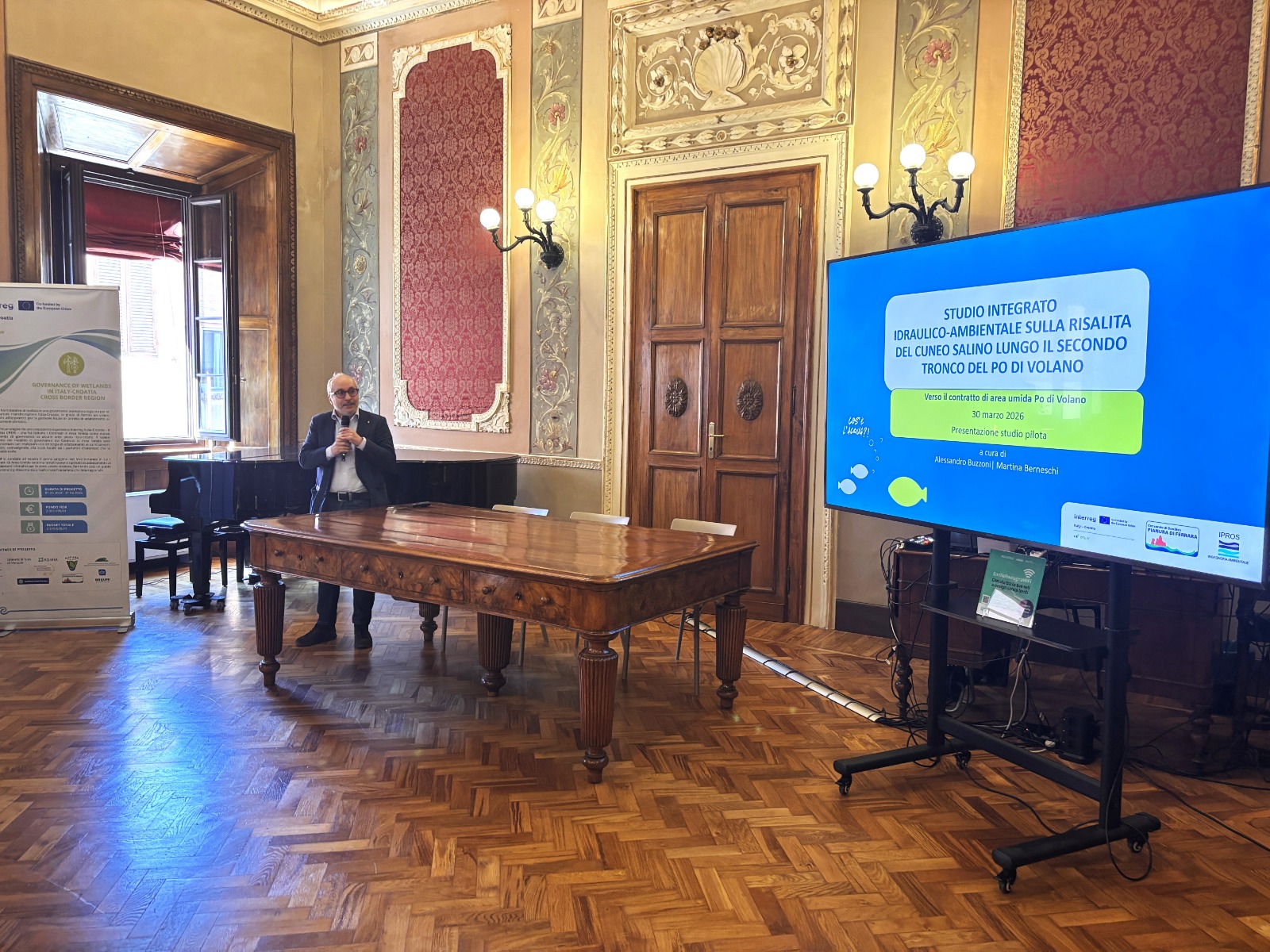
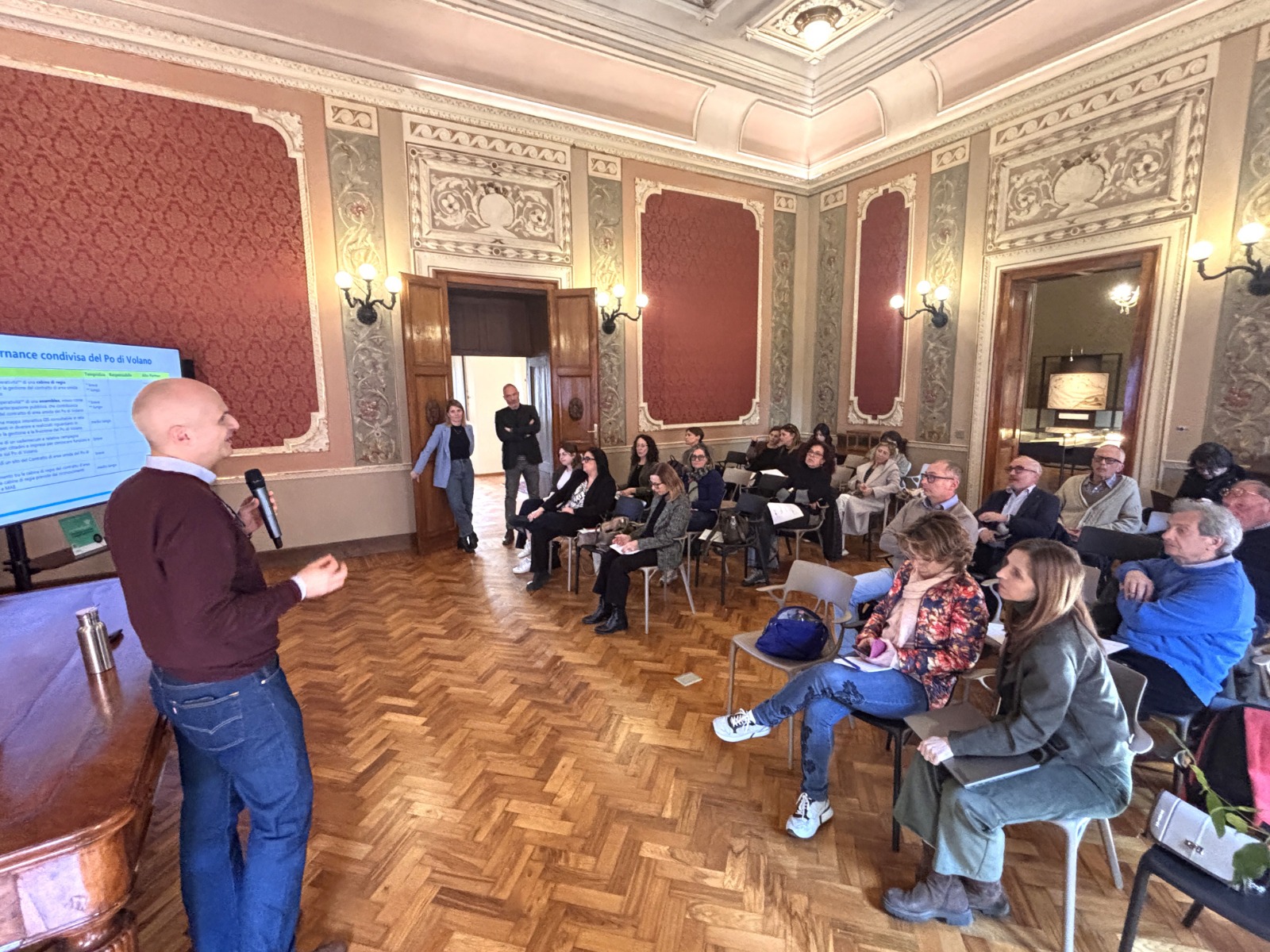
The process leading to the signing of the Wetland Contract for the Po di Volano, in the province of Ferrara, is now in its final stages and approaching completion. Following the signing of the memorandum of understanding and ongoing work to refine the agreement, the first of two workshops took place on March, 30th at Palazzo Naselli Crispi to define in detail the Contract’s Action Plan.
The meeting was attended by numerous stakeholders, including public authorities and private entities, who contributed throughout the entire co-design process.
Regarding the importance of this milestone, Stefano Calderoni, President of the Consorzio di Bonifica Pianura di Ferrara, stated: “This process has allowed us to regain awareness of having a close companion that represents an extraordinary opportunity: our river and the connected wetlands. We often remember them only when problems arise, but this journey teaches us that we must take care of the Po di Volano system for its extraordinary functions, its development potential for the territory, and the strategic role it plays for our agriculture. Taking care first means strengthening institutional governance: fragmented competences often prevent us from acting in a unified direction, whereas strong institutional links are the foundation for giving new identity and real growth opportunities to inland areas. However, good intentions will not be enough—we must find economic resources to address vulnerabilities and revitalize the areas along the Po di Volano.”
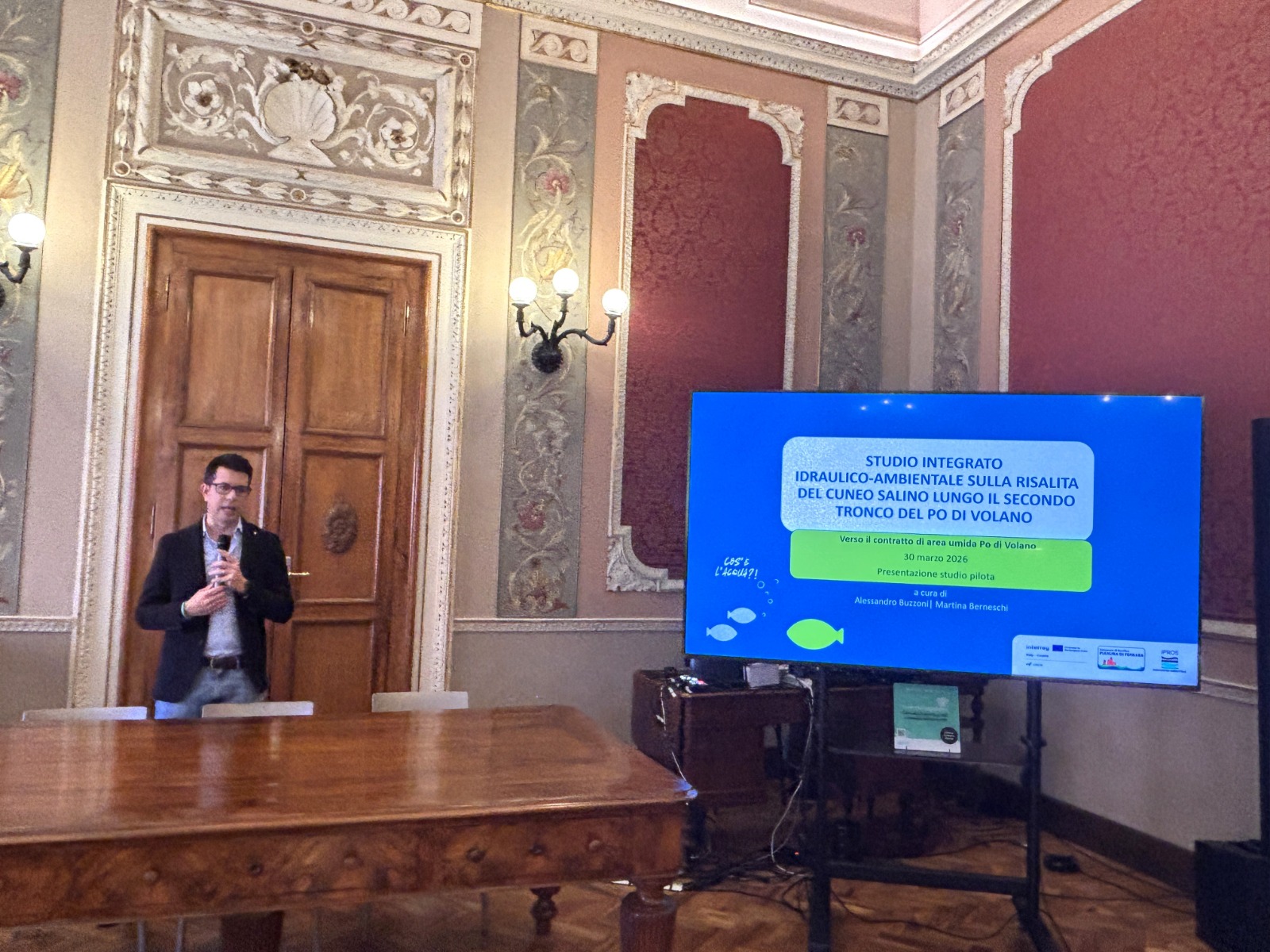
Alessandro Buzzoni, Director of the Territory Area of the Consortium, then presented the results of the pilot project under GREW: a hydrodynamic study with 3D modelling of salt wedge intrusion in the final stretch of the Volano River. “Saltwater intrusion in the final stretch of the Volano affects an area of nearly six thousand hectares within the Consortium’s irrigation basin,” said Buzzoni. “It is therefore essential to study in detail how saltwater moves upstream. Thanks to this modelling, we can develop different intervention scenarios and predict the impact of planning choices on water quality and, consequently, on the territory.”
During the meeting, Chiara Ferrara and Filippo Lenzerini from Punto3 facilitated the discussion on the Action Plan, which is structured around ten strategic axes. These include shared governance, identification of vulnerable areas, active protection of habitats and biodiversity, hydraulic system safety, and integrated planning along the river. The plan also aims to promote sustainable and high-value use of the area, transforming the Volano into a research laboratory and strengthening its role as a strategic agricultural infrastructure. Finally, attention is given to improving connections and territorial accessibility, with the ultimate goal of regenerating landscapes, spaces, and communities.