

Cross-border FORTIC Summer School for students in Šibenik: Inspiring, motivating and educating future heritage managers
The Cross-border FORTIC Summer School entitled “Sustainable tourism and management models in fortifications” was held at the St. John’s Fortress Campus in Šibenik from 5 to 9 May 2026, as part of the FORTIC project – From remains Of the war to the aRchiTecture of peace in cross-border area of Italy-Croatia, co-financed through the Interreg Italy–Croatia 2021–2027 program.
ECHOES
Let's start from the end – the echoes of the activity. What matters more that just implementing the activity is the impact, what is left when the action is finished – meaning, what the students have learned and how they benefited from the program? In their own words – “a lot”. In the next paragraphs we transmit the impressions and takeaways from several participants.
“Sometimes the best learning experiences happen outside the classroom, and the past week was one of them. I spent the past few days on Campus Sv. Ivan in Šibenik, Croatia, participating in the FORTIC Cross-Border Summer School focused on sustainable tourism and the management of cultural heritage sites. Between lectures, boat excursions, workshops, presentations, and long group work sessions, it became much more than just an academic project.
What made the experience especially meaningful was working with people from different backgrounds and perspectives, while being surrounded by places with so much history and identity. Walking through the fortresses of Šibenik and seeing how these spaces are being transformed into cultural and community hubs really changed the way I think about heritage, tourism, and sustainability. For our final project, my group worked on a comparison between St. John’s Fortress in Šibenik and Forte di Bard, analyzing how historical sites can balance preservation, visitor experience, inclusivity, and innovation. It was interesting to see how two fortresses from different countries can face similar challenges while approaching them in different ways.
One of my favorite parts of the week was realizing how cultural heritage is not only about preserving the past, it’s also about creating experiences, conversations, and spaces that people can actively connect with today. Very grateful for everyone I met, the ideas shared, and the opportunity to be part of such an international and inspiring environment.” – Asli Donmez, student/participant.
“The main topic was sustainable management of cultural heritage sites focusing on the development of Šibenik fortresses touristic offer. Together with students from both universities of Venice and Pula, I spent 5 days in St John’s Fortress educational campus between lectures, guided tours to the city center and to the four fortresses (St. John, Barone, St. Michael and St. Nicholas), boat excursions and a group work about the comparison between one of Šibenik fortresses and one in Italy. It has been a great opportunity to learn more about tourism management and how to plan transformations and activities to make a place attractive to tourists while preserving the environment and its meaning for the local community, and also about the challenges that need to be faced to make the site accessible and inclusive. I was also glad to meet new people in an international environment.” – Erika Sorze, student/participant.
“During the school, we had two great lectures on strategic management of cultural institutions, did a group project where we started a comparative strategic analysis of the Fortress of St. Michael in Šibenik and the Fortress of San Giusto in Trieste and, in between all of that, visited spaces that left quite an impression. What struck me were the stories of people who lived through centuries of conflict and still chose to stay - that kind of resilience is exactly why narrative framing sits at the core of heritage interpretation.
These are some of my key takeaways: Institutional sustainability has to run across all dimensions, not just the environmental one, but it becomes much more achievable when there's one coherent organizational narrative holding the strategic vision together. Revenue diversification in publicly funded cultural institutions is not a pipe dream even in the Balkans, where people tend to assume it's impossible. Around 60% of self-generated income in around only a decade of existence is proof that audience development and earned income strategies can work in contexts we often write off. Lastly, a truly sustainable cultural organization never stops learning; institutional openness to new knowledge might matter just as much as bold leadership or a strong programming vision. Lots to take back.” – Danica Milanović, student/participant.
ORGANIZERS AND PARTNERS
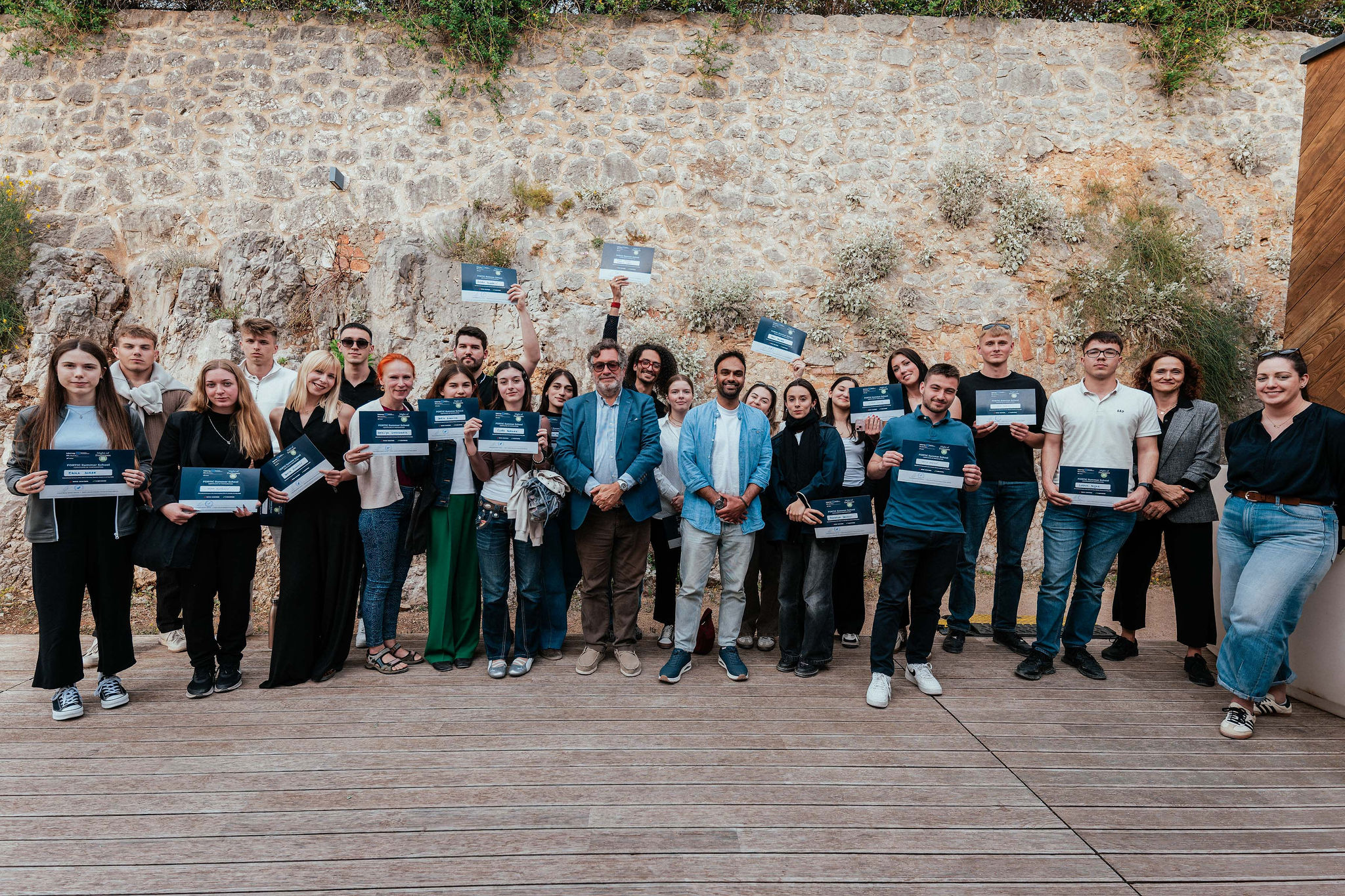
The Summer School was organized and hosted by the Public Cultural Institution Tvrđava kulture Šibenik, which presented the Šibenik model of sustainable fortification heritage management. The program brought together 20 students and 5 professors from Juraj Dobrila University of Pula and Ca’ Foscari University of Venice, with the aim of encouraging cross-border cooperation, interdisciplinary learning, and joint work on topics related to cultural heritage, sustainable tourism, and the contemporary reuse of fortifications.
During the five-day program, participants explored the Šibenik fortresses through lectures, professional site visits, fieldwork, and group work, using them as examples of the restoration, valorization, and contemporary use of fortified heritage. The program included visits to St. John’s Fortress, Barone Fortress, St. Michael’s Fortress, and St. Nicholas’ Fortress, as well as guided tours of Šibenik’s historic old town and a visit to the Croatian Coral Centre Zlarin. The lectures of the program focused on sustainable management of cultural heritage, the development of cultural content in restored fortification sites, sustainability, and inclusivity.
“It was a real pleasure working with such curious and thoughtful participants — this is where meaningful conversations about heritage and its bright future begin. It was also our pleasure to share our know-how on cultural heritage management with our academic partners from universities of Pula and Venice” – said Gorana Barišić Bačelić, director of Fortress of Culture Šibenik and the keynote lecturer of the Summer School. The Summer School was an important opportunity for the exchange of knowledge and experience among students and professors from Croatia and Italy, while also raising awareness about the importance of interdisciplinary and participatory approaches in the preservation and contemporary use of cultural heritage. The program further confirmed the value of field learning, international cooperation, and joint reflection on the future of fortified heritage sites.
PROGRAME AND OUTPUTS
Through lectures and collaborative work, students had the opportunity to learn about examples of good practice and reflect on the role of fortifications in the development of sustainable tourism, cultural programs, and local communities.
Special emphasis was placed on student group work focused on comparing the Šibenik fortresses with fortifications in Istria and Italy. Students analyzed different models of management, interpretation, and adaptive reuse of fortified heritage and developed proposals for its sustainable use in a contemporary social and tourism context.
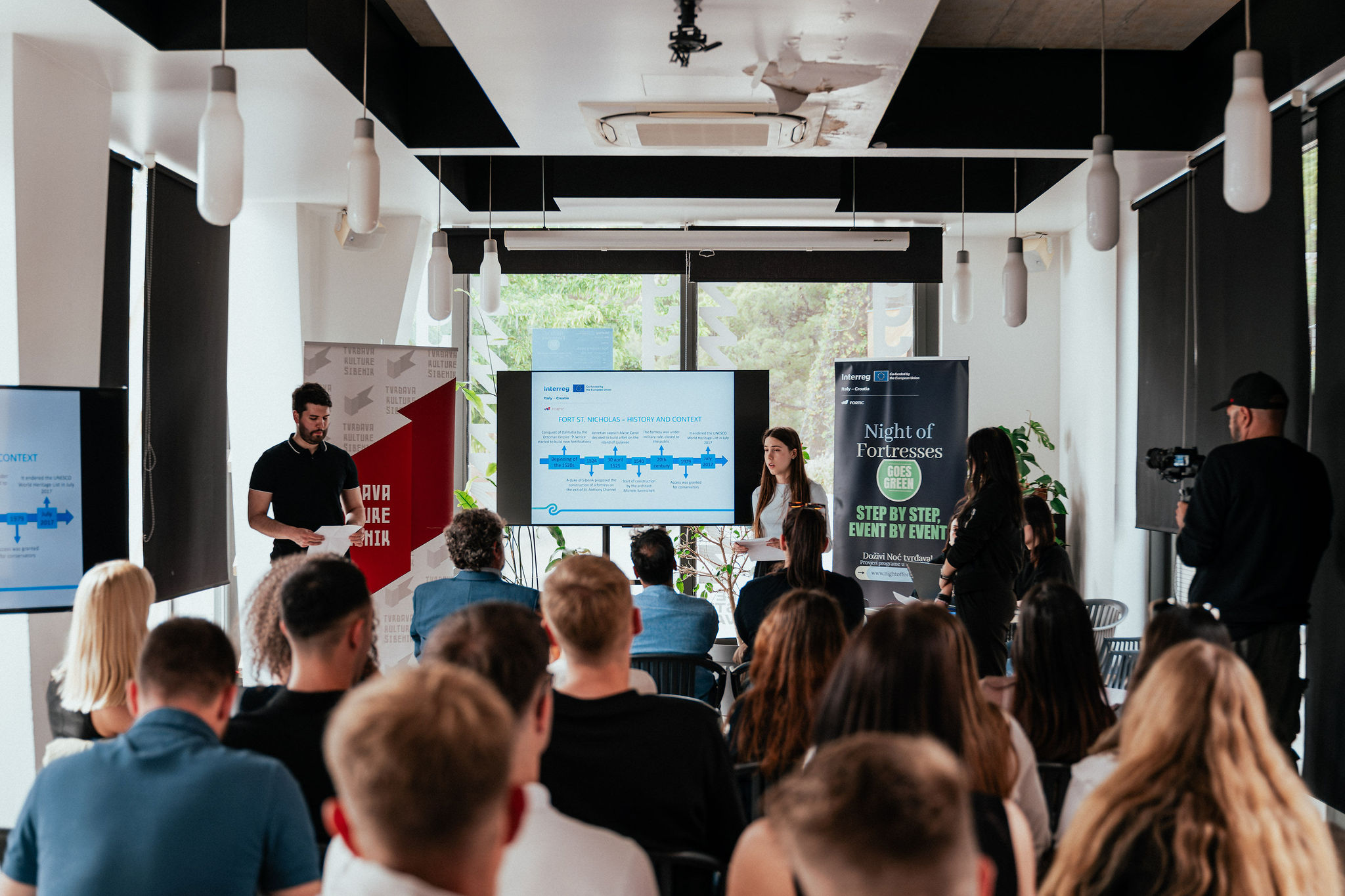
The results of the group work were publicly presented on 8 May at Barone Fortress as part of the Night of Fortresses Goes Green program. In this way, participants presented their conclusions, ideas, and proposals within a living heritage space, in front of an audience and as part of an event that connects fortification sites, sustainable tourism, education, and local communities.
„What we did was simple but effective. After lectures and site visits, we divided the students into 4 international groups. The groups were given a pre-prepared power point template designed to enable them to analyze and compare the 4 Šibenik fortifications that they visited (St. Michael's Fortress, Barone Fortress, St. John's Fortress and St. Nicholas Fortress) with fortified sites in Istria and Italy that they know. Students have chosen to compare our sites with Kaštel in Pula, Castello di Marostica, Forte di Bard and Forte San Giusto. We are very proud of their work and presentations they gave because they prove that we were able to inspire, motivate and educate them some future potential heritage managers“ – said Đurđa Vrljević Šarić, Head of International Cooperation and Project Department and lead of the Summer School in Šibenik program.
The Summer School concluded with an excursion to Zlarin and a guided visit to the Croatian Coral Centre Zlarin, allowing participants to further explore the natural and cultural heritage of the Šibenik area.
Cross-border Summer School in Šibenik entitled “Sustainable tourism and management models in fortifications” – was a successful experience for all involved project partners and students. At the end of this insight, for all those who wish to organize participatory and interactive educational programmes that bring heritage closer to its future manager, in attachment we share the summer school program and the final presentations by the four student groups.
Cross-border FORTIC Summer School Programme