

Sensing the future at GS 2025
17/12/2025
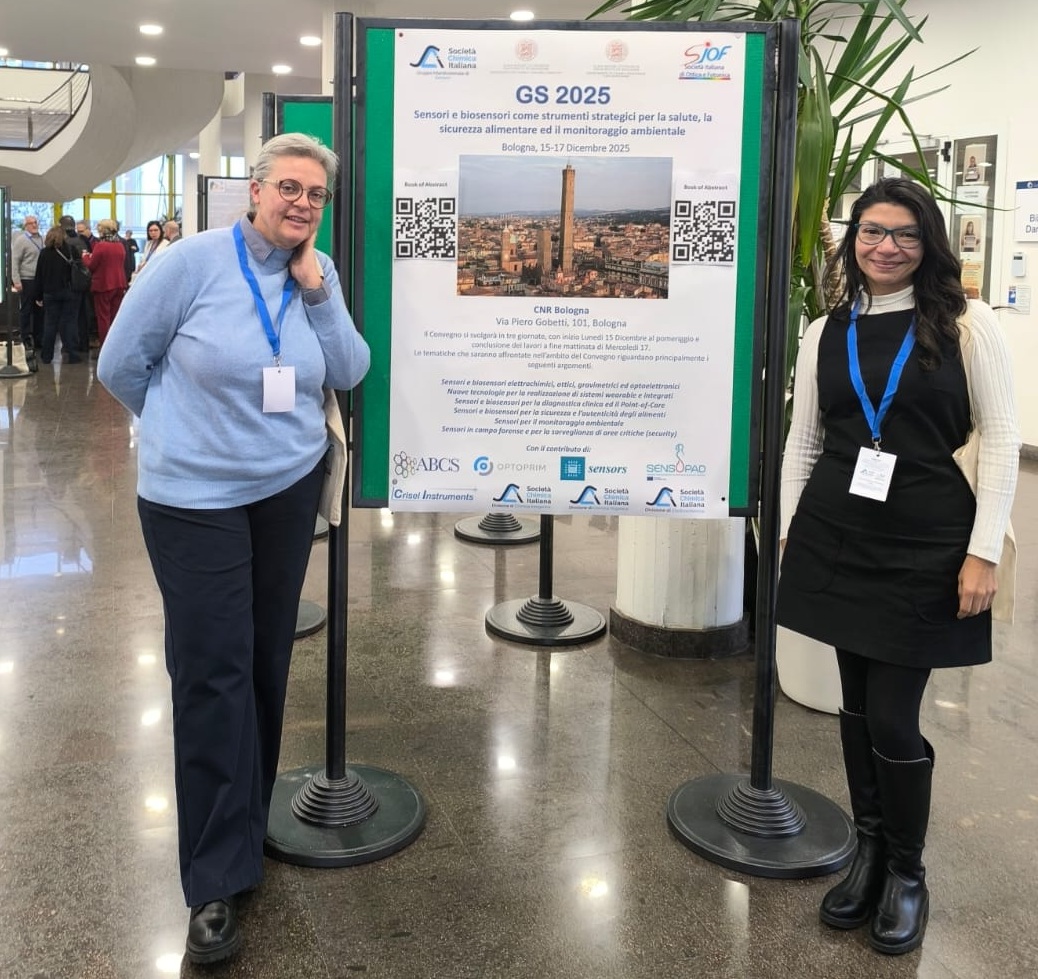
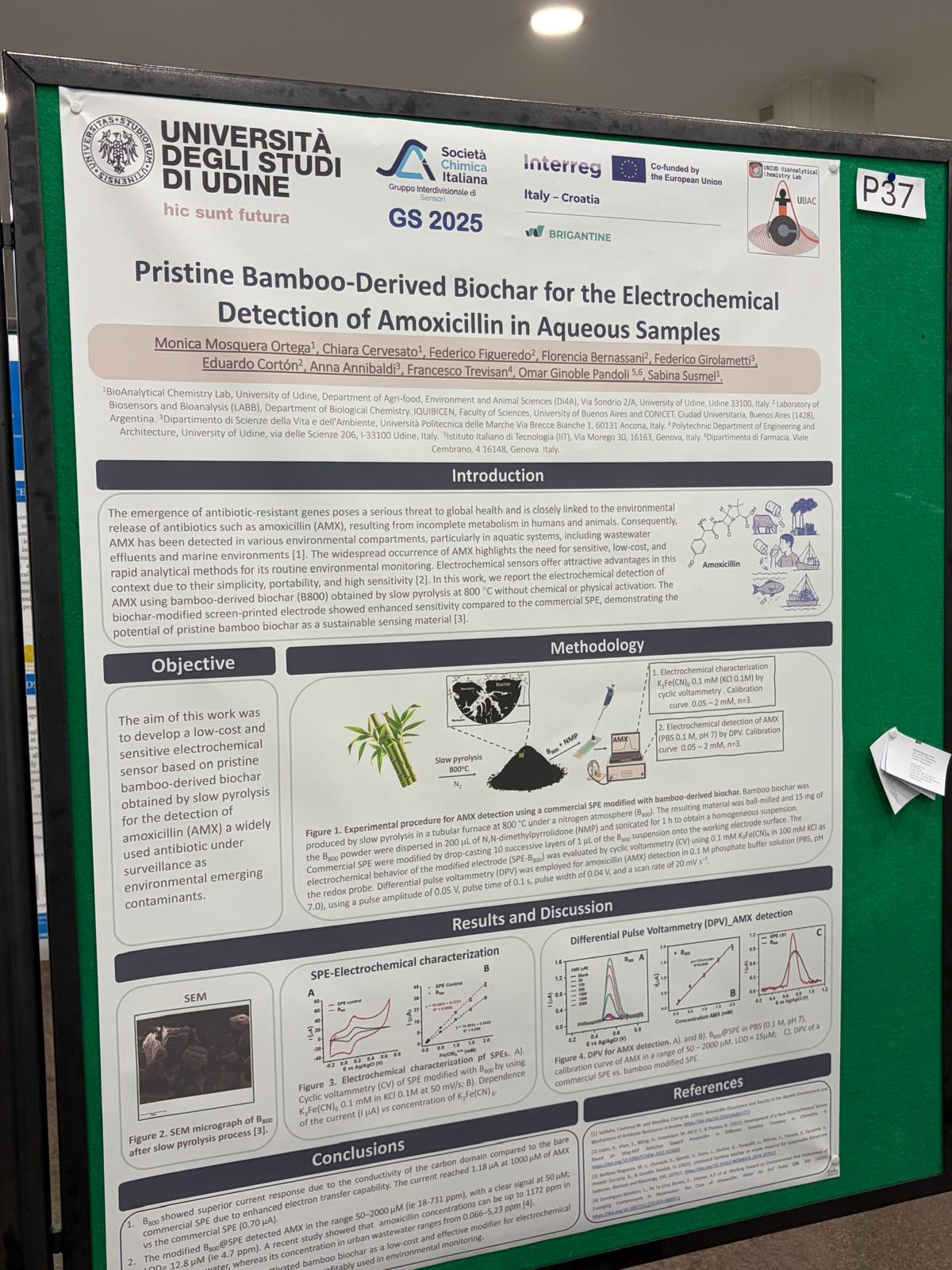
A tiny sensor can make a big difference. From 15 to 17 December 2025, the BRIGANTINE team takes part in the GS 2025 Interdivisional Sensors Group Workshop at CNR in Bologna. Researchers from the University of Udine, Prof. Sabina Susmel and Dr. Monica Mosquera, present their latest results. They show how an innovative electrochemical sensor can detect amoxicillin in water. The aim is clear: improve environmental monitoring and protect aquatic ecosystems.
At the congress, the BRIGANTINE team presents a low-cost and sensitive electrochemical sensor for the detection of amoxicillin (AMX), a widely used antibiotic now considered an emerging environmental contaminant.
Antibiotics released into water can promote the spread of antibiotic-resistant genes, a serious global threat closely linked to environmental contamination. The proposed solution uses bamboo-derived biochar as sensing material. This material is sustainable, efficient, and suitable for routine electrochemical monitoring. The development reflects the broader mission of the Brigantine project: to provide practical and innovative tools for the protection of aquatic ecosystems.
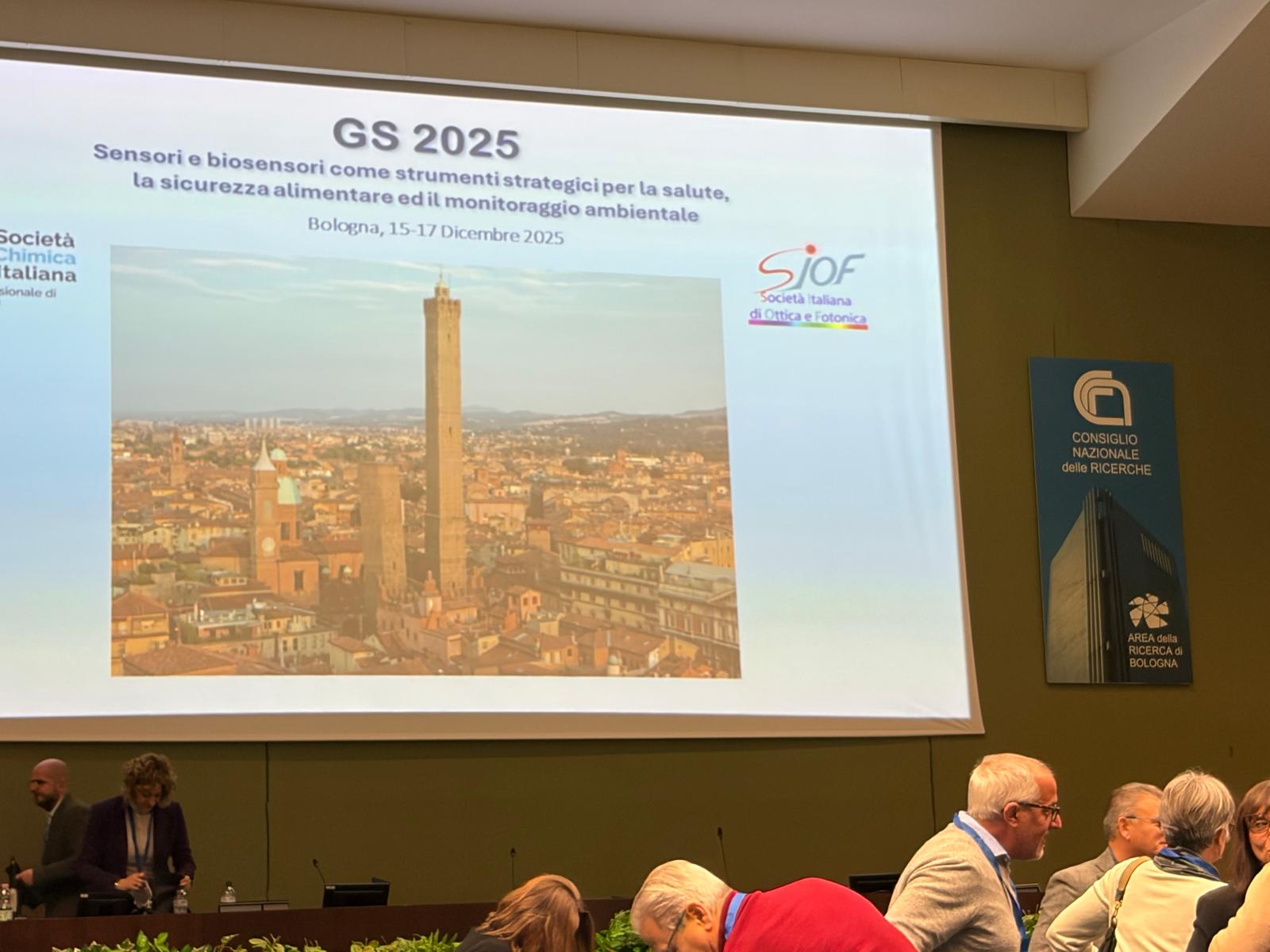
The Gruppo Sensori 2025 BRIGANTINE's workshop, titled “Sensors and biosensors as strategic tools for health, food safety, and environmental monitoring,” gathers researchers and experts working on sensor technologies. Hosted at CNR in Bologna, the congress promotes dialogue between different scientific divisions and encourages interdisciplinary collaboration. The event highlights the strategic role of sensors and biosensors in addressing global challenges, from public health to environmental sustainability.