
1st Transregional and second partners meeting of the BEYOND project finished
27/11/2024
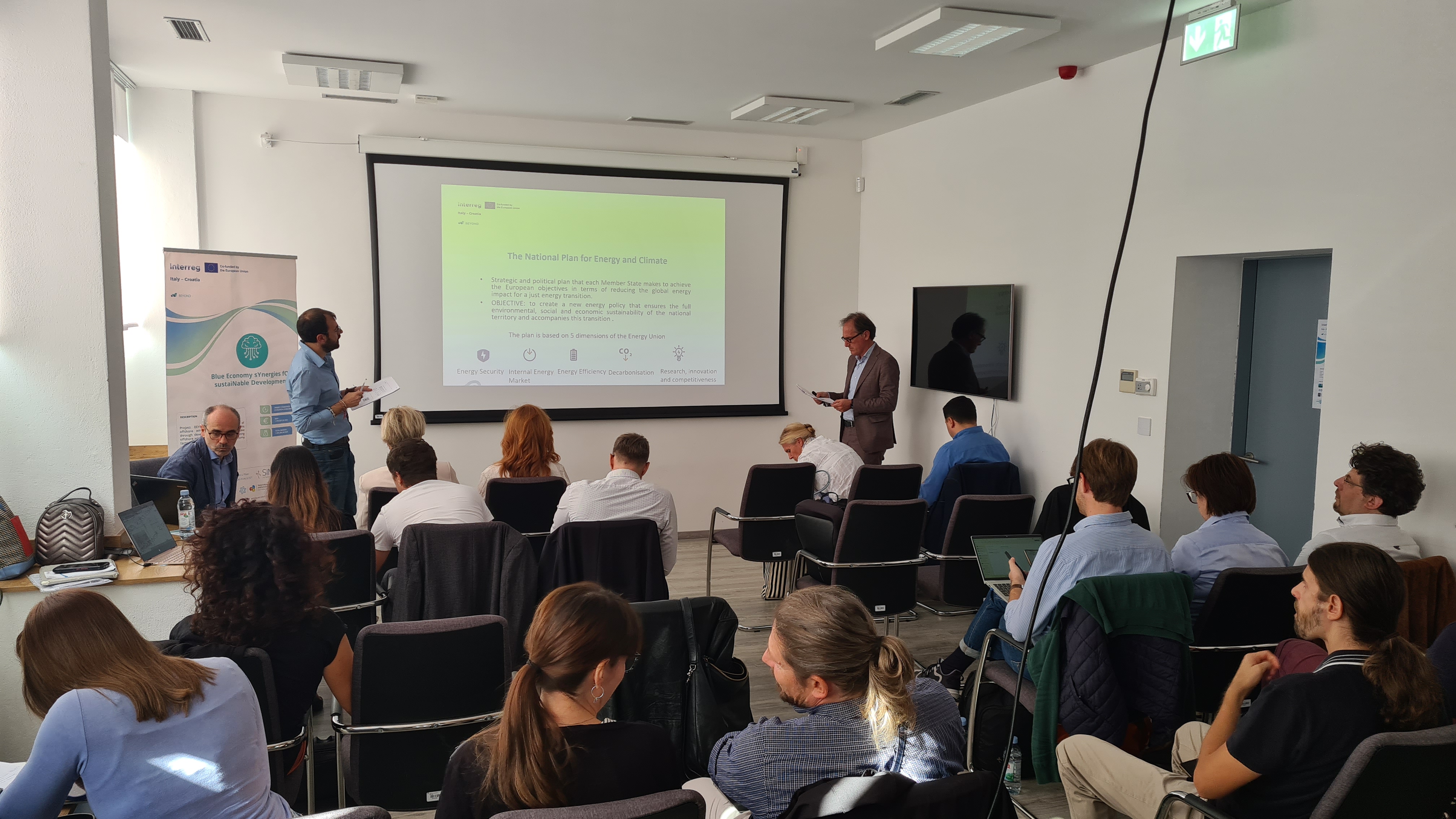
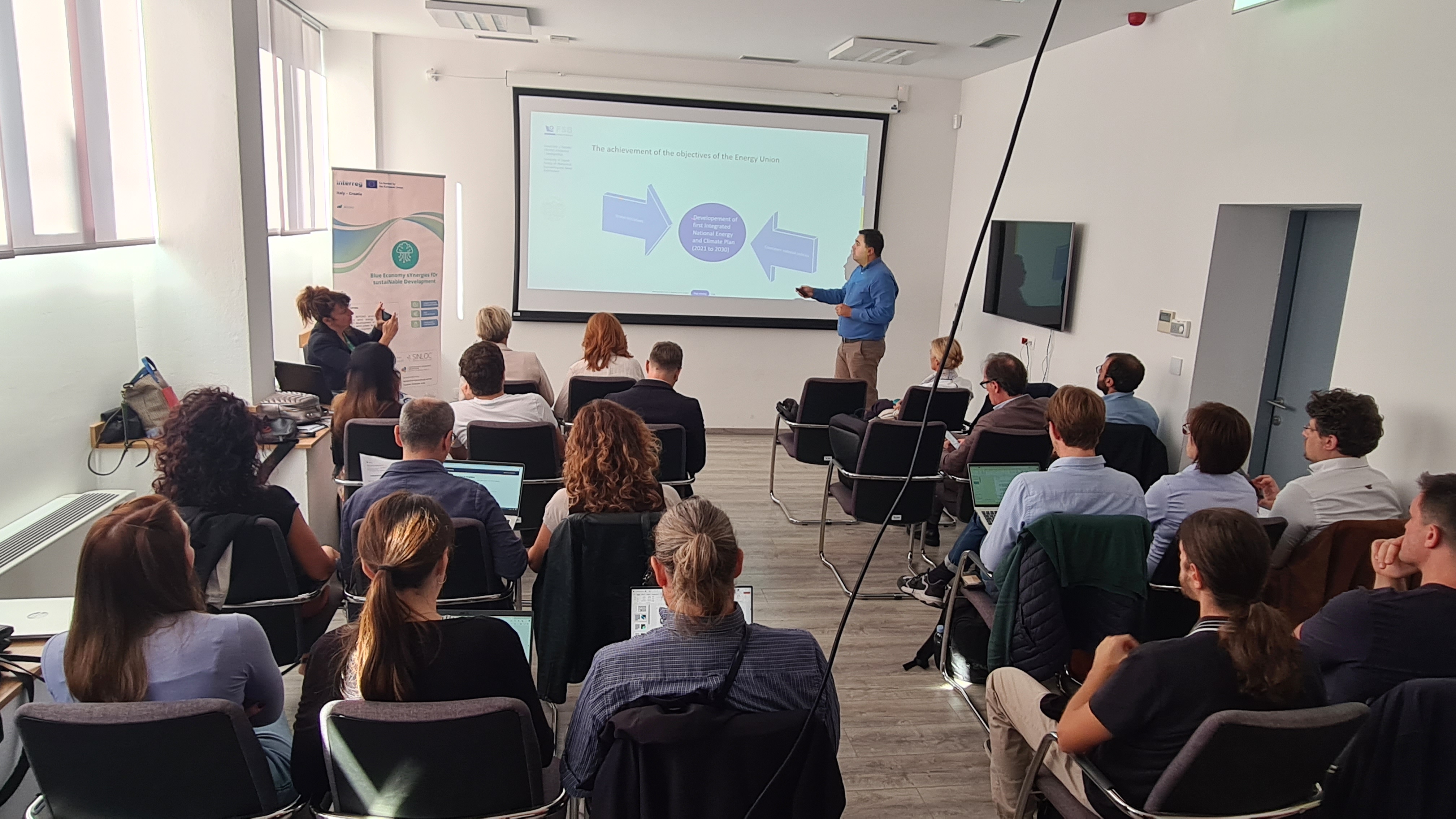
The utilization of renewable energy sources such as offshore wind farms and the potential for economic development in local communities in Croatia and Italy were the key topics discussed during the partner meeting of the international project Interreg IT-CRO, BEYOND – Blue Economy Synergies for Sustainable Development, held in Split, organized by the Split-Dalmatia County. The meeting concluded that exchanging experiences with Italian partners is essential, as they have already developed their legislation, ensuring compliance with ecological standards and the specificities of different ecosystems.
Dalibor Jovanović, Director of IRENA - Istrian Regional Energy Agency, which is also the lead partner of the BEYOND project, spoke about the need for energy transition, especially since the Plomin hydroelectric plant, which is vital for the Istrian power system, will be decommissioned in 2033, particularly affecting summer energy supply.
• "Therefore, we need a new system as a partial replacement. Alongside a wind farm, we also need about 400 megawatts of solar power on the transmission network to meet part of the energy demand. We have stated that the wind farm in Istria must function at a minimum as an ecologically neutral facility, taking into account all economic sectors, such as shipbuilding, fishing, aquaculture, and so on, while even improving existing ecosystems. This is the foundation of the BEYOND project. We want to size energy production in a way that is compatible with marine organisms," explained Jovanović, adding that Croatia must focus on renewable energy sources, particularly solar and wind, for which it has favorable geographic conditions.
Hrvoje Mikulić, Docent at the Faculty of Mechanical Engineering and Naval Architecture in Zagreb, reflected on the economic opportunities offered by the development of offshore wind farms, an initiative promoted by the European Union.
• "It is important to discuss with the local community their vision for economic development and ensure that it aligns with the regional development strategy, as has been done so far through various projects and workshops in which we have collaborated. It is crucial that the process is inclusive and that all stakeholders are involved in discussions on how to best build sustainable economic development," emphasized Mikulić.
Vanda Vaniček, Director of the Environmental Protection and Spatial Planning Sector at the Hydrocarbon Agency of the Republic of Croatia, noted that one of the agency's tasks is to monitor European directives, legislation, and regulatory frameworks concerning renewable energy sources, as well as to track the experiences of countries that have already implemented such projects, such as the Netherlands, Denmark, and the United Kingdom.
• "These are not new projects; they have existed in Europe for over 20 years. What we need to do is implement them successfully in Croatia by adopting the best practices from Northern European countries, including technology, techniques, and the development of a legislative framework that precisely defines how these projects should be carried out, what is allowed, where they can be located, and who manages the entire process. Moreover, before such projects are implemented, environmental impact assessments are conducted. If any negative impact is identified, measures are taken to mitigate it so that the environment can sustain it. If the study shows that something cannot be done or there are significant obstacles, it must be removed from those areas. For instance, we already know where we can place wind farms and where we cannot, such as in areas with migratory bird routes or important fishing zones," Vaniček concluded.