

Coastal Squeeze: A Growing Threat to Korčula's Natural Sandy Beaches
03/06/2026
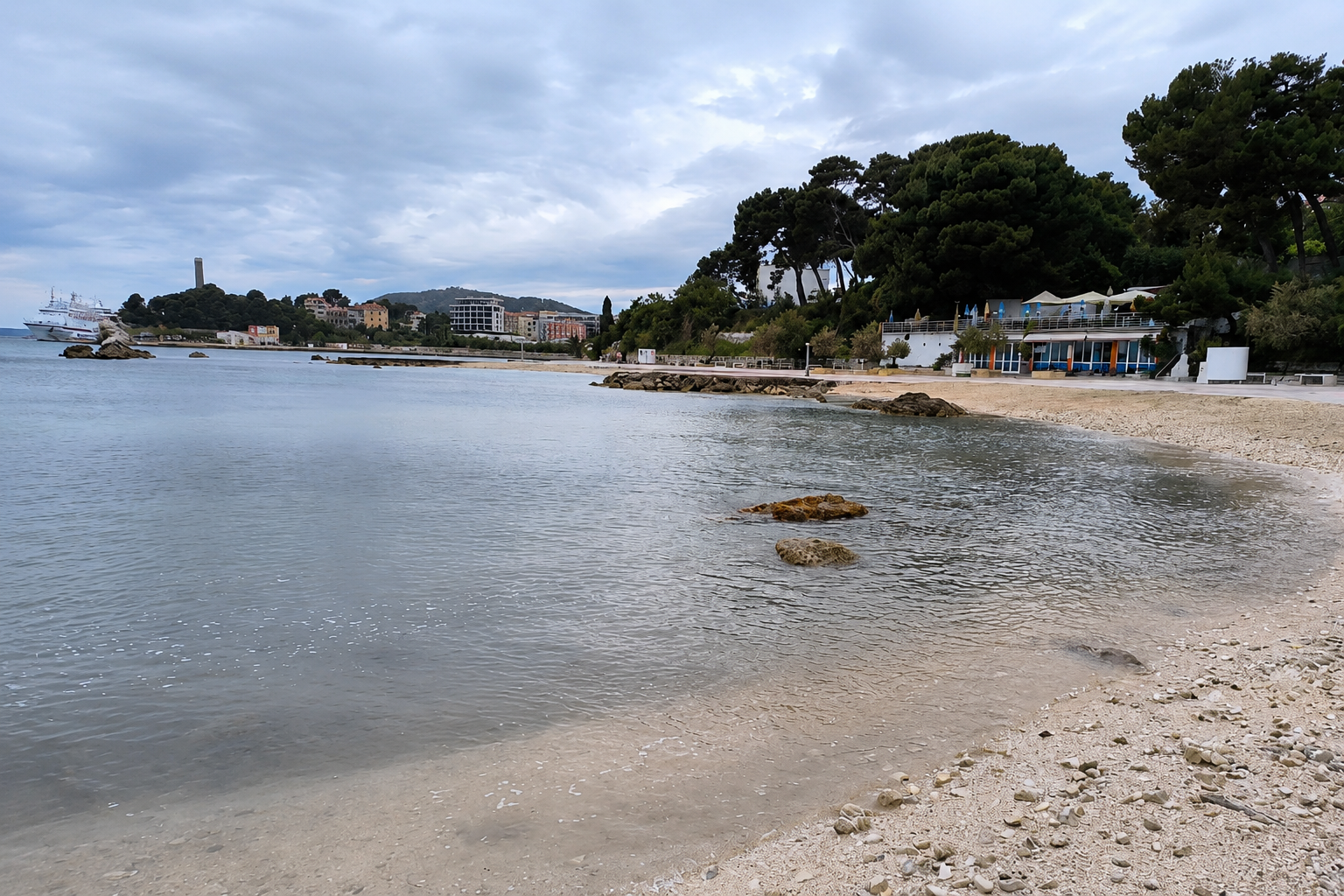
Along the Adriatic coast, fixed coastal infrastructure may increasingly contribute to a phenomenon known as coastal squeeze. As sea levels rise, sandy beaches can naturally migrate landwards where sufficient space is available. However, when fixed infrastructure blocks this movement, beaches become trapped between the rising sea and the built environment, gradually losing the space they need to adapt.
Conditions associated with coastal squeeze have been identified at Bilin Žal and Vela Pržina, on the island of Korčula, two of the very few remaining natural sandy beaches along the Croatian coast. Their dynamics and vulnerability were examined through several months of monitoring and the creation of three-dimensional beach models, presented by Associate Professor Kristina Pikelj, PhD, from the Department of Geology at the Faculty of Science of the University of Zagreb, during the ASPEH workshop held in Lumbarda on 12 May 2026.
As Pikelj explained, sandy beaches are fragile ecosystems that are particularly vulnerable to erosion and human impacts. At Bilin Žal and Vela Pržina, stormwater runoff, vehicle traffic and coastal interventions were identified as pressures that alter shoreline dynamics. Their long-term survival also depends on a continuous supply of sediment. Another important factor identified during the research is the presence of concrete retaining walls, approximately two metres high, along most of the shoreline. These fixed structures constrain the beaches’ natural landward migration and thereby contribute to coastal squeeze, a pressure expected to intensify further as sea levels continue to rise.
Local coastal management cannot prevent sea-level rise, but it can be adapted to help reduce its impacts on these beaches. Pikelj therefore suggested considering the partial removal of existing barriers and limiting activities that place additional stress on the beaches.
The ecological importance of these habitats makes their protection even more urgent. The first documented loggerhead sea turtle nest in Croatia was recorded on a Korčula beach, underlining the conservation importance of suitable sandy beach habitats.
Addressing coastal squeeze requires continuous monitoring, responsible coastal management and the reassessment of infrastructure that limits the ability of these ecosystems to adapt. Protecting Bilin Žal and Vela Pržina means preserving not only two rare beaches, but also their capacity to adjust to shoreline and sea-level rise.