


Introduction to the History of the Archaeological Park of Sepino
The Archaeological Park of Sepino preserves the remains of the ancient Roman town of Saepinum, a settlement with origins dating back to pre-Roman times. Strategically located along key trade routes, Saepinum flourished under Roman rule, becoming a vibrant center of civic, religious, and commercial life. The site retains well-preserved city walls, gates, a forum, and public buildings, offering a remarkable glimpse into urban planning and daily life in antiquity. Today, the park allows visitors to step back in time and explore the legacy of a town that once connected communities across the region.
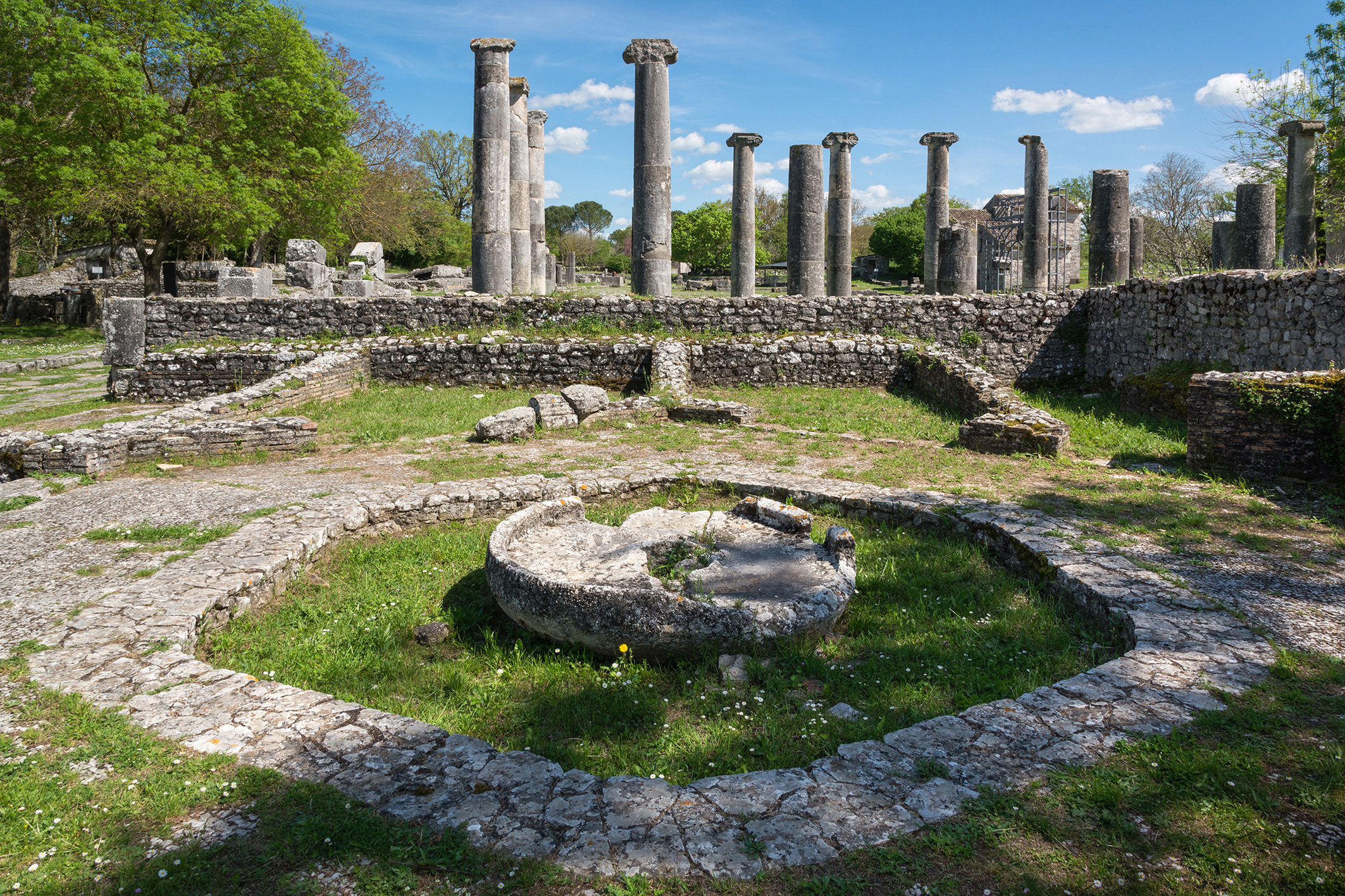
Memories of Altilia / Saepinum
The site of Altilia, also known as Saepinum, preserves the enduring legacy of a Roman settlement in Molise. Its well-preserved city walls, gates, and streets, along with the forum and public buildings, offer a glimpse into urban life in antiquity. Visitors can trace the town’s history from its pre-Roman origins through its development under Roman rule, discovering how its strategic location shaped commerce, culture, and daily life. Today, Saepinum stands as a remarkable testament to the ingenuity and organization of ancient Roman communities.
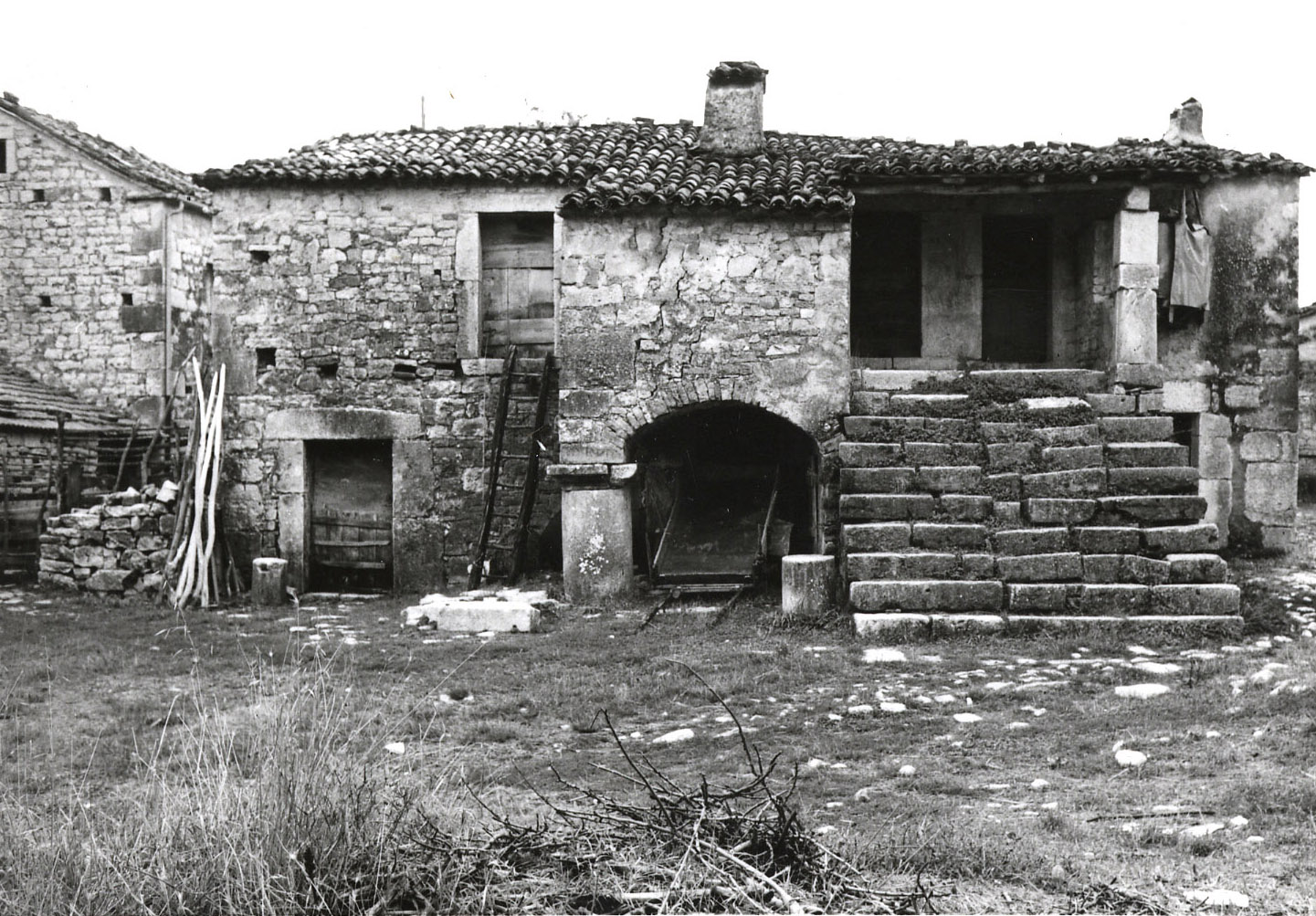
The rich architectural heritage of the Park provides an ideal setting to showcase and tell the story of the city and its territory, both tangible and intangible. The rural houses and domestic spaces have been transformed into exhibition rooms of the Park’s open-air museum, while preserving characteristic features of peasant homes, such as sinks, fireplaces, ovens, and niches. Other evocative spaces, where archaeology meets rural life, are used for temporary exhibitions and thematic displays, including the Casa Lunga, the Casa delle Cucine, and the Casa della Colonna. In the coming years, additional areas within the rural buildings will be developed to illustrate daily life in Sepino during the Samnite and Roman periods, as well as the many lives that followed.
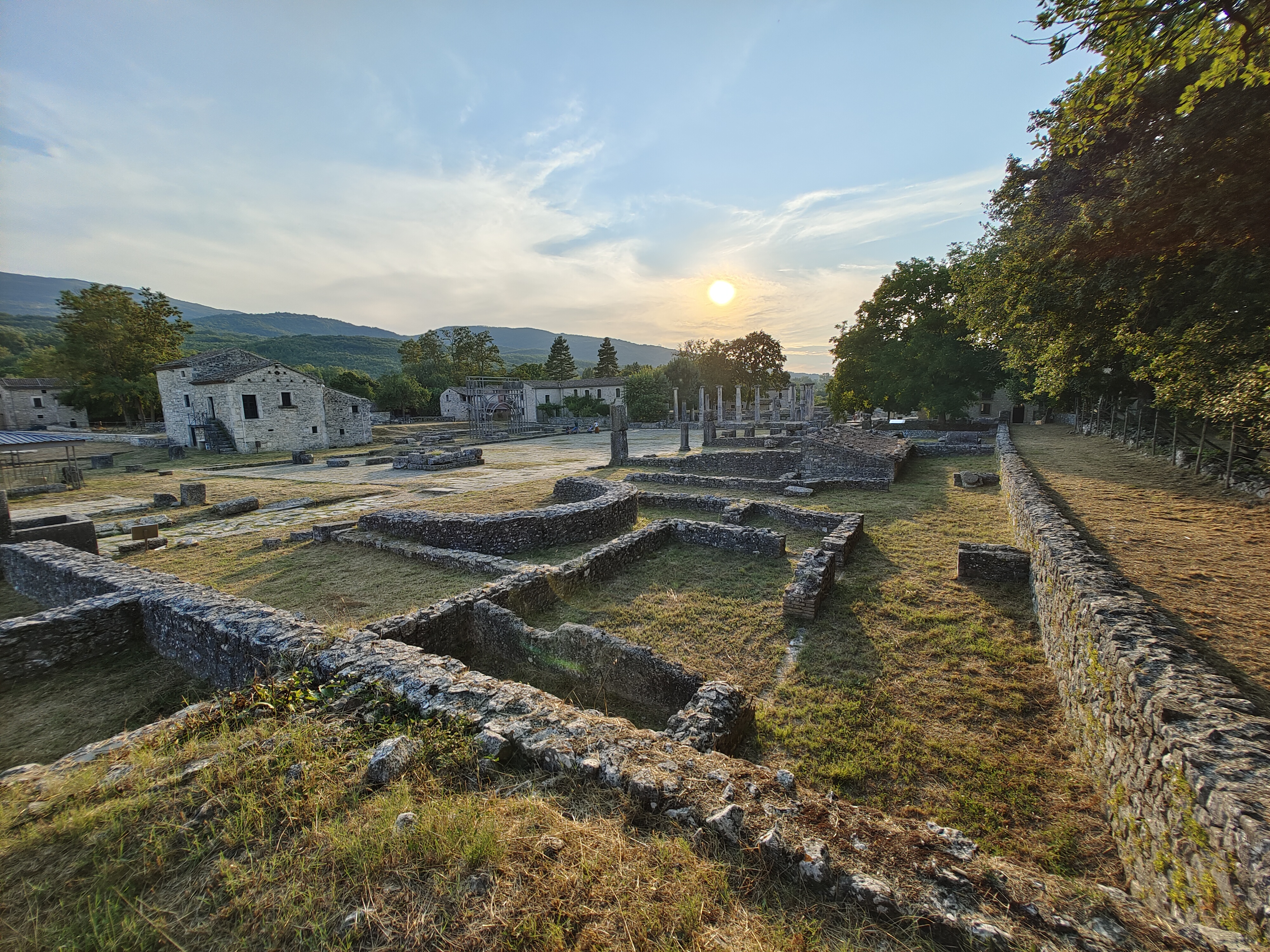
At the intersection of the cardo and the decumanus opens the Forum square, which today appears bare but was once surrounded by the main political and religious buildings. Trapezoidal in shape and bordered on two sides by a drainage channel for water runoff, it was paved with limestone slabs. On the northern long side, the Comitium (building for popular assemblies), the Curia (seat of the city Senate), the Capitolium (the city’s main temple), and other cult buildings probably stood. On the eastern short side, there were municipal buildings, guild halls, or small cult shrines. Finally, on the southern side stood an honorary arch dedicated to L. Neratius Priscus, a famous jurist from Sepino and friend of Emperor Trajan.
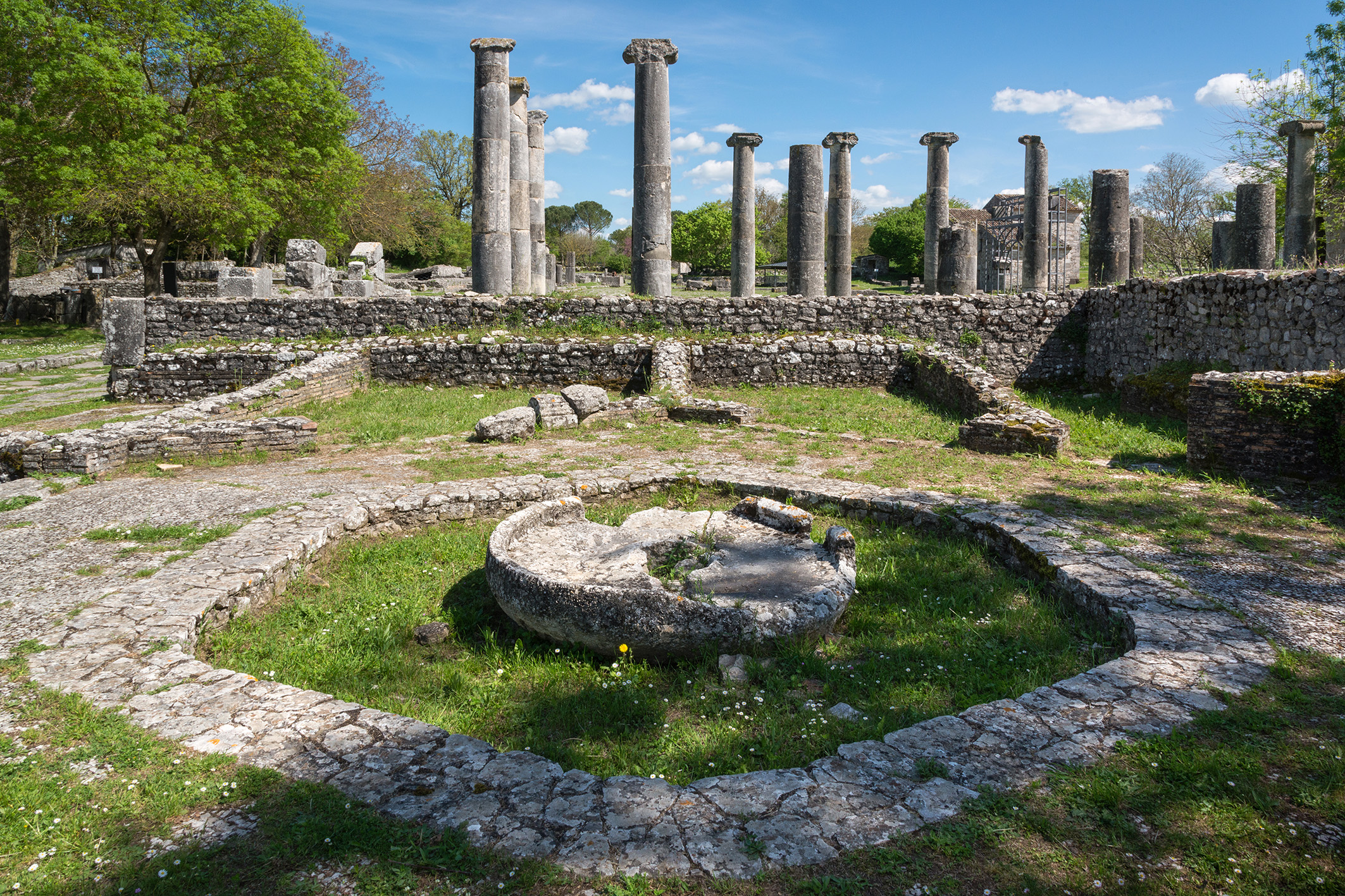
Located along the decumanus, the Macellum was the public building dedicated to the sale of foodstuffs. The entrance, raised above street level, leads through a short corridor to the hexagonal inner courtyard, decorated with a floor made of large slabs of local limestone. In the central basin is placed a millstone from an olive press, installed in later periods. Around it are the rooms dedicated to trade. Its location is certainly significant: near the public area yet set back, so as to be central without interfering with the activities carried out in the immediate surroundings. An inscription reveals that the building was funded by M. Annius Phoebus, an official of the imperial cult, and was adorned with a portico decorated with bronze and marble ornaments.
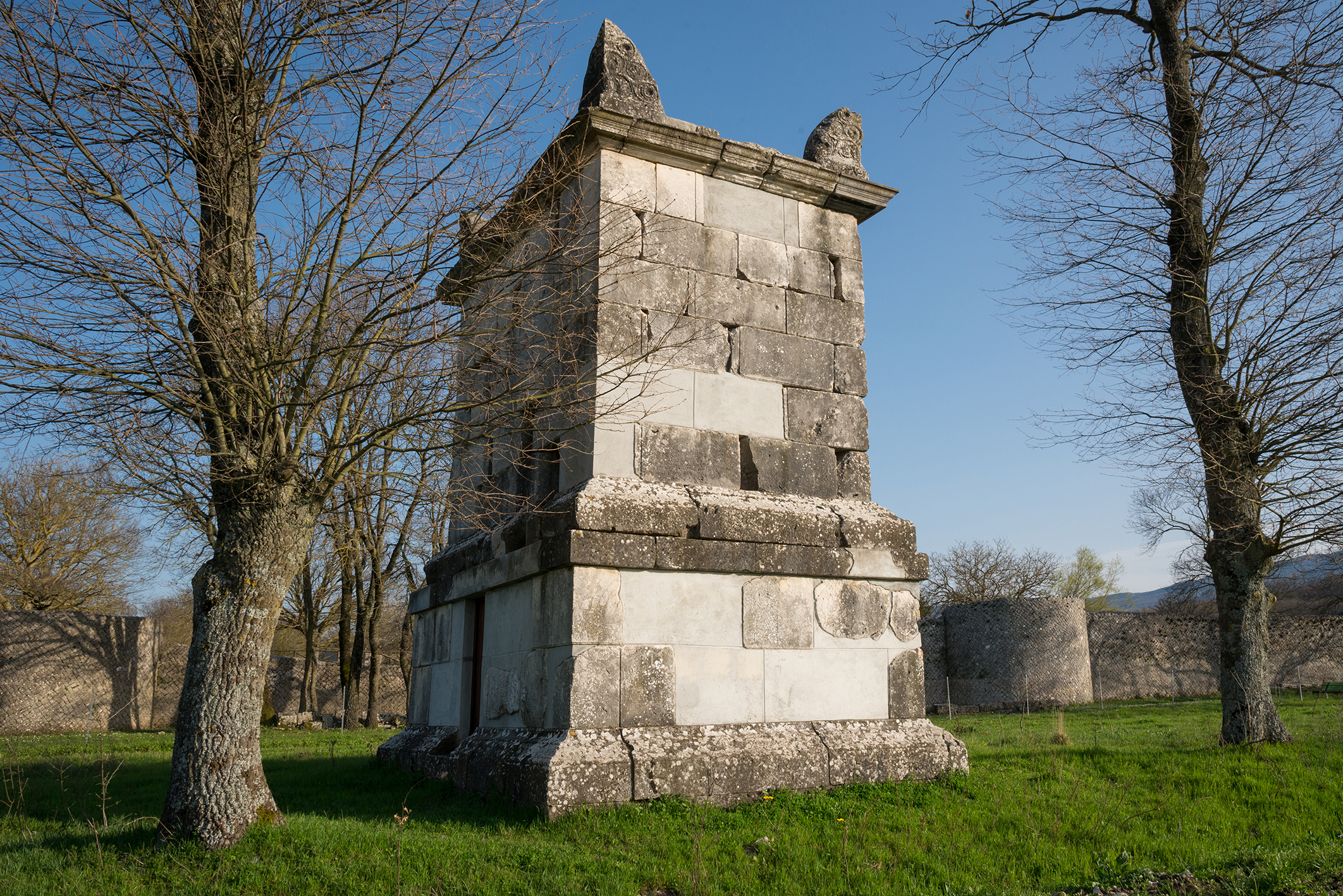
Outside the city walls, a short distance from Porta Boiano, stands the funerary monument of P. Numisio Ligure, a distinguished figure who held numerous military and civil offices. According to Roman custom, necropolises were located outside the city along the main road axis, here identifiable with the tratturo. The monument, reconstructed in the past century, appears as a square-based building, adorned with molded cornices and crowned by four corner elements decorated with vegetal motifs. On the façade, an inscription records the military career and municipal offices of the deceased, who had the monument erected for himself, his wife, and his prematurely deceased son. The construction dates back to the Julio-Claudian period, thus to the first half of the 1st century A.D.
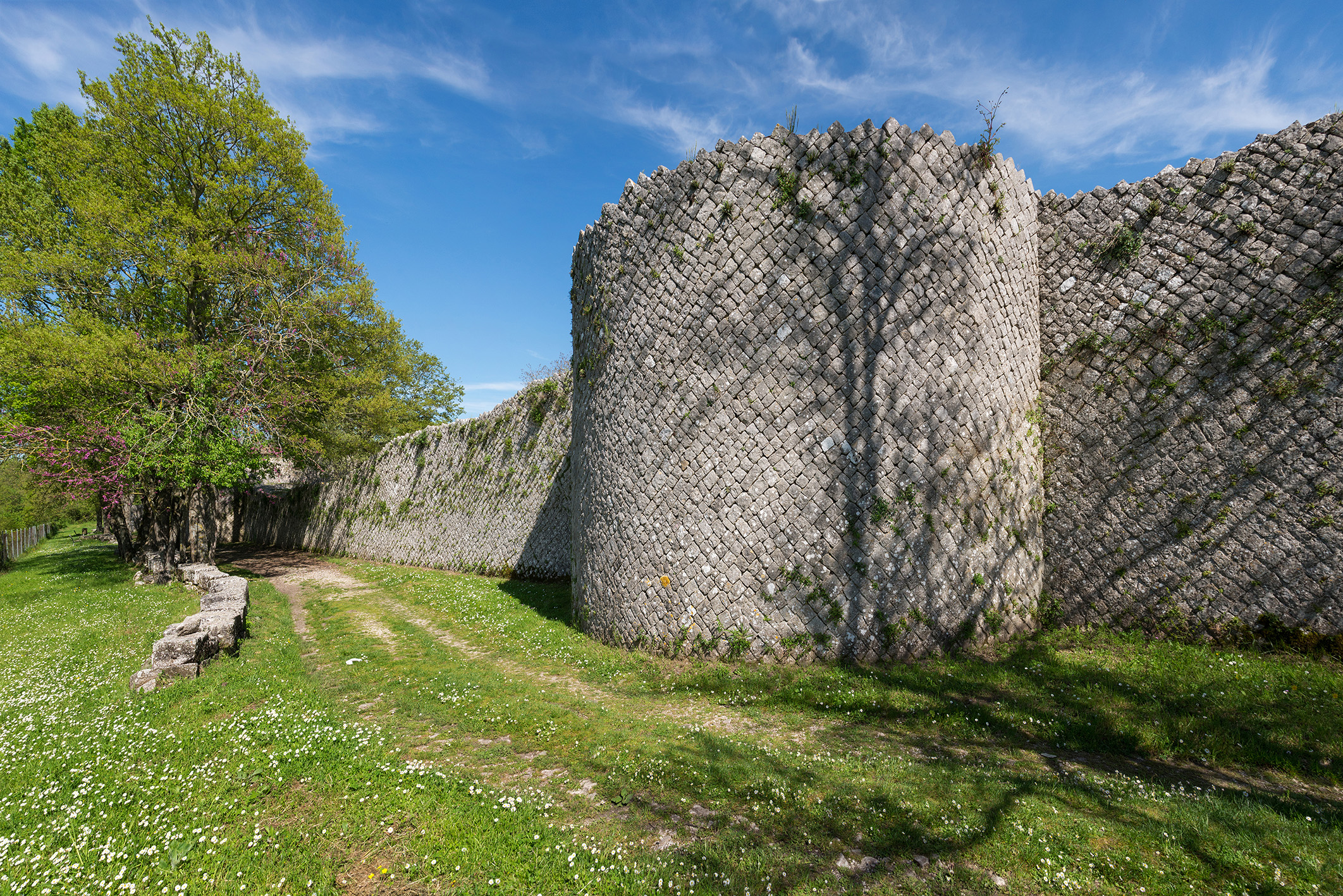
The walls of Saepinum, over 1 km long, were built using opus reticulatum, a Roman construction technique consisting of pyramid-shaped stone elements with a square base, which create a net-like pattern on the façade and anchor with their points into the interior of the wall. The walls were equipped with 35 towers, 33 circular and 2 octagonal, placed at the most exposed points. The four monumental single-arch gates, flanked by two circular towers and located at the ends of the two main streets, served as the city’s entrances: Porta Bojano and Porta Benevento on the decumanus, and Porta Terravecchia and Porta Tammaro on the cardo. Dating to the Augustan period and financed by the imperial family, the walls not only had a defensive function but also served as a monument, a tool of propaganda, and a means of strategic control over the territory.
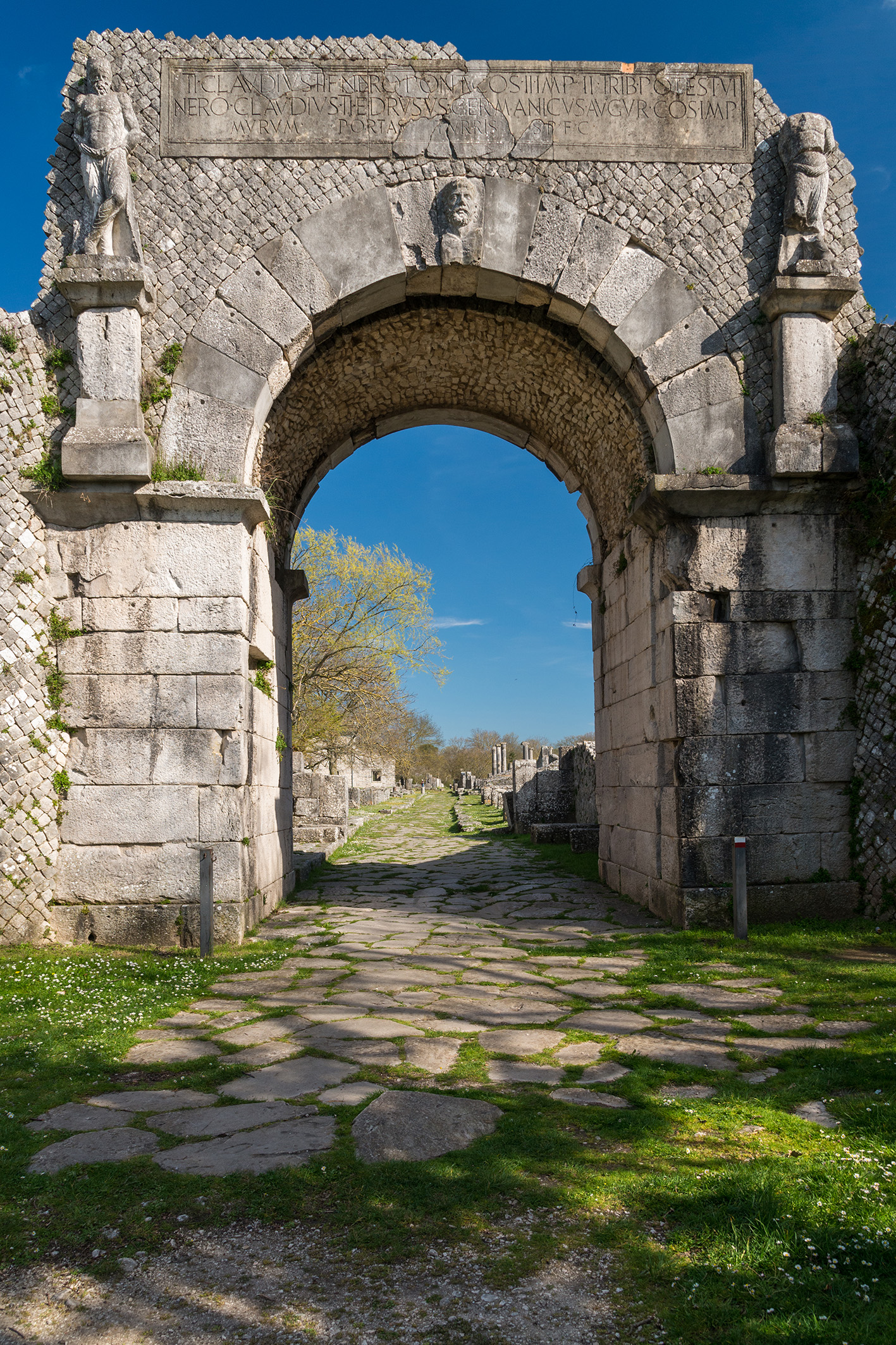
Facing the direction of the ancient city of Bovianum, the monumental gate, partially reconstructed in the past century, provides insight into how all the other gates of Sepinum were built: single-arched, flanked by two circular towers, and equipped with a portcullis and an internal double-leaf gate. These features ensured greater security and allowed for the management of city entrances, including inspections and tax collections related to transhumance. The honorary inscription above the arch commemorates the adopted sons of Emperor Augustus, Drusus and Tiberius, who financed the construction of gates, walls, and towers. On either side of the inscription are two statues of captive barbarians, symbols of the Germanic military campaigns and likely serving as a warning to the local population.
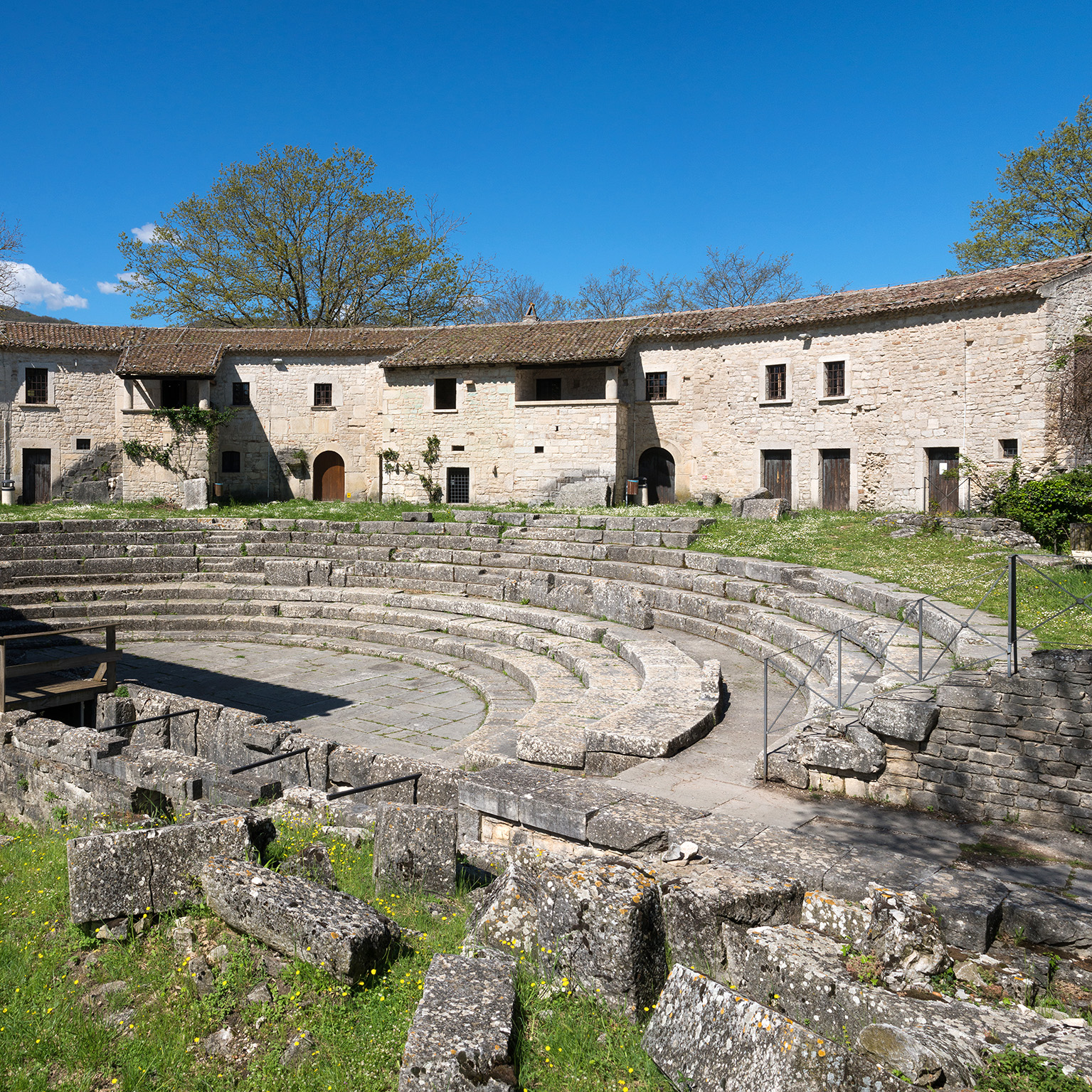
The theatre of Saepinum, built in the 1st century A.D. against the city walls, could accommodate around 3,000 spectators and rose approximately 11 meters above the level of the orchestra. Today, we can still admire the stage, the orchestra, and a significant portion of the cavea, intended for the audience. Access was through two main entrances and a secondary entrance built into the walls. Traces also remain of the structures that allowed for a temporary covering (velarium) and the operation of the curtain (aulaeum). The rural buildings seen today are the result of transformations that took place from the 17th century onward, reusing materials from the ancient structures. The recent restoration has successfully preserved the value of these sites, transforming them into museum spaces.