
Breadcrumb

Discovering Macerata

Introduction to the History of the Archaeological Area of Helvia Ricina

Introduction to the History of the Archaeological Area of Helvia Ricina

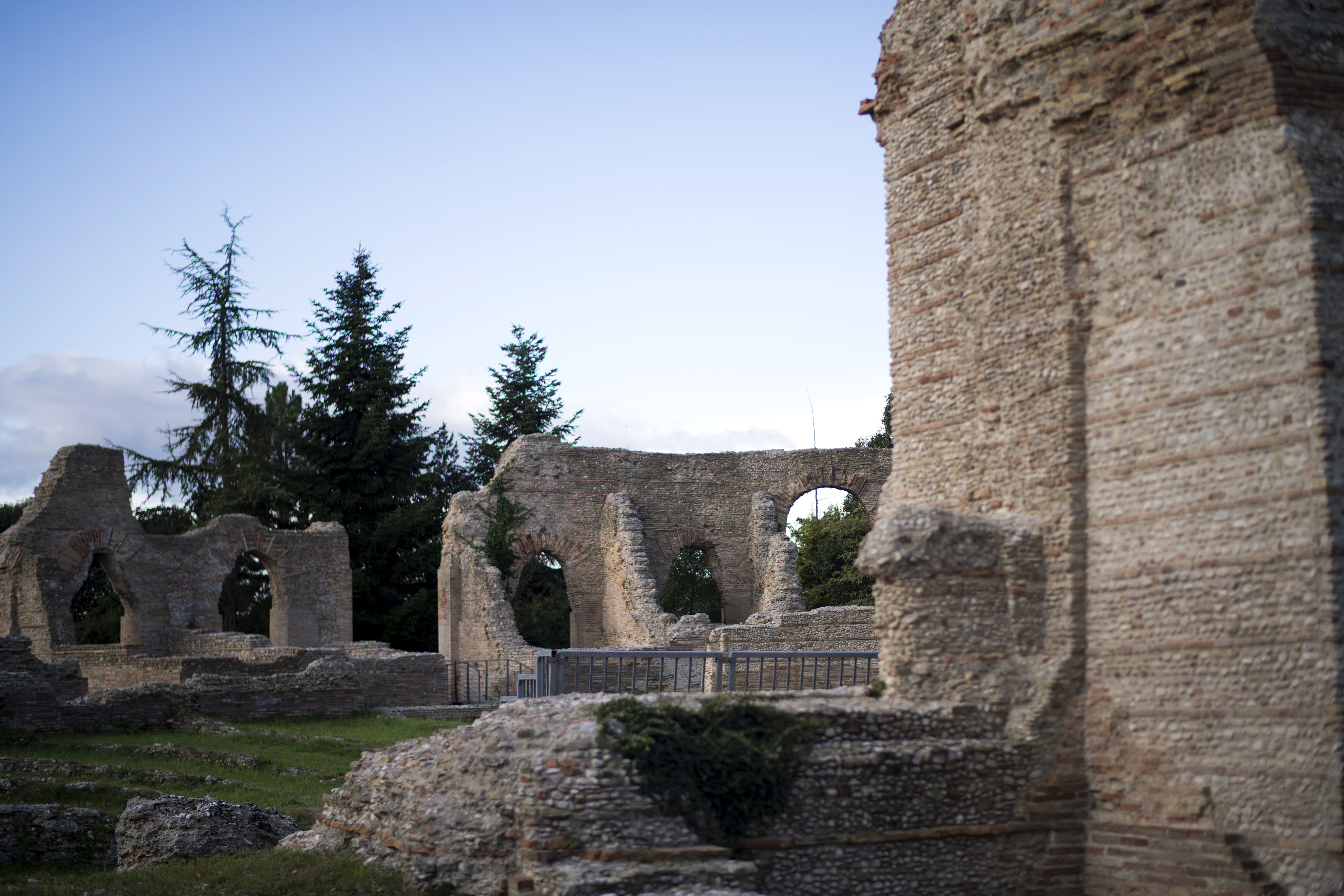
The archaeological area of the ancient Roman city of Helvia Ricina lies at the gates of Macerata, with the large brick theater, built in the early decades of the 1st century AD, standing as its most impressive feature. Measuring 72 meters in diameter, the cavea, arranged in two tiers of gradins, could accommodate up to 2,000 spectators. The stage set, enriched with niches and columns, was likely adorned with statues.

Despite the spoliations and restorations it has undergone over the centuries, the theater remains a site of great charm and one of the main attractions of the archaeological area.

The site also preserves six funerary monuments, reconstructed following the discovery in 1967 of 150 carved stone blocks featuring inscriptions and decorations. Their presence was first noted by the sculptor Valeriano Trubbiani in the riverbed of the Potenza. These fragments not only made it possible to restore the monuments’ original forms but also provided valuable insights into the social structure of ancient society.

Beyond Helvia Ricina: The Municipality of Macerata

Beyond Helvia Ricina: The Municipality of Macerata

Rooted in the ancient Roman settlement of Helvia Ricina, the Municipality of Macerata carries forward a rich historical and cultural legacy. Today, it stands as a vibrant center of art, education, and innovation in the Marche region—bridging its archaeological past with a forward-looking vision for sustainable urban and community development.

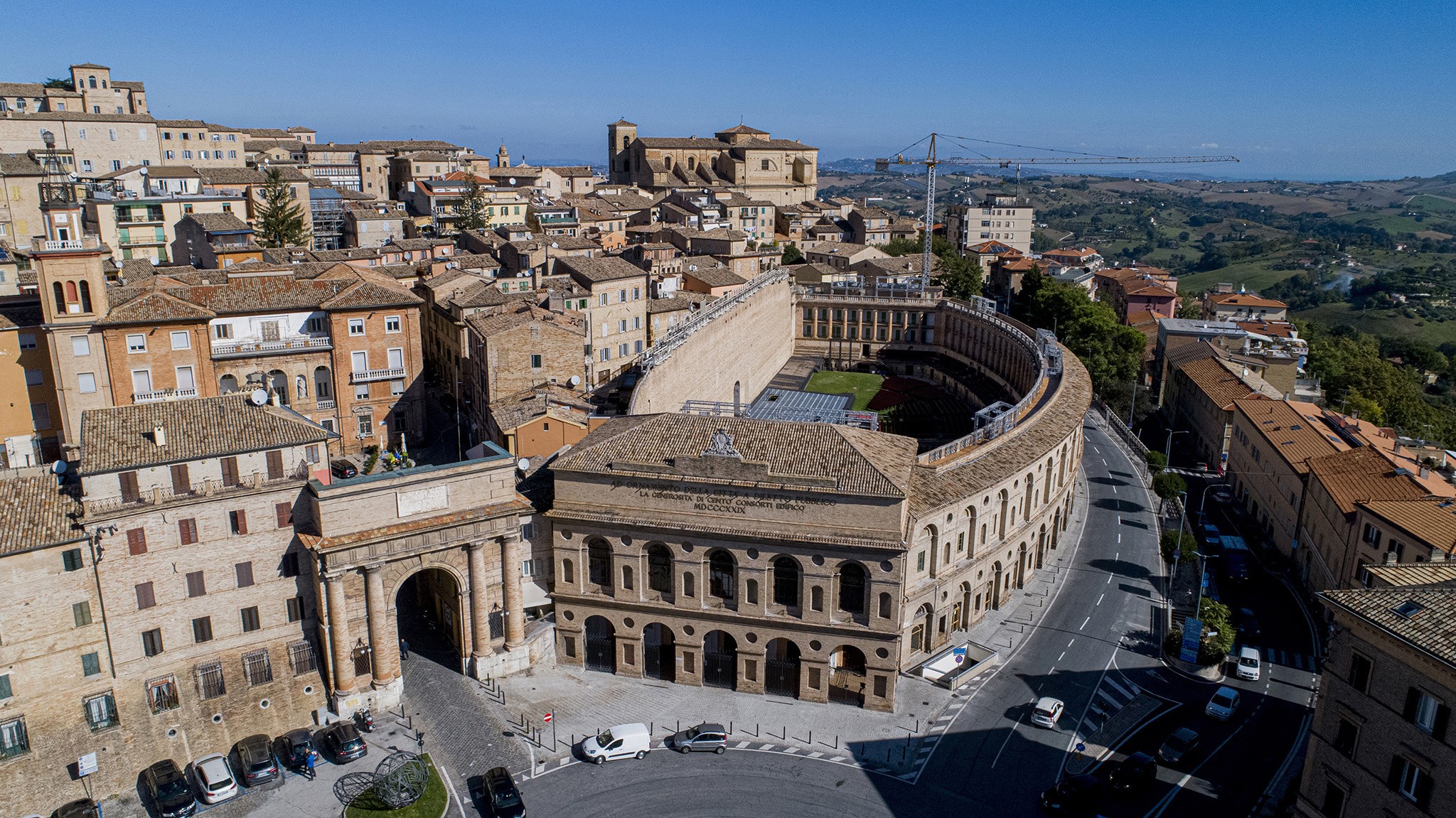
Designed by the architect Ireneo Aleandri and inaugurated in 1829 at the initiative of the Cento Consorti, with Innocenzi overseeing the construction, the Sferisterio is a masterpiece of Macerata’s Neoclassical architecture.

This majestic 90-meter-long arena is surrounded by arcades supported by 56 columns and features a high rectilinear wall with a central gate and three scenic arches for the stage. Originally built for the traditional Italian ball game pallone col bracciale, it soon became a venue for public festivities, jousts, equestrian parades, circus performances, and bull hunts. From 1909 onwards, it was also used for football and lawn tennis.

The operatic repertoire made its debut in 1921 under Pietro Conti with Verdi’s Aida, followed by Ponchielli’s La Gioconda and a concert by the great tenor Beniamino Gigli. Opera performances resumed in 1967 under the direction of Carlo Perucci, marking the beginning of today’s Macerata Opera Festival.

Today, with its 3,000 seats, 104 boxes, and extraordinary acoustics, the Sferisterio attracts audiences from around the world for its opera, dance, and music events. It also hosts Musicultura, a renowned festival and true “workshop of wonders” celebrating Italian songwriting.

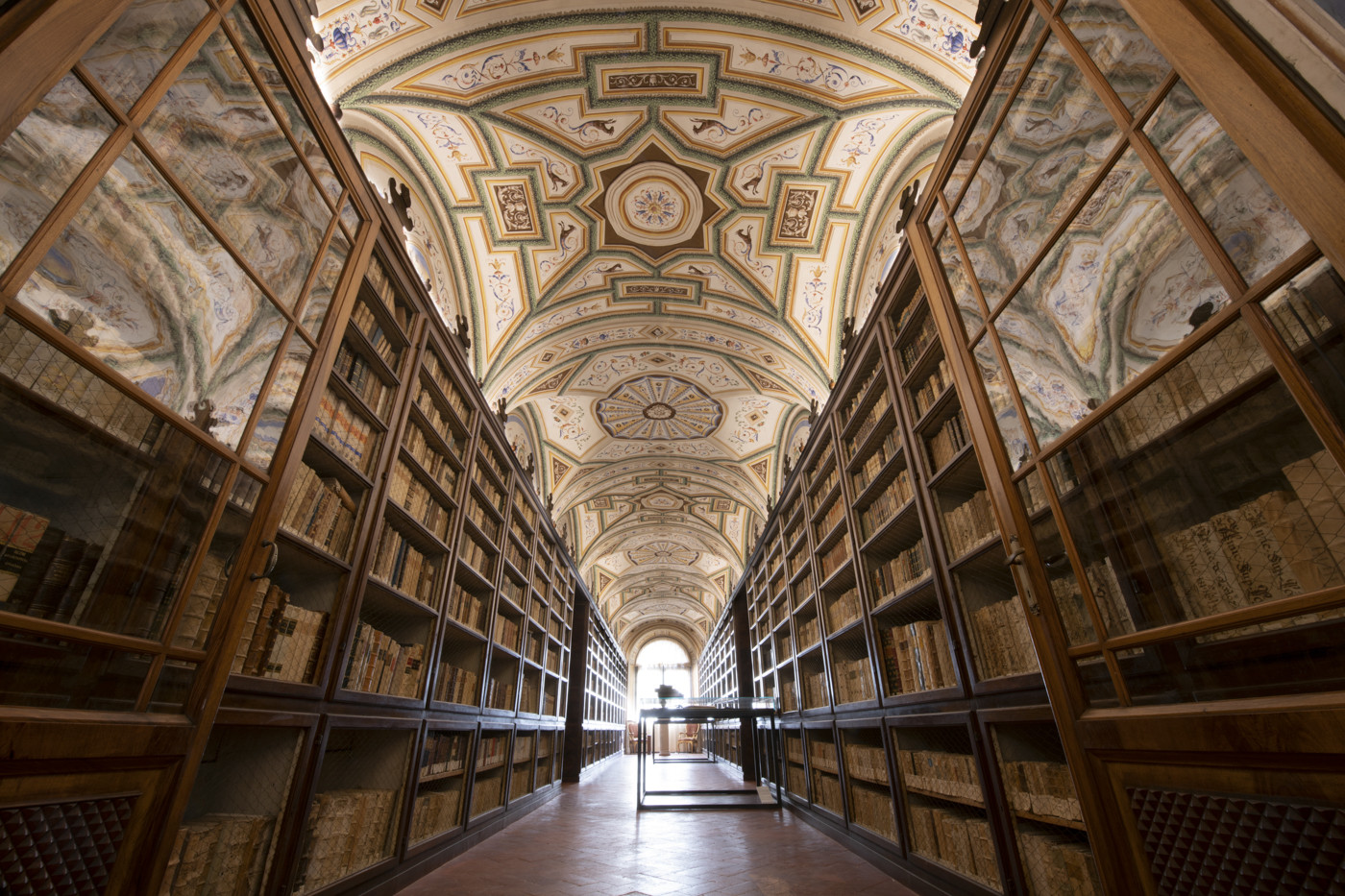
Located in the former Jesuit college—granted to the Municipality in 1773 thanks to the efforts of Cardinal Compagnoni Marefoschi, Monsignor Pallotta, and Ferdinando Palmucci—the Mozzi Borgetti Library is one of the most important libraries in the Marche region. Opened to the public in 1787, it now holds around 400,000 items, including incunabula, manuscripts, maps, statutes, legal collections, and the archives of the Accademia dei Catenati.

The original core of 5,000 Jesuit volumes gradually expanded with collections from suppressed religious orders, the Public Library, and numerous private donations. Its elegant Neoclassical rooms, designed by painter Vincenzo Martini, are adorned with remarkable artworks: medallions depicting the emperors of Helvia Ricina by Costanzo Alberti, frescoes by Scarponi, grotesques in the Hall of Mirrors by Marzapani and Cervini, the painted ceiling of the former oratory by Mattei, wood carvings by Ciferri and Consalvi, and bookcases by Pianesi.

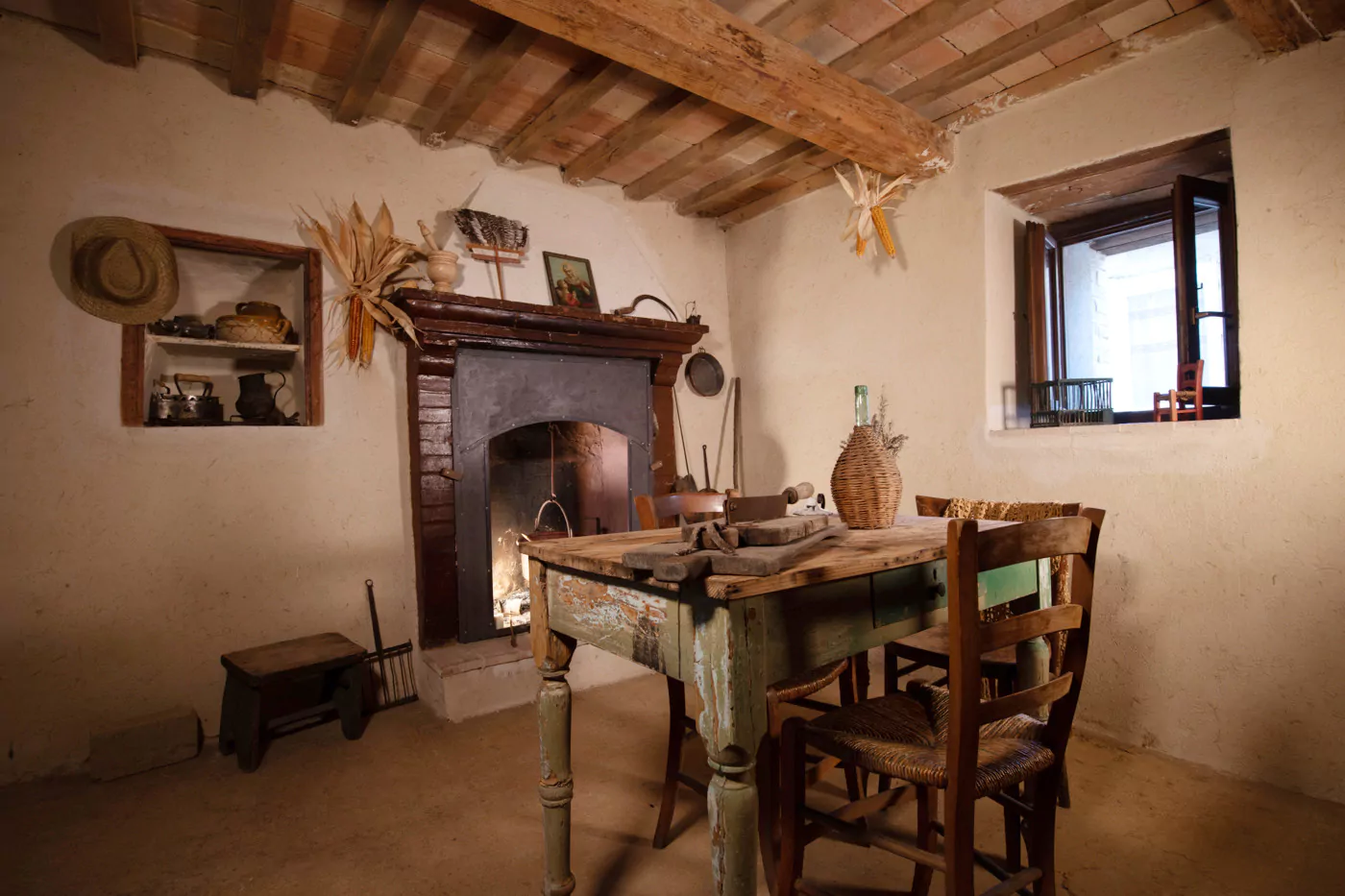
Ficana is a neighborhood that emerged in the mid-19th century on the far western outskirts of Macerata, on the northern slope of the Santa Croce hill. Now incorporated into the urban fabric, it consists of about 50 small houses built with raw earth—a material that defines its unique character. These earthen buildings, locally known as atterrati, are mostly two-story terraced houses or semi-detached dwellings.

The village was established during a period when the outskirts of Macerata attracted impoverished peasants expelled from rural areas, known as casanolanti—tenant laborers typical of the Marche-Romagna region. Having survived the wave of urban cement construction of the 1970s, Ficana still preserves the memory of its peasant community.

Since 2003, it has been protected as an architectural heritage site of historical interest—a rare case in Italy, as the protection extends to an entire neighborhood rather than a single building. Today, Ficana includes private homes as well as municipal buildings that host a Visitor Center, a museum itinerary, and guest accommodations for the Ecomuseum.

The MuBi was created as a dynamic educational space designed to engage visitors of all ages in exploring nature and appreciating biodiversity. Through interactive pathways and immersive exhibits, the museum becomes a living laboratory where curiosity meets knowledge.

Its educational activities, tailored for students of every age group, offer hands-on and stimulating experiences on scientific and environmental topics. Here, the exploration of the natural world becomes an opportunity to reflect on the importance of sustainability and to grow as conscious and responsible citizens.


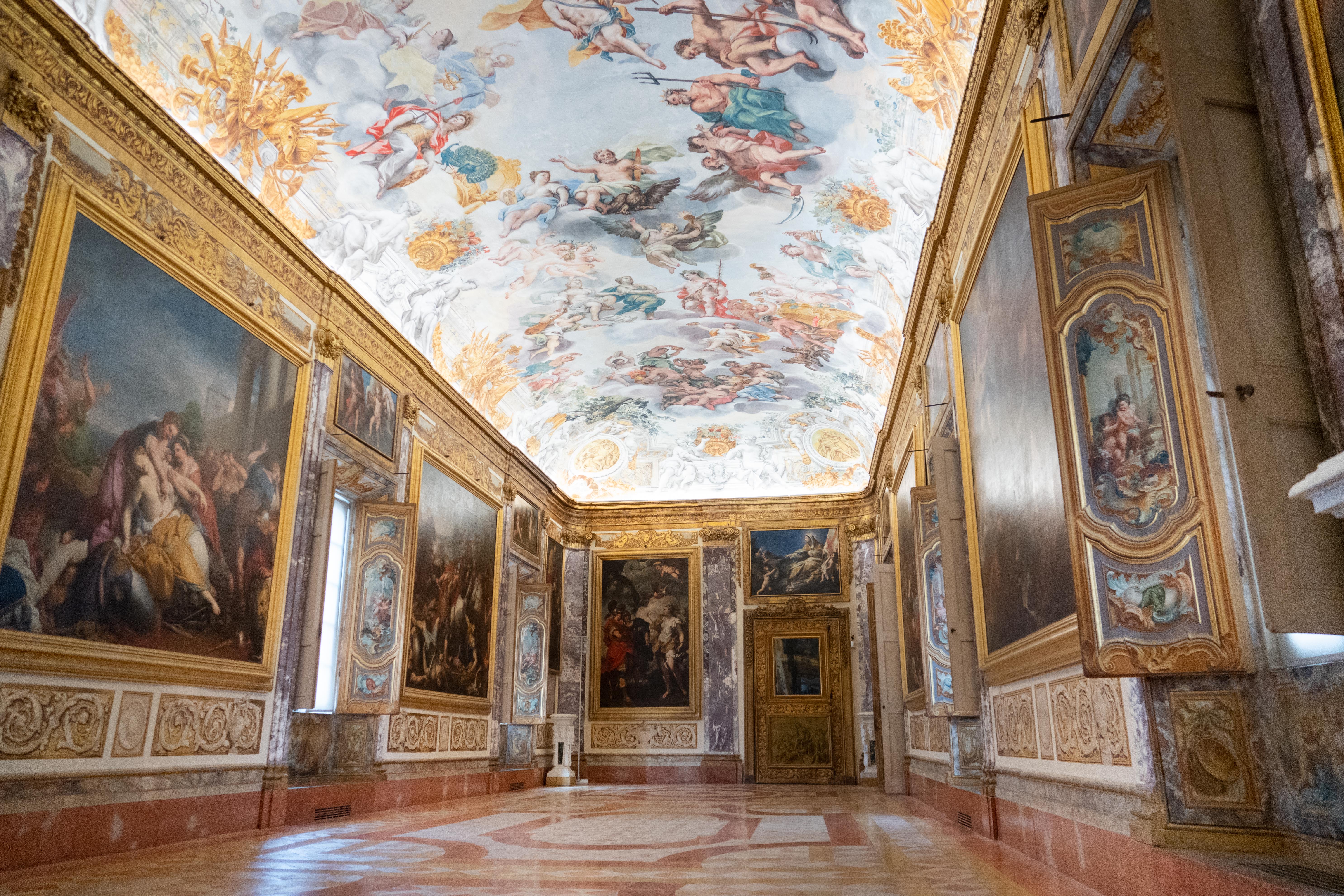
Located in the historic center of Macerata, Palazzo Buonaccorsi is today home to the Civic Museums and stands as a splendid example of 18th-century architecture. Commissioned by the noble Buonaccorsi family, construction began in 1697 based on a design by Giovan Battista Contini, a pupil of Bernini, and was completed in 1718 by Ludovico Gregorini, who also designed the inner courtyard and the Italian-style garden. From the original garden, the balustrades and statues by the Venetian sculptor Giovanni Bonazza are still preserved.

Inside, visitors can admire loggias, coffered ceilings, frescoed halls depicting mythological scenes, and a chapel with a vaulted ceiling painted by Niccolò Ricciolini and an altarpiece by Carlo Antonio Rambaldi. Purchased by the Municipality in 1967 and later restored, the palace now hosts collections from the former Jesuit College: in the basement, the Carriage Museum; on the first floor, the Ancient Art section featuring the magnificent Aeneid Gallery; on the second floor, the Modern Art collection; and on the ground floor, spaces dedicated to temporary exhibitions.
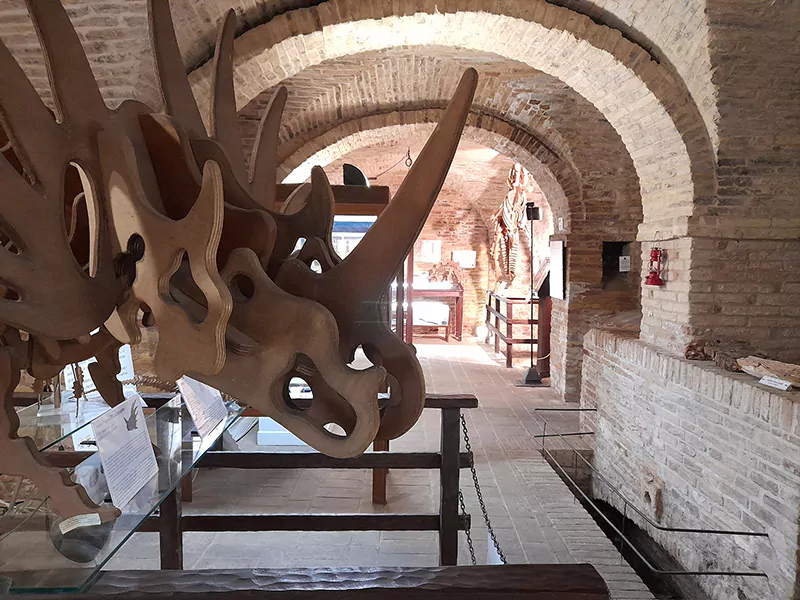
Founded in 1973 by curator Romano Dezi, the Civic Museum of Natural History was established with the goal of combining scientific research and public education through exhibitions, teaching activities, and laboratories.

Spread over two floors and covering a total area of 200 square meters, the museum welcomes visitors—particularly students—on a journey through a rich collection of specimens gathered, purchased, or donated over more than 35 years of activity. The collections are divided into five sections: paleontology, mineralogy, vertebrates, malacology, and entomology.

Among its most notable collections is the Bernocchi Collection, a remarkable set of mammal trophies from around the world that tells stories not only of biodiversity but also of extinction, conservation, and recovery. Since June 1993, the museum has been housed in the atmospheric underground rooms of Palazzo Rossini Lucangeli, a historic building whose construction began in 1570 at the initiative of Captain Felice Rossini.


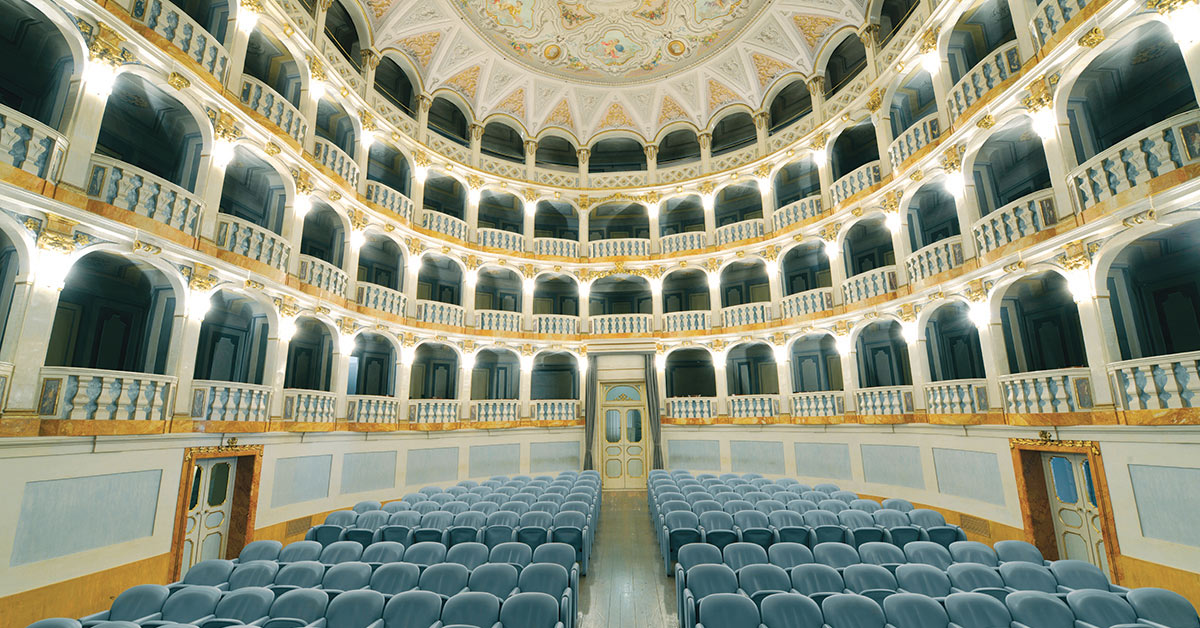
In 1765, forty-six nobles from Macerata promoted the construction of a new theater on the site of the old Town Hall, which had housed the “Sala della Commedia” until 1662. The original design by Antonio Galli, known as “il Bibiena,” was later adapted by Cosimo Morelli, who oversaw the construction starting in 1769. The theater was inaugurated in 1774 with L’Olimpiade by Pasquale Anfossi, and in 1884 it was named after Lauro Rossi (1812–1885), the renowned composer from Macerata.

The auditorium, in late Baroque style, features a bell-shaped plan with three tiers of boxes and a gallery; the proscenium is framed by elegant Corinthian columns. The majestic double staircase in the entrance hall was added in 1833 by Piero Ghinelli.

With its 426 seats, refined stuccoes, and polychrome faux marbles, Teatro Lauro Rossi stands as the only surviving 18th-century teatro all’italiana in the Marche region. The building also hides a charming secret: though the walls appear to be made of marble, they are actually painted wood—warm to the touch, rather than cold as one would expect.

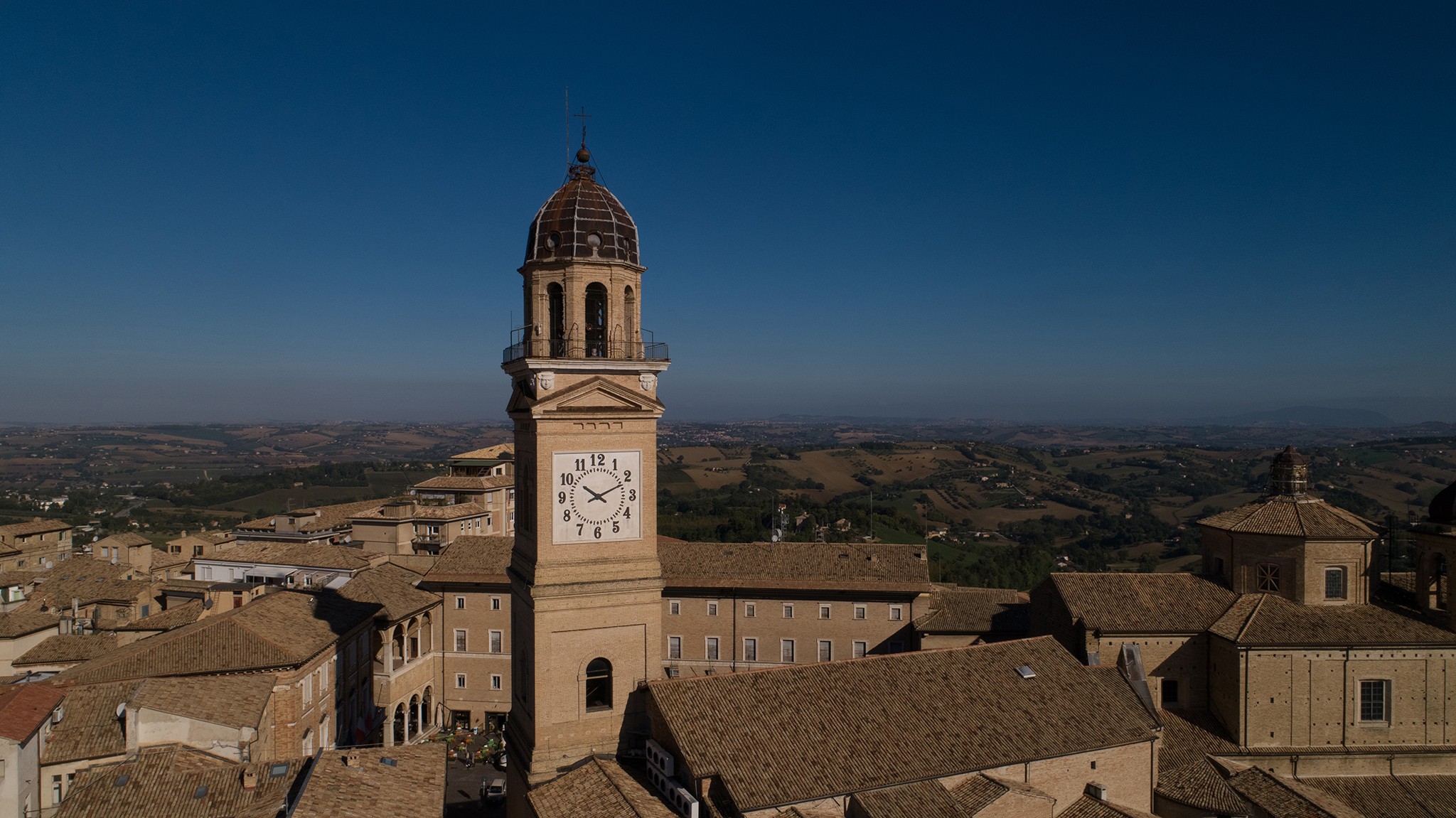
Rising 64 meters high in Piazza della Libertà, at the heart of Macerata’s historic center, the Civic Tower dominates the city skyline. Construction began in 1492 under Matteo d’Ancona and was completed in 1653, based on a design by Galasso Alghisi da Carpi. From its panoramic terrace, visitors can enjoy a 360-degree view stretching from the Sibillini Mountains to the Adriatic Sea.

Between 1569 and 1571, brothers Giovanni and Giulio Ranieri created the tower’s astronomical clock—a remarkable masterpiece featuring five automatons and zodiac panels. It was designed not only to mark the hours but also to display lunar phases and the apparent motion of the Moon, the Sun, the five known planets, and the stars according to the geocentric model.

In 2015, a faithful replica of the original mechanism was installed, crafted by master clockmaker Alberto Gorla in collaboration with the Galileo Museum and Opera Laboratori Fiorentini. At noon and 6 p.m., to the sound of a small bell struck by the metal bird “Cesare,” the Three Wise Men parade before the enthroned Virgin, preceded by an angel.

The original mechanism is now preserved inside the Infopoint, while the bronze statues and fragments from the ancient clock face are exhibited in the Civic Museums of Palazzo Buonaccorsi.

Our contact form is open for all your requests