

Uninvited Guests: Unmasking the Invasive Species Threatening Our Seas
Our seas face an escalating threat from non-indigenous species – uninvited guests that disrupt delicate marine ecosystems. These invasive organisms, often transported inadvertently by human activity, can outcompete native species, alter food webs, and even undermine the resilience of entire marine environments.
In the following sections, we'll delve into the specific non-indigenous species currently under close surveillance by our project, understanding their pathways, impacts, and the critical need for monitoring their spread to protect our invaluable marine biodiversity
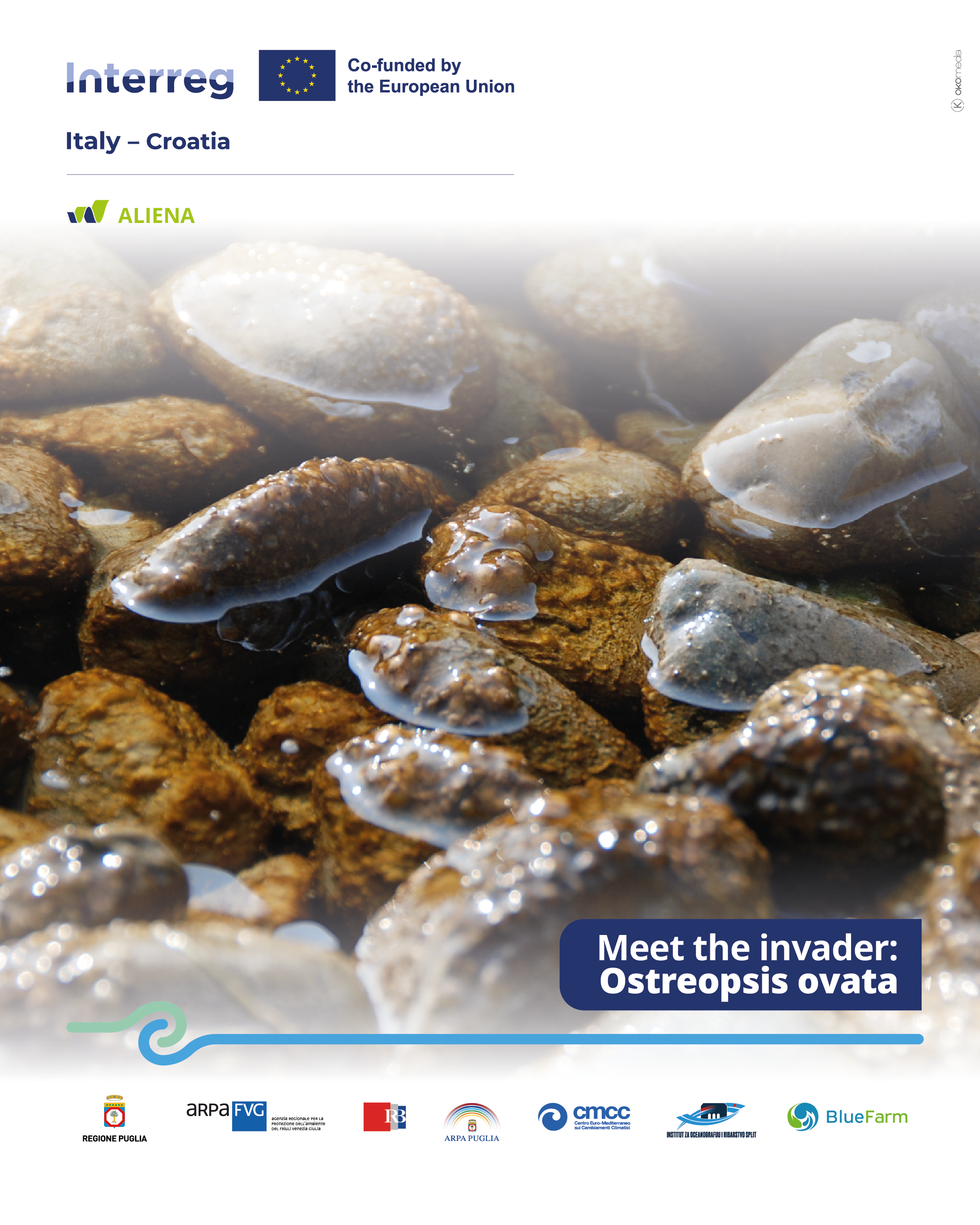
Ostreopsis ovata, a toxic dinoflagellate, is an escalating concern in the Mediterranean, particularly the Adriatic Sea. Its blooms have dramatically intensified over the last two decades.
This species thrives in shallow, rocky coastal areas with low water circulation, often colonizing macroalgae. Blooms are most common in summer and early autumn, favored by high temperatures, strong sunlight, and calm seas. Difficult to detect, its historical presence was likely underreported.
O. ovata produces potent toxins harmful to humans, causing illness through aerosol exposure, skin contact, or consuming contaminated seafood. First noted in Italy in 1998, and linked to human irritation in Croatia in 2010, it's now actively monitored by the Interreg Italy-Croatia ALIENA project.
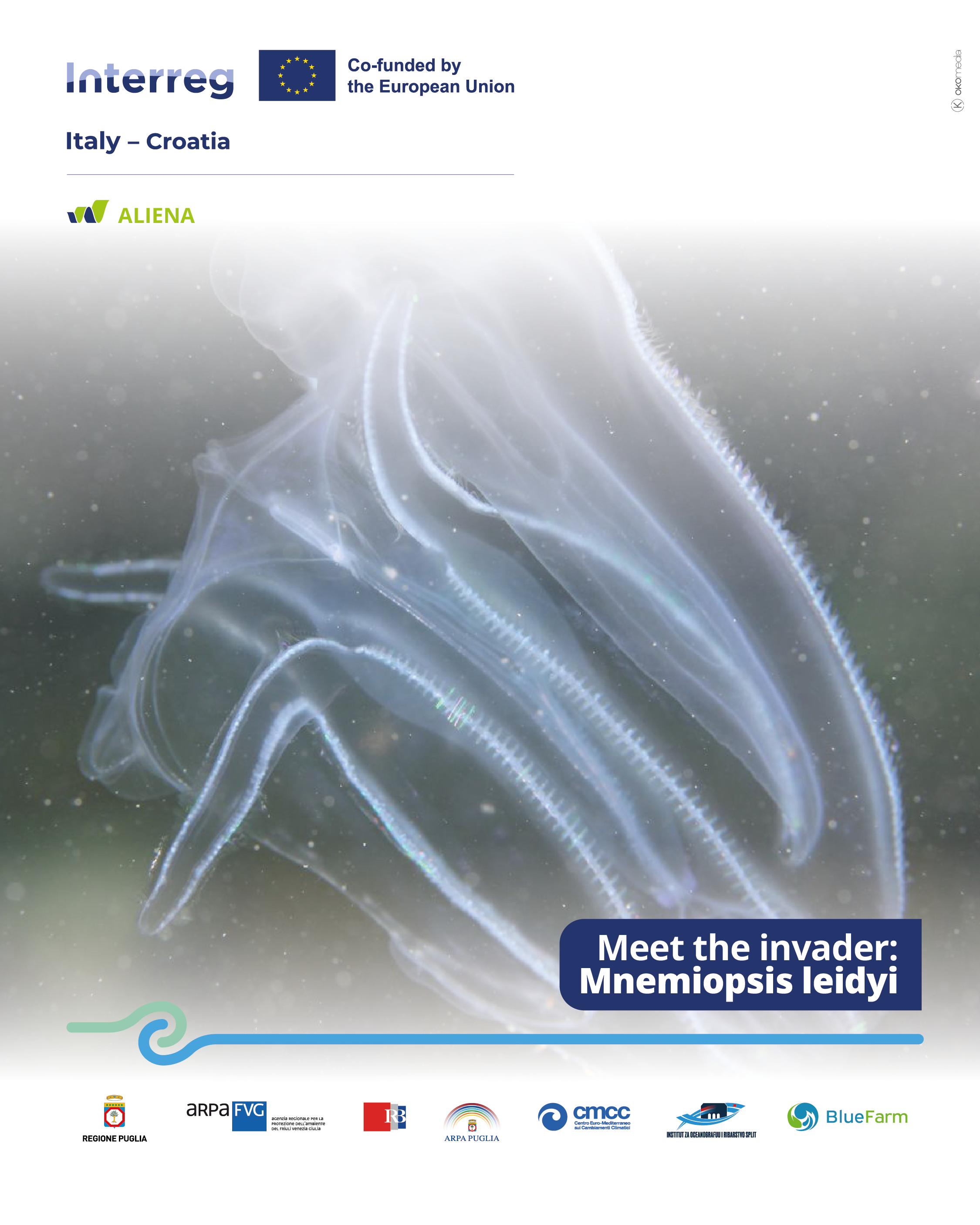
The sea walnut (Mnemiopsis leidyi), a gelatinous zooplankton native to the Americas, has become a major invasive species globally. Over the past four decades, it has rapidly spread to the Black Sea, Mediterranean, North Sea, and Baltic Sea, causing widespread ecological disruption, notably in the northern Adriatic.
Introduced primarily via ballast water, Mnemiopsis leidyi poses a significant threat to planktonic ecosystems and fisheries. Its invasive success stems from several key traits:
- Rapid Reproduction: It's a self-fertilizing hermaphrodite, producing thousands of eggs daily;
- Quick Maturation: Reaches reproductive age in as little as two weeks;
- Broad Tolerance: Thrives across a wide range of temperatures and salinities;
- Efficient Predator: Consumes microplankton, zooplankton, fish eggs, and larvae, outcompeting native species and altering food webs.
This species can consume over 100% of zooplankton standing stock daily, severely impacting food chains, biodiversity, and fish populations, especially in already stressed ecosystems.
Recognizing its aggressive expansion, Mnemiopsis leidyi is a target species in the Interreg Italy-Croatia ALIENA project. Monitoring its spread in the "rocky shore in the Gulf of Trieste" and "western Istrian coast & Northern Adriatic" pilot areas is crucial for understanding its impact and developing early warning tools for marine ecosystem management.
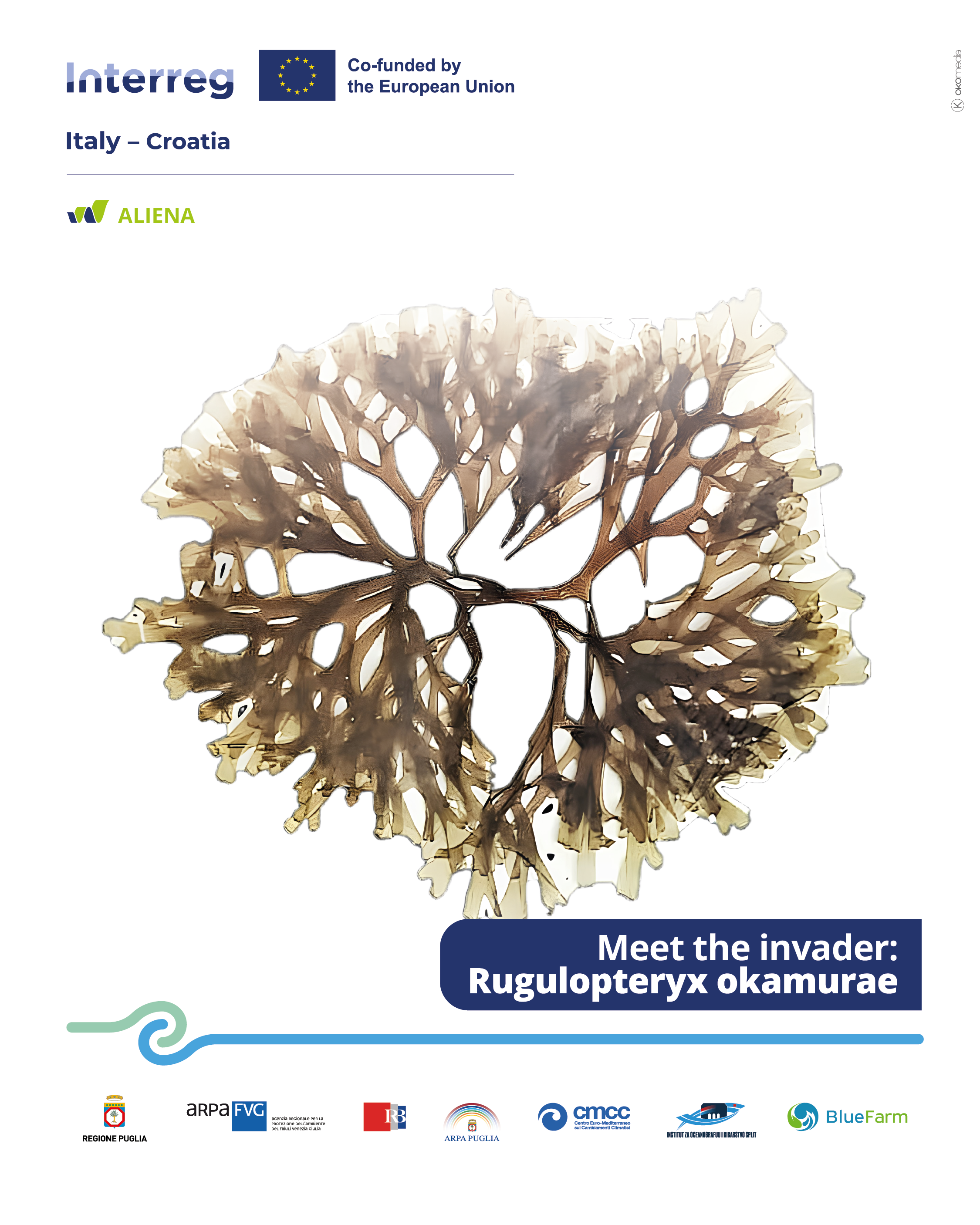
Rugulopteryx okamurae, a brown macroalga native to the temperate western Pacific, is rapidly becoming one of the most significant invasive species in the Mediterranean Sea. First detected in France in 2002, likely introduced through oyster farming, it has aggressively expanded since 2015, colonizing coastlines from the Strait of Gibraltar to the French Riviera and even beyond into the Atlantic.
This alga's success as an invader is driven by several key factors:
- Prolific Asexual Reproduction: It can reproduce asexually year-round, with even a small fragment of the alga capable of forming a new colony. This makes control and containment extremely difficult;
- Versatility: R. okamurae can grow on a wide range of surfaces, from natural rocky shores to artificial structures like piers, buoys, and boat hulls, allowing it to spread efficiently.
- Chemical Defense: The alga produces chemical compounds that deter native grazers and competitors, giving it a significant advantage in colonizing new areas.
- Resilience: It thrives under a broad range of environmental conditions, making it a serious threat to local biodiversity and marine ecosystems already under pressure.
Its dense, bushy growth can outcompete native species, altering local food webs and ecosystems.
The Interreg Italy-Croatia ALIENA project is actively monitoring the spread of R. okamurae in its pilot areas—including the rocky coasts of the Apulia region and the Gulf of Trieste—to better understand its dynamics and inform effective management responses. This ongoing effort is crucial for protecting the fragile marine biodiversity of the Mediterranean.
Codium fragile, a green macroalga native to temperate Asian coasts, has become one of the most widespread marine invaders globally. First recorded in the Mediterranean during the 1950s–60s, it has since spread extensively across the Adriatic, colonizing both natural habitats and artificial structures like jetties, piers, and breakwaters.
This subspecies, Codium fragile, is easily recognized by its thick, spongy, and finger-like branches, which can reach up to a meter in length. Its vibrant green tips contrast with older, darker segments.
Codium fragile's invasive success stems from several key traits:
- Remarkable Resilience: It thrives across a wide range of temperatures (from -2°C to 30°C), salinities, and substrates, from rocky reefs to soft bottoms and floating structures.
- Rapid Reproduction: It reproduces both sexually, via zoospores, and asexually, through fragmentation, making it highly effective at colonizing new areas.
- Adaptability: It is particularly well-adapted to disturbed or artificial environments, often becoming the dominant species in harbors and urban coastal areas.
Its aggressive nature allows it to outcompete native species and alter marine ecosystems. Recognizing this threat, Codium fragile has been selected as a target species in the Interreg Italy-Croatia ALIENA project. Monitoring its spread is crucial for understanding its impact and developing effective management strategies to protect the Adriatic's fragile biodiversity.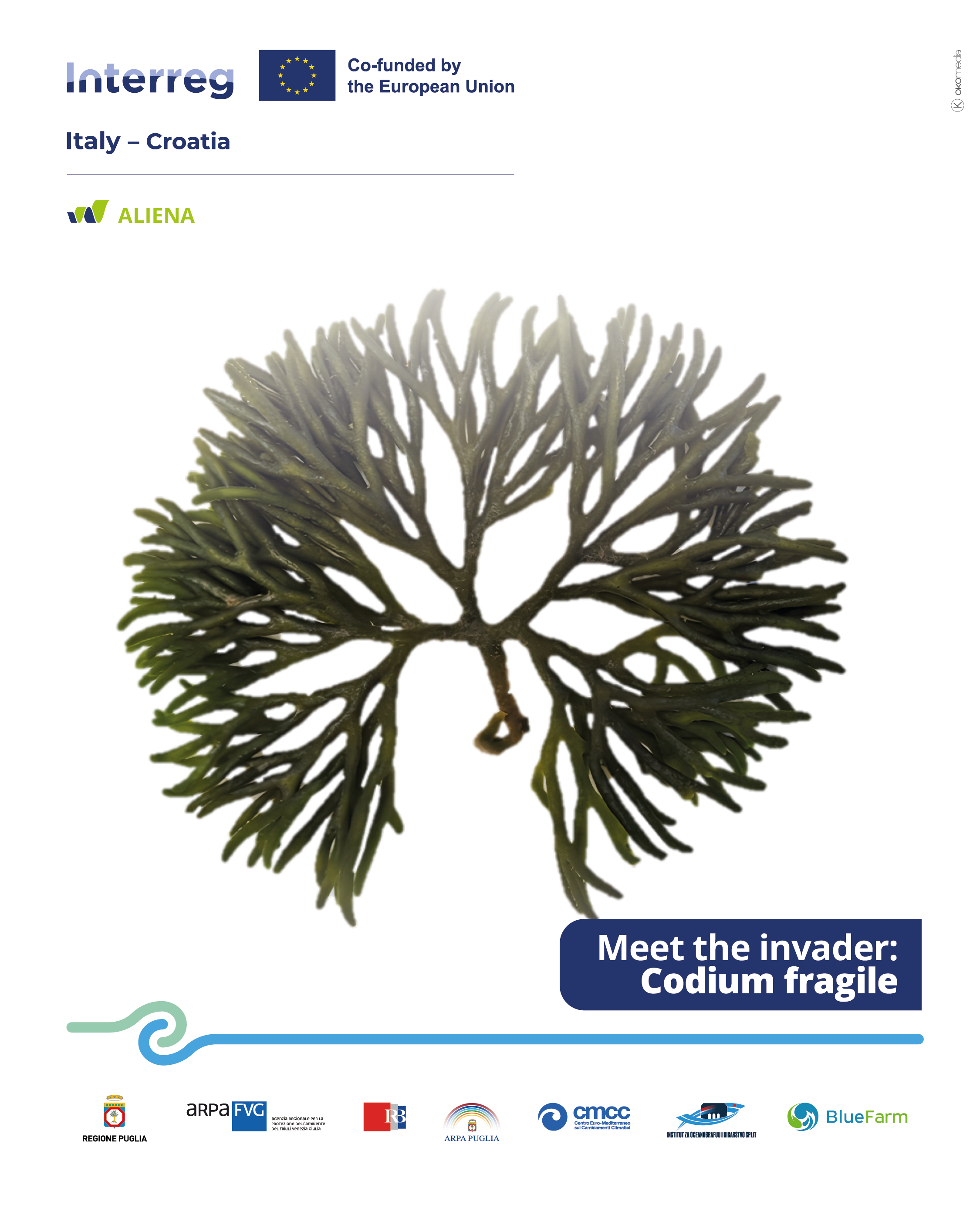
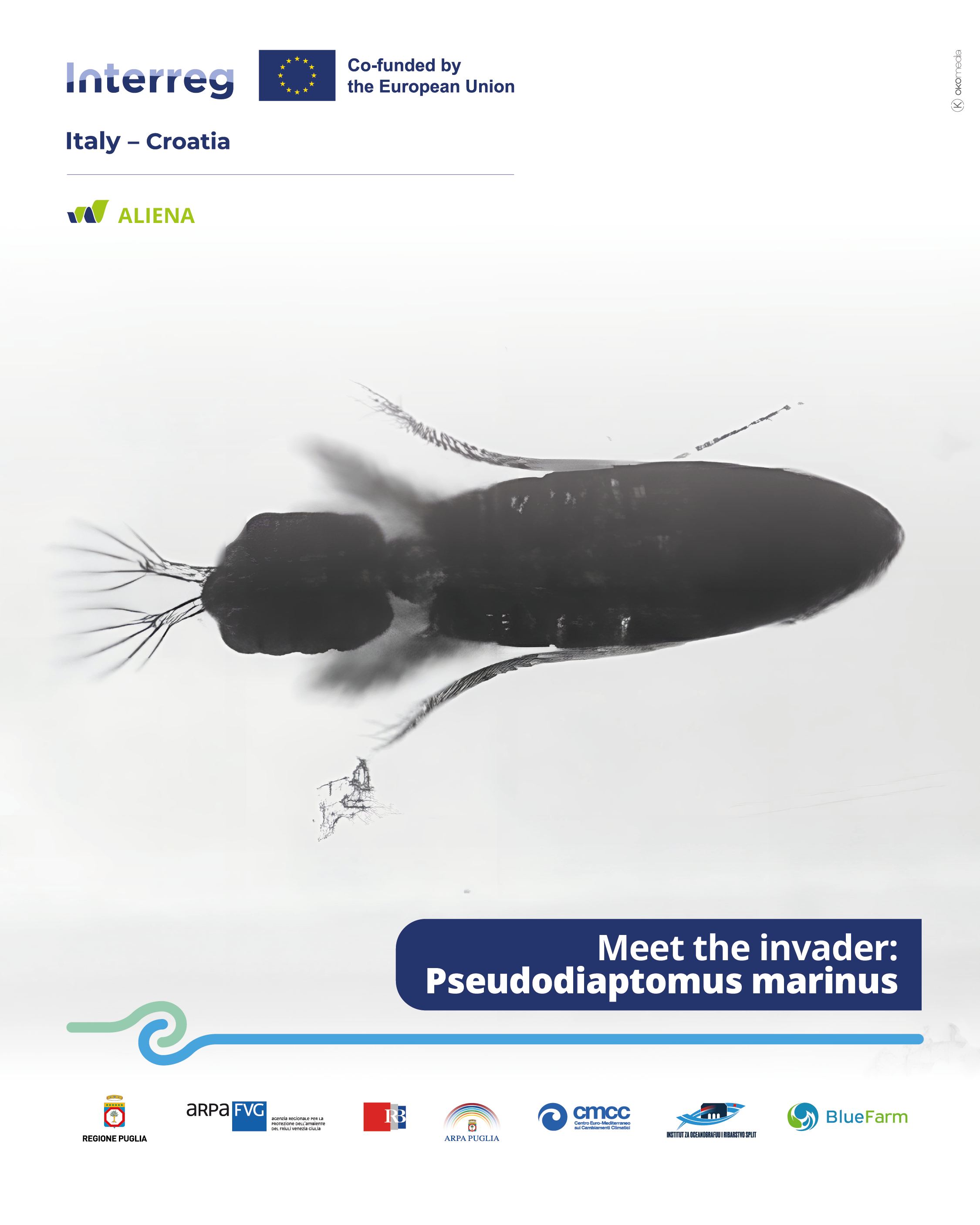
Pseudodiaptomus marinus, a calanoid copepod native to the Northwest Pacific, has rapidly become one of the fastest-spreading non-indigenous zooplankton species in European seas. Its global dispersal has been largely driven by the ballast water discharge from commercial ships, allowing it to reach coastal waters, estuaries, and harbors far beyond its original range.
This small crustacean is a highly successful invader, thriving in environments with varying salinity and temperature.
Pseudodiaptomus marinus invasive success stems from several key traits:
- High Tolerance: It thrives in environments with fluctuating salinity and temperature, demonstrating a remarkable ability to colonize anthropogenically altered habitats such as port areas.
- Adaptable Diet: It is an omnivore, feeding on phytoplankton, microzooplankton, and detritus, allowing it to exploit various food sources in new ecosystems.
- Widespread Colonization: Its effective dispersal has allowed it to spread across seven of the ten European marine subregions.
Ecologically, its presence may lead to competition with indigenous zooplankton, potentially affecting biodiversity and trophic balance.
For this, the project is actively monitoring its distribution at several sites in Kaštela Bay and Šibenik Bay area.