


Introduction to the History of the Archaeological Site of Fulfinum–Mirine
In the bay of Sepen, just a few kilometers south of Omišalj, lies a rich archaeological treasure: the ancient Roman town of Fulfinum–Mirine. The first traces of settlement date back to the 1st century AD, when the town was established for retired Roman soldiers during the Flavian dynasty. Its strategic coastal location fostered maritime activity and trade, making Fulfinum an important hub in the Adriatic.
Archaeological excavations have revealed the town’s forum, the heart of Roman cities, serving as the center of social, religious, and economic life. Just fifty meters from the sea, the foundations of a temple, a civil basilica, and commercial buildings (tabernae) have been uncovered, offering a vivid glimpse into the organization and daily life of its inhabitants.
By the 3rd century AD, Fulfinum largely disappeared in its monumental form. Yet life in the area continued, with evidence of a smaller settlement likely connected to the still-functioning harbor. Today, the ruins of Fulfinum–Mirine provide visitors with a unique opportunity to explore the layers of history, from its Roman origins to its continued life along the Adriatic coast.
The Archaeological Treasure
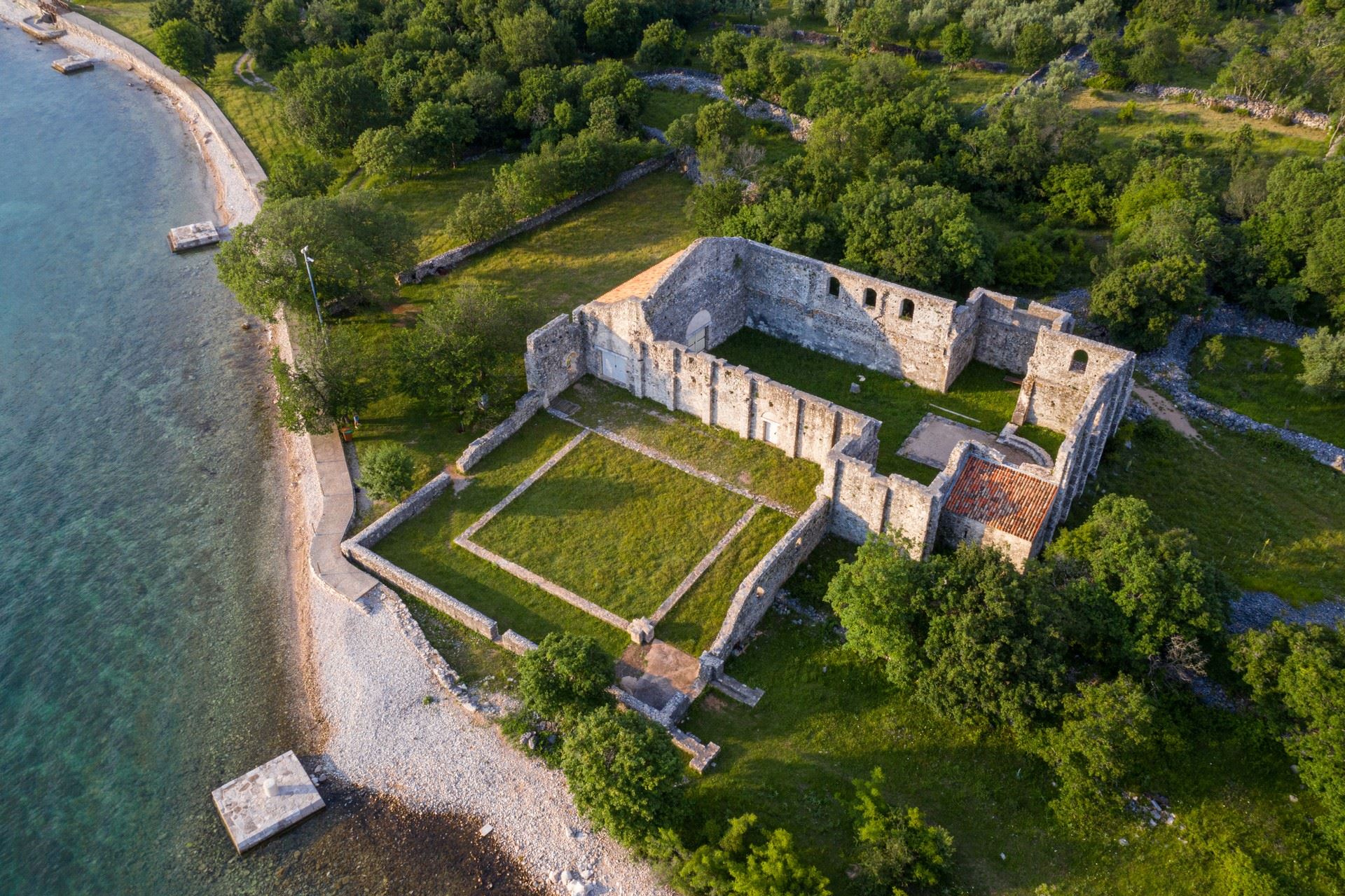
Nestled along the Adriatic coast near Omišalj, Fulfinum–Mirine stands as a remarkable archaeological treasure, preserving the legacy of a Roman settlement founded in the 1st century AD. The site reveals a carefully planned urban center, where the forum once served as the bustling heart of civic, religious, and social life. Nearby, the atrium and the Basilica of Mirine reflect the spiritual and administrative functions of the town, while the three-apsed church offers insight into early Christian worship.
Visitors can also encounter the thermal complex, a place of daily leisure and hygiene, and the remains of a temple, which speak to the religious and cultural practices of the inhabitants. The necropolis and a finely crafted sarcophagus provide a glimpse into funerary traditions and the care given to commemorating the dead. Together, these monuments weave a vivid narrative of Roman life, from public ceremonies and private devotion to trade, leisure, and remembrance. Fulfinum–Mirine stands not only as a collection of ruins but as a living testament to the architectural skill, cultural richness, and enduring legacy of the Adriatic’s ancient past.
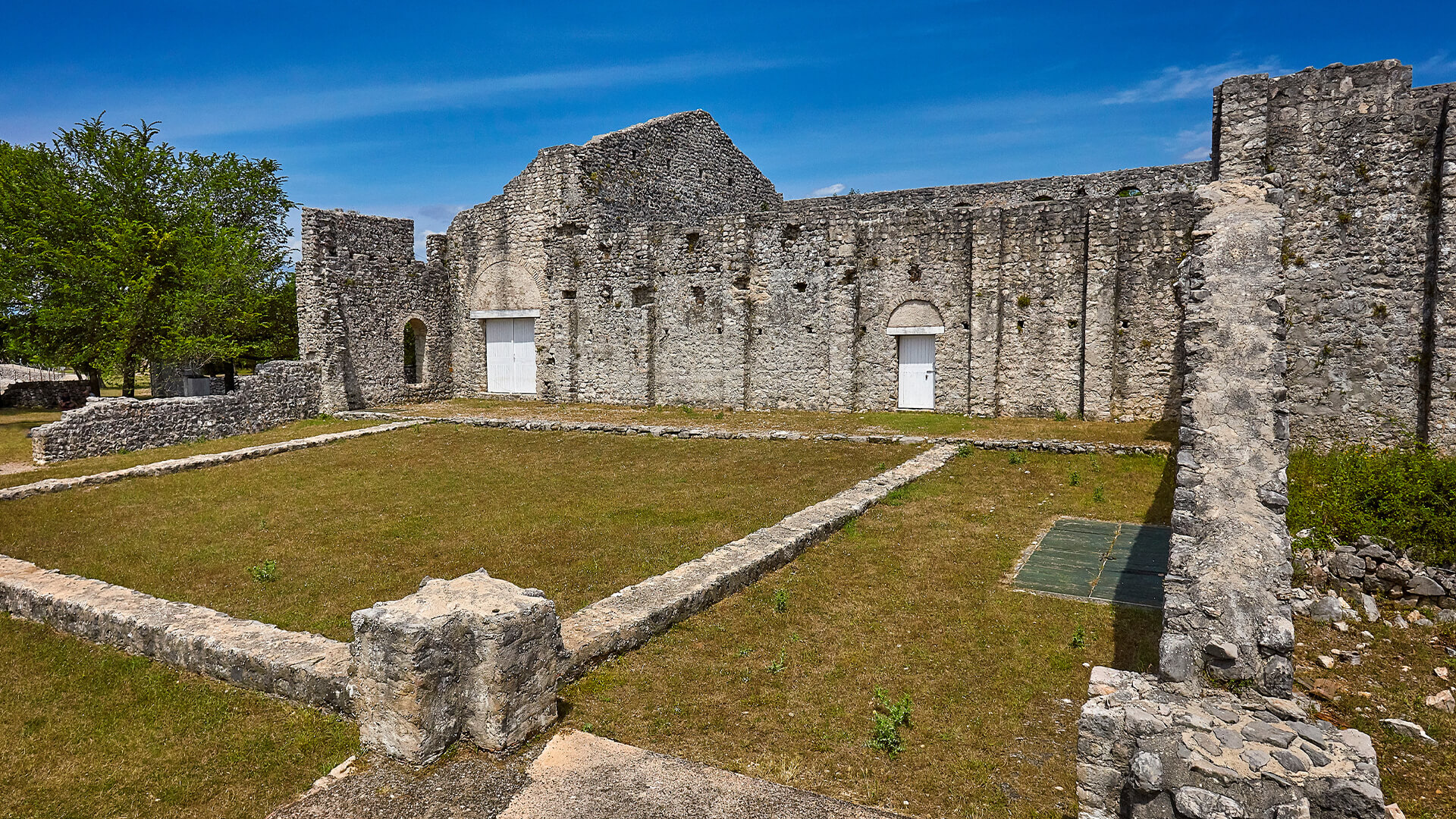
The large atrium, extending along the entire southern side of the basilica and reaching toward the sea, is the only known early Christian example excavated so far on the eastern Adriatic coast. Its construction does not coincide with the original erection of the church but was added later, likely to better accommodate the needs of the religious community, probably Benedictine monks.
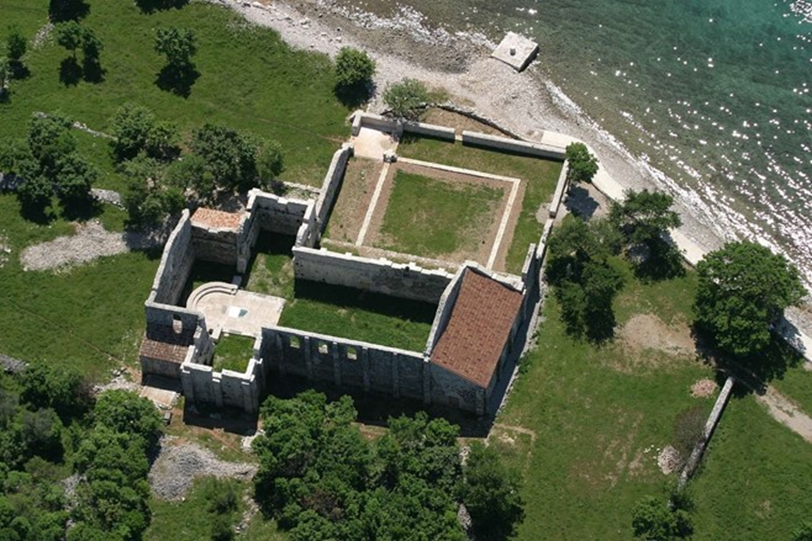
The Basilica of Mirine is the most remarkable building within the entire archaeological area. Constructed around the 5th century AD on the site of the ancient Roman town of Fulfinum, it is exceptionally well preserved, particularly in height, although some parts have been reconstructed. The church features a single nave with a Latin cross plan and a frontal entrance consisting of a narthex or vestibule.
Inside, the presbytery, the area reserved for the clergy, is clearly identifiable, containing the altar and, on either side, two rooms likely used as sacristies. At the end of the cross, there are the pastophoria, two lateral chambers that were integral to the presbytery, used by priests to store sacred objects and prepare for rituals. On the exterior, the northern side revealed three masonry tombs, one of which is vaulted, while the southern side opens onto a large atrium.
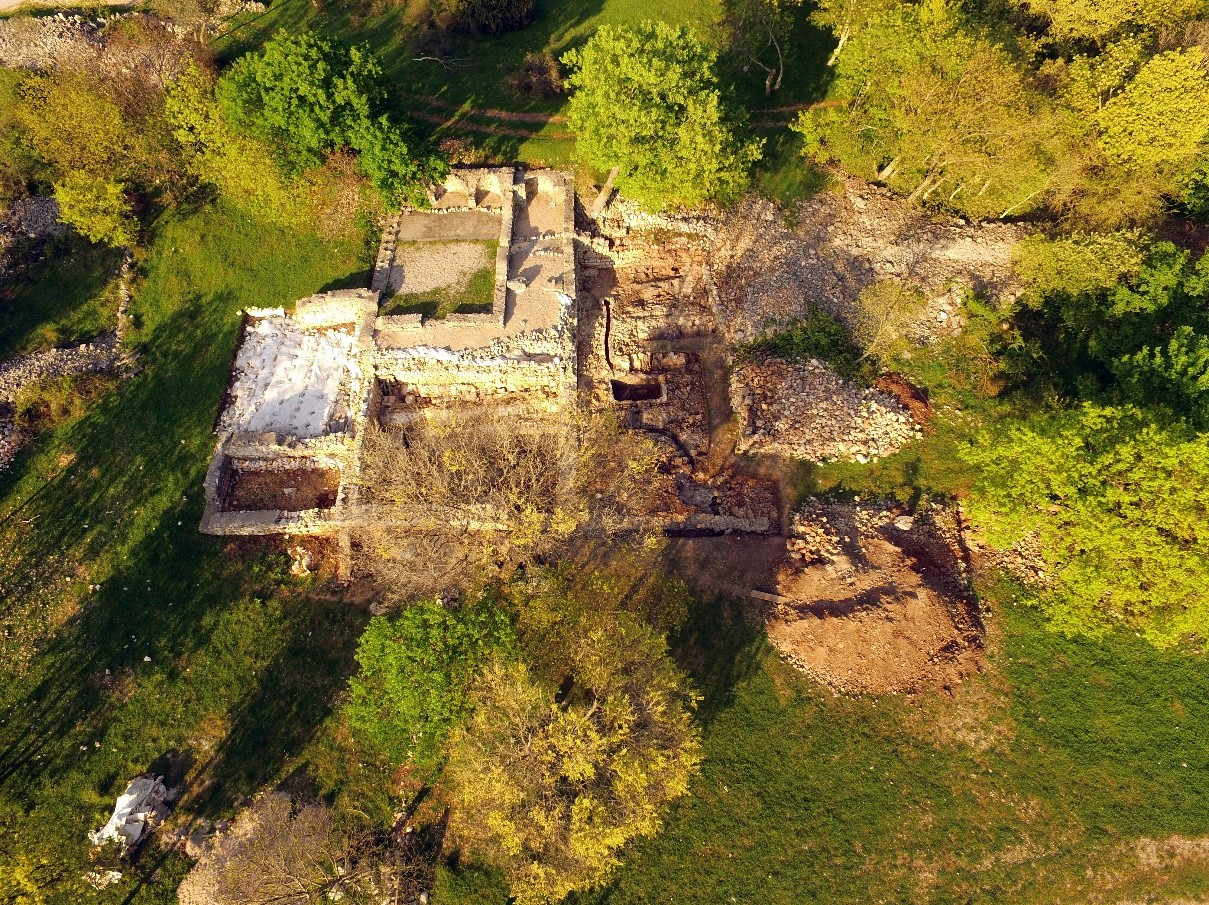
Following the path that rises from the thermal complex to the nearby small hill, visitors reach the remains of a small church dating from between the 9th and 11th centuries. The building has a single nave ending with three apses embedded in the rear wall. On the south side, a small lateral chapel with an apse was added later, while on the west side additional structures were built, likely part of a modest monastic complex.
The church was constructed on the site of a late Roman villa rustica, which also included the small thermal complex that was restored during this phase for reuse. Archaeological excavations uncovering the church took place between 2005 and 2006; from 2016 onwards, the area has been subject to new explorations that are expected to continue in the coming years.
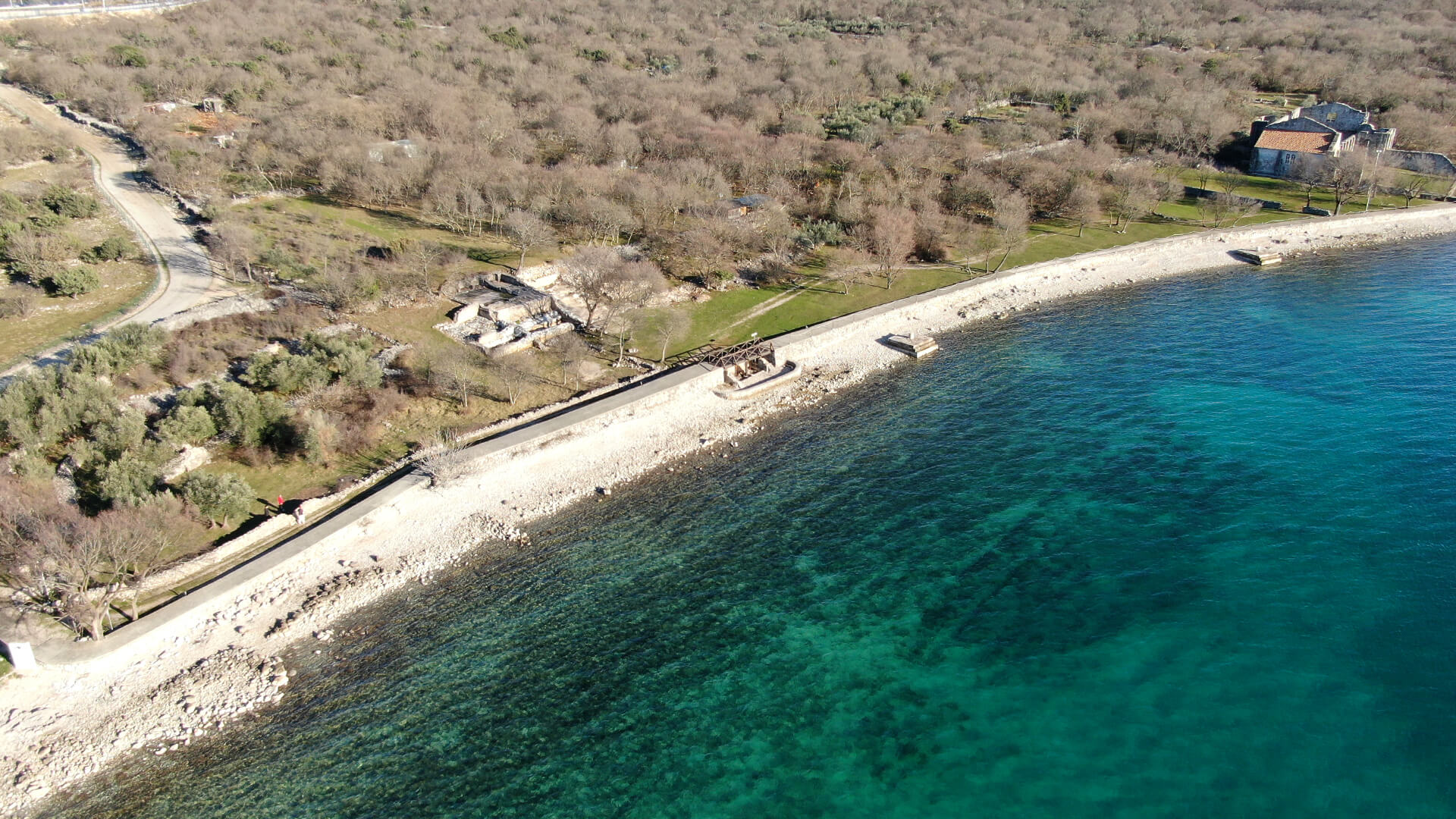
The small thermal complex was an integral part of a late Roman villa rustica, likely a residence built between the late 4th and 5th centuries AD. The villa was probably abandoned around the 6th century, and between the 9th and 11th centuries, a three-apsed church was constructed above it. During this same period, the thermal complex was restored for reuse.
Even today, beneath the wooden bridge along the seafront, visitors can observe the hypocaust, the characteristic Roman underfloor heating system that once made up the heart of the thermal baths.
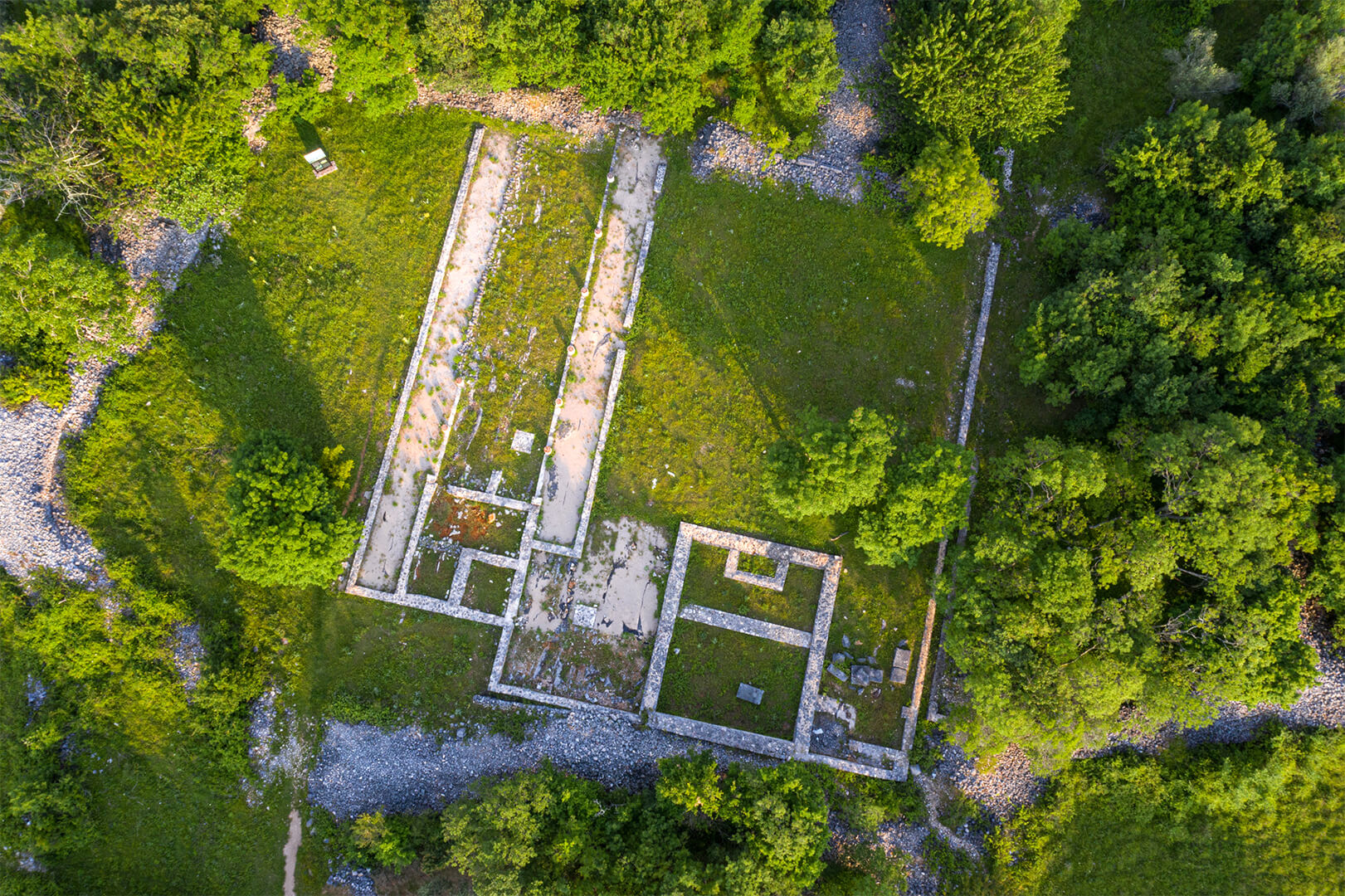
The forum was the main square of the city during the Roman period, when it was known as Fulfinum, and it formed the heart of public life, surrounded by civic and religious buildings. It was constructed between the 1st and 2nd centuries AD, and the central area has been almost completely excavated. Today, visitors can see the main temple, likely dedicated to the Capitoline Triad (Jupiter, Juno, and Minerva), and the city basilica.
On the western side of the forum were various tabernae, while to the east stood a long building with three small rooms opening onto a large inner courtyard, flanked by two porticoes. Some areas, such as the southeastern section where a colonnaded portico is expected, remain to be excavated.
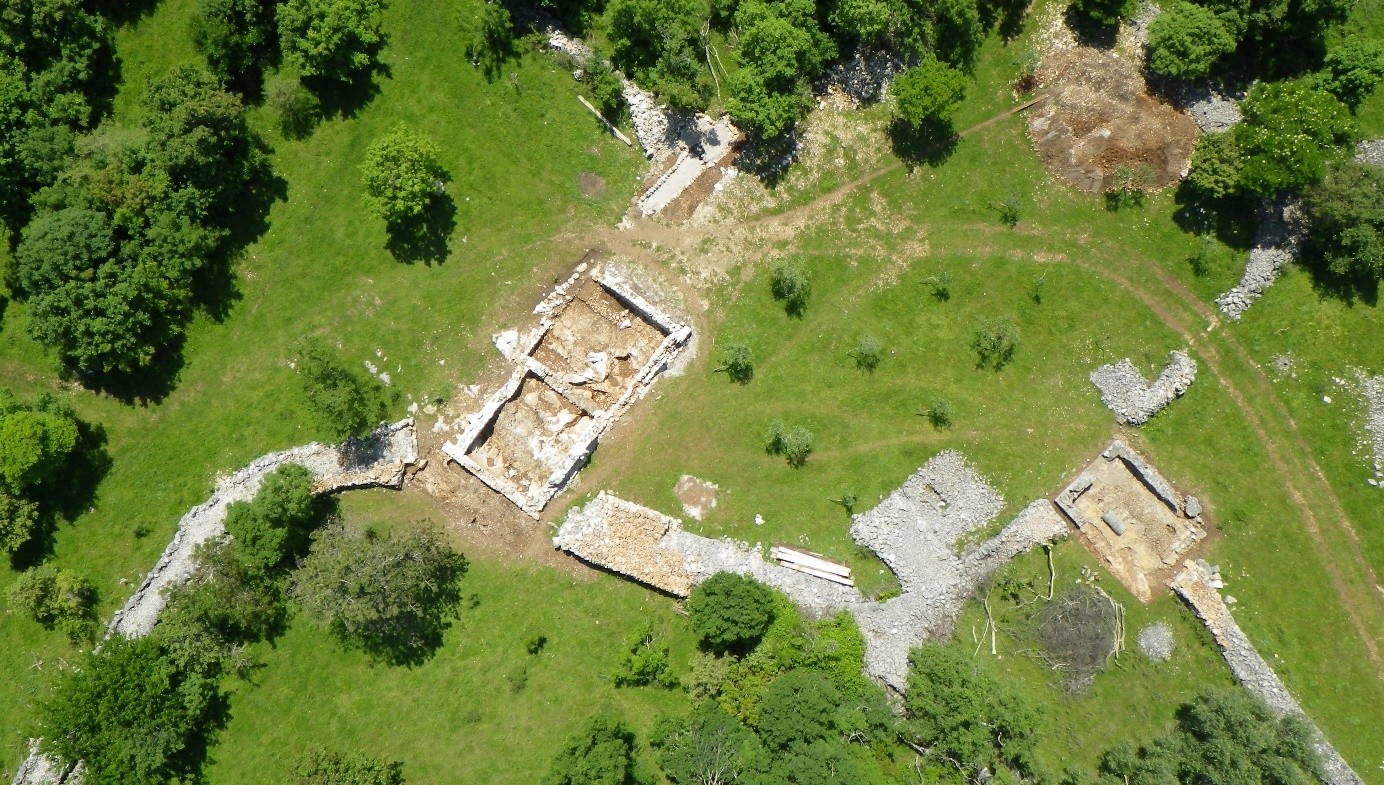
Not far from the basilica, a late Roman necropolis has been identified, preserving the remains of a few mausoleums that are exceptionally well preserved in height—up to 1.2 meters before restoration—a truly unique feature for archaeology in the Kvarner region.
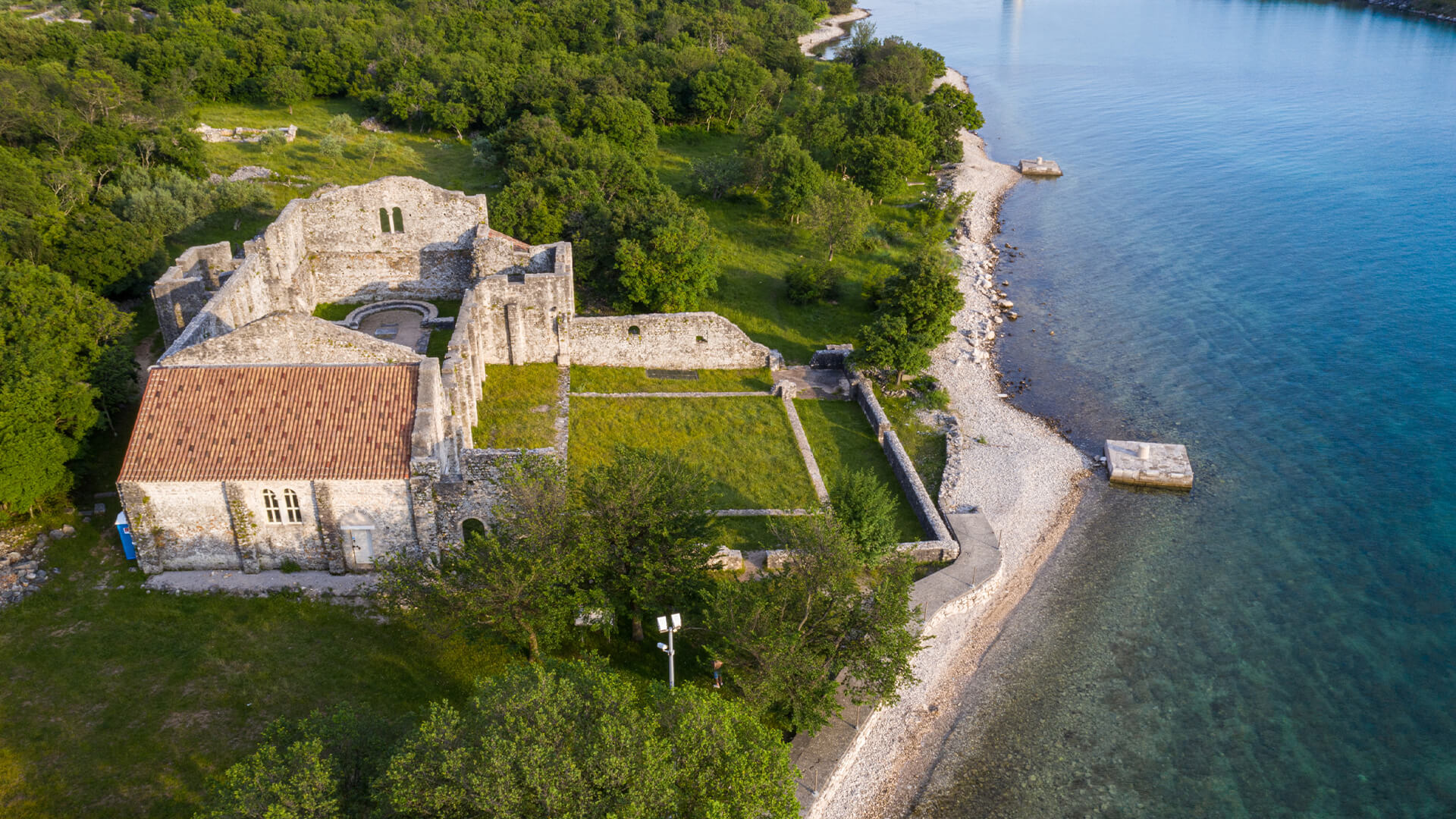
During cleaning interventions in the basilica’s vestibule—the entrance area preceding the main liturgical hall—a sarcophagus was uncovered beneath a large pile of stones. This is an exceptionally valuable and rare artifact within the entire complex. The sarcophagus, still with its original lid, remains in its original location, buried beneath the church. To preserve the integrity of the burial without opening the tomb, a microcamera was used, revealing the remains of two individuals inside.
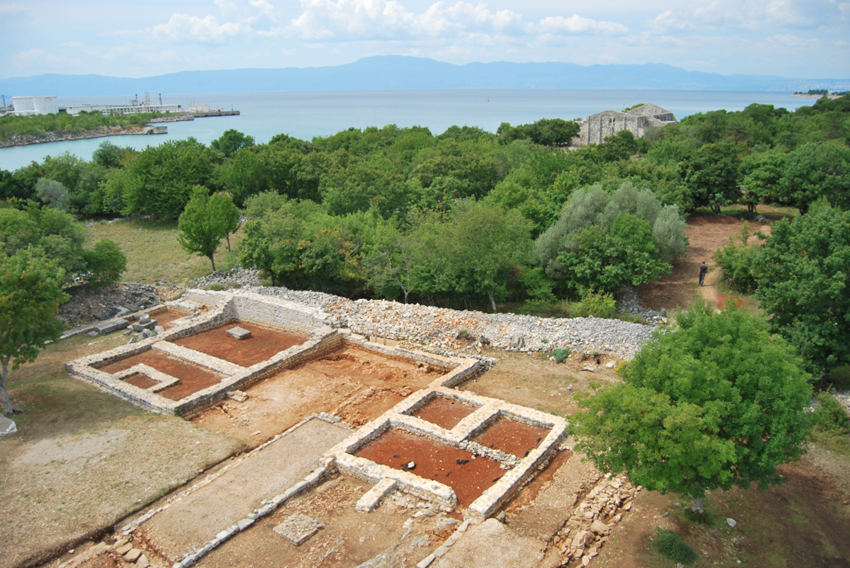
The temple stood at the center of the forum and was one of the most important buildings in the city. Today, its foundations and some remaining walls are clearly visible, allowing scholars to reconstruct its original appearance. The entrance was set on a podium and preceded by four columns, making it a prostyle temple.
The interior, measuring approximately 8 by 10 meters, was divided into three chambers, a feature that identifies it as a Capitolium, a temple dedicated to the Capitoline Triad—Jupiter, Juno, and Minerva—goddesses who protected Rome and symbolized imperial authority in the provinces. Externally, the building was covered with high-quality plaster in a pale yellowish-white hue.