


Night of Fortresses Goes Green: When Cultural Heritage Meets Sustainability
On Friday, May 9, 2025 – Europe Day – more than 70 fortified sites in 10 European countries opened their doors to visitors as part of the fourth edition of the international event Night of Fortresses. This year’s edition, held under the slogan Night of Fortresses Goes Green – Step by Step, Event by Event, carried a powerful message: heritage and sustainability go hand in hand.
Launched in 2022, Night of Fortresses has quickly evolved into a vibrant European initiative, linking fortification sites across Europe. The idea was born at Fortress of Culture Šibenik, a Croatian public cultural institution, which has since remained at the heart of the project—coordinating the event at the European level and building strong partnerships with organisations all over Europe.
“The motivation for launching this event arose from the desire to connect fortification sites across Europe, transforming them into dynamic centres of cultural exchange and joint creation. It is precisely through such manifestations that culture proves to be a powerful tool in promoting sustainable values and encouraging ecological awareness. The fourth edition of the event, held in May this year, was dedicated to a simple but powerful idea – connecting cultural heritage with ecological responsibility. The aim of the event was to raise awareness of sustainable tourism and everyday practices that contribute to environmental preservation, while also encouraging citizens to actively participate in the protection of natural and cultural resources,” explained representatives of the Fortress of Culture Šibenik.
The 2025 edition brought together 75 cultural sites across 10 European countries – Croatia, Bosnia and Herzegovina, Montenegro, Slovenia, Serbia, Czech Republic, Romania, Lithuania, Ukraine, and for the first time, Italy. The Night of Fortresses Goes Green event is part of two EU-funded projects implemented by Fortress of Culture Šibenik. The first, GIFTSnet – Network for Green and Inclusive Fortified Tourism Solutions, is financed through the Interreg IPA Croatia – Bosnia and Herzegovina – Montenegro 2021–2027 program. The second, FORTIC – From the Remains of War to the Architecture of Peace in the Cross-Border Area of Italy-Croatia, is supported by the Interreg Italy-Croatia 2021–2027 program. Thanks to cross-border collaboration through the FORTIC project, the event expanded to new locations in both Croatia and Italy.
As Vera Jergović from Fortress of Culture Šibenik highlighted:
“The last edition brought together a record number of participants and activities – thousands of visitors took part in more than 190 events at a total of 75 cultural sites in 10 European countries. All programmes were free of charge for visitors and included workshops, themed guided tours, exhibitions, lectures, public forums, musical and stage performances, film screenings, theatre productions, fairs, gastronomy programmes, sports activities, and ecological actions for cleaning the environment.
As the European-level coordinator, I was involved in monitoring the implementation of the programme and exchanging experiences on green practices in culture, in cooperation with partners from across Europe. This diversity shows how important the event is for communities and confirms its potential for further growth, especially in the segment of linking culture with green practices.”
She added that, due to the strong interest among organisers and the public, Night of Fortresses will become a two-day event in 2026, taking place on May 8 and 9.
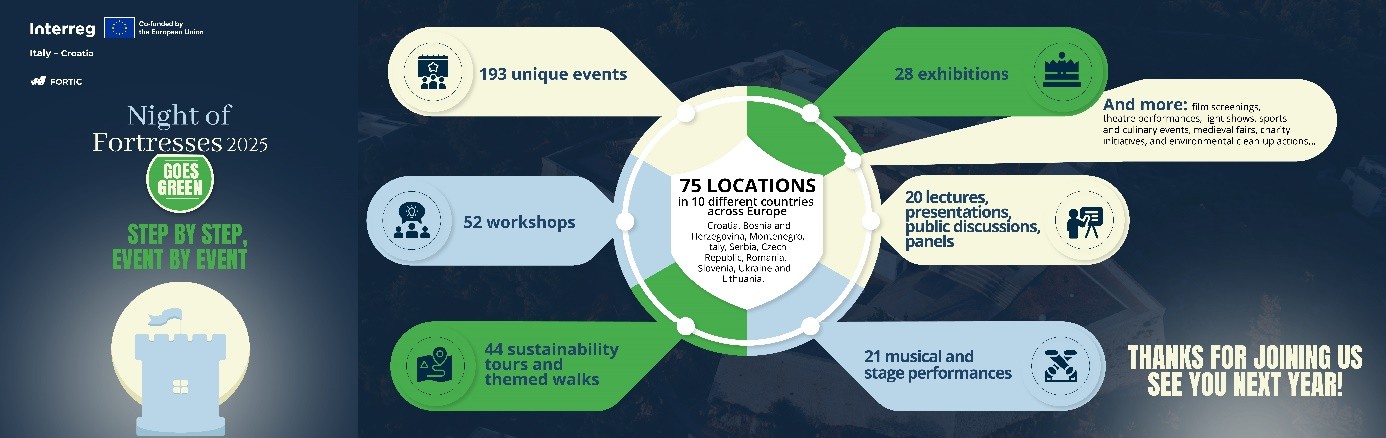
While the event connects cities through a common focus on cultural heritage and sustainability, each participating city brings its own story – combining local history with modern eco-friendly practices.
Pula, Croatia – The First Step
For the first time, the city of Pula joined Night of Fortresses through the FORTIC project. The programme took place across three sites: Kaštel, with guided tours for schoolchildren and the public; Fort Bourguignon, which turned into a lively family hub with exhibitions, STEM workshops, performances and eco-workshops for children; and Fort Casoni Vecchi (Monte Paradiso), where visitors enjoyed restoration workshops, circus arts, choir singing, and DJ sessions. Pula demonstrated how historical sites can become inclusive spaces for learning, play, and community spirit.
Maša Mihelić, Head of the Department for Construction, Public Utilities, Transport, and Property of the City of Pula, said:
“We are now entering a period of reflection on the future uses of the fortifications through various cross-border and international cooperation projects with other EU countries. The goal is to restore these fortifications and transform them into cultural and educational spaces, not only to prevent their deterioration but also to open the doors to new activities.”
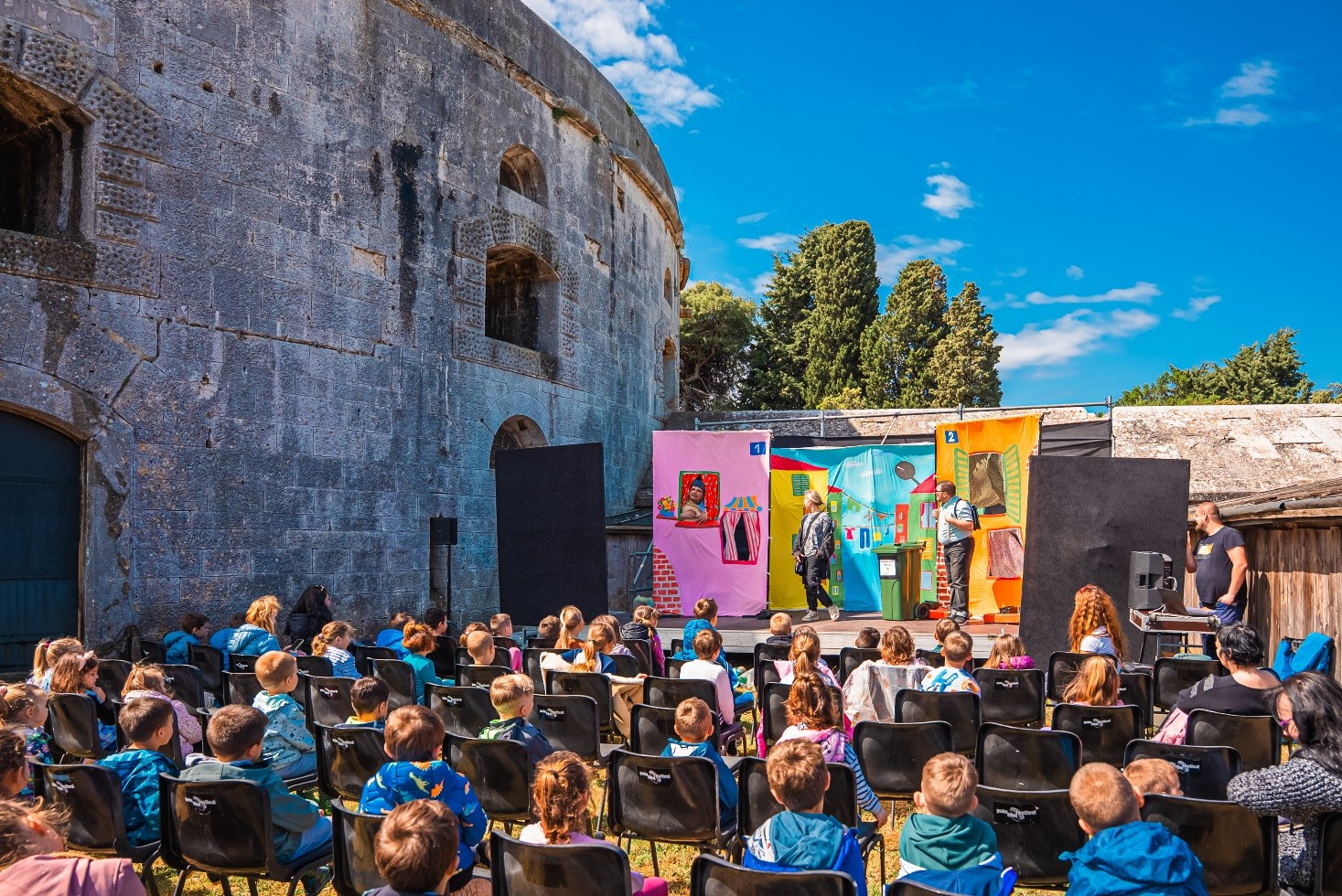
Eco-themed play for children at Fort Bourguignon, Pula
Cervia, Italy – Exploring Local Heritage
In Cervia, visitors explored the city’s defensive quadrilateral, San Michele Tower, rediscovered fortifications in the salt pans, and WWII bunkers. The Salt Museum (MUSA) opened its doors with creative workshops on recycling and environmental awareness, while the Town Hall lit up in the colours of the European flag – marking Europe Day in a symbolic way.
“The program places Cervia at the center of an international reflection on a historical heritage that is often underestimated,” said Councillor Federica Bosi. “We want to make it accessible, sustainable, and capable of generating new opportunities for cultural and tourist development.“
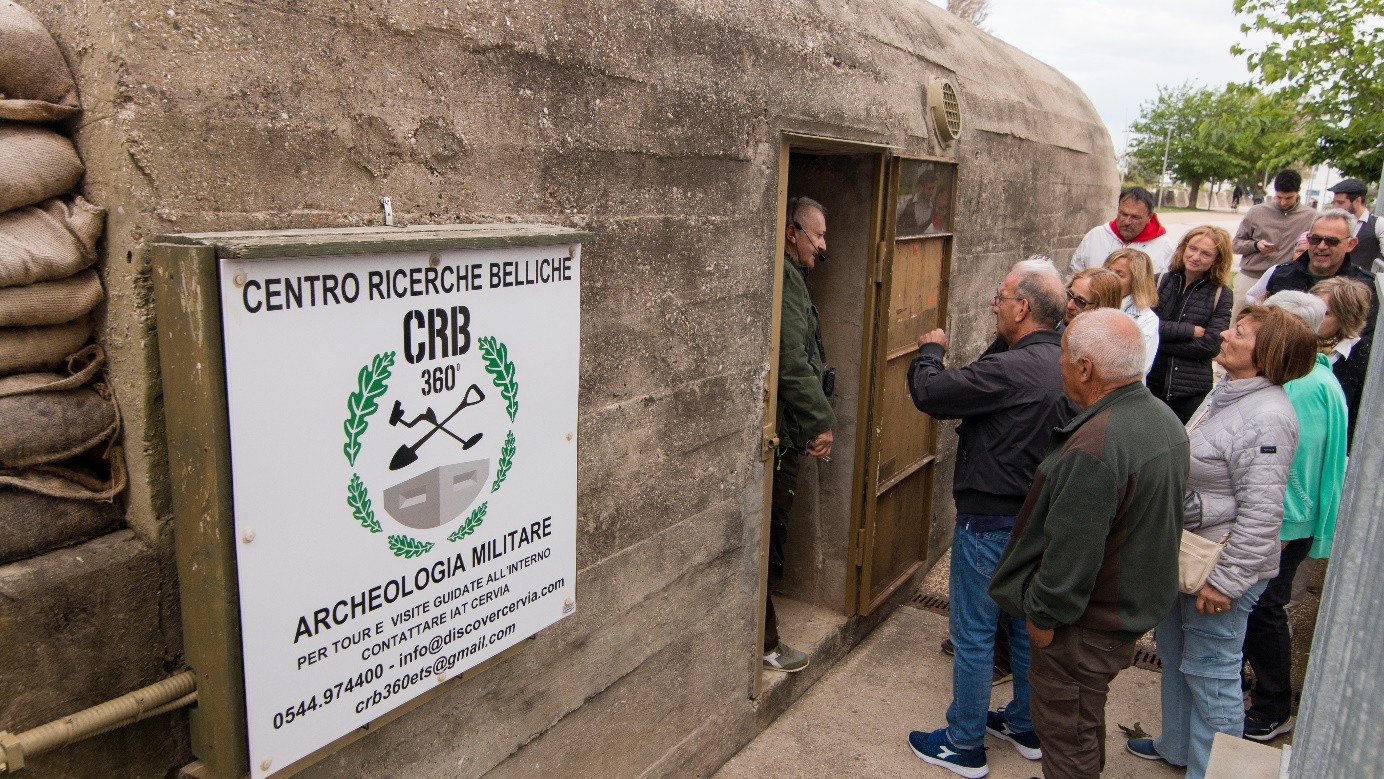
Study visit to Cervia’s Regelbau 668 WWII bunker
Vieste, Italy – Heritage Walks with a Green Perspective
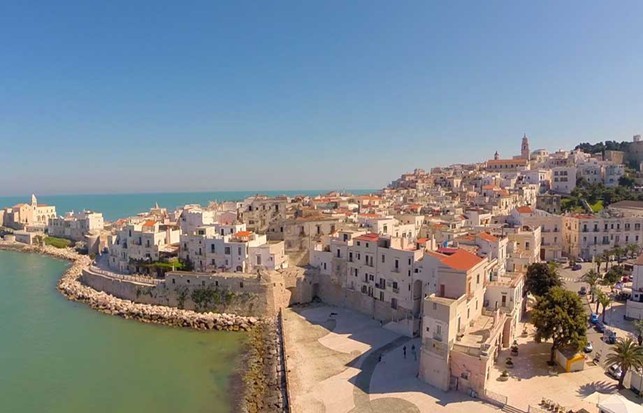
The Municipality of Vieste prepared three activities connecting heritage with sustainability: a guided tour of Vieste Castle focused on architecture and traditions; a visit to Porticello Tower and a sustainable walk along the Norman-Swabian city walls, where participants learned about historical preservation and eco-friendly tourism. Each activity invited participants to reflect on the protection of natural and cultural resources as a shared responsibility.
The Municipality of Vieste stated: “The first two visits were particularly important, as these sites are not always open to the public: the Porticello Tower has only been accessible since 2024 and it is used for exhibitions and cultural events, while the Castle of Vieste, still a military area, can be visited only on special openings. We are already looking ahead to next year’s Night of Fortresses: by involving local associations, the extraordinary heritage of the territory will be further enhanced and made available for everyone to rediscover.“
Korčula, Croatia – Tradition and Innovation
For the fourth consecutive year, Korčula hosted Night of Fortresses, with an expanded two-day programme. Highlights included an eco-quiz for primary school students, guided city walks in Croatian and English, expert lectures on dry-stone walls, quarries, and an interactive presentation on creativity in stone carving. The evening concluded with a spectacular illumination of the Revelin Tower. Using advanced technology, video mapping, and laser effects, a spectacular light show was created, accentuating the symbolic and historical importance of this fortification and offering visitors a truly memorable nighttime experience.
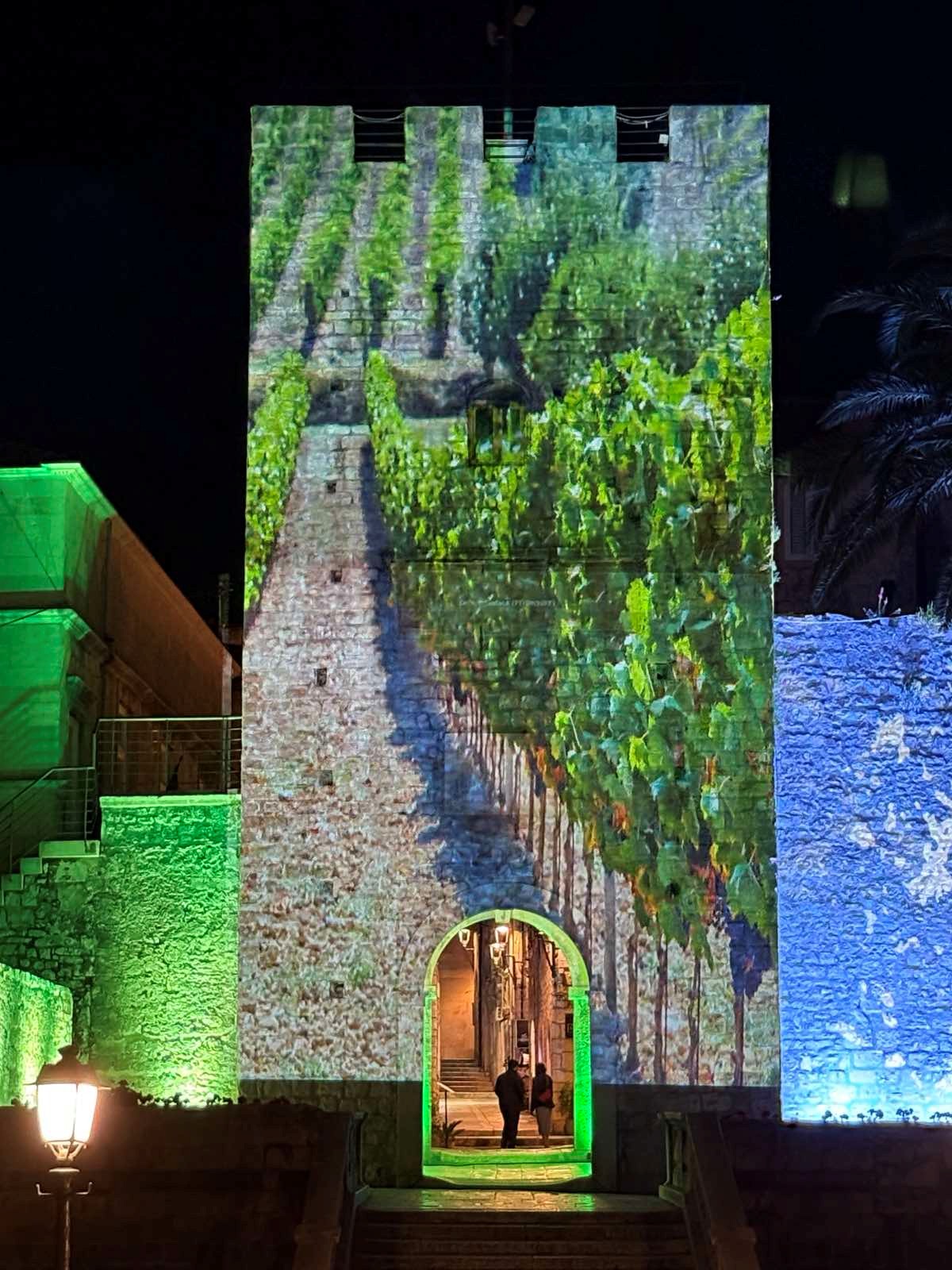
Illumination of the Revelin Tower, Korčula
Night of Fortresses is more than a cultural event - it is an initiative that promotes:
- Sustainability – linking heritage protection with environmental awareness.
- Inclusivity – offering all programmes free of charge and accessible to local communities.
- Cross-border cooperation – strengthening ties among cultural institutions across Europe.
- Education – engaging both children and adults in interactive activities that combine history with ecology.
- Community identity – turning fortresses from just static monuments into vibrant cultural hubs.
As the event grows year by year, it demonstrates how culture can become an active driver of ecological awareness and sustainable practices, while also bringing local communities together around shared heritage and traditions.
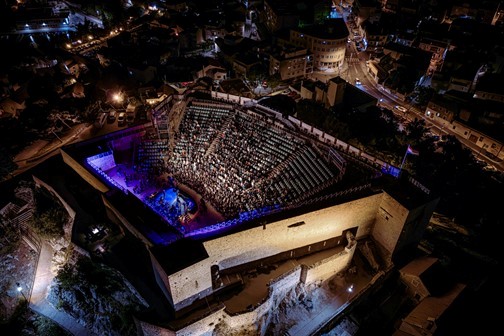
Concert at St. Michael’s Fortress, Šibenik
The success of Night of Fortresses Goes Green confirms that Europe’s historic sites are not only guardians of the past, but also places for building a more sustainable future. The initiative continues to spread, inspiring communities to reimagine fortifications as spaces of learning, creativity, and ecological responsibility.
The 2026 edition promises to be even bigger, running across two days, May 8 and 9. Once again, fortresses and castles across Europe will open their gates, inviting visitors to celebrate cultural heritage while taking concrete steps toward a greener tomorrow.