
Cross-Border Symposium Explores Innovative Approaches to Smart Heritage Governance in Acquaviva Picena
06/07/2026
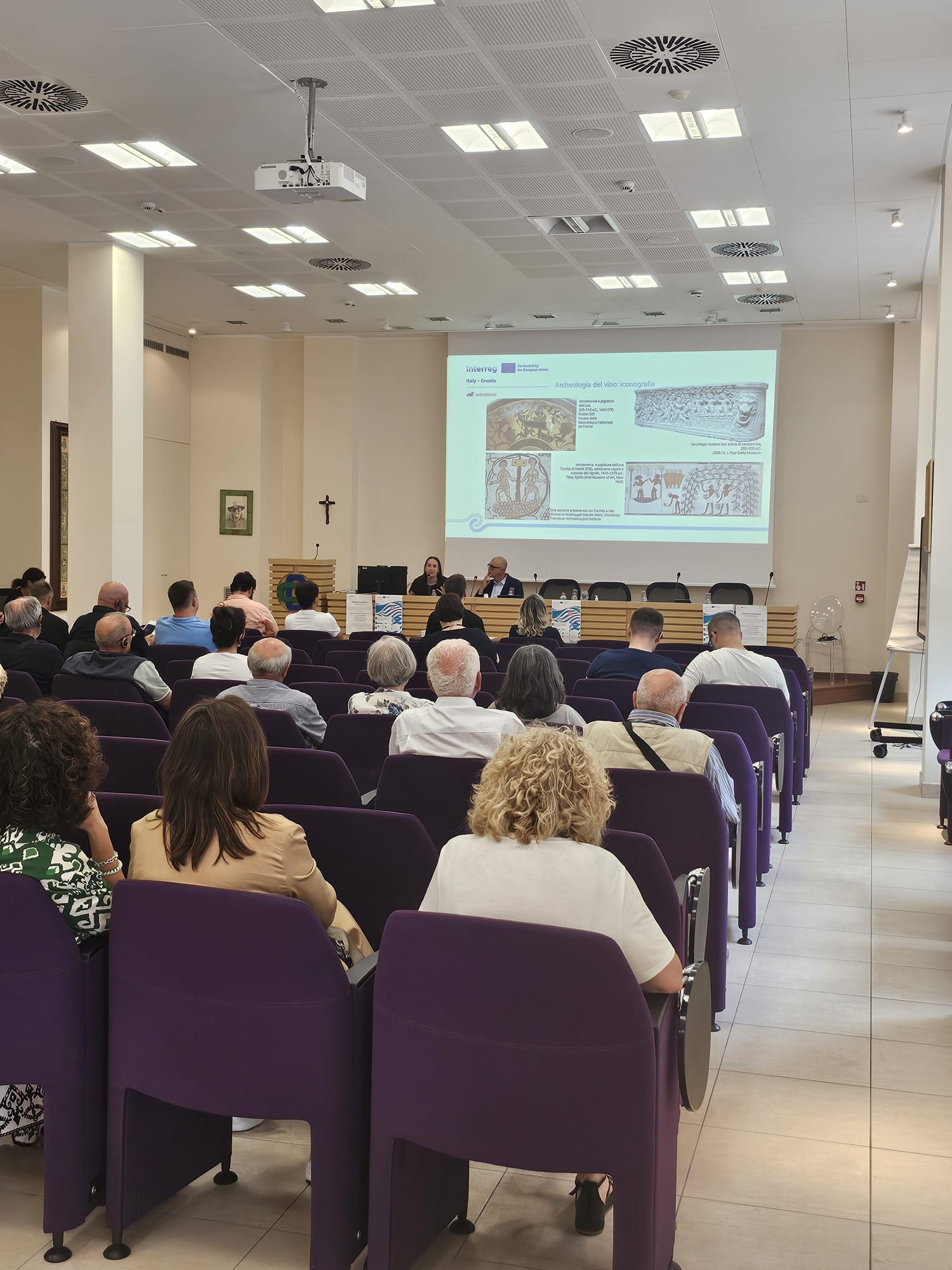
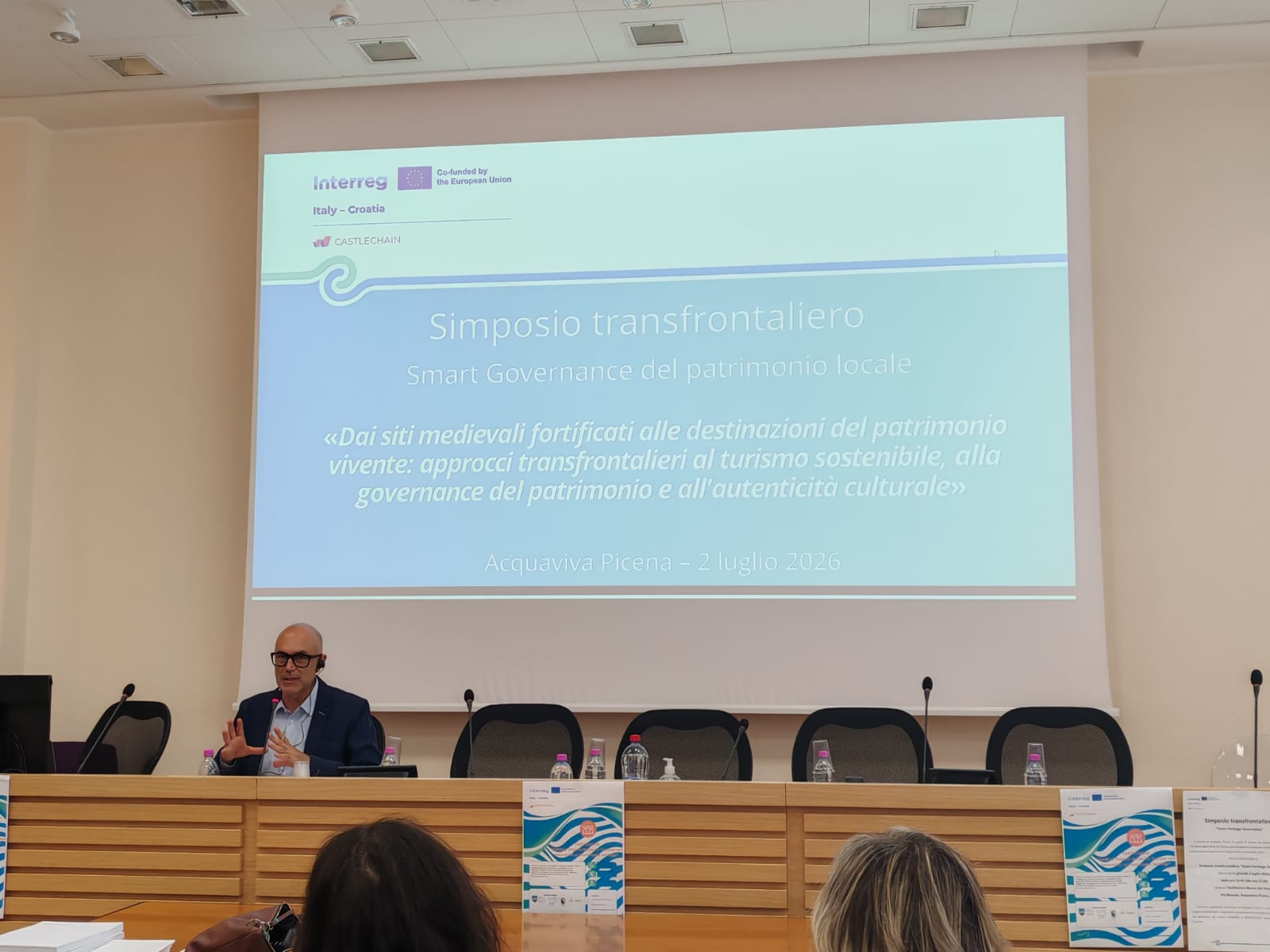
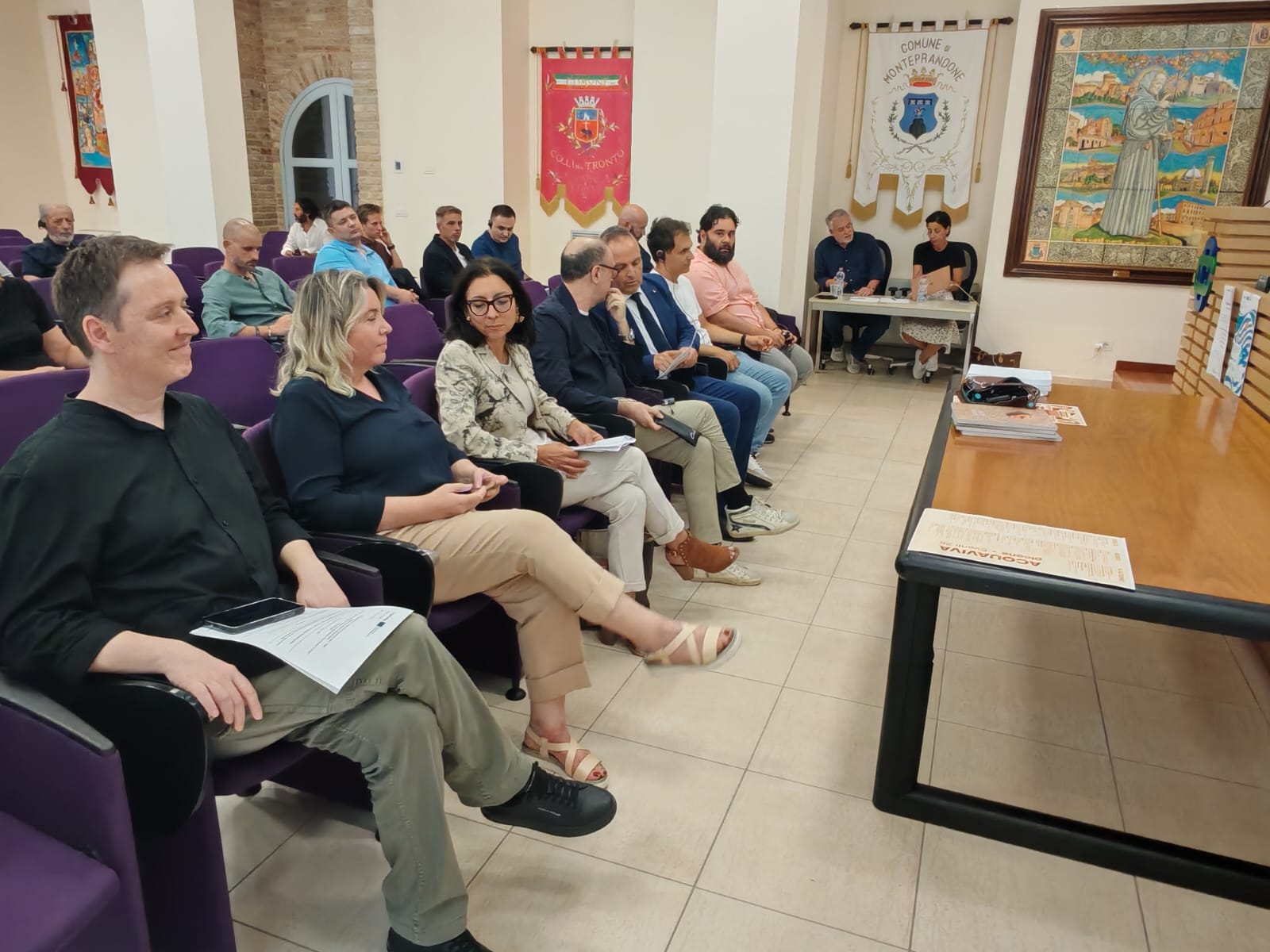
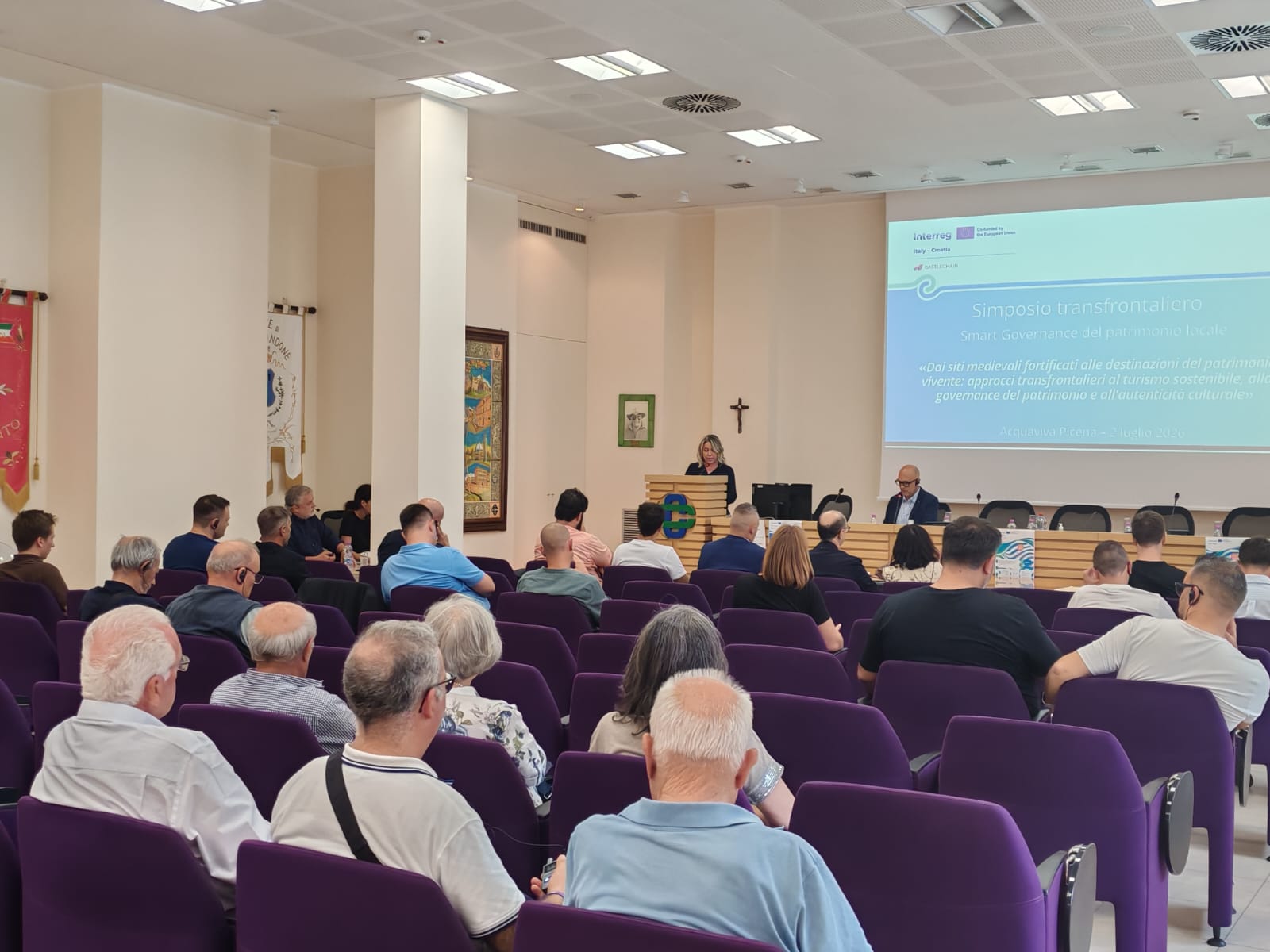
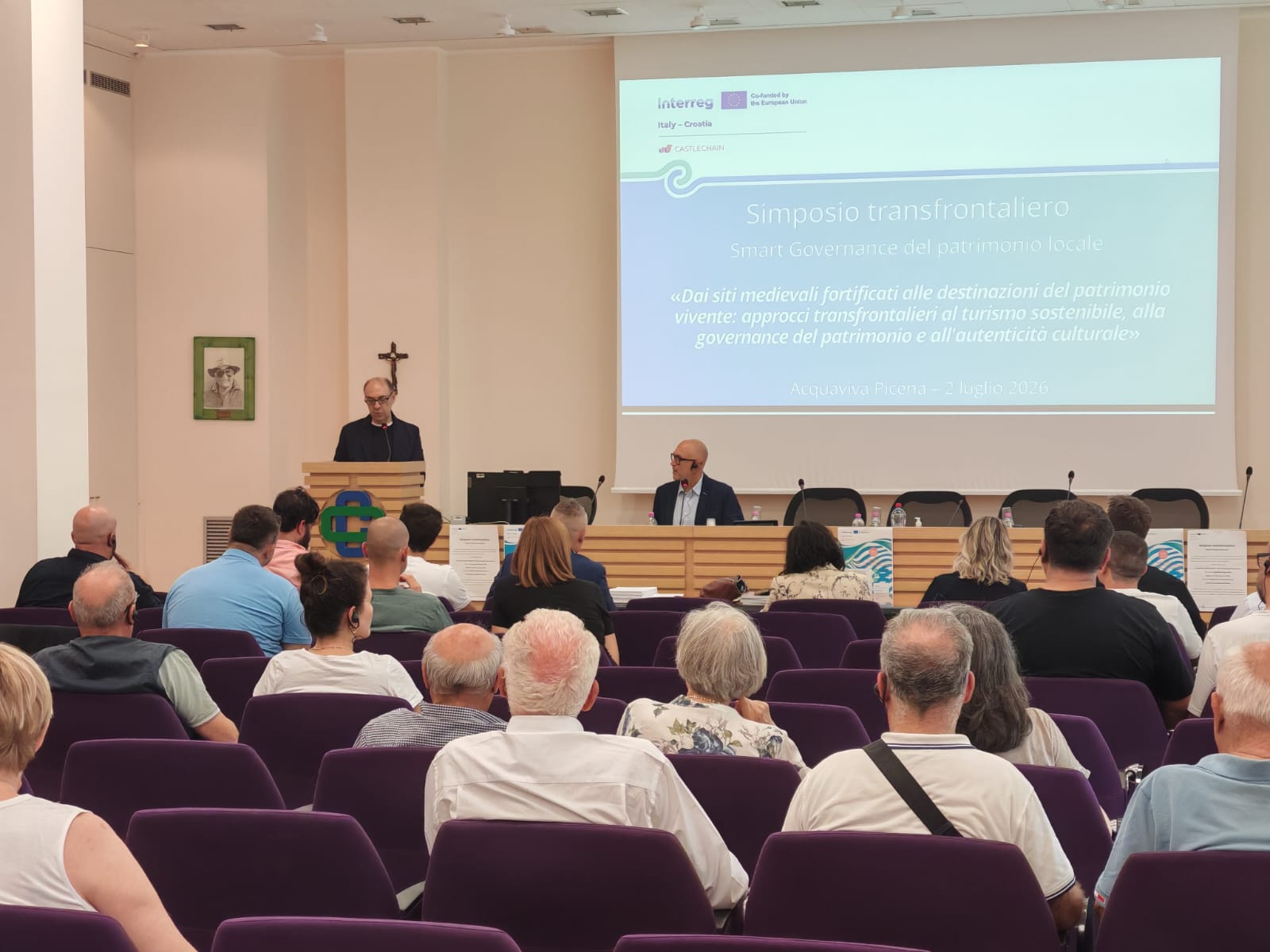
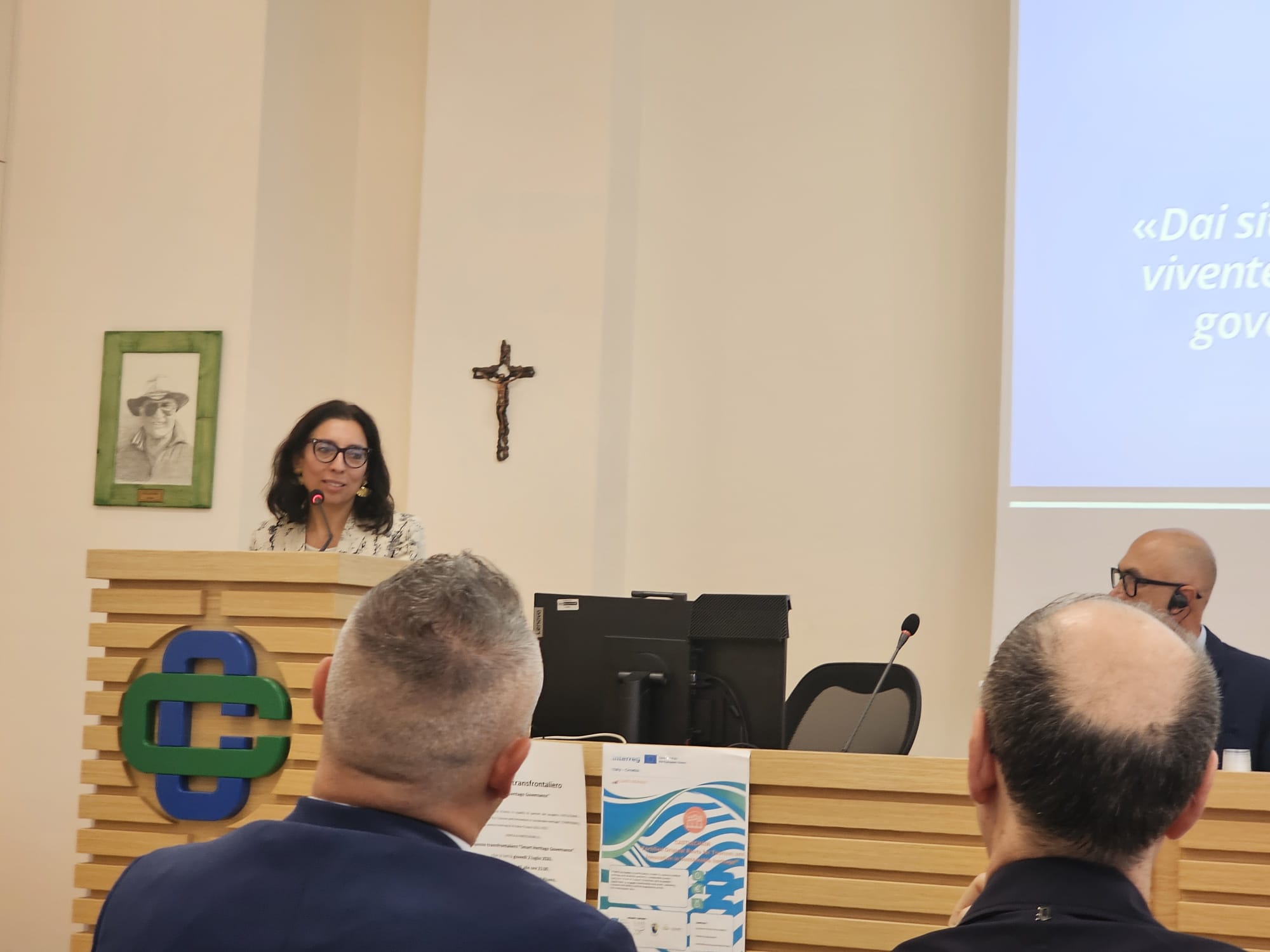
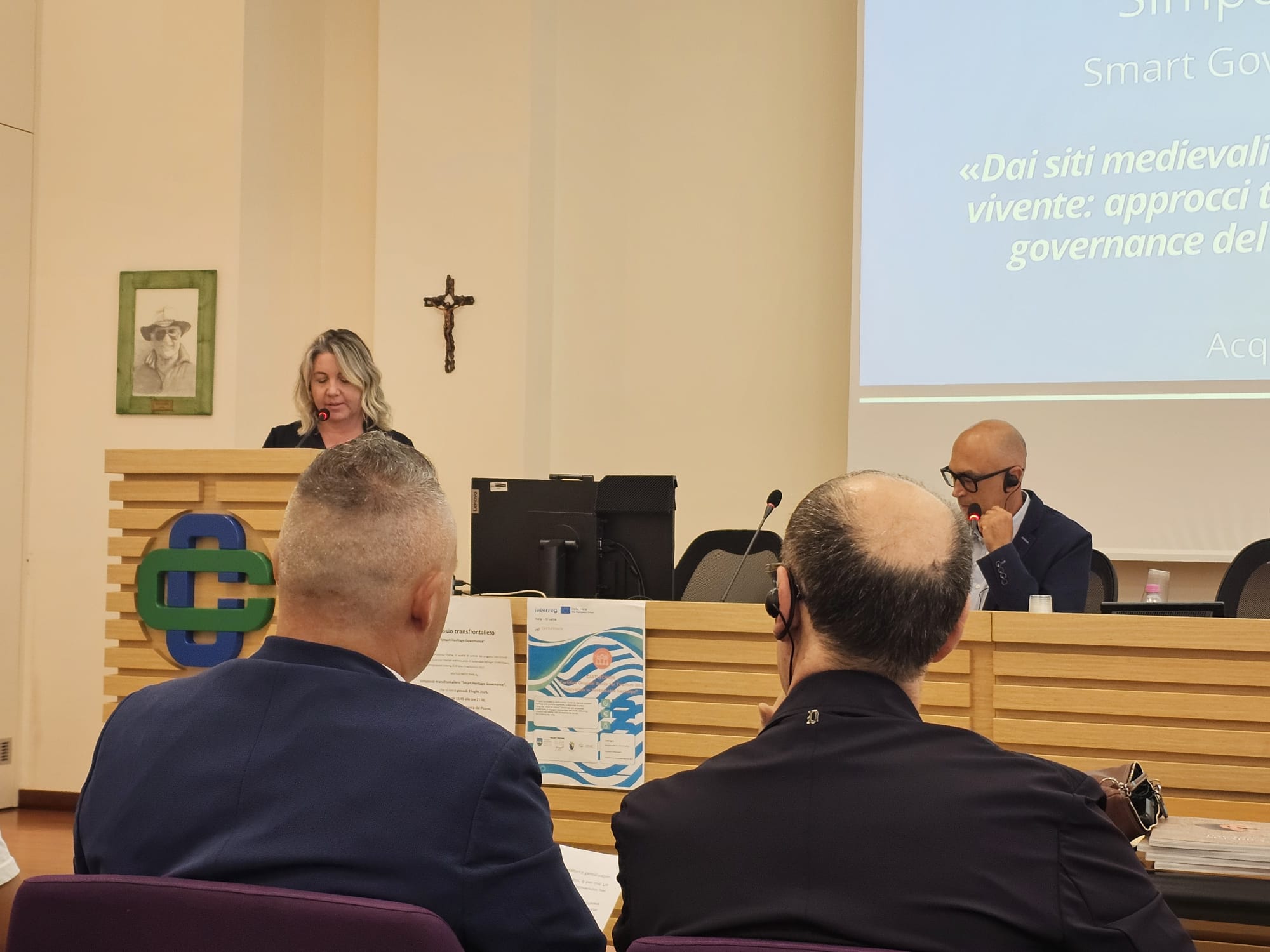
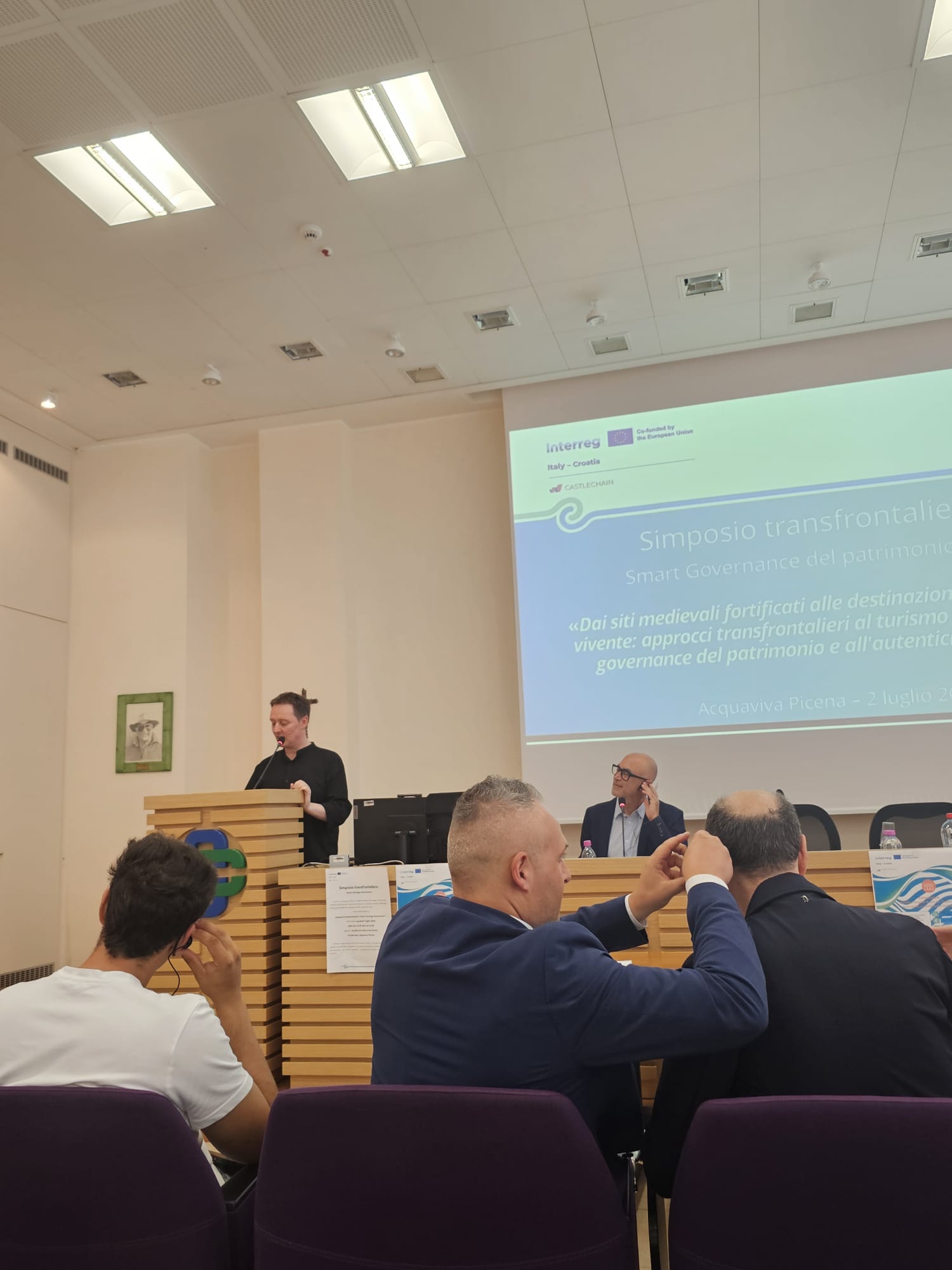
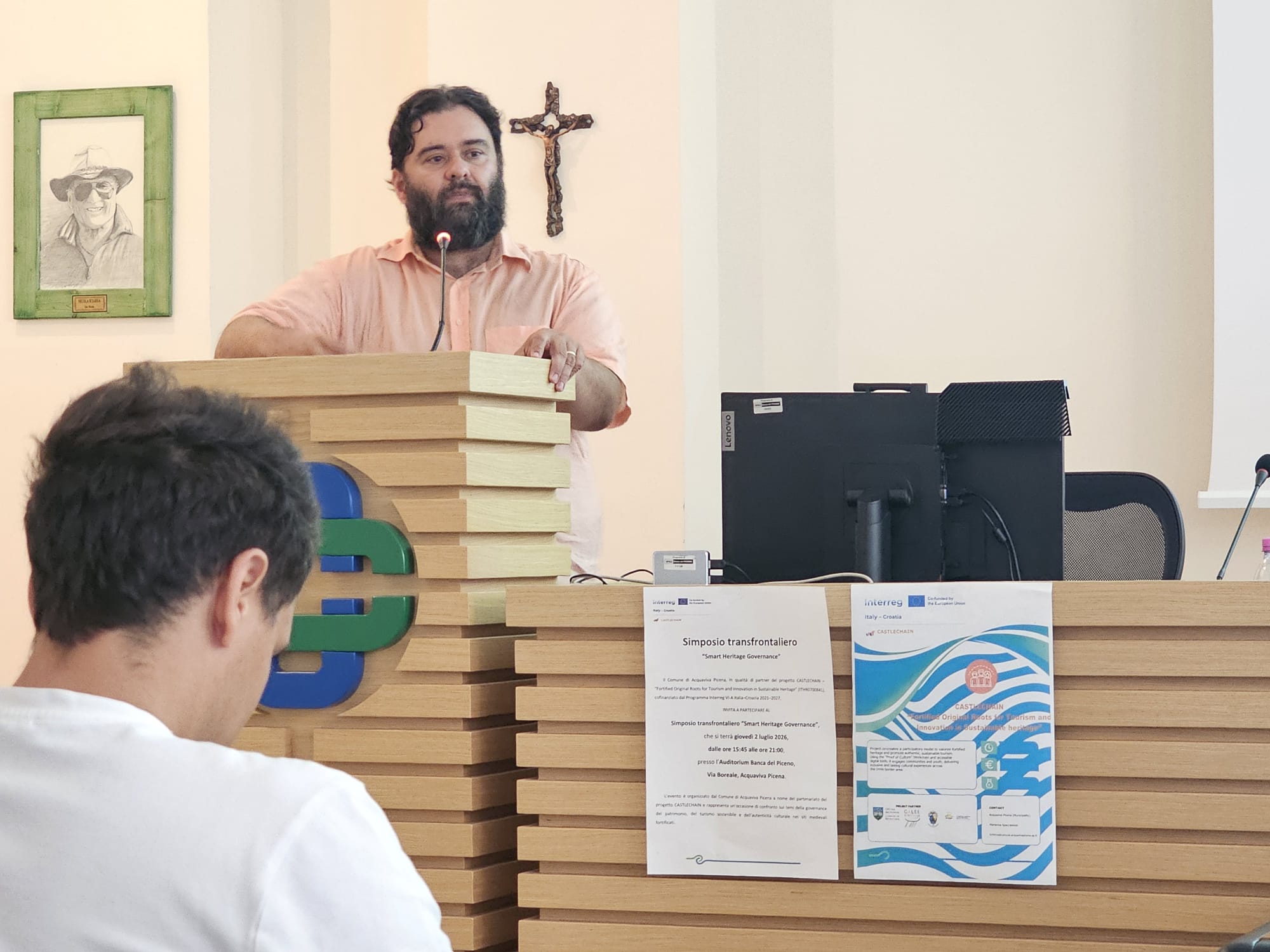
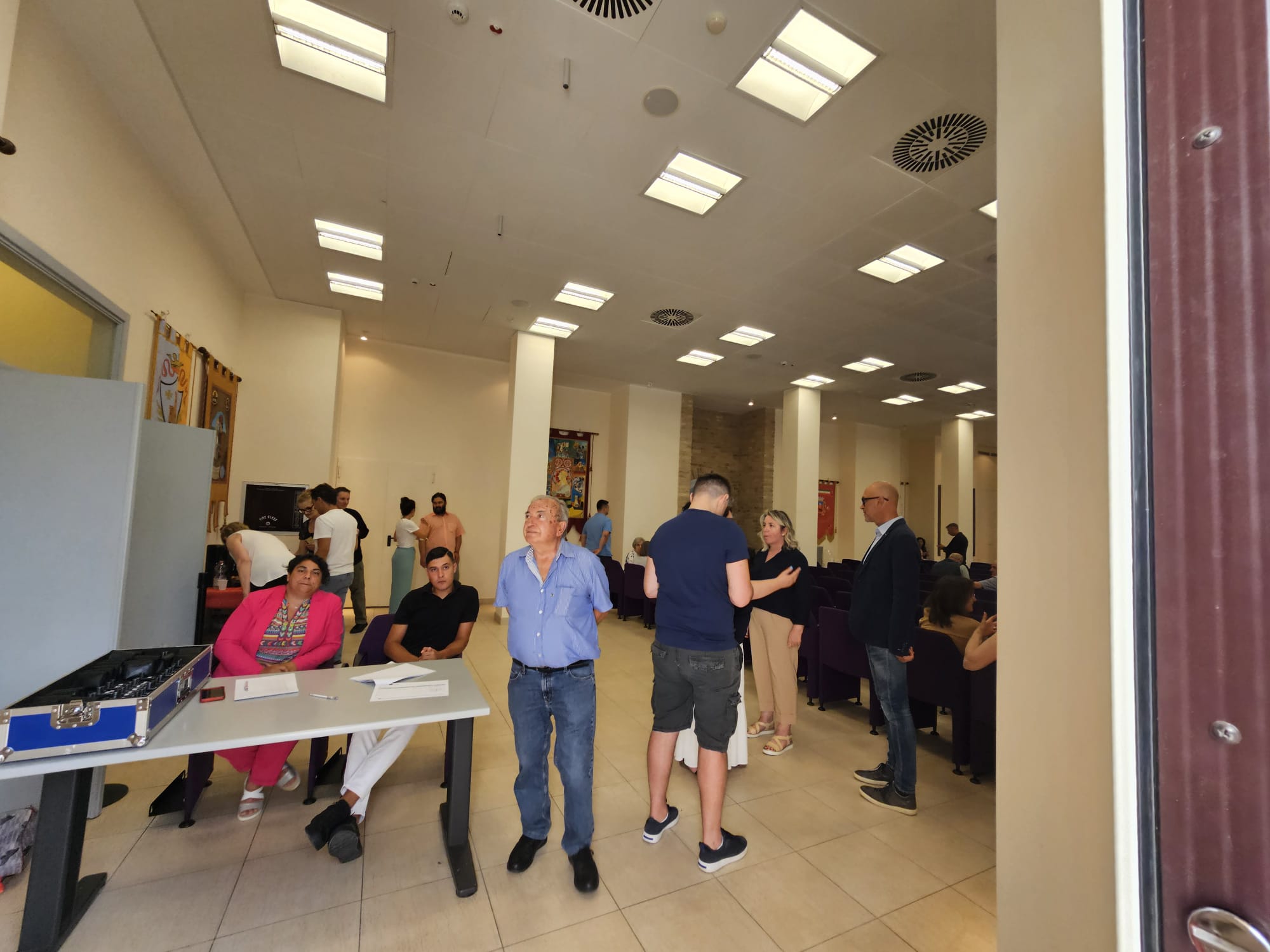
On 2 July 2026, the Municipality of Acquaviva Picena in the Marche region hosted the Cross-Border Symposium – Smart Heritage Governance, organised within the framework of the CASTLECHAIN – Fortified Original Roots for Tourism and Innovation in Sustainable Heritage project. The event brought together representatives of public authorities, cultural heritage professionals, researchers, tourism stakeholders and project partners from Italy and Croatia to discuss innovative approaches to the sustainable management and valorisation of fortified medieval heritage.
The symposium was officially opened by Marianna Spaccasassi, Head of the Tourism Department of the Municipality of Acquaviva Picena, Francesca Pantaloni, Head of the Budget Department of the Marche Region, Sandro Donati, President of Banca del Piceno, and Tomislav Pahović, Mayor of the Municipality of Motovun-Montona. Welcoming the participants, the speakers highlighted the importance of cross-border cooperation, heritage preservation and sustainable tourism as common priorities for the Italy–Croatia Programme and the CASTLECHAIN partnership. They also reaffirmed the commitment of the partner institutions to strengthening long-term cooperation and promoting innovative and sustainable approaches to cultural heritage management for the benefit of local communities and visitors alike.
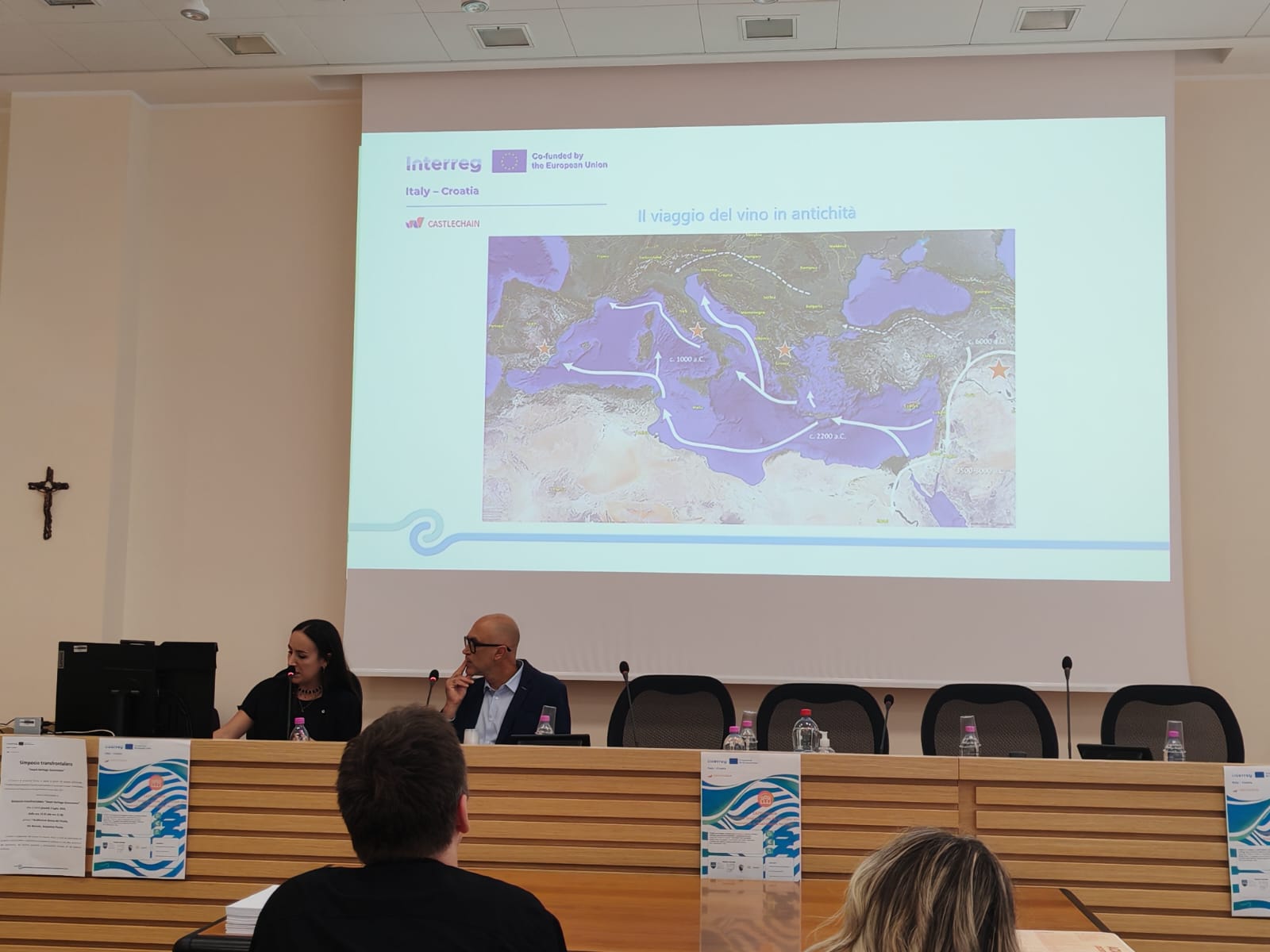
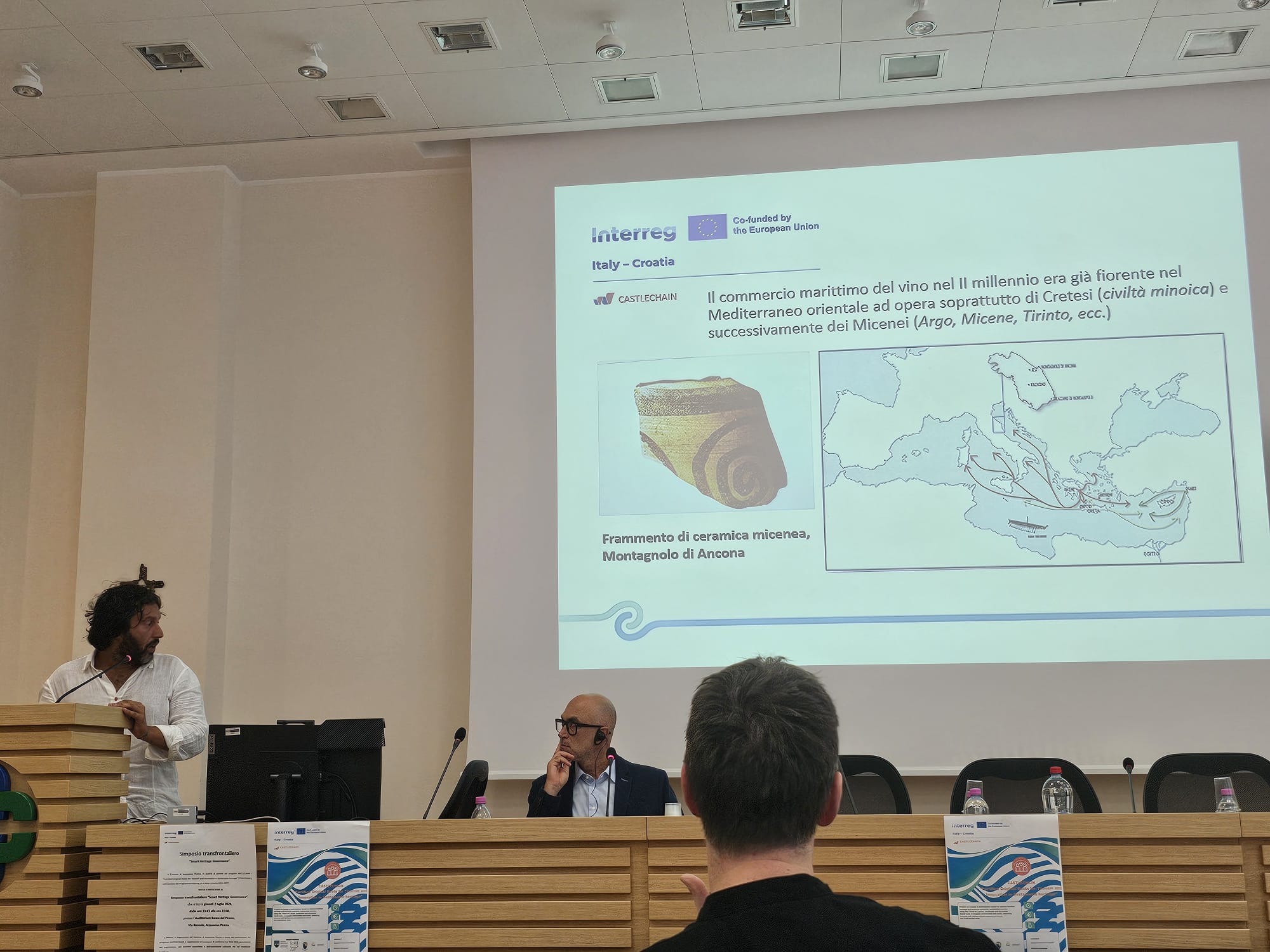
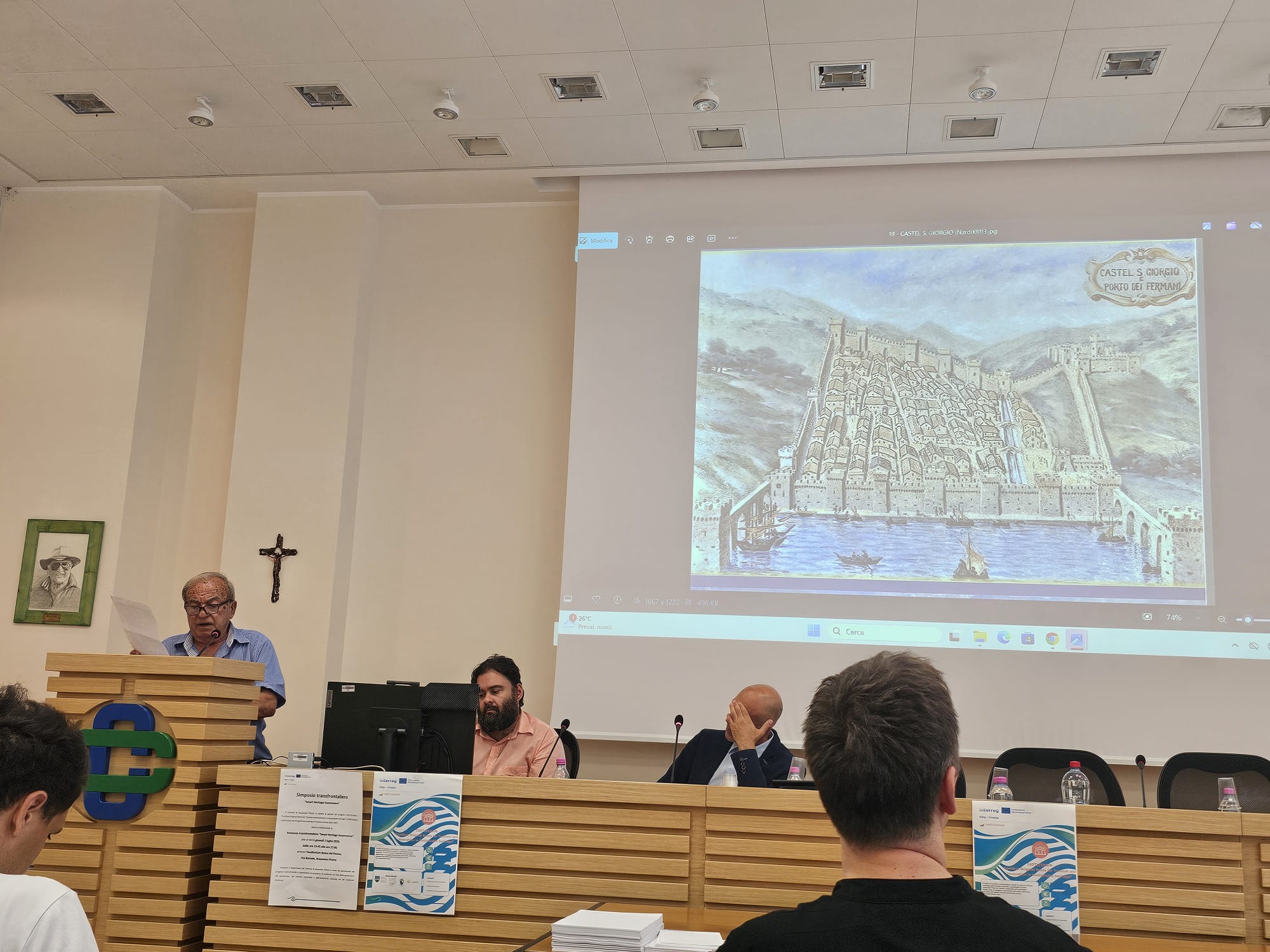
The first thematic session focused on the cultural and historical identity of Acquaviva Picena. Giacomo Recchioni, anthropologist from the Vidacilius Museum, presented the origins of the Piceni civilisation through the latest archaeogenetic research. Veronica Castignani, PhD Candidate in Cultural Heritage Sciences at the University of Catania, explored archaeological evidence of ancient wine production, consumption and trade in Roman times, while Prof. Luigi Rossi from the Deputazione di Storia Patria per le Marche discussed the role of merchants, migrants and corsairs in shaping the medieval Adriatic and cross border cooperation in history. The panel highlighted how historical research, archaeology and local identity can be transformed into authentic cultural tourism products while ensuring the sustainable management and interpretation of fortified medieval sites.
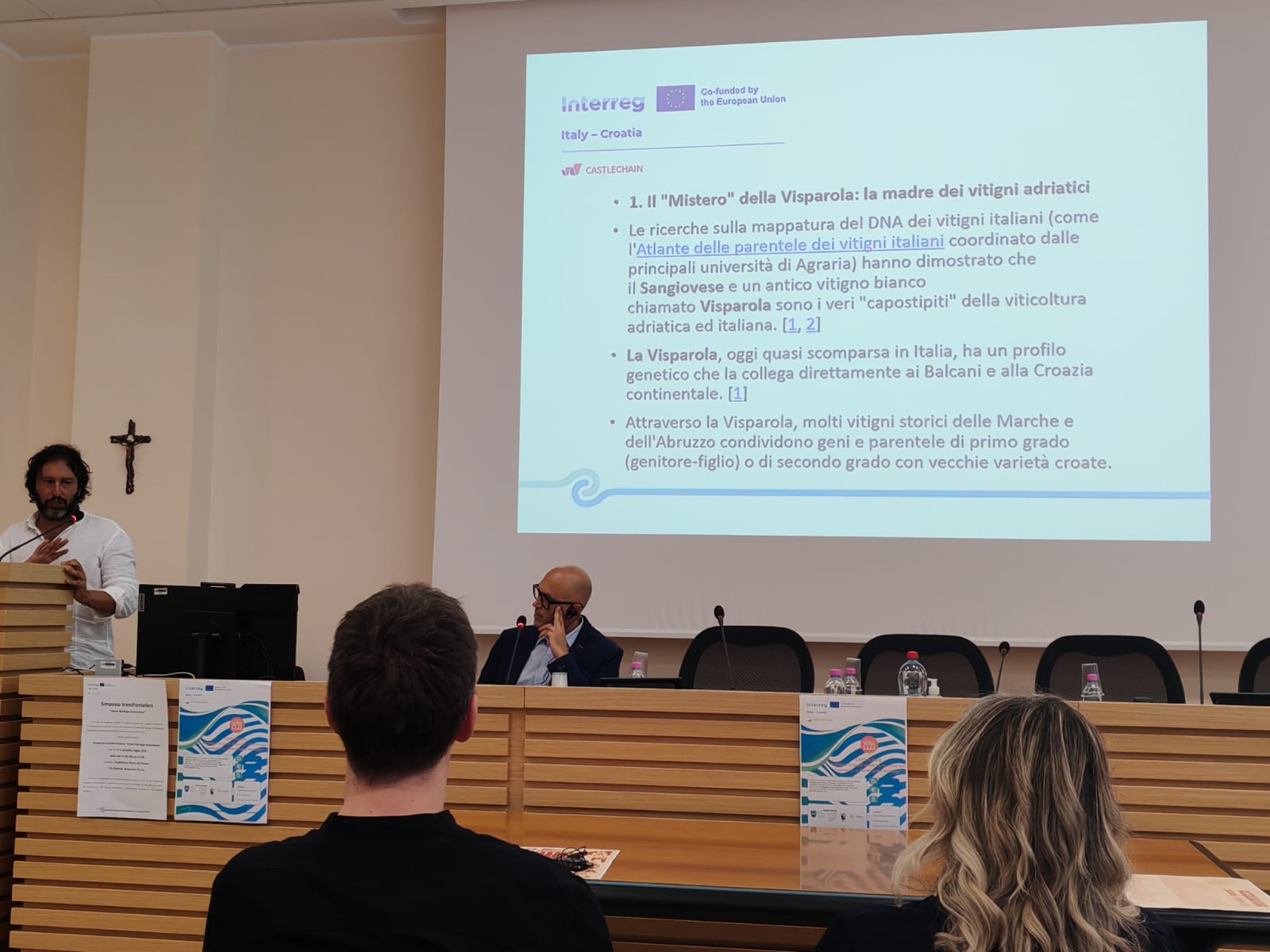
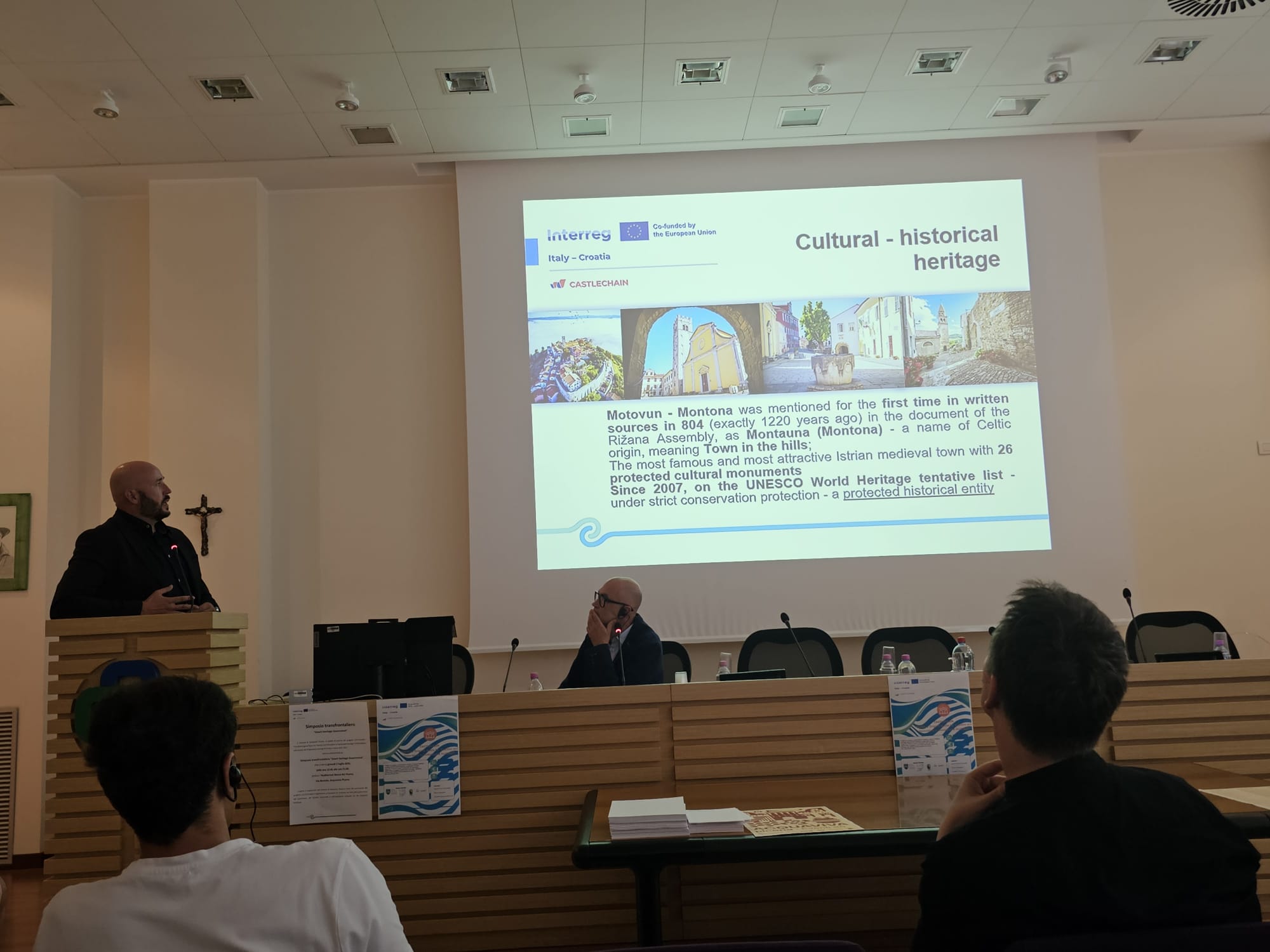
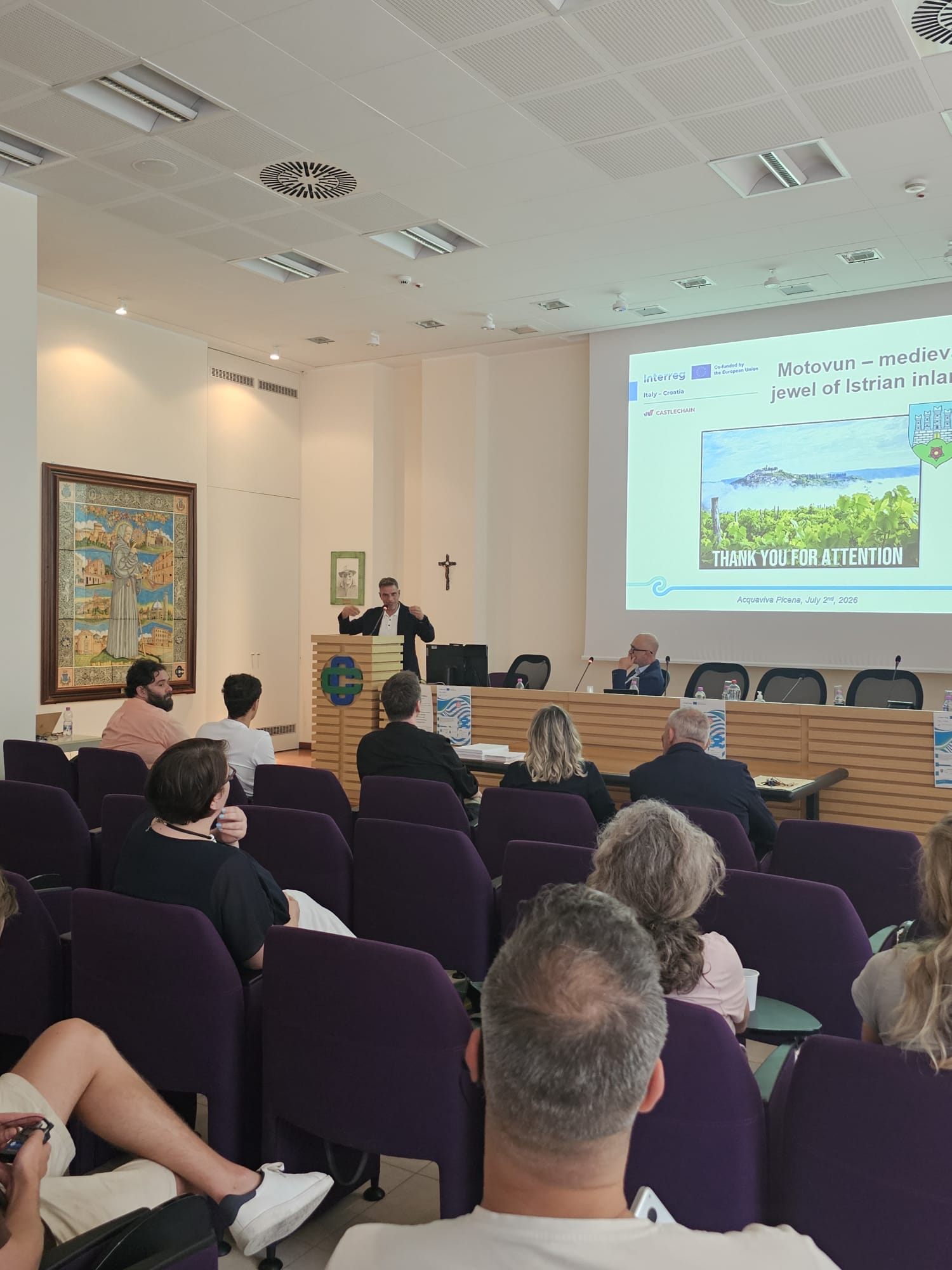
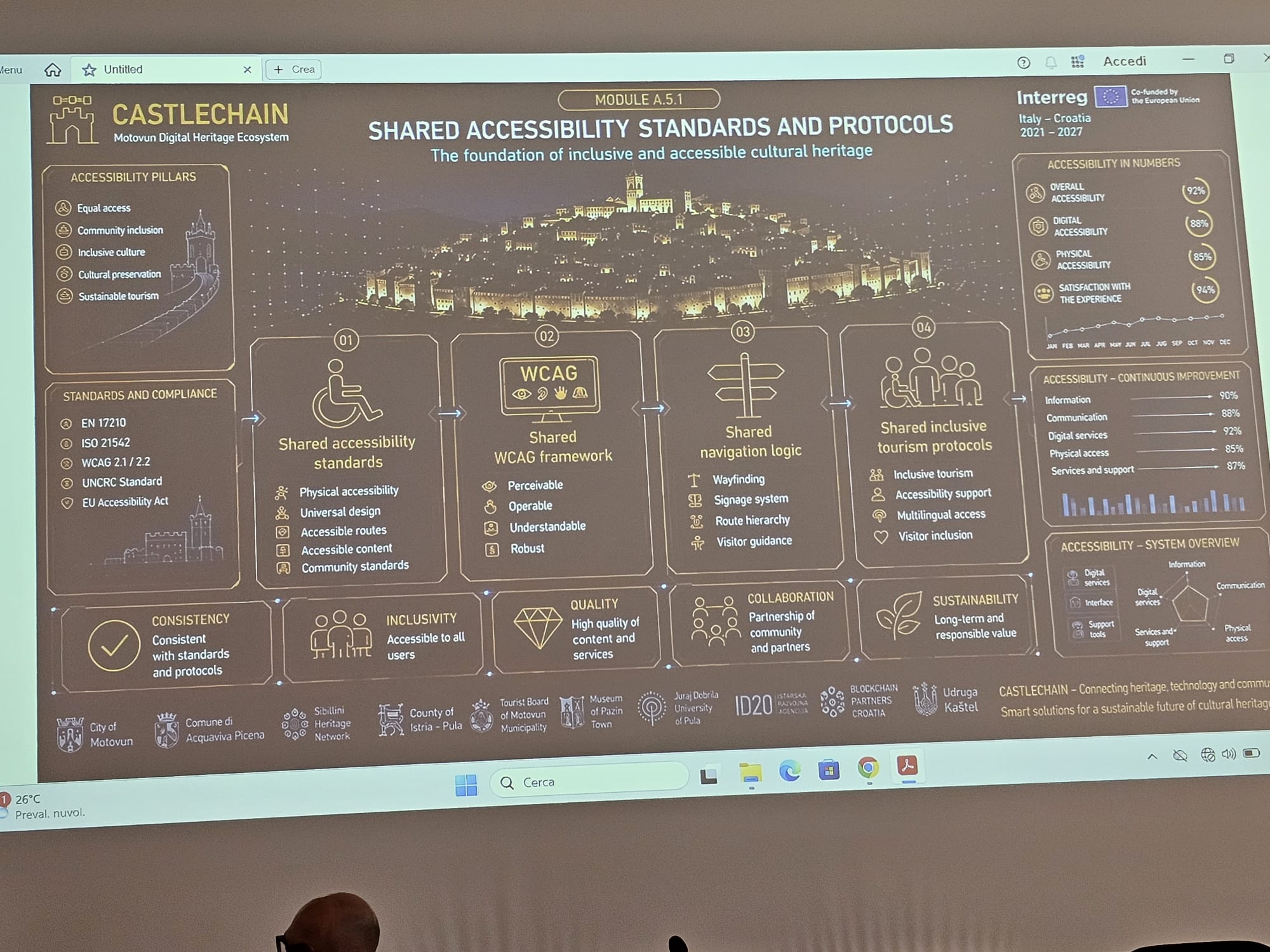
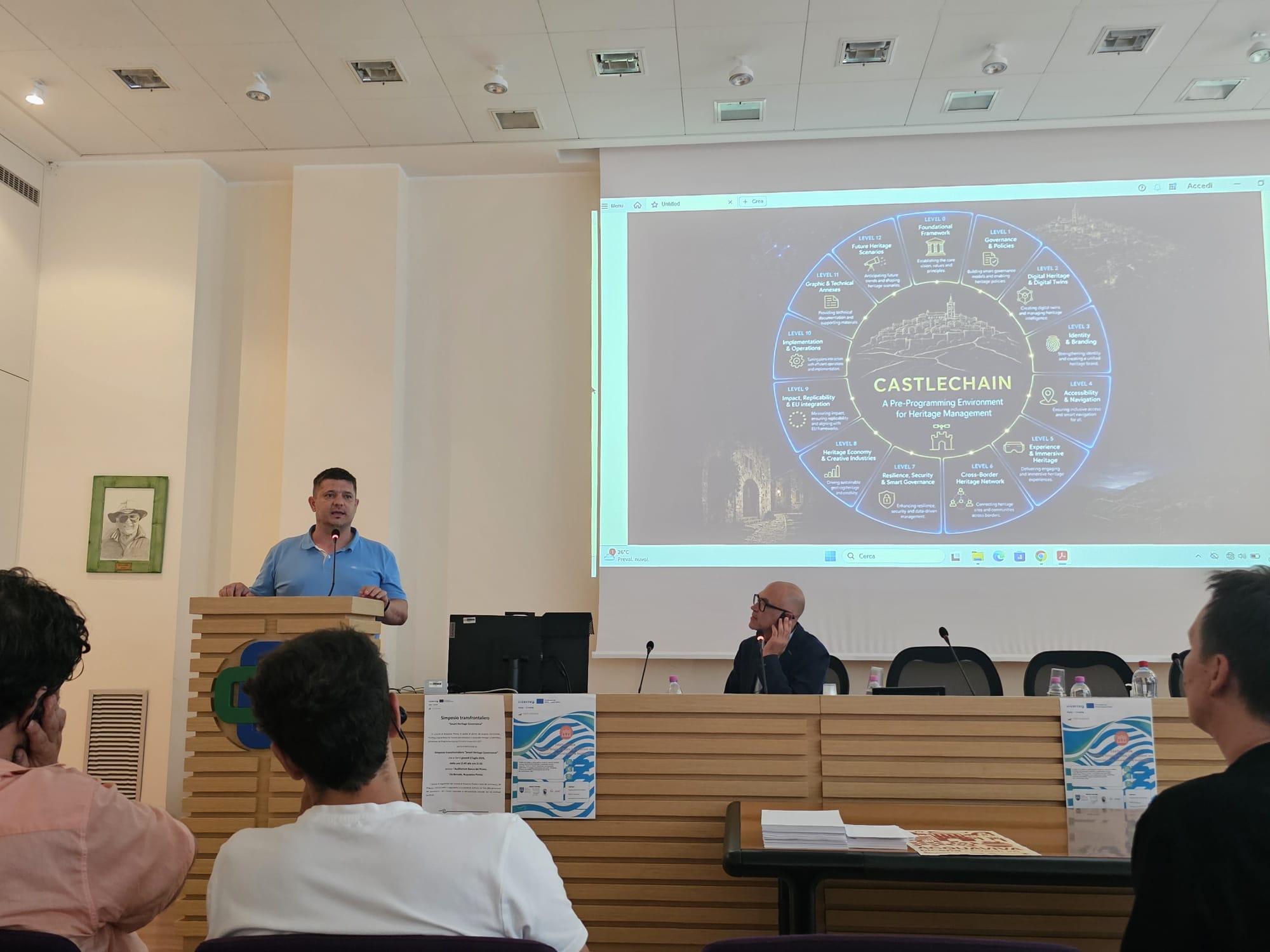
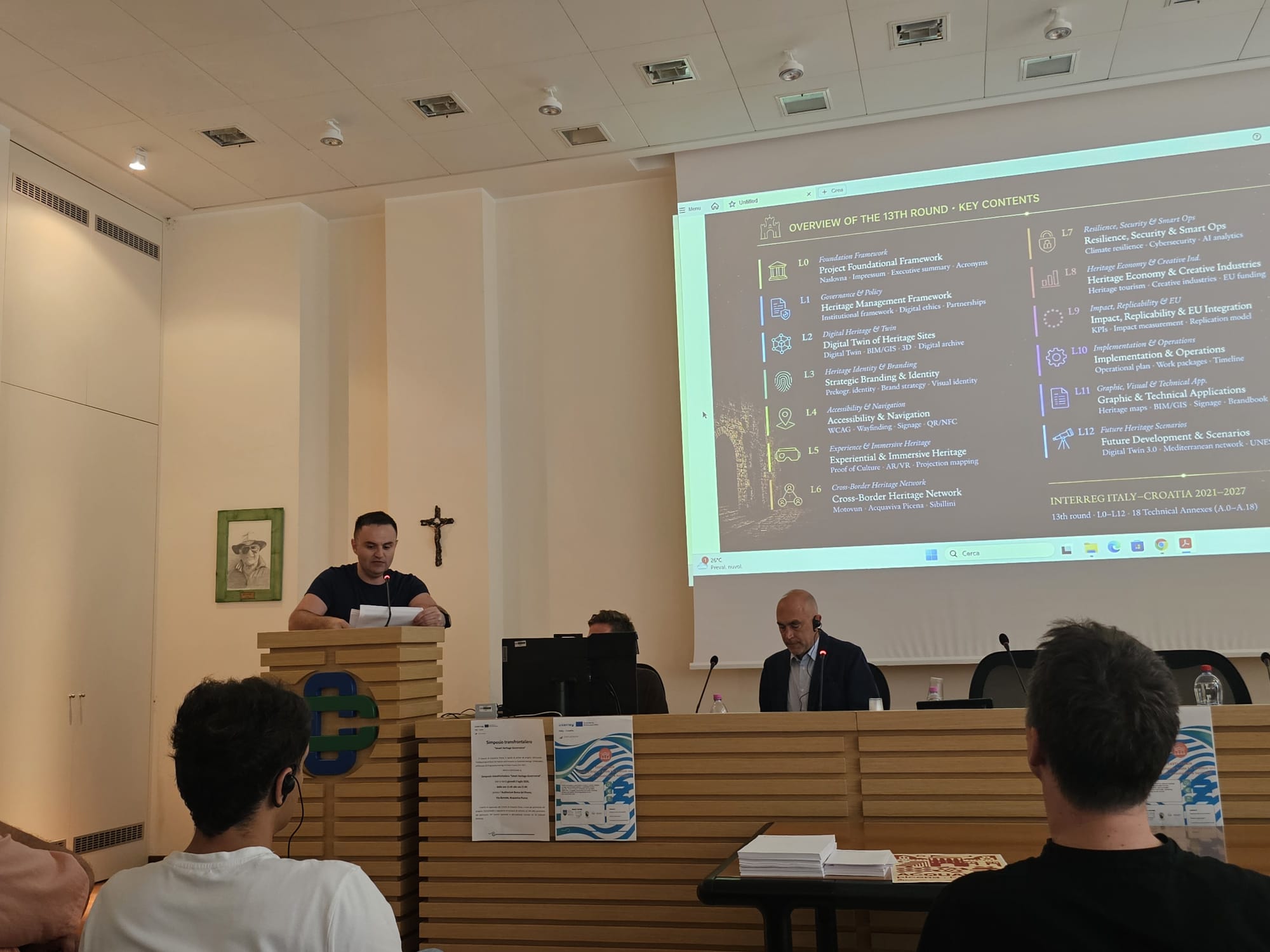
The second panel showcased the experience of Motovun-Montona as an example of integrated heritage management. Motovun was presented as a fortified medieval town included on Croatia's UNESCO Tentative List, where heritage management follows the strict principles and standards promoted by UNESCO in the fields of protection, conservation, valorisation, accessibility and sustainable management of cultural heritage. Jadranko Hrvačević, architect and lead expert for the protection, digitalisation and future management of cultural heritage, presented contemporary approaches to activating heritage as a living resource rather than a static monument. His presentation emphasised the importance of integrating conservation, digital innovation, interpretation and community participation to create authentic and sustainable visitor experiences while safeguarding the outstanding cultural value and developemental potential of historic fortified environments.
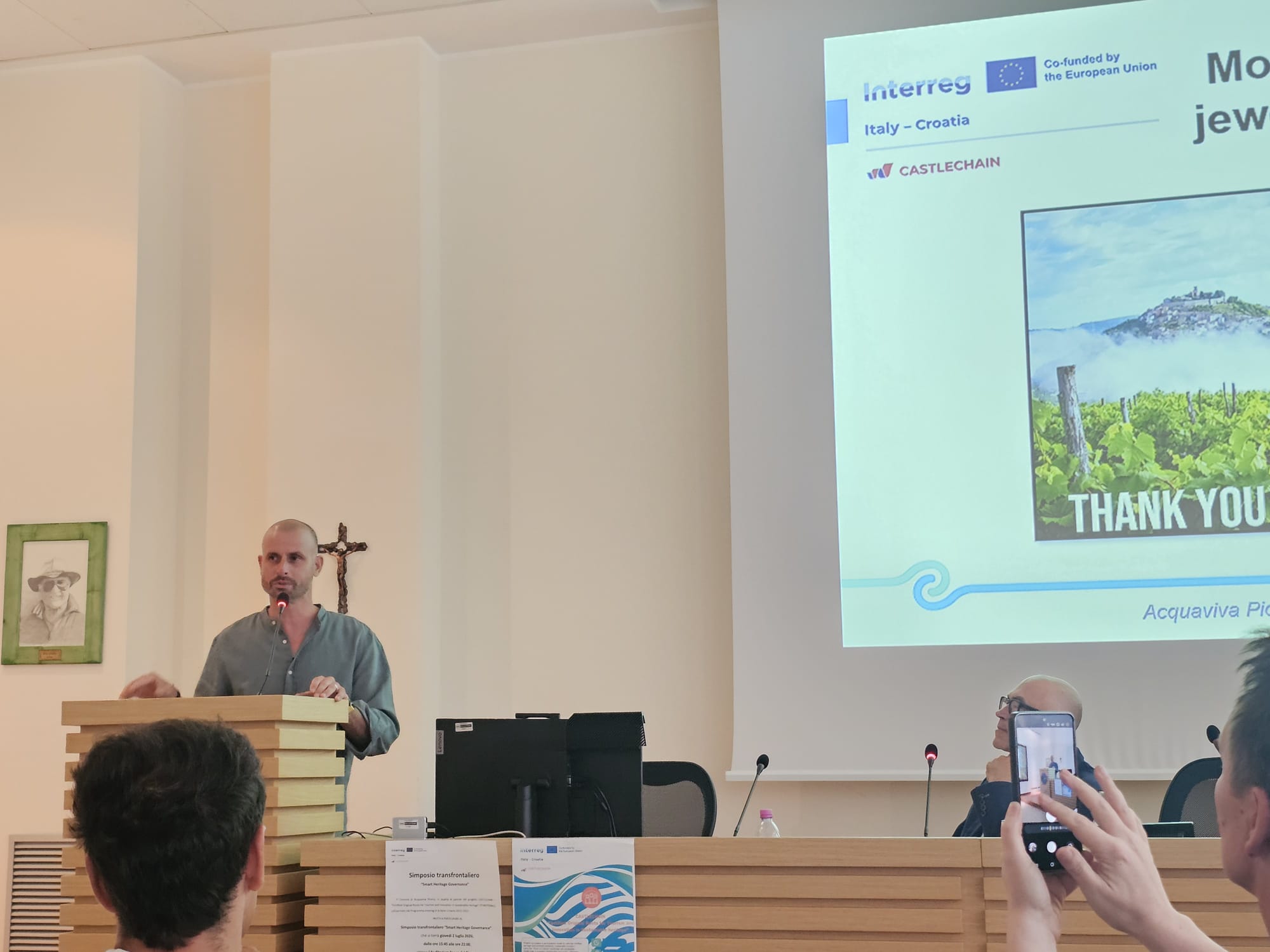
The symposium concluded with a joint cross-border discussion involving project partners and tourism stakeholders. On behalf of the project partners, contributions were delivered by Nenad Šćulac, Head of Administration of the Municipality of Motovun-Montona, David Matković, Director of the Motovun-Montona Tourist Board, Mate Mekiš, certified tourist guide and storytelling expert, Robi Bertoša, young innovative winemaker from Motovun, and Emanuele Luciani, representative of the project partner G.A.L.E.E. Sibilline leading and explaining the steps of the blockchain part of the CASTLECHAIN project. The discussion focused on innovative governance models for fortified medieval sites, sustainable valorisation of cultural heritage, community participation, accessibility and the development of authentic visitor experiences that will be part of a join action plan at the end of the project. Particular attention was devoted to the Proof of Culture concept being developed within the CASTLECHAIN project, aimed at strengthening authenticity, traceability and trust in cultural heritage interpretation while supporting future Italy–Croatia cooperation initiatives.
The discussions confirmed the shared commitment of the project partners to developing innovative governance models that connect heritage protection, sustainable tourism and local communities. By encouraging dialogue between experts, public institutions and tourism stakeholders, the symposium provided valuable input for the forthcoming pilot activities and policy recommendations that will be developed within the CASTLECHAIN project. The symposium represented an important milestone in achieving these objectives and further strengthening cooperation between partner territories.