

Environmental Impact Assessment of the Case Studies Published
25/05/2026
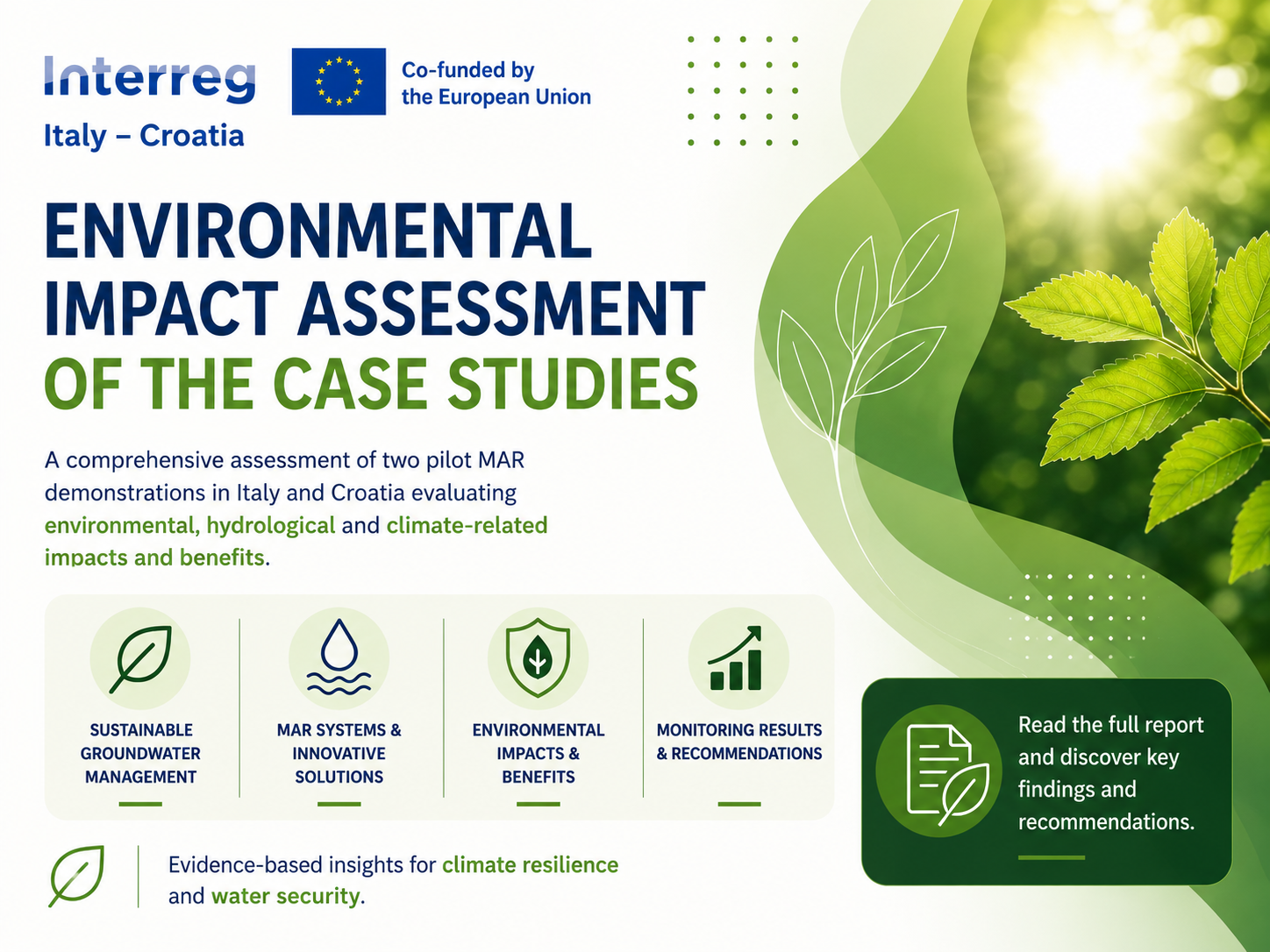
The report “Environmental Impact of the Case Studies” developed within the Interreg Italy–Croatia project presents the results of comprehensive environmental impact assessments conducted on the Italian and Croatian pilot sites focused on Managed Aquifer Recharge (MAR) systems and sustainable groundwater management.
The document evaluates the environmental, hydrological, and climate-related impacts of two pilot demonstrations implemented in Italy and Croatia, highlighting the role of innovative recharge systems in strengthening drought resilience, mitigating saltwater intrusion, and supporting sustainable water resource management.
The Italian case study focuses on the Mezzano Valley in the Po Delta region, where wetlands are used as natural infiltration basins for aquifer recharge. Monitoring activities confirmed positive groundwater responses to controlled wetland filling, while the assessment highlighted benefits such as improved groundwater quantity, reduction of saltwater intrusion risks, biodiversity preservation, and enhanced climate resilience.
The Croatian case study, implemented at the WWTP Loborika pilot site in Istria, explores the use of tertiary-treated wastewater for controlled subsurface infiltration in karst aquifers. Extensive monitoring and tracer testing demonstrated favorable hydrogeological conditions, slow groundwater flow regimes, and strong potential for safe MAR implementation with manageable environmental risks.
The report additionally presents:
- monitoring methodologies and field measurements,
- groundwater level and water quality analyses,
- hydraulic and isotopic characterization,
- environmental risk assessments and mitigation measures,
- climate adaptation and circular economy benefits,
- recommendations for future implementation and replication of MAR systems in other Mediterranean regions.
The findings confirm that both pilot demonstrations provide environmentally beneficial and transferable approaches for sustainable groundwater management and climate adaptation in coastal and water-stressed regions.
👉 The full document is available for download via the link located on the right side of the page.