
Dissemination workshop “Climate Change: Innovation, Governance and Territorial Cooperation” in Bari: climate change, innovation and territorial cooperation
06/07/2026
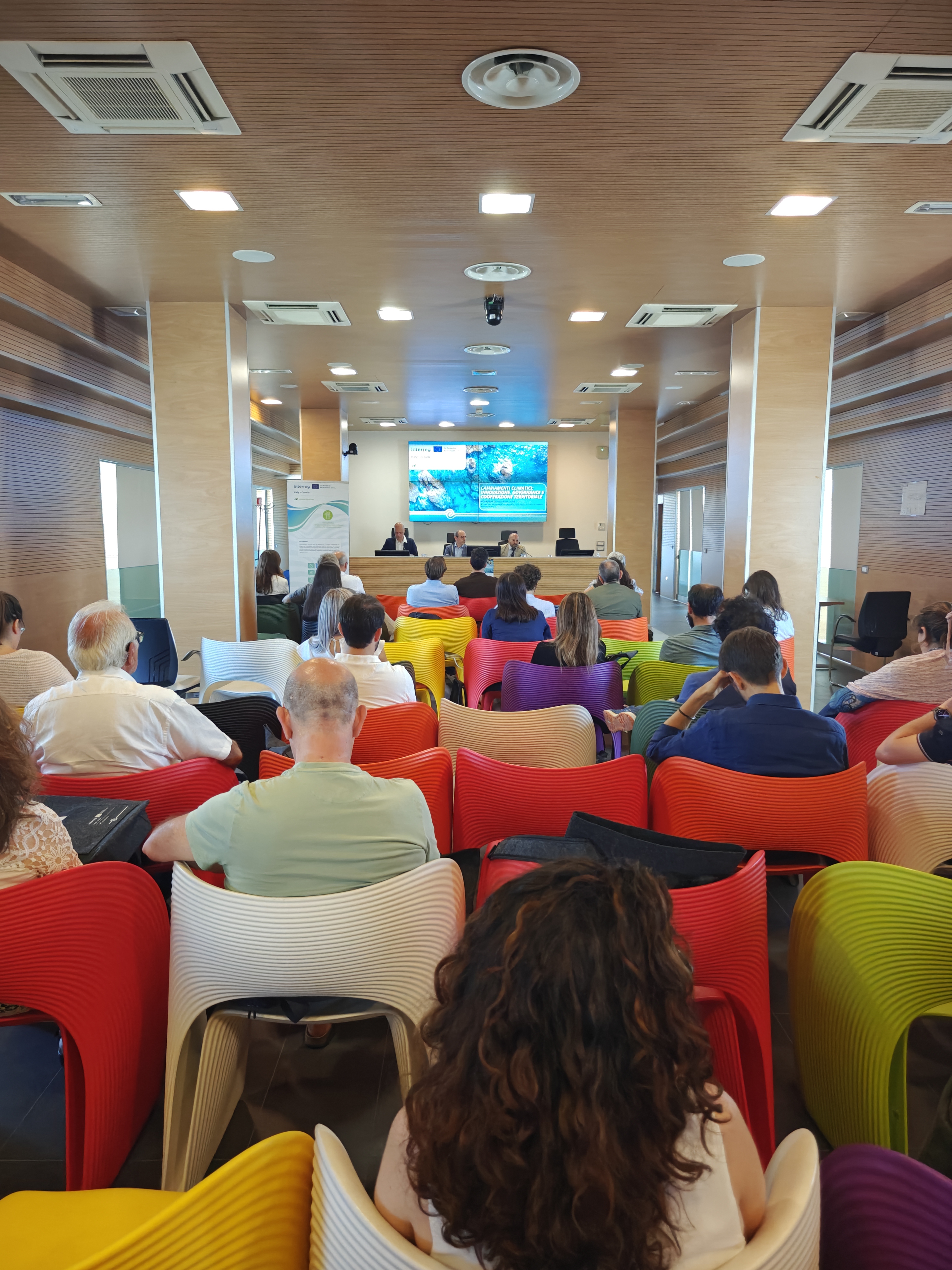
On 24 June 2026, the AdriaClimPlus dissemination workshop “Climate Change: Innovation, Governance and Territorial Cooperation” was held in Bari, bringing together institutions, researchers, technical experts and stakeholders to discuss how science, innovation and cooperation can support climate adaptation in Adriatic coastal areas.
Organised within the framework of AdriaClimPlus, the workshop offered a valuable opportunity to exchange knowledge, experiences and perspectives on the challenges that climate change poses to coastal territories.
Throughout the morning, participants explored a wide range of topics closely connected to the project’s objectives: climate scenarios, changes affecting the Adriatic Sea, Environmental Digital Twins, biogeochemical modelling, satellite data, governance for adaptation, water resource management, stakeholder engagement and Citizen Science.
The workshop opened with institutional greetings from the Department of Environment, Landscape and Urban Quality of the Puglia Region, which introduced the main themes of the day and the relevance of strengthening cooperation among research, institutions and territories.
The first technical contribution was delivered by Gianandrea Mannarini, Senior Scientist at the CMCC – Institute for Earth System Predictions, who provided an overview of the ongoing changes affecting the sea in Puglia. His presentation helped frame the discussion around the importance of understanding local climate impacts to support more informed adaptation choices.
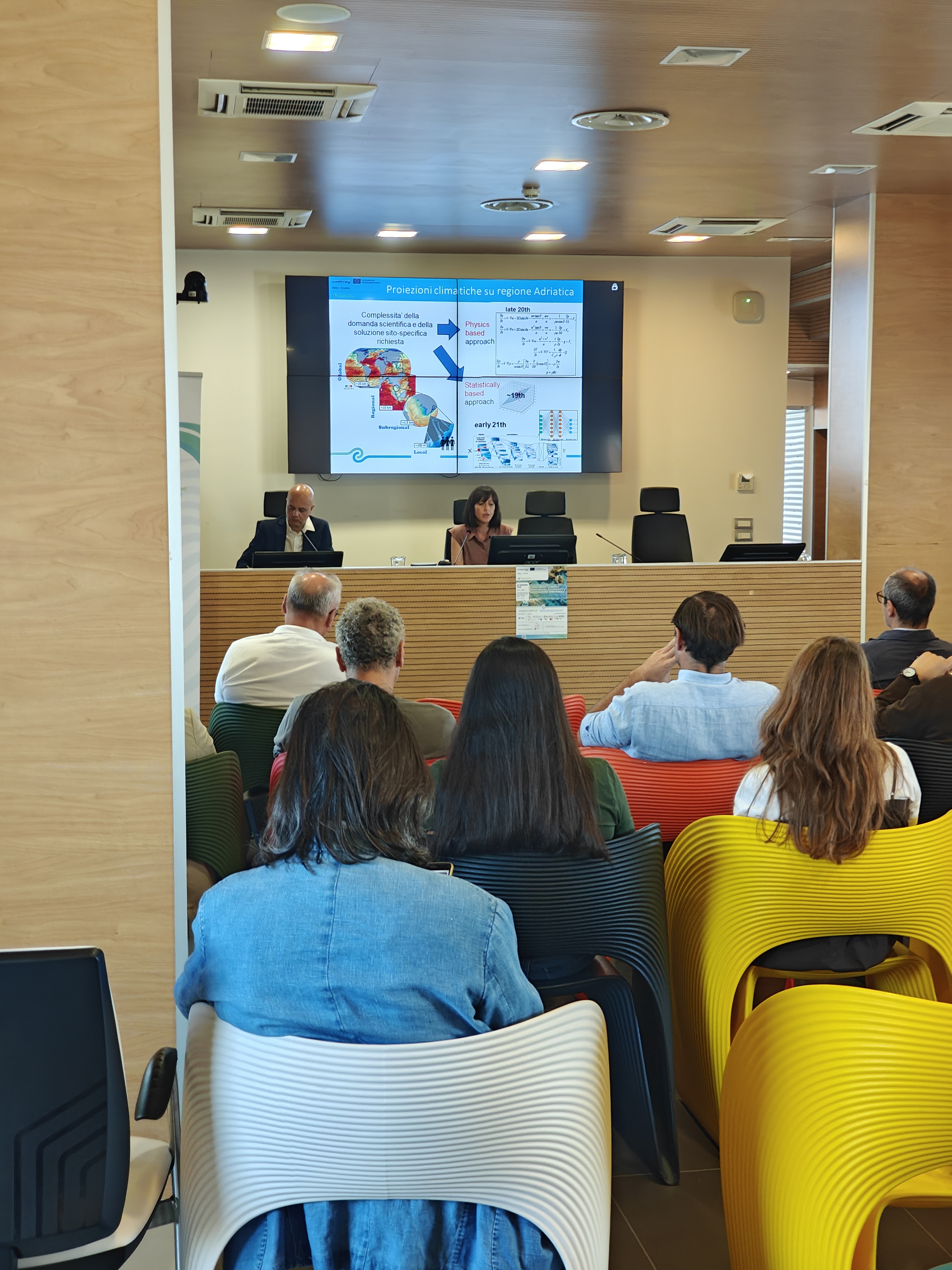
The focus then moved to the broader Adriatic context with Giorgia Verri, CMCC Scientist and AdriaClimPlus Project Coordinator, who illustrated how the project contributes to advancing knowledge on the future climate of the Adriatic Sea and how this knowledge can be used to support science-based adaptation strategies.
The session continued with Dario Giaiotti, environmental modeller at ARPA FVG, who presented the transition from the Environmental Digital Twin of the Friuli Venezia Giulia Region to the AdriaClimPlus climate scenarios for the North-East Adriatic pilot area. His contribution highlighted the role of digital tools and modelling in making climate information more accessible and useful for territorial planning.
The scientific discussion was further enriched by Lorenzo Mentaschi, Senior Researcher in Earth Physics and Oceanography at the University of Bologna, who explored new developments in biogeochemical modelling and climate projections in the Adriatic Sea, offering insights into how advanced modelling can improve the understanding of future environmental conditions.
The second part of the workshop focused on the connection between innovation, sustainability and governance. Vincenzo Barbieri, Chief Marketing Officer of Planetek Italia, presented the role of space technologies in supporting sustainable development, showing how satellite data and Earth observation can contribute to more effective environmental monitoring and decision-making.
The governance dimension was addressed by Elisa Fiorini Beckhauser, researcher in climate law and litigation at CMCC – ATEC, who focused on governance for adaptation and on the social legitimacy of climate policies within public administrations. Her contribution underlined the importance of building adaptation policies that are not only technically sound, but also socially accepted and institutionally effective.
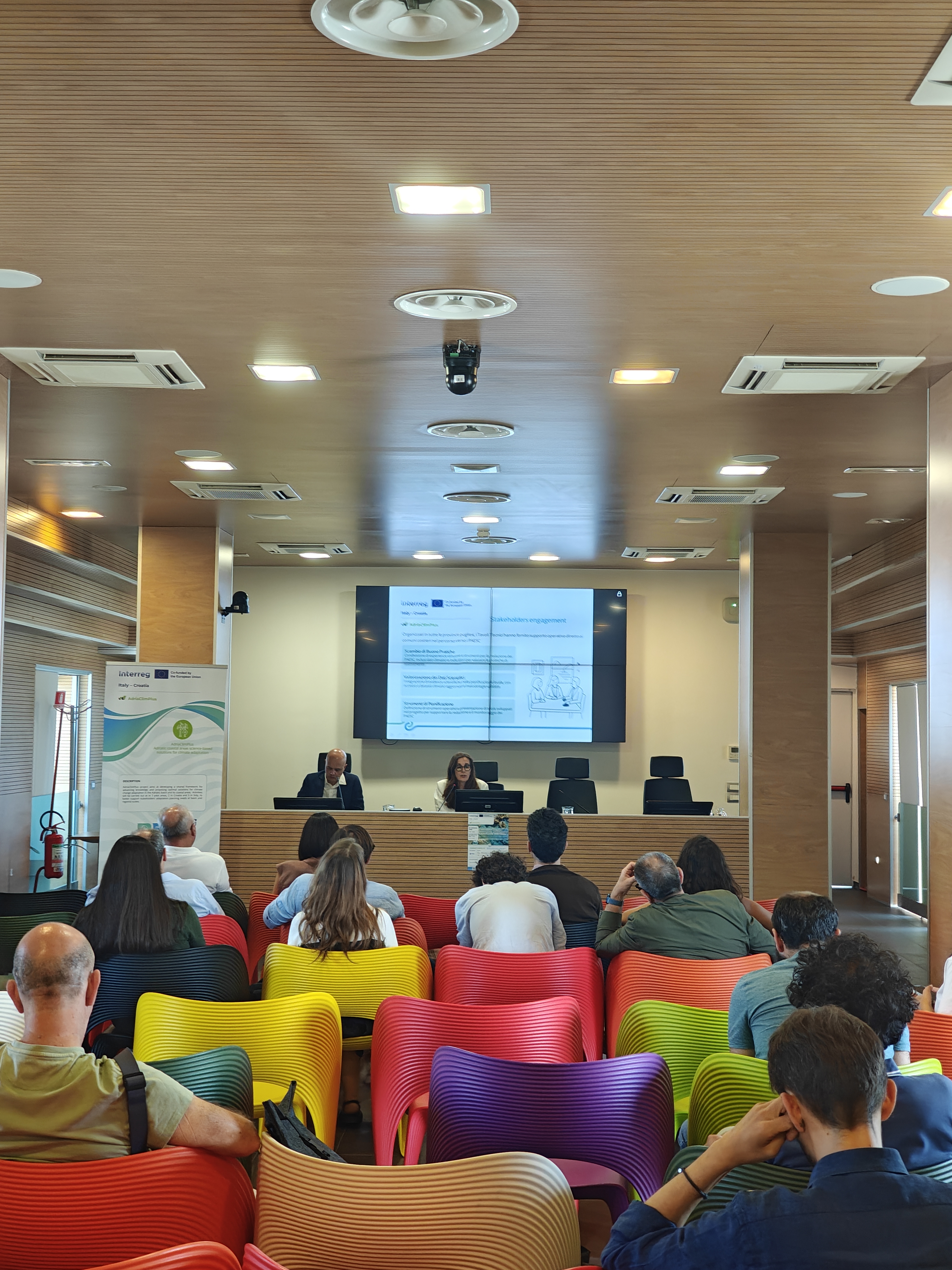
Particular attention was also dedicated to stakeholder engagement and capacity building. Stefania Geronimo, from the Department of Environment, Landscape and Urban Quality of the Puglia Region, presented the engagement and training activities carried out within AdriaClimPlus, highlighting the role of participation, dialogue and training in supporting shared and more effective adaptation pathways.
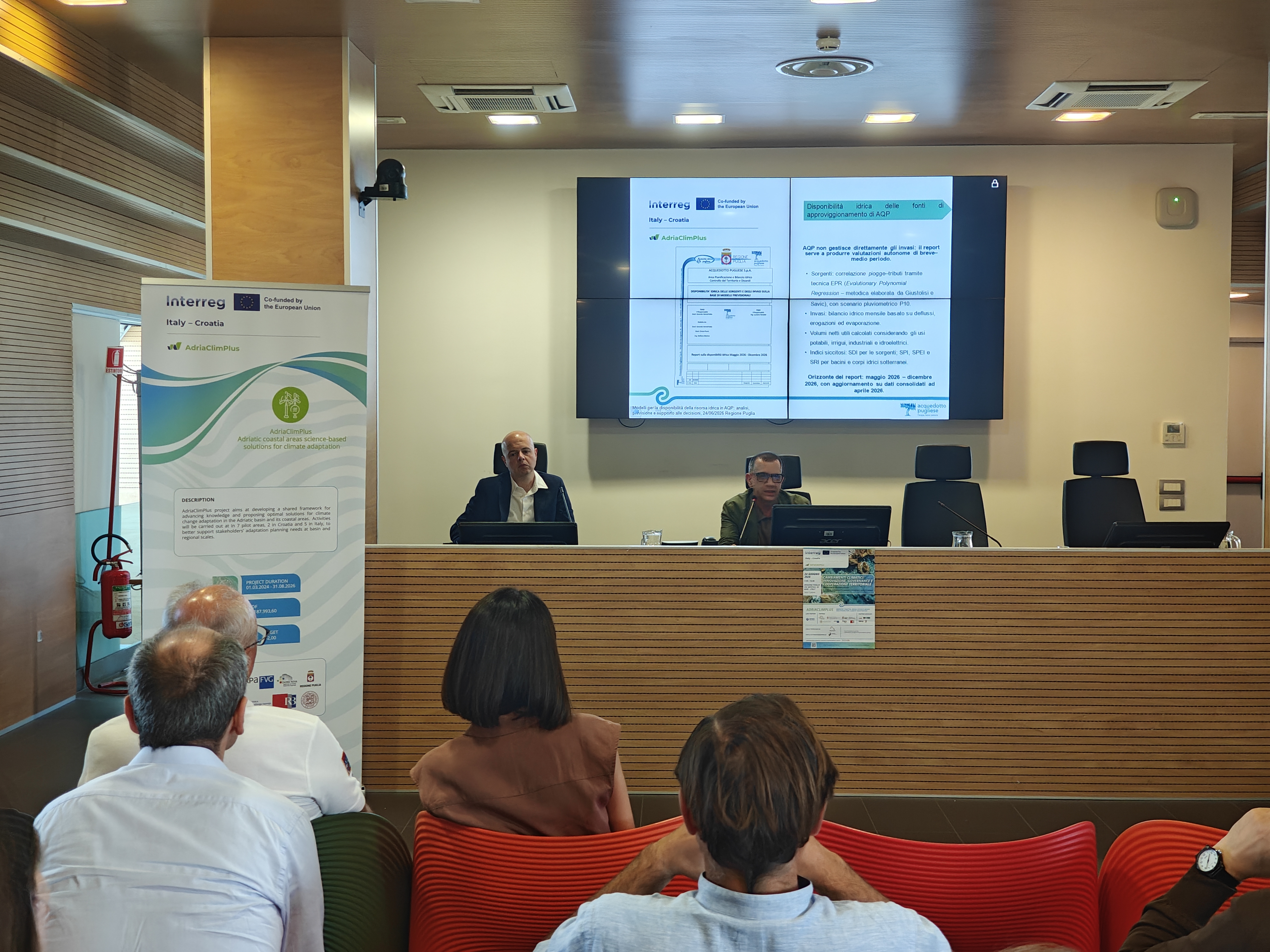
Water resource management was another key topic of the workshop. Gerardo Ventafridda, Head of Territory Control and Hydrogeological Instability, Planning and Water Balance at Acquedotto Pugliese S.p.A., presented models for water resource availability in AQP, including analysis, forecasting and decision-support tools. His contribution offered a concrete perspective on how data and modelling can support operational planning in a context increasingly affected by climate variability.
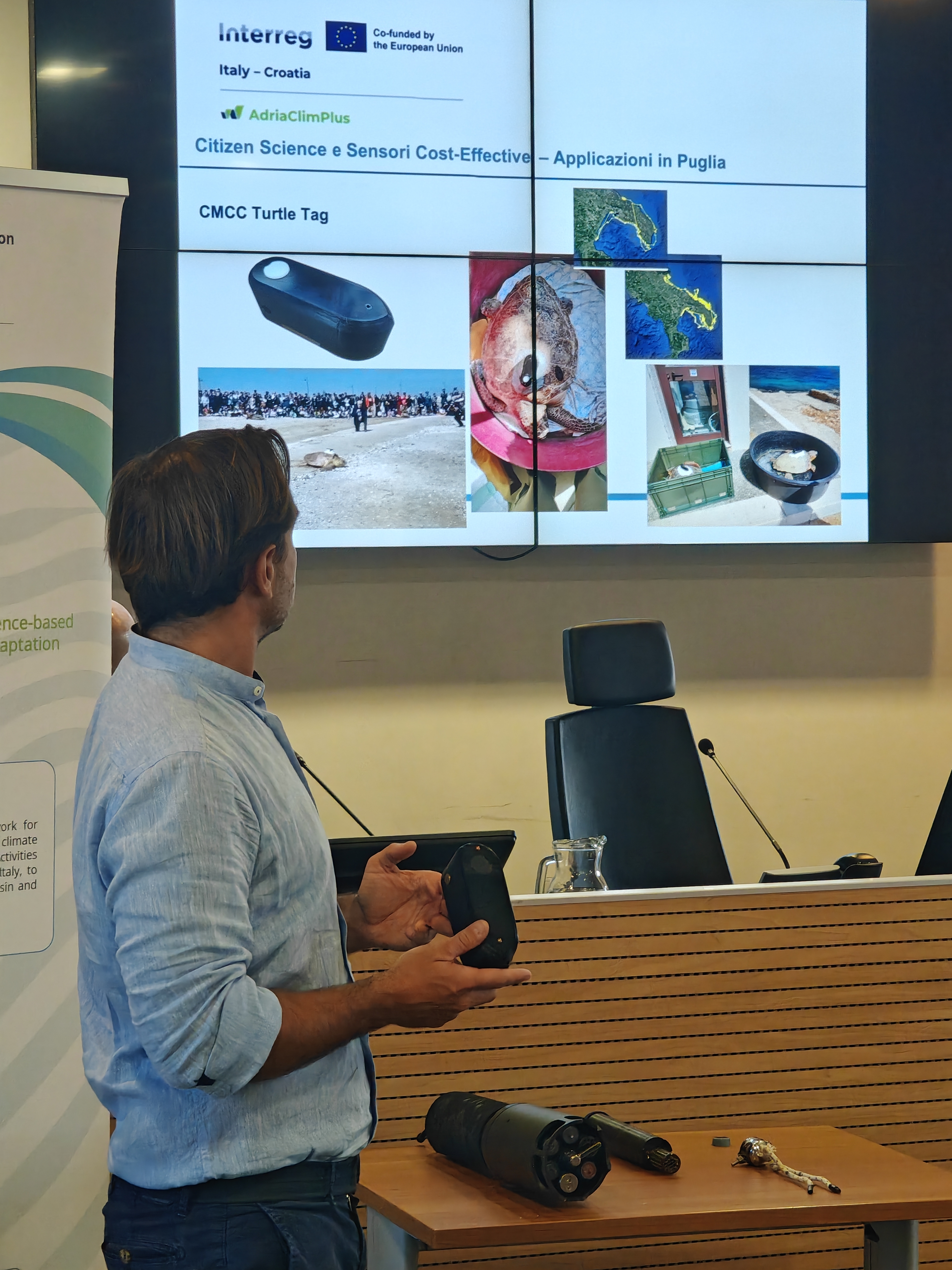
The technical session was closed by Viviana Piermattei, Head of the Advanced Observing Systems Research Unit of the Global Coastal Ocean Division at CMCC, with a presentation dedicated to the importance of observations in the study of climate change and the role of Citizen Science. Her contribution also introduced tools used for the analysis and monitoring of climate and environmental phenomena, emphasising the value of observation systems and public participation in strengthening climate knowledge.
The Bari workshop represented an important moment within the AdriaClimPlus dissemination and engagement path. By bringing together different fields of expertise, the event encouraged dialogue between scientific research, public institutions, technical bodies and local stakeholders.
The discussions confirmed that climate adaptation requires a shared effort: advanced scientific knowledge, innovative tools, effective governance and strong territorial cooperation must work together to strengthen the resilience of Adriatic coastal areas.
Through this exchange, AdriaClimPlus continues to support the development of science-based, participatory and forward-looking strategies for coastal adaptation across the Adriatic region.