
Fifth technical meeting in Lecce engages Apulian municipalities on climate adaptation tools
13/03/2026
Fifth technical meeting in Lecce engages Apulian municipalities on climate adaptation tools
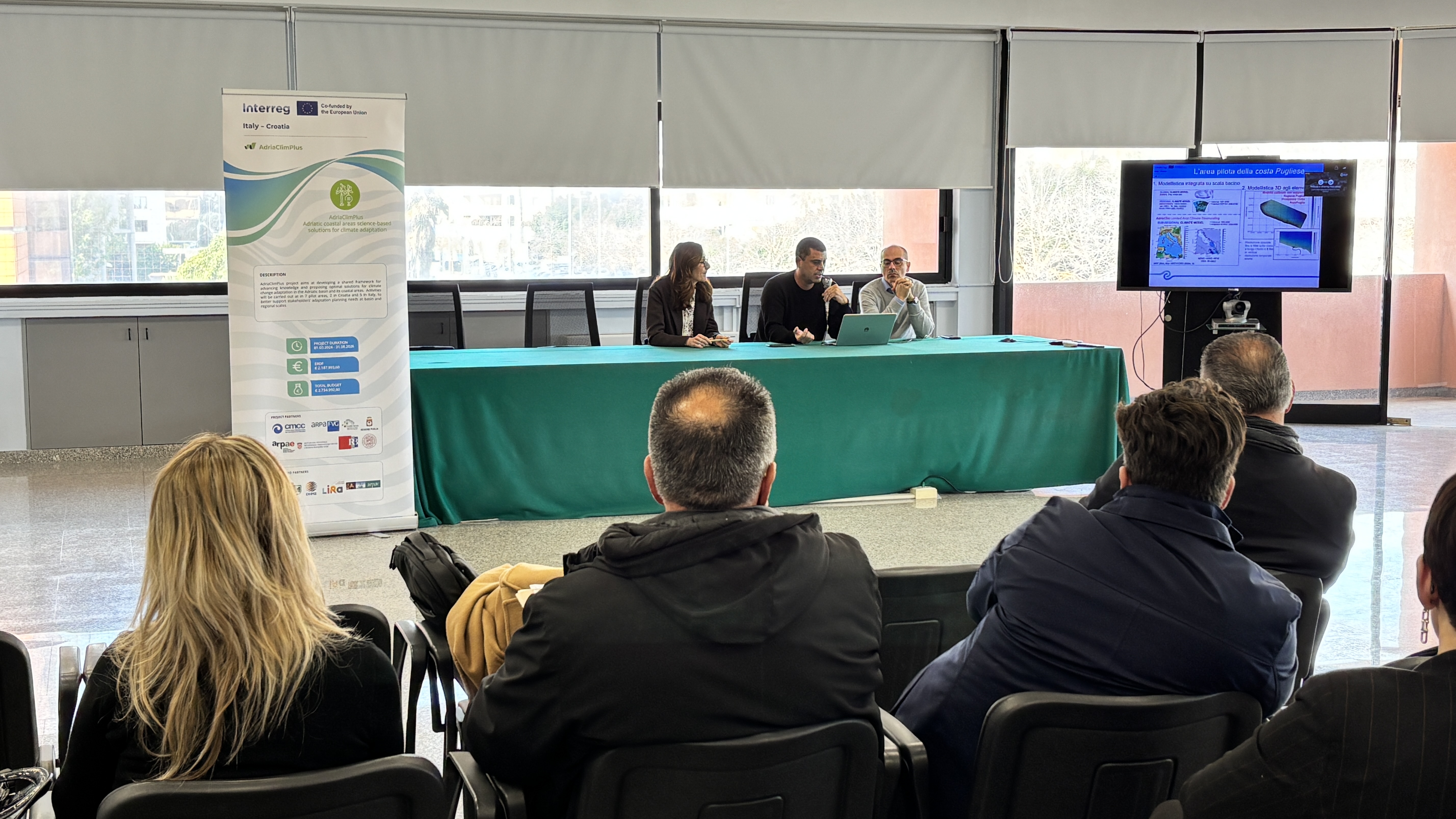
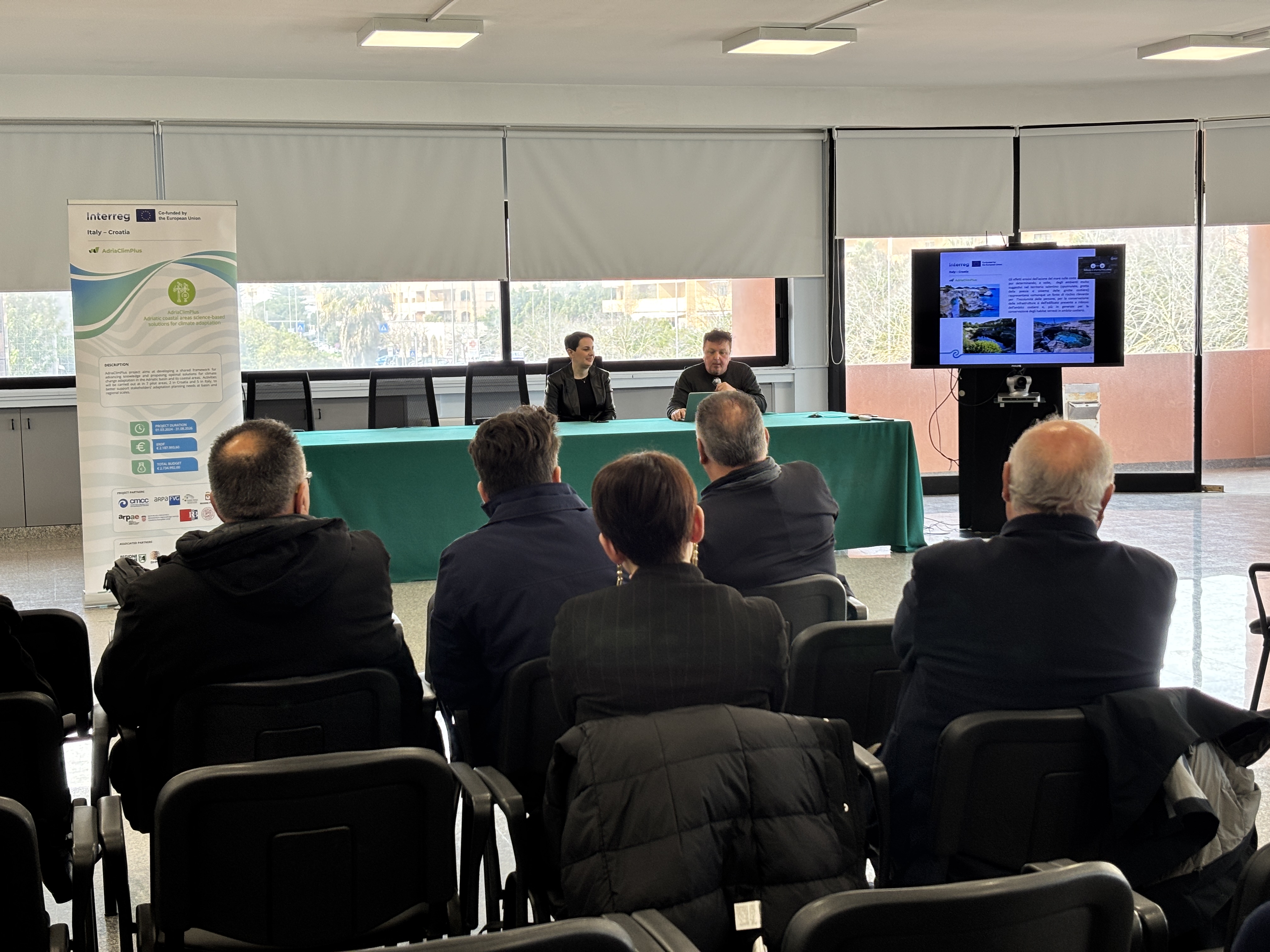
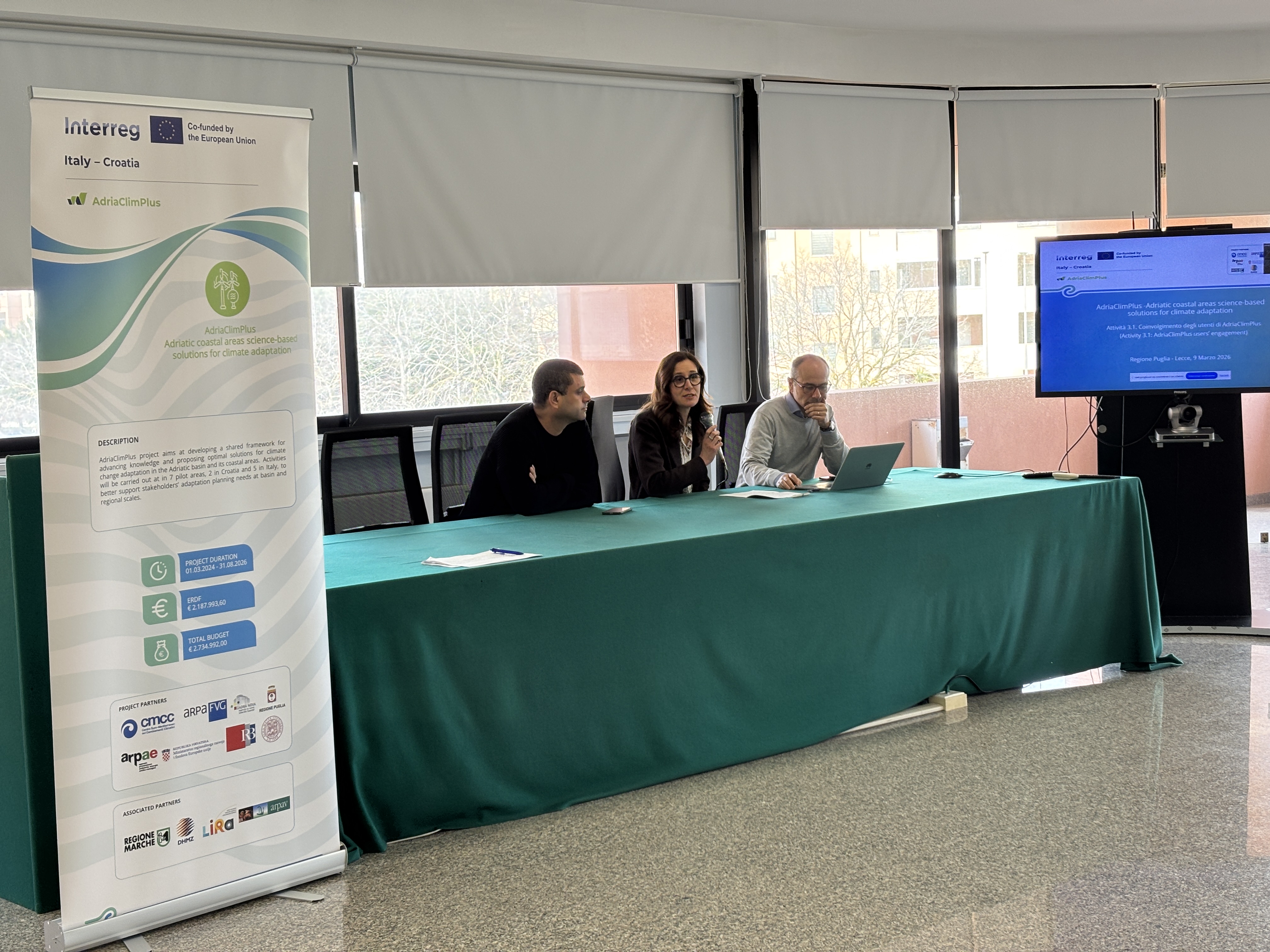
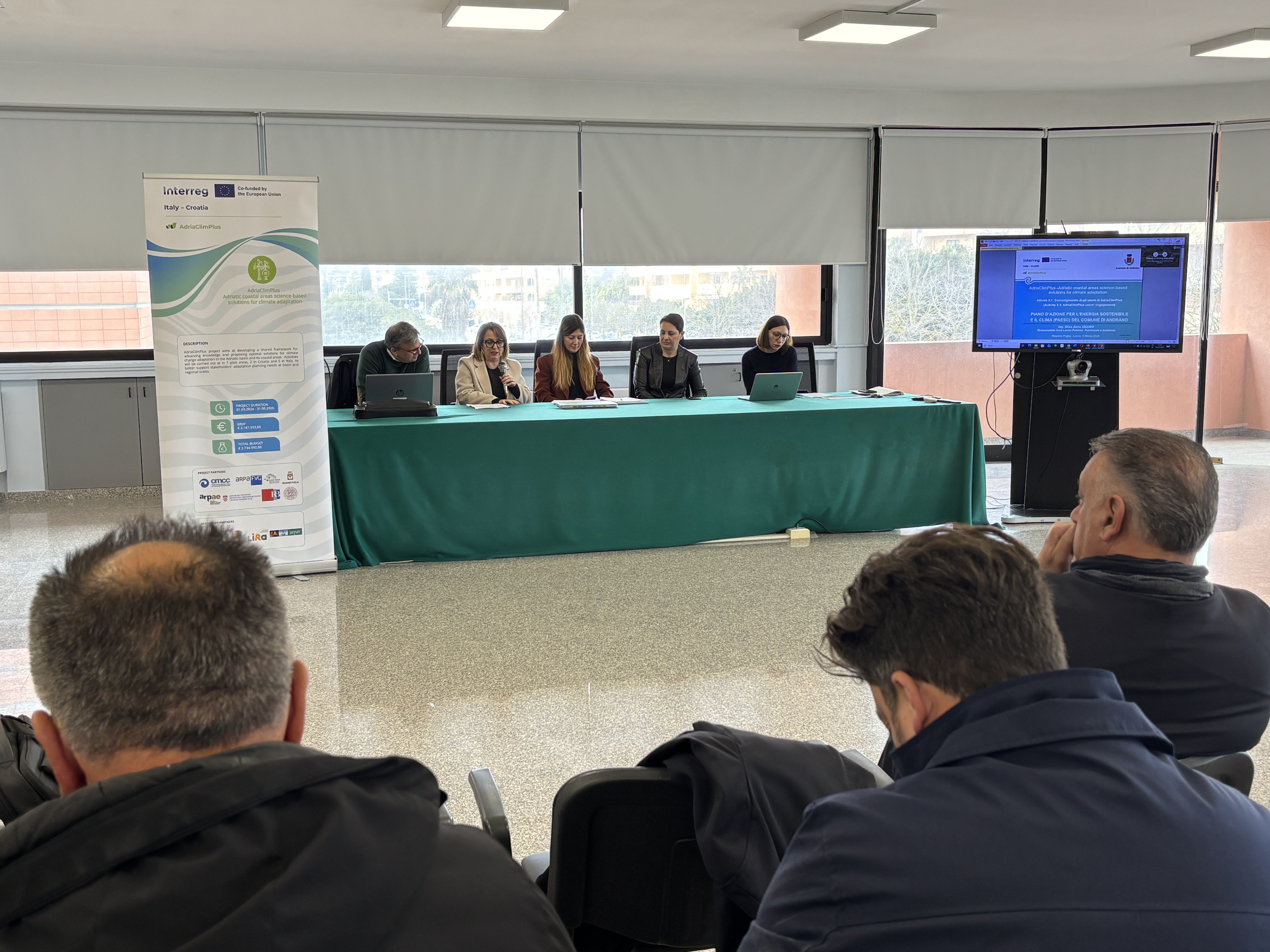
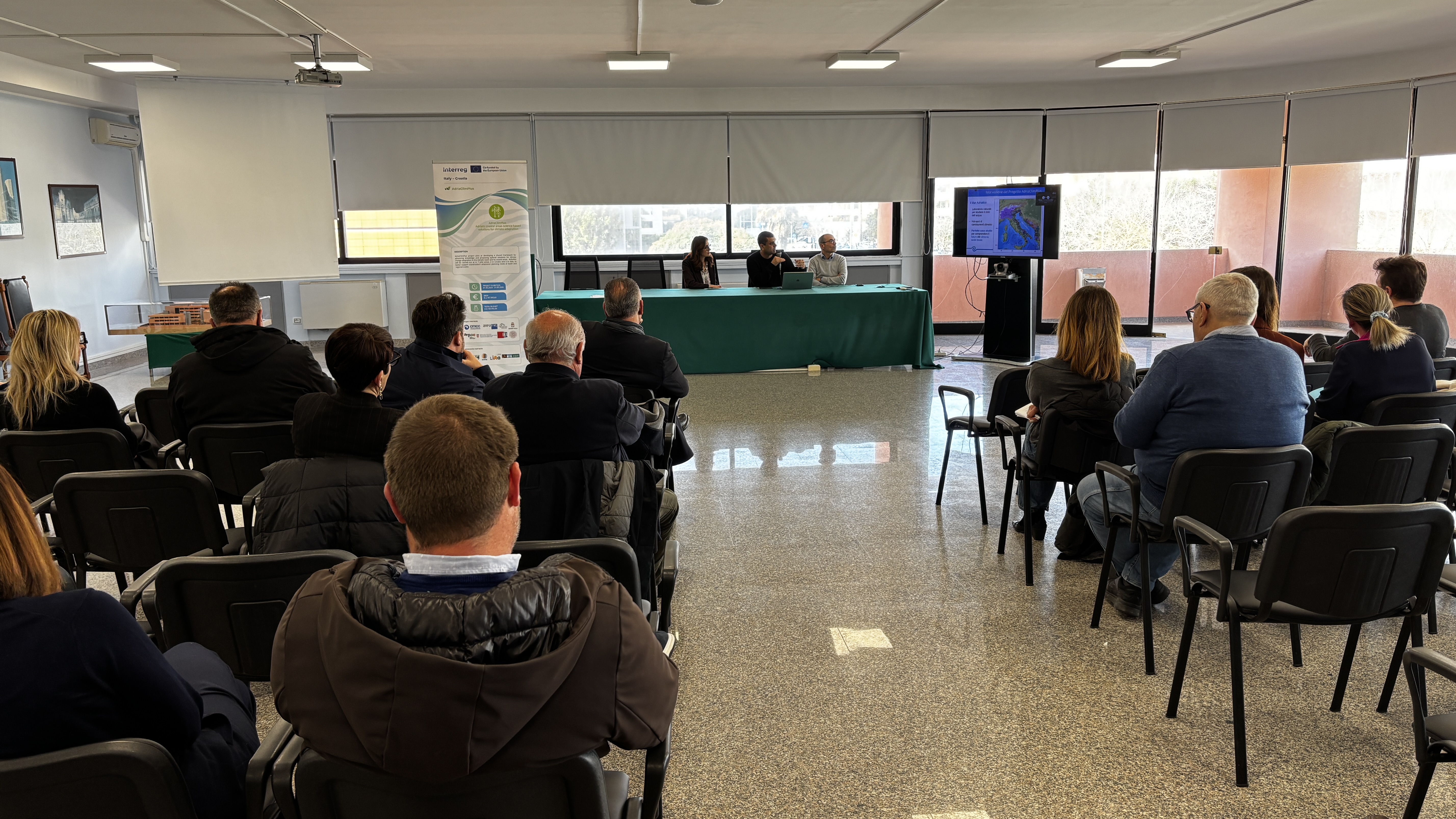
On 9 March 2026, the AdriaClimPlus project brought together local authorities and experts in Lecce for its fifth technical meeting, hosted at the headquarters of the Regione Puglia.
Titled “Sharing experiences and tools to support the development of SECAPs”, the meeting was organised by the Department for Environment, Landscape and Urban Quality of Puglia Region, providing a valuable opportunity for participants to exchange knowledge and strengthen collaboration on local climate action.
Strengthening stakeholder engagement and local capacity
The initiative is part of a broader regional pathway aimed at supporting local authorities in climate planning, while also contributing to the objectives of AdriaClimPlus to actively engage end users in pilot areas.
Through these activities, the project seeks to improve the usability and effectiveness of its information system and tools, consolidating technological solutions and supporting the further development of local climate adaptation strategies.
Exchange of experiences among local administrations
The meeting brought together local administrators and technical experts from the Salento area, including representatives from the Province of Lecce and the municipalities of Racale, Andrano and Lecce, alongside other municipalities from the region.
Participants shared their experiences in the preparation of SECAPs, presenting concrete case studies that highlighted organisational approaches, tools used, and key challenges encountered. These exchanges provided practical and replicable examples for municipalities engaged in defining local climate adaptation strategies.
Climate data and tools supporting local planning
During the session, participants were introduced to the latest developments of the AdriaClimPlus project, with a focus on the tools designed to support climate planning.
These tools, such as the AdriaClim Geoportal, provide access to climate data, datasets, and adaptation indicators, enabling local authorities to better integrate scientific information into their planning processes and strengthen evidence-based decision-making.
An interactive session was also held to gather feedback, needs, and proposals from local administrations, fostering direct dialogue between local and regional administration and contributing to the further improvement of the project outputs.