
Success Stories from the Adriatic Blue Economy
DIH InnovaMare presents a series of best-case studies showcasing cutting-edge marine technology applications across key Blue Economy sectors. These real-world use cases demonstrate how digital and sustainable innovations are transforming marine industries in the Adriatic Sea region - bridging gaps between research, industry, and environmental stewardship.
🎥 Watch, learn, and be inspired by how technology is driving cooperation, sustainability, and economic growth in coastal and marine environments.

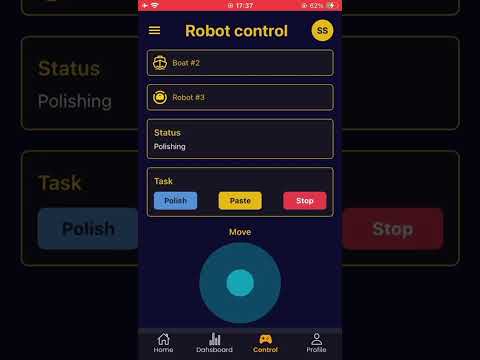
Autonomous Vessel for Sustainable Maritime Environment
Stakeholder: Hartera Robotics
Start-up transforming vessel maintenance. Developing robots for dry marinas worldwide. Hartera Robotics is not just innovating; they are changing how the maritime industry handles vessel maintenance. By tackling key issues of efficiency, sustainability, and cost, they provide a solution that addresses current industry needs while paving the way for a more sustainable and efficient future. Their dedication to innovation, combined with our understanding of the maritime sector's challenges, positions us as a leading force in the evolution of maritime maintenance practices.
Sector: Maritime Transport
This case explores how autonomous navigation systems and smart sensors are revolutionizing port operations and vessel efficiency. By integrating AI and IoT, maritime operators are reducing emissions, improving safety, and enhancing logistics across the Adriatic Sea.
🧭 See how smart technologies are steering the future of clean and efficient maritime mobility.
Precision Aquaculture Using Remote Sensing & Underwater Drones
Stakeholder: DIH Agrifood
AgriFood Croatia is an innovation hub that brings together research, business, and public stakeholders in Croatia for the common pursuit of digital transformations in the aquaculture, agriculture, and food-related sectors. The mission of AgriFood Croatia is to contribute towards achieving the vision outlined in the EU Declaration of ‘A smart and sustainable digital future for European agriculture and rural areas’ and strengthen the national and European technological infrastructure.
Sector: Fisheries & Aquaculture
A deep dive into how precision farming techniques, underwater drones, and data analytics are optimizing fish farming operations. This approach not only increases productivity but also ensures sustainable ecosystem management.
🐠 Discover how innovation is making aquaculture smarter, safer, and more sustainable.

Offshore Renewable Energy Monitoring & Maintenance with AI
Stakeholder: Zadar Energija
Zadar Energija is a company that, at the moment, operates 440 MW of Wind Farms (SS 220 kV); (SS 110 kV). They are a 24/7 service provider in the field of operation, maintenance, and testing of electrical equipment for power plants and substations. They provide high-quality geospatial products using a multitude of tools. Zadar Energija has years of experience in creating, installing, and maintaining charging infrastructure, including several nationwide charger networks. They also deliver state-of-the-art products using remote sensing satellite data.
Sector: Renewable Energy
Learn how marine robotics and AI-powered predictive maintenance tools are supporting offshore wind and wave energy installations. These innovations ensure system reliability while minimizing human risk and ecological disruption.
⚡ Explore the power of digital tech in scaling clean energy at sea.

Marine Environmental Data Platforms
Stakeholder: Tilebytes
Tilebytes is an innovative Italian SME that exemplifies how technology, environmental awareness, and cross-sector collaboration can drive progress toward a smarter and more sustainable blue economy. The company specializes in developing modular SaaS/PaaS platforms that integrate data from both fixed and mobile sensors to monitor environmental parameters such as weather conditions and air quality. This technology is particularly valuable for assessing environmental impact in port and maritime areas. A key example of Tilebytes’ user-centered approach is its collaboration with LabService, which resulted in the development of an interactive reporting system – featuring app and chatbot interfaces – for collecting citizen reports on odour issues.
Sector: Environmental Monitoring
See how data-driven platforms and marine sensors help local tourism operators balance economic activity with conservation goals. Real-time environmental data empowers smarter destination management, ensuring both visitor satisfaction and ecosystem health.
🌐 Experience how digital tools are reshaping sustainable tourism in coastal zones.

Marine Biodiversity Research with AI-Enabled Monitoring Systems
Stakeholder: SeaCras
SeaCras provides a suite of marine environmental and coastal surveillance solutions that detect and distinguish naturally occurring events and pollution hazards. Our satellite-derived oceanographic solutions enable coverage of open seas, coastal waters, as well as urbanized and remote areas.
Sector: Marine Research & Environmental Protection
Cutting-edge AI and imaging technologies enable continuous, automated monitoring of marine biodiversity. This case demonstrates how scientists are using innovation to detect species, monitor health indicators, and guide conservation efforts in the Adriatic.
🔬 See how digital innovation is advancing marine science and protecting biodiversity.

Automated Fish Counting & Species Recognition with AI Video Analysis
Stakeholder: BlueDataB (formerly Karmen Studio) in cooperation with the Institute Ruđer Bošković (project partner)
Sector: Fisheries & Aquaculture
BlueDataB is an innovative technology company composed of scientists, software engineers, and entrepreneurs focused on delivering cutting-edge video and image processing solutions. With deep expertise in aquaculture applications, their software uses advanced algorithms and AI-driven automation to enhance both business efficiency and scientific research outcomes.
This case highlights a smart system designed for real-time fish counting and species recognition during transfer operations. Using AI-powered video analysis, the system automates the counting process, achieving speeds up to 300% faster than manual methods while ensuring high precision to meet regulatory standards. In addition to counting, the system intelligently selects a sample (20–30% of the fish) for 3D landmark measurements, offering insights into fish size and species distribution. These insights allow for faster decision-making and improved management practices in aquaculture operations.
📊 Witness how intelligent video analytics is streamlining aquaculture processes and raising the bar for data-driven fish farming.

Wireless and More srl - Smart Buoy for Marine Monitoring
Stakeholder: Wireless and More srl (W&M)
Sector: Marine Technology / Environmental Monitoring
Wireless and More (W&M) is a University of Padova spin-off company specializing in software development for embedded systems in telecommunications, with a strong focus on terrestrial and underwater networks. Their experience spans design, simulation, deployment, and evaluation of networked systems, making them a key player in applying IoT solutions to aquatic environments. With a commitment to the Green and Blue Economy, W&M has contributed to several research projects aimed at improving aquatic environment monitoring using smart, integrated sensor systems—their work bridges cutting-edge digital technologies with environmental sustainability goals.
Innovation: Solar-Powered Smart Buoy
See how IoT-based smart buoys can support both environmental protection and cultural heritage preservation in marine settings. W&M has developed a solar-powered smart buoy capable of both visual monitoring and environmental data collection.
🧭 See how smart technologies are protecting marine ecosystems and heritage through clean, connected innovation.

Underwater tourism
At the heart of the Adriatic,innovation is helping protect history beneath the waves
The Torre Chianca underwater archaeological site represents one of the pilot actions of the DIH InnovaMare project, demonstrating how digital technologies can support the protection and sustainable management of submerged cultural heritage. The pilot is coordinated by ARTI, Agenzia Regionale per la Tecnologia e l’Innovazione and implemented by Wireless and More in collaboration with the University of Salento - Department of Cultural Heritage.
A solar-powered smart buoy, equipped with underwater cameras and environmental sensors, monitors the Roman-era tombs by tracking water quality and helping prevent unauthorized access. The system also collects valuable data to support research, site protection, and sustainable heritage management. By combining smart marine technologies, scientific research, and institutional collaboration, the pilot demonstrates how digital solutions can protect fragile underwater heritage while contributing to sustainable coastal management.
This pilot serves as a replicable model for other coastal and underwater heritage sites, showing how innovation can strengthen the protection of cultural assets and advance a more sustainable Blue Economy.

Biodiversity monitoring
AI-Supported Fish Biodiversity Monitoring in the Krka River Estuary
This pilot action of the DIH InnovaMare project addresses the growing need for efficient and scalable biodiversity monitoring in complex coastal ecosystems. Implemented in the Krka River estuary in Croatia, a protected Natura 2000 site, the activity tested an innovative approach to assessing fish diversity and abundance using underwater video monitoring and artificial intelligence. A permanent underwater camera system installed at about 5 m depth continuously recorded fish presence and behaviour under natural conditions. The monitoring system was supported by environmental sensors measuring water temperature, tidal dynamics, and meteorological conditions.
Video data were processed using AI-based species recognition software trained to identify Adriatic fish species. The model currently recognizes 46 species, enabling automated species identification, individual tracking, and real-time counting. The pilot demonstrates that AI-supported underwater monitoring provides a non-invasive, efficient, and scalable solution for long-term biodiversity assessment, supporting better understanding and sustainable management of sensitive coastal ecosystems.

Underwater wireless network
Autonomous Technologies Mapping the Dynamic Ecosystem of the Venice Lagoon
In the tidal channels of the Venice Lagoon, an innovative pilot action of the DIH InnovaMare project is demonstrating how advanced technologies can support marine ecosystem monitoring and sustainable management. The pilot, implemented by the National Research Council of Italy within the DIH InnovaMare project, deployed the Autonomous Surface Vehicle SWAMP as an advanced marine monitoring platform. Equipped with state-of-the-art bathymetric and optical sensors, the vehicle conducted detailed surveys of the lagoon environment.
The monitoring campaign combined multibeam echo sounder data with UAV-based LiDAR measurements, creating an integrated survey approach capable of capturing both underwater and above-water features. Through this process, SWAMP collected bathymetric measurements and high-resolution imagery of benthic habitats. The resulting digital terrain model reveals the complex morphology of the lagoon’s tidal channels, providing valuable data for habitat mapping, environmental monitoring, and the sustainable management of this highly dynamic transitional ecosystem.
